Introduction
Every homeowner eventually faces the same practical question while shopping for tools: do you need the powered version, or will a basic hand tool actually do the job just as well? The power tools vs hand tools decision isn’t really about which category is universally better, it comes down to the specific task, how often you’ll use the tool, and how much speed and precision the job genuinely requires.
This guide breaks down the real differences between these two categories, where each one clearly wins, and how most well-equipped homeowners end up using a practical mix of both rather than committing entirely to one or the other.
Power Tools vs Hand Tools
Hand tools remain the better choice for tasks requiring precision, control, or infrequent use, tightening a single screw, making fine adjustments, or working in situations where a power tool’s speed could actually cause damage or over-correction. Power tools are the clear winner for repetitive tasks, larger projects, or jobs involving harder materials, drilling multiple holes, cutting lumber, or driving dozens of screws, where manual effort would be exhausting and genuinely impractical. Most well-equipped homeowners own a foundation of essential hand tools for everyday small tasks, supplemented by a handful of power tools, starting with a cordless drill, for larger or more frequent projects.
What Actually Separates the Two Categories
Hand Tools
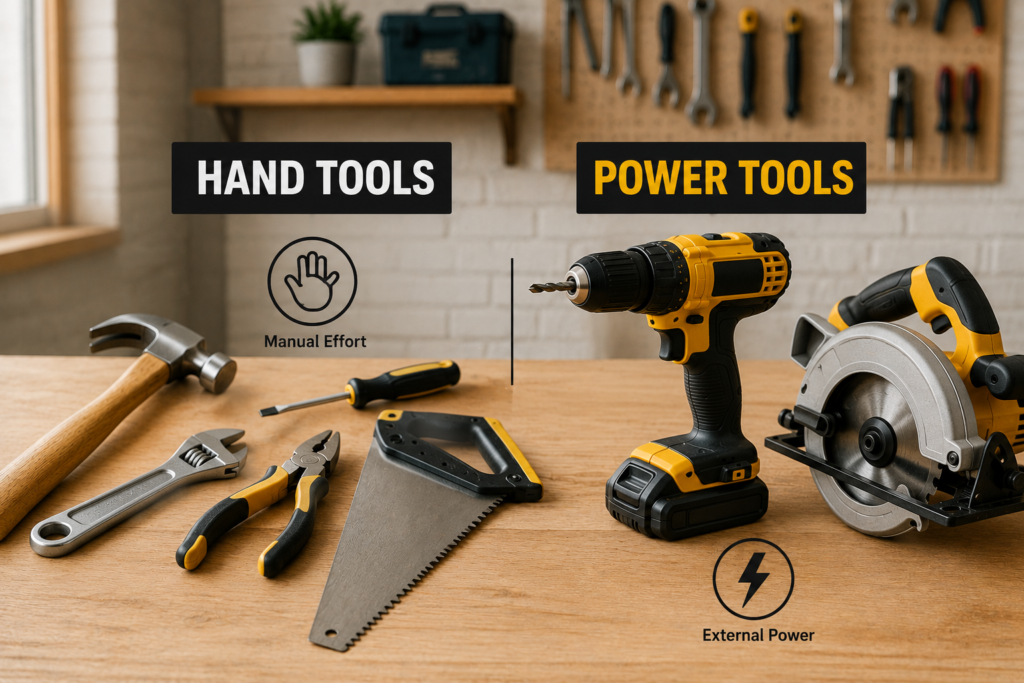
Hand tools operate entirely on manual human effort, no motor, no battery, no electrical or gas power source involved. This includes tools like hammers, screwdrivers, wrenches, pliers, and hand saws.
Power Tools
Power tools use an external power source, electricity (corded or battery-powered) or occasionally gas, to perform mechanical work, drilling, cutting, sanding, or driving, with considerably less manual effort required from the user.
Key Differences at a Glance
| Factor | Hand Tools | Power Tools |
| Power source | Manual effort only | Electric (corded/battery) or gas |
| Speed | Slower | Considerably faster |
| Precision/control | Generally higher | Can be lower without practice |
| Physical effort required | Higher | Lower |
| Learning curve | Lower | Moderate (varies by tool) |
| Noise level | Quiet | Louder |
| Cost | Generally lower | Generally higher |
| Maintenance | Minimal | Battery care, motor upkeep |
| Portability | Excellent | Good (cordless) to limited (corded) |
| Safety considerations | Lower risk overall | Higher risk, requires more caution |
When Hand Tools Are the Better Choice
Precision Tasks
Hand tools offer more direct, tactile control, valuable for tasks like carefully tightening a delicate fixture, making small adjustments, or working with materials that could be damaged by a power tool’s speed and torque.
Infrequent, One-Off Tasks
If you’re tightening a single loose screw or driving one nail, reaching for a power tool often takes longer than simply using a hand tool directly, given the setup, charging, or bit-changing that power tools sometimes require.
Tight or Awkward Spaces
Hand tools are generally more compact and maneuverable in confined spaces, like behind furniture or inside tight cabinetry, where a bulkier power tool simply won’t fit or maneuver comfortably.
Situations Requiring Quiet Operation
Hand tools operate silently or nearly so, useful for early morning repairs, apartment living, or households with sleeping family members where a loud drill or saw would be genuinely disruptive.
Budget-Conscious Starter Toolkits
Hand tools are generally more affordable individually, making them a practical starting point for homeowners building a tool collection gradually rather than investing heavily in power tools upfront.
When Power Tools Are the Better Choice
● Repetitive Tasks
Driving dozens of screws for a large furniture assembly project or deck installation is considerably faster and less physically taxing with a power drill than doing the same task by hand.
● Cutting or Drilling Harder Materials
Power tools generate significantly more force and consistent speed than manual effort can match, making them essential for cutting through lumber, masonry, or metal that a hand saw would struggle with or take excessively long to complete.
● Larger Home Improvement Projects
Projects involving substantial cutting, drilling, or sanding, building a deck, installing shelving throughout a home, or major furniture assembly, benefit enormously from the speed and reduced physical strain power tools provide.
● Tasks Requiring Consistent, Even Results
Power sanders, for example, produce a more even surface finish across a larger area than manual sanding typically achieves, particularly valuable for furniture refinishing or prepping surfaces before painting.
Comparing Common Tool Pairs
➢ Screwdriver vs Power Drill/Driver
A manual screwdriver works fine for occasional, single-screw tasks, while a cordless drill/driver becomes essential once you’re driving more than a handful of screws, given the significant time and effort savings.
➢ Hand Saw vs Circular Saw
A hand saw suits occasional, smaller cutting tasks, trimming a single board or cutting pipe, while a circular saw becomes worthwhile once you’re cutting lumber regularly or working with material thicker than a hand saw comfortably handles.
➢ Manual Sanding Block vs Power Sander
Manual sanding works for small, detailed touch-ups, while a power sander (orbital or belt) dramatically speeds up larger surface areas, like refinishing a full piece of furniture or prepping a large wall section before painting.
➢ Wrench vs Impact Driver
A standard wrench works well for typical household nuts and bolts, while an impact driver becomes valuable for tasks involving larger, more stubborn fasteners, like automotive work or heavy-duty furniture assembly, where a manual wrench alone would require considerable extra effort.
Cost Comparison
Hand tools are generally more affordable on a per-tool basis, making a full basic hand tool collection a relatively modest investment. Power tools, particularly cordless models requiring battery packs and chargers, typically cost meaningfully more per tool, though the time and effort savings often justify this cost for homeowners tackling regular or larger projects. It’s worth noting that once you own one cordless tool from a particular brand’s battery platform, additional tools from that same platform (sold as “tool only,” without a separate battery and charger) often cost considerably less than the first tool purchased.
Skill Level and Learning Curve
Hand Tools Generally Have a Gentler Learning Curve
Most hand tools are intuitive to use safely and effectively with minimal instruction, making them a comfortable starting point for homeowners newer to DIY projects.
Power Tools Require More Initial Care and Practice
Power tools, particularly saws and drills, involve genuine safety considerations and a bit more practice to use accurately and confidently. Reading the specific tool’s manual and starting with lower-stakes practice tasks before tackling an important project is a reasonable approach for anyone new to a specific power tool.
Safety Considerations
1. Hand Tool Safety
While generally lower-risk than power tools, hand tools still require basic care, keeping cutting edges (like a utility knife) sharp and controlled, and using proper technique to avoid strain or minor injury during use.
1. Power Tool Safety
Power tools introduce genuinely higher risk given their speed and force, making safety equipment (safety glasses at minimum, hearing protection for louder tools, and a dust mask for sanding or cutting) considerably more important. Always read the specific tool’s safety guidelines before first use, and maintain full attention while operating any power tool, avoiding distractions during active use.
Building a Balanced Tool Collection
➔ Start With Core Hand Tools
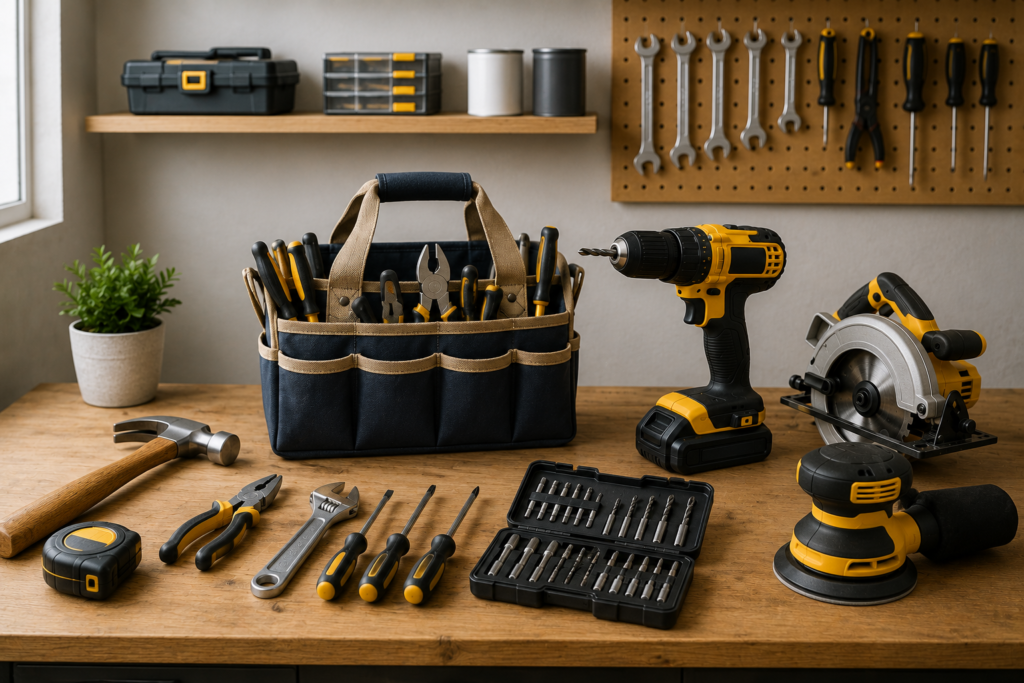
A hammer, screwdriver set, adjustable wrench, tape measure, level, pliers, and utility knife cover the majority of everyday small household tasks without requiring any power tool investment at all.
➔ Add a Cordless Drill Early
This is generally the first power tool worth adding, given how frequently it comes up for furniture assembly, hanging shelves, and general household setup and repair tasks.
➔ Expand Based on Actual Project Needs
Rather than purchasing power tools broadly upfront, add specific tools, a circular saw, jigsaw, or power sander, once a genuine, specific project makes the need clear, avoiding unnecessary investment in tools that might otherwise sit unused.
Maintenance Differences
● Hand Tool Maintenance
Generally minimal, keeping cutting edges sharp, wiping away rust on metal tools if exposed to moisture, and occasionally oiling moving parts like pliers hinges.
● Power Tool Maintenance
Requires somewhat more ongoing attention, proper battery charging and storage habits for cordless tools, periodic motor and blade or bit maintenance, and following the manufacturer’s specific care recommendations to maintain performance and safety over the tool’s lifespan.
Which Category Should You Prioritize First?
1. If You’re a First-Time Homeowner
Start with core hand tools, since they cover the broadest range of small, everyday repair needs at the lowest upfront cost, then add a cordless drill as your first power tool once you’ve settled into your new home.
1. If You’re Planning Larger DIY Projects
Prioritize the specific power tools your planned project actually requires, rather than a broad hand tool collection alone, since larger projects genuinely benefit from the speed and reduced physical effort power tools provide.
1. If Budget Is a Primary Concern
Hand tools offer the most practical, affordable starting point, with power tools added incrementally as specific needs and available budget allow.
Common Mistakes to Avoid
- Assuming power tools are always better, when hand tools genuinely outperform them for precision, quiet operation, and occasional, low-effort tasks
- Buying power tools before you have a specific project need, resulting in expensive tools that sit unused
- Skipping safety equipment when using power tools, particularly safety glasses and hearing protection for louder tools
- Choosing incompatible battery platforms across brands, resulting in multiple separate chargers and battery types to manage
- Underestimating hand tool quality, since a poorly made hand tool can still lead to frustrating inaccuracy or minor injury despite lower inherent risk
Conclusion
The power tools vs hand tools decision isn’t about choosing one category over the other permanently, it’s about matching the right tool to each specific task as it comes up. Hand tools remain genuinely valuable for precision, quiet operation, and occasional small repairs, while power tools earn their place for repetitive work, larger projects, and harder materials where manual effort alone would be impractical. Building a collection that includes both, starting with essential hand tools and adding power tools as real project needs arise, gives you the flexibility to handle nearly anything your home throws at you.
Frequently Asked Questions
1- Do I need power tools if I only do occasional small repairs?
Not necessarily. For occasional, small tasks, tightening a screw or hanging a single picture frame, a basic hand tool collection often covers your needs without requiring power tool investment.
2- What is the most important power tool for a homeowner to own?
A cordless drill/driver is widely considered the most valuable first power tool purchase, given how frequently it comes up for furniture assembly, hanging shelves, and general household tasks.
3- Are power tools more dangerous than hand tools?
Generally, yes, power tools introduce more risk due to their speed and force, making safety equipment and proper technique considerably more important than with most hand tools.
4- Can hand tools do everything a power tool can do?
For smaller, occasional tasks, often yes, though hand tools require considerably more time and physical effort for repetitive tasks or harder materials that power tools handle far more efficiently.
5- Should I buy a full power tool set or individual tools as needed?
For most homeowners, buying individual power tools as specific project needs arise is more practical than an upfront full set, since it avoids purchasing tools you may never actually use.
6- Is it worth buying cordless power tools over corded ones?
Cordless tools offer more mobility and convenience, particularly for tasks away from an outlet, though corded tools generally provide consistent, uninterrupted power without needing to monitor battery charge during longer projects.
7- How do I know when to upgrade from a hand tool to a power tool for a specific task?
Once a task becomes repetitive (driving many screws, cutting multiple boards) or involves harder materials than a hand tool comfortably handles, it’s generally worth upgrading to the powered equivalent for both speed and reduced physical strain.