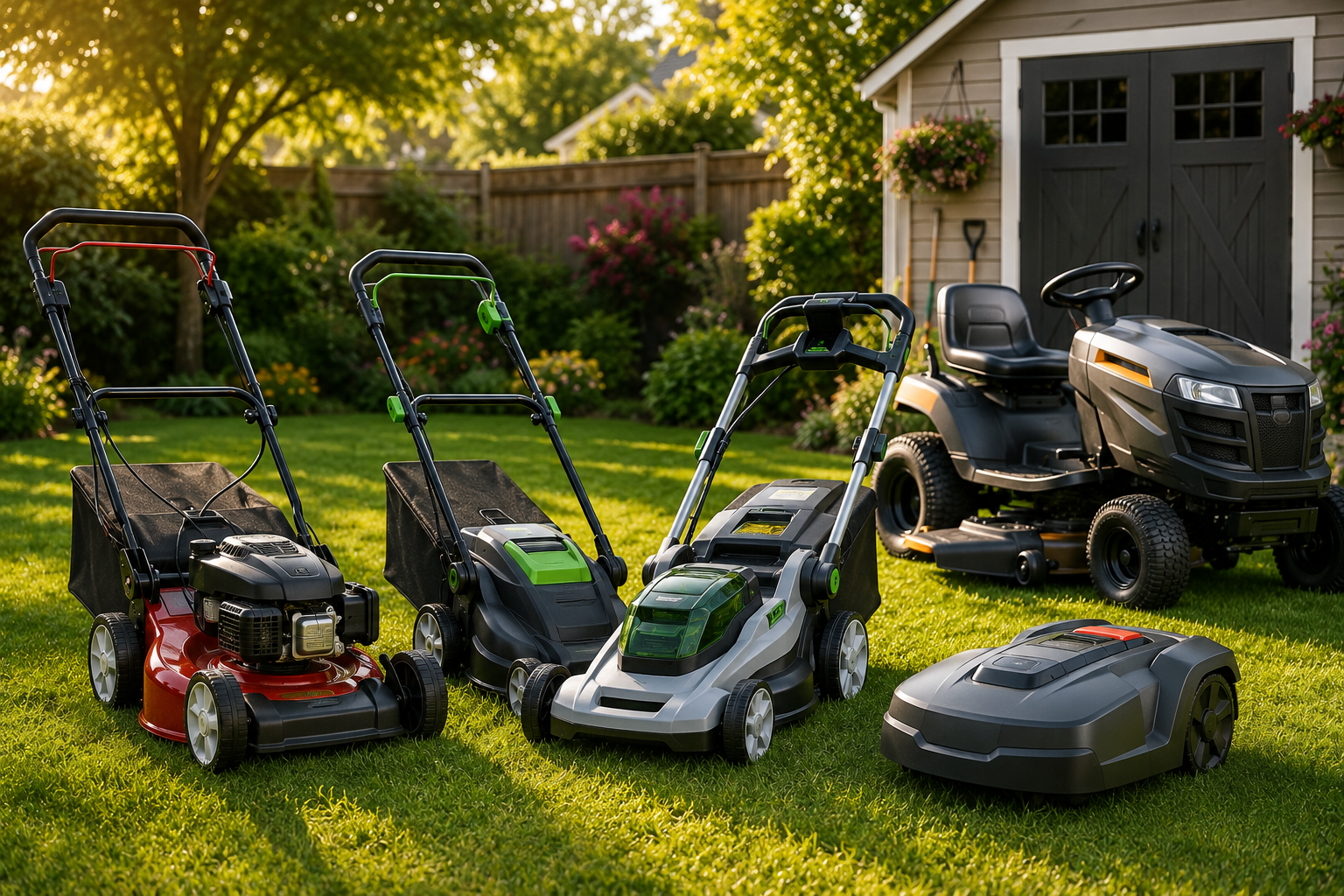
Buying a new lawn mower involves more decisions than it used to. Beyond the classic push-versus-riding question, homeowners now also need to weigh gas against electric, corded against cordless, and in some states, navigate genuinely new regulations affecting what’s even available to buy. This lawn mower buying guide walks through every major decision point including the recent shift in gas-powered equipment availability, so you can choose the right mower for your specific yard size, terrain, and budget.
Lawn Mower
For most standard residential lawns under half an acre, a battery-powered cordless electric push mower now offers the best overall balance of power, convenience, and lower long-term cost, especially given rising gas prices and quieter, cleaner operation. For larger properties over an acre, a gas-powered mower (where still available for purchase) or a riding mower typically remains more practical for continuous, heavy-duty cutting without battery swaps or recharging breaks. If you live in California or another area with active small-engine sales restrictions, your practical choice may already be narrowed to electric or robotic mowers regardless of your yard size, so it’s worth checking your local regulations before shopping.
A Major Shift Worth Understanding: Gas Mower Availability Has Changed
California’s Small Off-Road Engine Ban
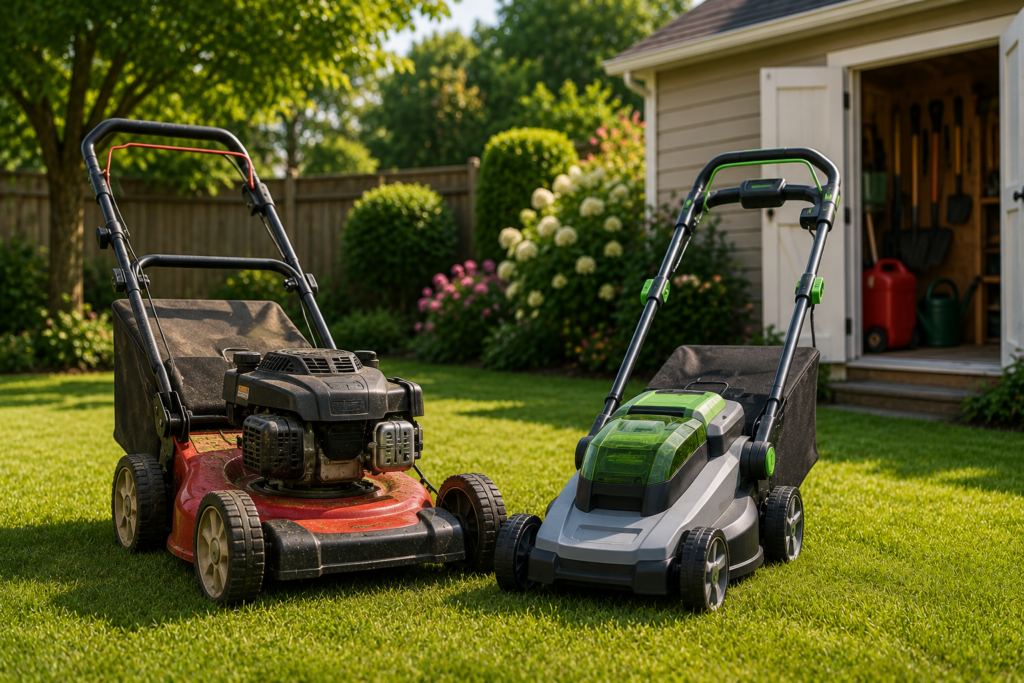
California’s Assembly Bill 1346, signed in 2021, prohibits the sale of new small off-road engines (SOREs), spark-ignition engines rated at or below 25 horsepower, which covers the vast majority of residential gas lawn mowers. This sales ban took effect for these engines manufactured after December 31, 2023, meaning retailers in California can no longer sell new gas-powered mowers using these small engines, though they were permitted to sell through existing inventory. Equipment over 25 horsepower, such as some larger commercial or agricultural equipment, is exempt.
What This Doesn’t Mean
Importantly, this law applies only to new sales, not to existing ownership or use. If you already own a gas mower in California, you don’t need to replace it, and you can continue using it as long as it functions. The restriction specifically prevents buying another new gas mower once your current one reaches the end of its life.
City-Level Rules Can Go Further Than the State
Some California cities have gone beyond the state’s sales-only restriction to actually ban the use of gas equipment, not just its sale. Irvine, for example, restricted residential and small-business use of gas leaf blowers starting January 2025, with a broader gas lawn equipment use ban for residents and small businesses beginning July 2026. If you live in California, it’s worth checking your specific city’s ordinances, since rules vary meaningfully beyond the statewide sales restriction.
Other States Are Watching, But Taking a Different Approach
Outside California, most states haven’t implemented outright sales bans, instead offering rebates and incentives to encourage a voluntary shift toward electric equipment. Texas cities like Denton and Dallas, for example, have moved toward rebate programs for electric lawn equipment purchases rather than banning gas sales outright.
Types of Lawn Mowers: An Overview
| Mower Type | Best For | Power Source | Maintenance Level |
| Push reel mower | Very small, flat lawns | Manual/human power | Minimal |
| Gas push mower | Small to medium yards (where available) | Gasoline | Moderate to high |
| Corded electric mower | Small yards near outlets | Electric (plugged in) | Low |
| Cordless/battery electric mower | Small to medium yards | Rechargeable battery | Low |
| Self-propelled mower | Medium yards, sloped terrain | Gas or electric | Moderate |
| Riding mower | Large properties (0.5+ acres) | Gas or electric | Higher |
| Robotic mower | Any size, hands-off maintenance | Battery, self-charging | Low |
Gas vs Electric: The Decision Framework
Choose Gas If Still Available in Your Area:
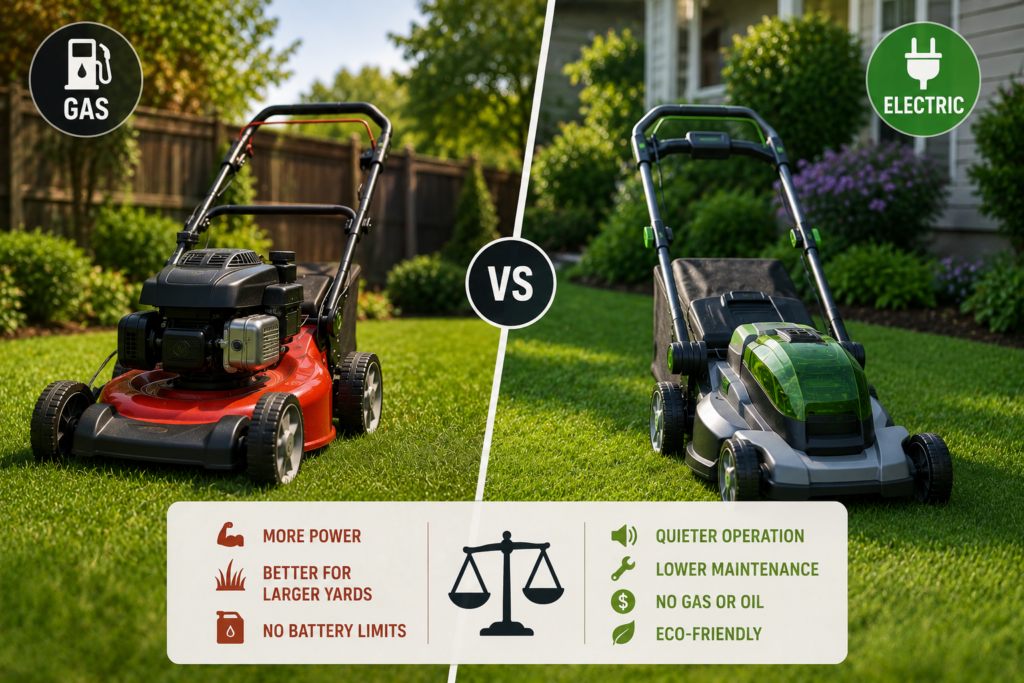
You own more than half an acre to a full acre of land, live in a state without active small-engine sales restrictions, and need continuous, heavy-duty cutting power without stopping to recharge a battery. Gas mowers remain generally more powerful for tackling thick, tall, or overgrown grass in a single pass.
Choose Electric If:
You have a smaller to mid-sized lawn, want lower ongoing costs (no gas purchases, oil changes, or spark plug replacement), prefer quieter operation, or live somewhere with active or pending gas equipment restrictions. Battery-powered mowers have improved considerably in recent years, and for most standard residential lawns, they now perform comparably to gas alternatives.
The Economics Have Shifted
Rising gas prices have made the ongoing cost of fueling a gas mower a more noticeable line item in household budgets than it was in past years, particularly in states with higher fuel costs. Combined with the elimination of oil changes, spark plug replacement, and general small-engine maintenance, electric mowers increasingly offer a genuine cost advantage over the mower’s full ownership period, even though their upfront price is often higher than a comparable gas model.
Choosing Between Corded and Cordless Electric Mowers
Corded Electric Mowers
Ideal for small to medium lawns, corded electric mowers are lightweight, produce zero emissions, and never require charging, since they run directly off household power. Their major limitation is the power cord itself, which restricts your mowing range to the cord’s length and can be genuinely inconvenient to manage around obstacles, trees, and garden beds.
Cordless (Battery) Electric Mowers
Cordless mowers offer considerably more mobility than corded models, powered by rechargeable batteries rather than a physical connection to an outlet. Battery life is the main trade-off, limiting continuous mowing time before requiring a recharge, though this has improved significantly as battery technology has advanced.
What to Look for in Battery-Powered Mowers
For push mowers, voltage is a useful indicator of power, with 40-volt to 80-volt models generally suitable for most residential lawns. Higher voltage generally corresponds to more cutting power and longer runtime, useful for thicker grass or larger yards. It’s also worth checking whether a mower’s battery is compatible with other tools from the same brand, since many manufacturers design battery platforms that work across multiple outdoor power tools, letting you share batteries between your mower, trimmer, and blower.
Self-Propelled vs Push Mowers
Push Mowers
Requiring you to physically push the mower forward, these suit smaller, flatter lawns well and are generally lighter and more affordable than self-propelled alternatives.
Self-Propelled Mowers
These use the mower’s own drivetrain to move forward, requiring you to simply guide and steer rather than push. This is particularly valuable for larger lawns, sloped terrain, or anyone who finds pushing a mower physically tiring, though self-propelled models typically cost more and weigh somewhat more than basic push mowers.
Riding Mowers: When They Make Sense
Riding mowers become genuinely practical once your lawn exceeds roughly half an acre to a full acre, where a push or self-propelled walk-behind mower would require considerably more time and physical effort. Both gas and increasingly capable electric riding mowers are available, though electric riding mowers generally carry a higher upfront price than comparable gas models.
Robotic Mowers: The Rising Hands-Off Option
Robotic mowers have moved from a novelty to a genuinely practical option for many homeowners, operating on a scheduled routine to maintain consistent grass height without any manual pushing or steering involved. Because they’re fully electric, they comply with the strictest noise ordinances and emissions regulations in areas like California and parts of Connecticut. They charge themselves via a docking station and use obstacle avoidance technology to navigate around yard toys, trees, and pets during their scheduled mowing routine.
Robotic mowers work particularly well for homeowners wanting to reclaim weekend time otherwise spent mowing, though they generally require a boundary wire or app-based virtual boundary setup during initial installation, and upfront costs remain higher than a comparable traditional push mower.
Matching Mower Type to Yard Size
| Yard Size | Recommended Mower Type |
| Under 1/4 acre | Push reel mower, corded or cordless electric push mower |
| 1/4 to 1/2 acre | Cordless electric or gas self-propelled push mower |
| 1/2 to 1 acre | Self-propelled mower (gas or high-voltage electric), or entry-level riding mower |
| 1+ acres | Riding mower (gas or electric) |
| Any size, hands-off preference | Robotic mower |
Key Features to Consider Regardless of Type
Cutting Width
Wider cutting decks cover more ground per pass, reducing overall mowing time, but can be less maneuverable around tight garden beds, trees, and obstacles in smaller or more landscaped yards.
Height Adjustment
Look for a mower with adjustable cutting height settings, letting you match the recommended mowing height for your specific grass type rather than being locked into a single fixed setting.
Mulching, Bagging, and Side Discharge
Many mowers offer multiple grass clipping disposal options: mulching (finely chopping clippings back into the lawn as natural fertilizer), bagging (collecting clippings for disposal), and side discharge (expelling clippings out the side). Mulching capability is worth prioritizing if you want to reduce lawn waste and naturally return nutrients to your soil.
Terrain and Slope Handling
For sloped or uneven yards, self-propelled models with good traction and stability, along with sufficiently large wheels, handle terrain changes considerably more comfortably than basic push mowers.
Budget Planning
Mower prices vary considerably by type, power source, and features. Basic push reel mowers and entry-level corded electric mowers represent the most affordable starting point for small, flat lawns. Cordless electric and gas self-propelled mowers occupy the mid-range, suited to most standard residential lawns. Riding mowers and robotic mowers represent the higher end of the price range, reflecting their added capability for larger lawns or fully automated maintenance.
Common Mistakes to Avoid
- Choosing gas without checking local regulations, particularly in California or other areas with active or pending small-engine restrictions
- Underestimating battery runtime needs for larger lawns, resulting in multiple recharge interruptions during a single mow
- Buying a push mower for a sloped or large property, leading to excessive physical strain and longer mowing times
- Overlooking cutting height adjustability, ending up unable to match the ideal mowing height for your specific grass type
- Ignoring battery platform compatibility, missing the chance to share batteries across a mower and other outdoor power tools from the same brand
Conclusion
Choosing the right lawn mower means weighing yard size, terrain, and budget against a genuinely shifting regulatory and cost landscape, particularly if you live in California or another area moving toward electric-only lawn equipment. For most standard residential lawns, a quality battery-powered electric mower now offers a compelling combination of power, convenience, and lower long-term cost, while larger properties may still benefit from a gas or electric riding mower. Whatever you choose, check your local regulations first, match the mower type to your actual yard size and terrain, and prioritize the features, cutting width, height adjustability, and mulching capability, that genuinely fit how you maintain your lawn.
Frequently Asked Questions
1- Can I still buy a gas lawn mower in California?
New gas-powered mowers using small off-road engines can no longer be sold as new in California following Assembly Bill 1346, though existing gas mowers can continue to be used, and some cities have additional restrictions beyond the state sales ban.
2- Is an electric lawn mower as powerful as a gas mower?
For most standard residential lawns, modern battery-powered mowers, particularly higher-voltage models (60V and above), now perform comparably to gas mowers. Gas mowers still generally offer an edge for very thick, tall, or overgrown grass on larger properties.
3- What size lawn mower do I need for a small yard?
For lawns under a quarter acre, a corded or cordless electric push mower with a standard cutting width typically provides more than enough power and coverage without the added cost or complexity of a self-propelled or riding model.
4- Are robotic lawn mowers worth the investment?
For homeowners prioritizing hands-off, consistent lawn maintenance and willing to pay a higher upfront cost, robotic mowers offer genuine convenience, particularly in areas with strict noise or emissions regulations.
5- How long does a battery-powered mower run before needing a recharge?
This varies significantly by model and battery voltage, but many mid-range battery mowers offer enough runtime to mow a standard quarter-to-half-acre lawn on a single charge, with larger yards potentially requiring a spare battery.
6- Do other states have gas lawn equipment bans like California?
Currently, California’s ban is the most comprehensive in the country. Other states and cities have generally taken an incentive-based approach, offering rebates for electric equipment rather than banning gas sales outright, though this could change over time.
7- What’s the difference between self-propelled and push mowers?
Push mowers require you to physically push the mower forward using your own effort, while self-propelled mowers use the mower’s own drivetrain to move, requiring you to simply guide and steer rather than push.