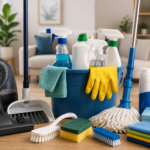
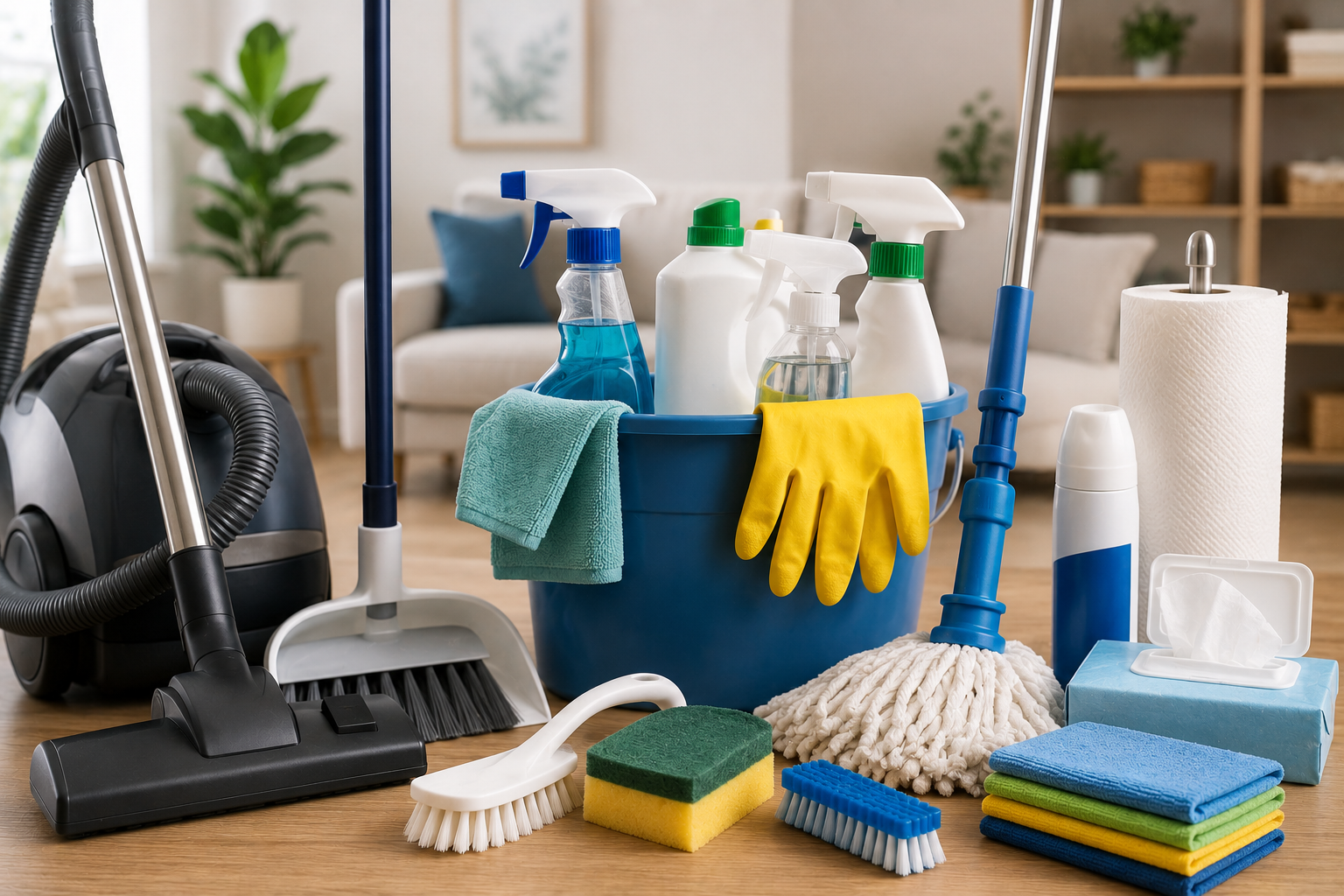
Walking down the cleaning aisle can feel genuinely overwhelming, dozens of sprays, pads, brushes, and gadgets, each one promising to fix a different mess. The good news is that most households only need around a dozen core tools to handle 90 percent of routine cleaning, plus a handful of room-specific extras for the tougher jobs.
This guide breaks down the essential cleaning tools every home actually needs, organized by whole-home basics and room-specific essentials, so you can build a genuinely functional cleaning kit without wasting money on gadgets you’ll never use. We’ll also cover microfiber cloths, all-purpose cleaners, and practical buying advice for American homeowners building or refreshing their cleaning supplies.
By the end, you’ll have a clear, uncluttered list you can actually shop from, rather than guessing what’s genuinely necessary versus what’s just clever marketing.
What Does Every Home Actually Need?
A genuinely efficient home cleaning kit covers an all-purpose cleaner, microfiber cloths, glass cleaner, disinfectant spray, a vacuum, a mop, and a handful of basic tools like a broom and dustpan, supplemented with room-specific extras like a degreaser for the kitchen and mildew remover for the bathroom. These core dozen items handle the overwhelming majority of everyday cleaning tasks across your entire home.
Beyond this baseline, additional tools are worth adding only as specific needs come up, rather than stocking up on specialty products before you actually know you’ll use them.
The Whole-Home Essentials Every Cabinet Needs
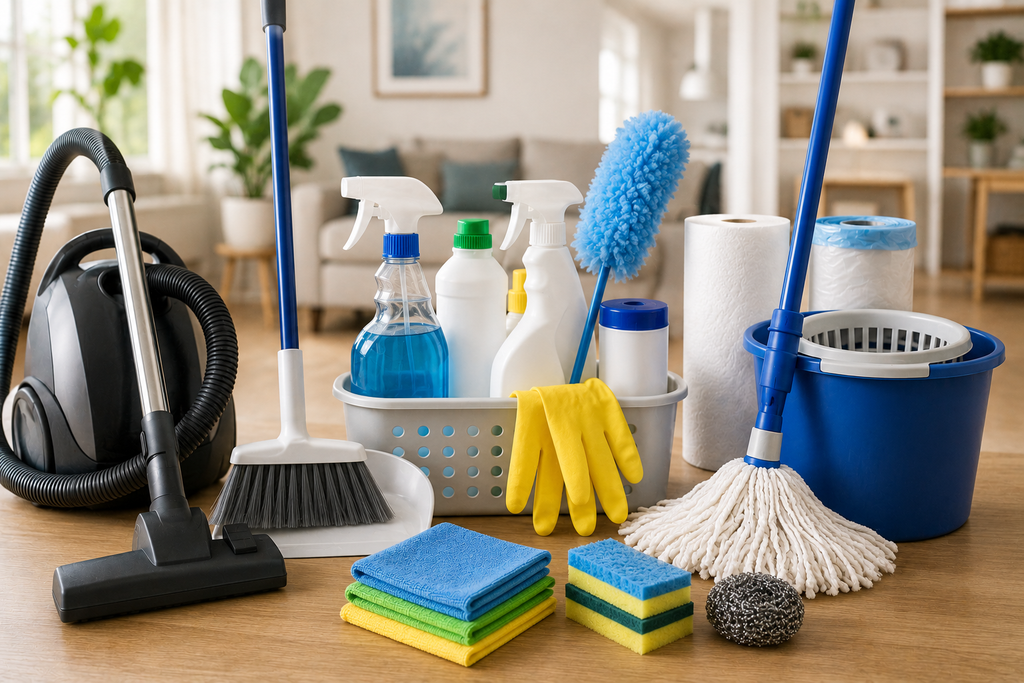
These items form the true foundation of any home cleaning kit, used across virtually every room rather than being tied to one specific space.
Microfiber Cloths
Microfiber cloths are genuinely the single most versatile tool in any cleaning kit, used in literally every room of the house. Made mostly from polyester in a tight knit, they trap dust and absorb moisture without leaving lint behind, working well dry for dusting or lightly dampened with water or a cleaning solution for wiping surfaces. They’re particularly valuable for glass and mirrors, since they clean streak-free in a way paper towels often can’t match.
All-Purpose Cleaner
A single quality all-purpose cleaner spray handles counters, sinks, and most sealed surfaces throughout your home, making it one of the most-used products in any cleaning routine. This one item alone can cover a surprising share of your daily wipe-down needs.
Vacuum Cleaner
A reliable vacuum with attachments for corners, upholstery, and various floor types is essential for carpets, rugs, and hard flooring alike. This is genuinely one of the higher-investment items on the list, but it’s also one of the most frequently used.
Broom and Dustpan
Even homes with a good vacuum still need a broom and dustpan for quick cleanups, particularly in kitchens where crumbs and spills happen daily and don’t always warrant pulling out the vacuum.
Mop and Bucket
A mop, whether traditional, sponge, or spray style, paired with a bucket remains essential for hard flooring throughout the home. If you’re using a traditional string or microfiber mop, a two-bucket system, one for clean rinse water and one for wringing, produces noticeably better results than a single bucket alone.
Extendable Duster
An extendable duster reaches ceiling fans, high shelves, and light fixtures regardless of your height, handling the dust that accumulates in spots most people simply can’t reach with a standard cloth.
Sponges and Scrubby Pads
A sponge with a scrubbing side handles both everyday dish washing and tougher grime in the kitchen and bathroom alike, making it genuinely useful well beyond just the sink.
Rubber Gloves
Rubber gloves protect your hands during tougher cleaning jobs, particularly when working with stronger cleaning solutions or handling genuinely dirty tasks like scrubbing a toilet.
Disinfectant Spray or Wipes
Disinfecting wipes or spray handle high-touch surfaces like doorknobs, light switches, and countertops, though bleach-based formulas should be avoided on food-contact surfaces unless specifically labeled food-safe.
The EPA maintains a registered list of disinfectants proven effective against specific germs and viruses worth checking if you want confirmed effectiveness rather than relying on marketing claims alone.
Trash Bags
A properly sized supply of trash bags for both your main kitchen can and smaller bathroom or bedroom bins keeps this basic task from becoming a recurring annoyance.
Whole-Home Cleaning Kit Checklist
| Tool | Primary Use |
| Microfiber cloths | Dusting, wiping, glass and mirrors |
| All-purpose cleaner | Counters, sinks, sealed surfaces |
| Vacuum cleaner | Carpets, rugs, hard floors, upholstery |
| Broom and dustpan | Quick sweeps, kitchen crumbs |
| Mop and bucket | Hard flooring |
| Extendable duster | Ceiling fans, high shelves |
| Sponges/scrubby pads | Kitchen and bathroom scrubbing |
| Rubber gloves | Hand protection during tougher jobs |
| Disinfectant spray/wipes | High-touch surfaces |
| Trash bags | Daily waste management |
Kitchen-Specific Cleaning Tools
The kitchen deals with grease, food residue, and appliances that need their own specific approach beyond the whole-home basics.
- Dish soap and a dedicated dish sponge or scrubber (plus a backup) handle daily dishwashing, while a dish drying rack or mat keeps counters from becoming a permanent puddle zone.
- Degreaser is worth keeping specifically for the stove, range hood, and backsplash, where standard all-purpose cleaner often struggles against baked-on grease.
- Stainless steel cleaner keeps appliance surfaces looking genuinely polished; for a simple DIY approach, a microfiber cloth with a water-and-vinegar solution works well too, applied and wiped with the grain of the steel for the best finish, while harsh chemicals like ammonia or bleach should generally be avoided on this surface.
- Glass cleaner handles the oven door, microwave front, and any glass stovetop, areas that show smudges and fingerprints more visibly than most other kitchen surfaces.
- Baking soda doubles as a deodorizer for the refrigerator and a gentle scrubbing agent for tougher kitchen stains, making it one of the more versatile natural cleaning staples worth keeping stocked.
Bathroom-Specific Cleaning Tools
Bathrooms combine moisture, soap scum, and germs in a way that calls for a few dedicated tools beyond the general kit.
- A dedicated toilet brush and bowl cleaner, used only for the toilet, helps prevent cross-contaminating germs to other bathroom surfaces, a genuinely important hygiene distinction worth maintaining.
- A squeegee works streak-free wonders on mirrors and glass shower doors, and running one across tile or fiberglass shower walls after each use meaningfully reduces the soap scum and water spots that otherwise build up between deeper cleanings.
- Mildew remover addresses the grout, caulk, and shower corners where bathroom humidity consistently creates the right conditions for mold and mildew growth.
- A mini grout brush reaches into tile grout lines that standard sponges and cloths simply can’t effectively clean, particularly important in showers and around bathroom flooring.
Living Room and Bedroom Cleaning Tools
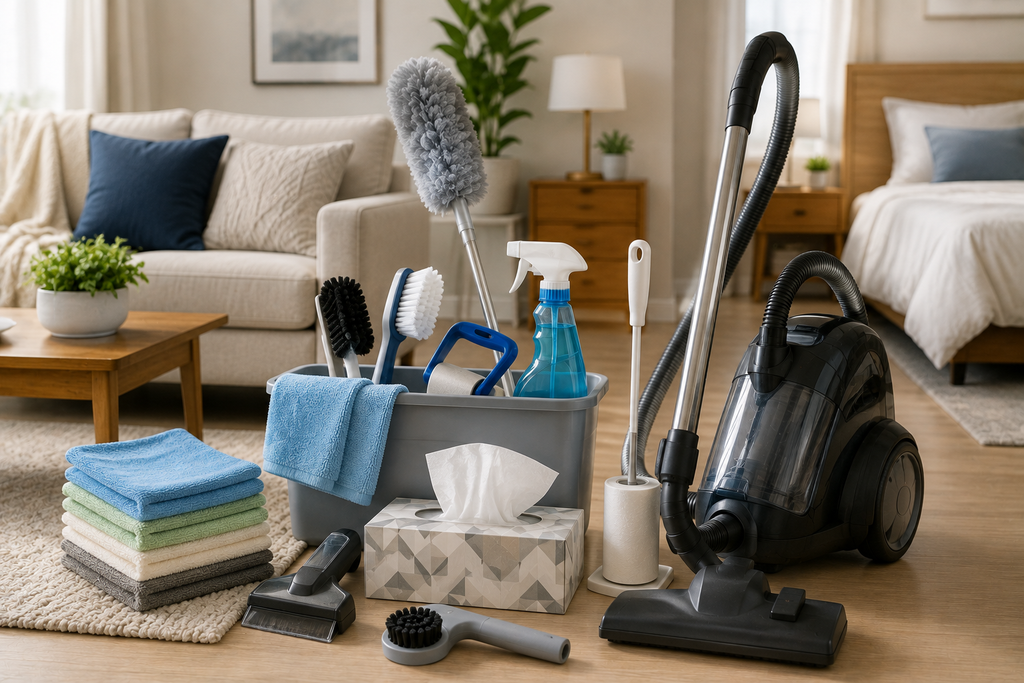
These lower-mess spaces still benefit from a few specific tools tailored to furniture, fabric, and softer surfaces.
- Upholstery attachments for your vacuum handle couches, chairs, and mattresses, pulling out embedded dust and debris that a standard floor attachment can’t reach effectively.
- Fabric-safe spot cleaner addresses spills on upholstery and carpet before they set permanently, and it’s worth testing any new product in an inconspicuous area first to confirm it won’t discolor the fabric.
- A soft-bristle duster works well for delicate items like lampshades, picture frames, and decorative objects that a standard microfiber cloth might handle too roughly.
Comparing Room-Specific Tool Priorities
| Room | Must-Have Extras |
| Kitchen | Degreaser, stainless steel cleaner, dish soap, baking soda |
| Bathroom | Dedicated toilet brush, squeegee, mildew remover, grout brush |
| Living room/Bedroom | Upholstery vacuum attachment, fabric spot cleaner, soft duster |
Natural and Eco-Friendly Cleaning Alternatives
For homeowners wanting to reduce chemical use, a few natural staples cover a surprising range of cleaning tasks effectively.
- Baking soda works well for scrubbing surfaces and tackling tougher stains in both the kitchen and bathroom, offering gentle abrasive power without scratching most sealed surfaces.
- Vinegar functions as a genuinely effective natural disinfectant and works particularly well for removing mineral deposits, making a simple vinegar-and-water mix a solid go-to for streak-free window and glass cleaning.
- Essential oils, like lavender or tea tree, add pleasant scent while offering some natural antibacterial properties, making them a popular addition to homemade cleaning solutions for households wanting to minimize synthetic fragrance.
- Reusable, biodegradable options: Swapping paper towels for reusable microfiber cloths, and choosing biodegradable sponges over standard plastic-heavy versions, reduces both ongoing cost and household waste over time.
Building Your Cleaning Kit on a Budget
You don’t need to buy everything on this list at once, and prioritizing strategically gets you most of the way to a fully functional kit without overspending upfront.
- Start with the core dozen: All-purpose cleaner, microfiber cloths, a vacuum, a mop and bucket, a broom and dustpan, and disinfectant wipes cover the overwhelming majority of routine cleaning needs on their own.
- Add room-specific items as needed: Rather than buying every specialty cleaner at once, add degreaser, mildew remover, and other targeted products only once you’ve identified a genuine recurring need for them.
- Invest more in frequently used items: A quality vacuum and a good set of microfiber cloths are worth spending a bit more on, since you’ll use them constantly, while occasional-use specialty tools can reasonably stay budget-friendly.
- Buy in bulk for consumables: Trash bags, sponges, and microfiber cloths are used up or wear out regularly, so buying these in larger quantities when on sale genuinely saves money over time.
Common Cleaning Tool Mistakes to Avoid
- Using one sponge for everything: Cross-contaminating a dish sponge with bathroom cleaning tasks spreads germs between spaces that should stay separate.
- Skipping a dedicated toilet brush: Using a general scrub brush on the toilet and then elsewhere in the bathroom creates an unnecessary hygiene risk.
- Overbuying specialty products: Many single-purpose cleaning gadgets duplicate what a good all-purpose cleaner and microfiber cloth already handle perfectly well.
- Neglecting to replace worn tools: A mop head that’s stopped absorbing properly, or a vacuum filter that’s clogged, quietly reduces cleaning effectiveness even though the tool still looks functional.
- Ignoring surface-specific compatibility: Using harsh chemicals like ammonia or bleach on stainless steel, for example, can dull or damage the finish rather than cleaning it properly.
Start With the Core Dozen, Then Build Out
Building an effective home cleaning kit doesn’t require filling an entire cabinet with specialty products; it starts with a core set of versatile tools like microfiber cloths, an all-purpose cleaner, a reliable vacuum, and a mop, then expands with a handful of room-specific essentials for the kitchen and bathroom’s tougher jobs. Prioritizing quality where you’ll use a tool constantly, while keeping occasional-use items simple and budget-friendly, gives you a genuinely functional kit without unnecessary clutter or expense. With this foundation in place, you’ll be equipped to handle nearly any cleaning task your home actually throws at you.
Frequently Asked Questions
1- What’s the single most useful cleaning tool for a home?
Microfiber cloths are widely considered the most versatile tool, used in nearly every room for dusting, wiping, and streak-free glass cleaning without needing a cleaning solution every time.
2- Do I really need a separate toilet brush?
Yes, keeping a dedicated toilet brush used only for that purpose helps prevent spreading germs to other bathroom surfaces during regular cleaning.
3- Are natural cleaning alternatives actually effective?
Yes, baking soda and vinegar in particular are genuinely effective for many everyday cleaning tasks, including deodorizing, mild scrubbing, and streak-free glass cleaning.
4- How many cleaning products does a typical home actually need?
Most households only need about a dozen core supplies to handle 90 percent of routine cleaning, plus a few room-specific items for tougher, more specialized jobs.
5- Is it worth buying a squeegee for the bathroom?
Yes, a quick squeegee pass on shower walls after each use meaningfully reduces soap scum and water spots, cutting down on the effort needed during deeper cleaning sessions.
6- Should I buy specialty cleaners for every surface in my home?
Not necessarily. A quality all-purpose cleaner handles most sealed surfaces well, and specialty products are worth adding only for specific problem areas like grease, mildew, or stainless steel.