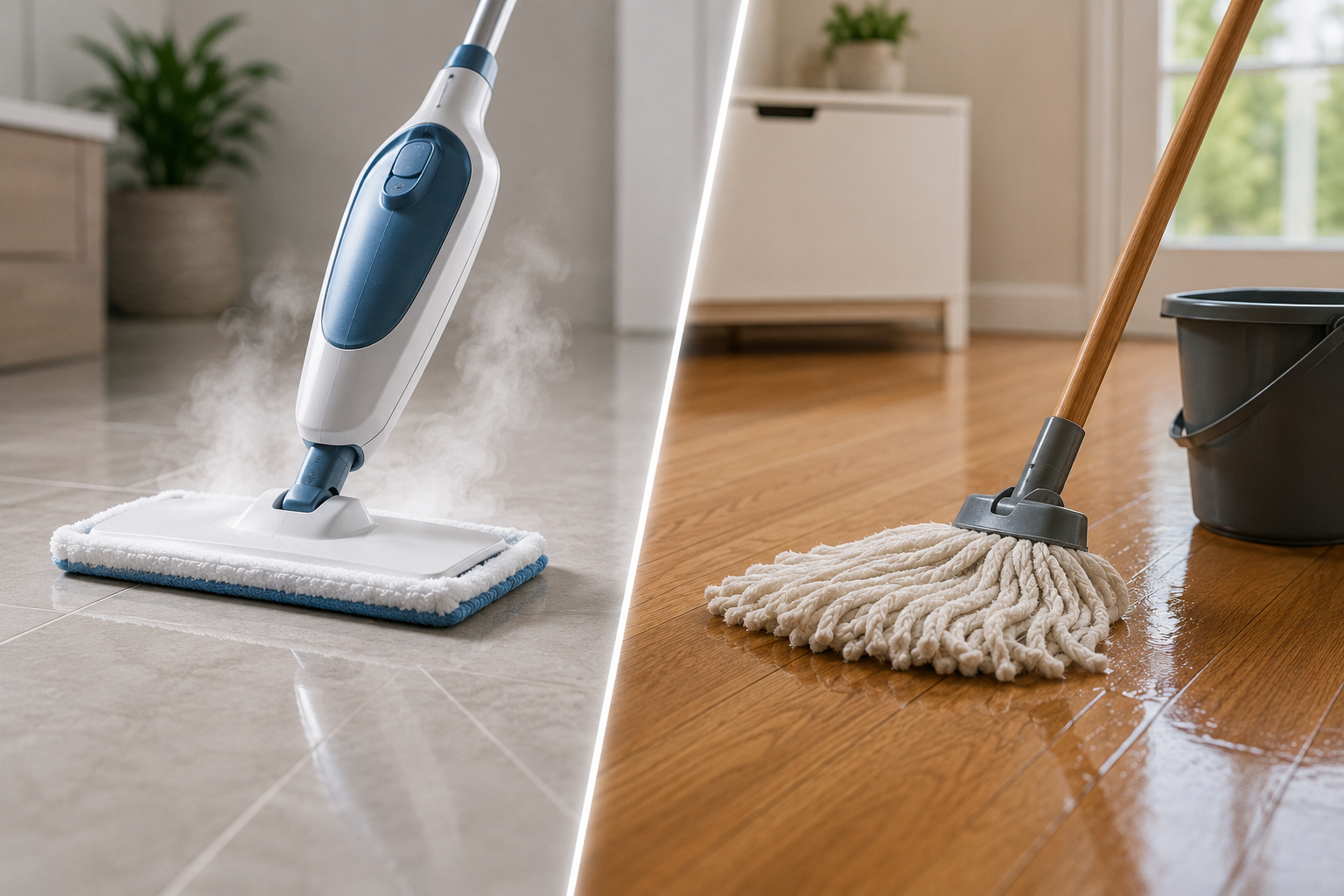
Steam mops promise chemical-free sanitizing power, while traditional mops offer the reliable, go-anywhere simplicity homeowners have trusted for generations. Neither one is universally better, since the right answer depends almost entirely on what your floors are actually made of and what you’re trying to accomplish with each cleaning session.
This guide compares steam mops and traditional mops across sanitizing power, floor compatibility, cost, and effort, helping you decide which fits your home. We’ll also cover sealed hardwood floors, bacteria elimination, and practical buying advice for American homeowners choosing between these two cleaning methods.
By the end, you’ll know exactly which mop suits which floor and which cleaning job, rather than assuming one option should replace the other entirely.
Which Mop Actually Wins?
Steam mops win decisively on sanitizing power, using heat above 200°F to kill up to 99.9 percent of household bacteria without any chemicals, making them excellent for sealed tile, sealed hardwood, and households dealing with pets, kids, or allergy concerns. Traditional mops win on versatility and safety, since they work on virtually any flooring type, including unsealed wood, waxed floors, and delicate laminate that steam can genuinely damage.
Rather than one method replacing the other, most homes actually benefit from having both: a steam mop for sanitizing sealed hard floors, and a traditional mop for absorbing spills, handling delicate surfaces, and general everyday cleanup.
How Each Mop Actually Cleans Your Floor
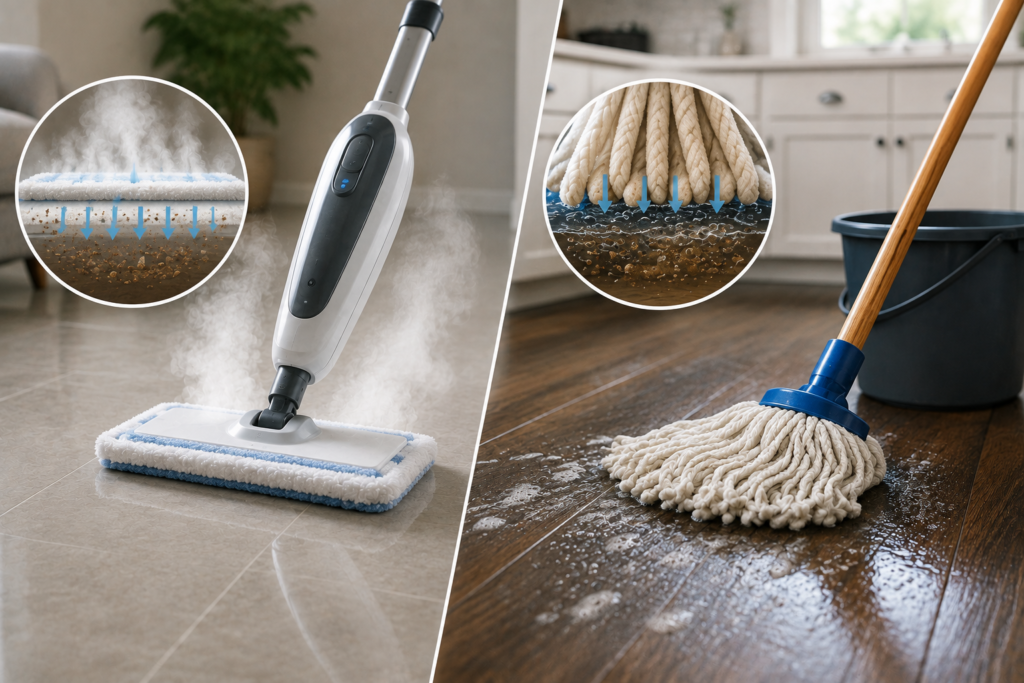
Understanding the mechanics behind each method explains why they perform so differently depending on the situation.
How Steam Mops Work
A steam mop heats water internally, then releases pressurized steam, typically in the 200 to 300°F range, through a microfiber pad pressed against your floor. The heat loosens dirt and breaks down grime and grease, while the pad absorbs the loosened debris, and the whole process happens without needing any chemical cleaning solution at all.
How Traditional Mops Work
A traditional mop relies on mechanical action and cleaning solution rather than heat, requiring you to dip a string or microfiber mop head into a bucket of water mixed with detergent, wring it out, and physically scrub the floor. Effectiveness here depends heavily on technique, water cleanliness, and the specific cleaning product used, rather than a built-in heating mechanism doing the work for you.
Round One: Sanitizing Power
If killing germs and bacteria without chemicals is your top priority, this category isn’t really a close contest.
According to the EPA, steam cleaners reaching 200°F or higher can kill up to 99.9 percent of household bacteria without any chemical assistance, a sanitizing method particularly valuable in homes with pets, kids, or allergy concerns. Steam also deodorizes as it sanitizes, neutralizing odor-causing bacteria and organic compounds at the source rather than simply masking smells the way many cleaning sprays do.
Traditional mopping can sanitize effectively too, but only when paired with the right cleaning products and proper technique, and it generally requires considerably more effort to reach comparable results. There’s also a genuine hygiene downside to traditional mopping worth knowing: unless you’re using a proper two-bucket system, you’re often rinsing your mop head in the same dirty water you just picked dirt up in, effectively redistributing some of that grime back across the floor rather than fully removing it.
Round Two: Which Floors Can Actually Handle Each Method
This is genuinely the most important practical distinction between the two, and getting it wrong can cause real, sometimes irreversible damage to your flooring.
Floors That Handle Steam Well
Sealed tile, sealed and properly finished hardwood, and sealed grout generally tolerate steam mopping well, since the sealed surface prevents moisture from penetrating into the material underneath. Steam is particularly effective on textured tile and deep grout lines specifically, areas where traditional mopping often struggles to fully reach and lift embedded grime.
Floors Steam Can Genuinely Damage
Unsealed hardwood, laminate, and luxury vinyl plank are all at real risk from steam mopping. Wood is naturally porous, and the combination of heat and pressure from steam can force moisture deep into the wood grain, eventually causing warping and stripping the floor’s finish over repeated use. Laminate and vinyl carry a different risk, since high heat can soften or melt the adhesives holding these materials together, causing peeling or bubbling that isn’t reversible once it happens.
A Simple Test to Check Your Floor
If you’re unsure whether your specific floor is properly sealed, place a few drops of water directly on the surface and watch what happens: if the water beads up on top, your floor is sealed and generally steam-safe, but if the water visibly absorbs into the material, steam mopping should be avoided entirely on that surface.
Where Traditional Mops Clearly Win
Traditional mops remain safe for almost any flooring type when used correctly, including unsealed wood, waxed floors, and other moisture-sensitive surfaces that steam simply isn’t compatible with. If you’re at all uncertain about your floor’s sealing status or material composition, a traditional mop remains the genuinely safer default choice.
Comparing Floor Compatibility
| Floor Type | Steam Mop Safe? | Traditional Mop Safe? |
| Sealed ceramic/porcelain tile | Yes | Yes |
| Sealed hardwood | Generally yes, with caution | Yes |
| Unsealed hardwood | No | Yes |
| Laminate | No | Yes, with minimal water |
| Luxury vinyl plank (LVP) | No | Yes |
| Waxed floors | No | Yes |
| Cracked tile or unsealed grout | No | Yes |
Round Three: Handling Spills and Loose Debris
Sanitizing power isn’t the only job a mop needs to do, and this is an area where traditional mops genuinely outperform steam.
Traditional mops are considerably better at absorbing large liquid spills and gathering loose debris like crumbs, hair, or dirt directly into the mop head as you clean. Steam mops, by contrast, cannot pick up loose debris at all, meaning you must sweep or vacuum before steam mopping, or the pad quickly becomes saturated and starts pushing dirt into grout lines rather than lifting it away.
This distinction matters practically: a steam mop functions best as a finishing and sanitizing tool after the floor is already reasonably clean, not as a first-pass cleanup tool for a messy floor covered in crumbs or standing liquid.
Round Four: Effort, Speed, and Drying Time
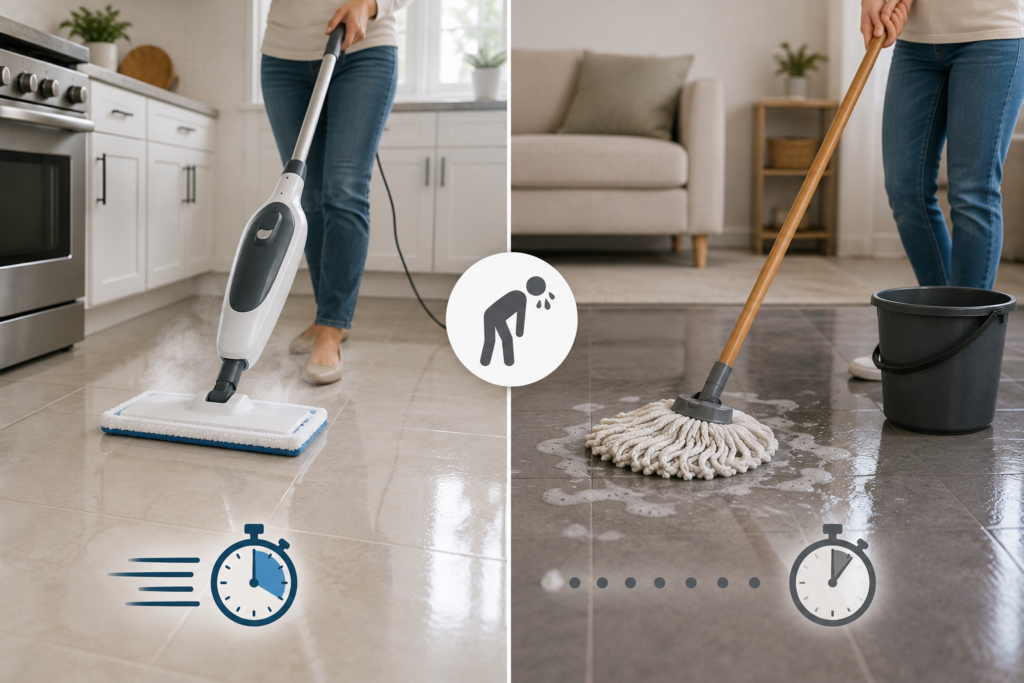
Beyond cleaning power, the physical experience of using each mop differs meaningfully, and it’s worth considering your own time and energy.
Steam mops require very little physical exertion, gliding across the floor with the heat doing most of the actual cleaning work, and setup is simple: fill the tank, plug it in, and wait roughly 30 to 90 seconds for it to heat up before you start. Steam mops also dry considerably faster than traditional mopping, typically within one to five minutes, since they use minimal standing water rather than saturating the floor.
Traditional mopping requires more physical scrubbing and genuine elbow grease, particularly for dried-on grime or stubborn stains, and floors typically stay damp for 15 to 30 minutes or longer afterward depending on airflow and how much water was used.
Round Five: Cost Comparison
Upfront and ongoing costs differ considerably between these two cleaning methods, and it’s worth factoring both into your decision.
A basic mop and bucket setup typically costs $20 to $40, compared with $60 to $300 or more for a quality steam mop, making traditional mopping the clearly more affordable starting point. However, steam mops can offset some of that higher upfront cost over time by eliminating the ongoing need to purchase chemical cleaning solutions, and they don’t require replacing detergent bottles the way traditional mopping does.
Additional cost considerations:
- Traditional mopping works during power outages, since it requires no electricity at all
- Steam mops require an accessible electrical outlet and add a small amount to your electricity usage
- Steam mop pads need regular washing and periodic replacement, while traditional mop heads also wear out and need occasional replacement
Round Six: Maintenance Requirements
Ongoing upkeep differs between the two methods, and this is worth factoring in if you want a genuinely low-maintenance cleaning routine.
Traditional mops require less maintenance overall, thanks to their simpler design, generally needing only occasional rinsing and periodic mop head replacement. Steam mops need more consistent care, including regularly washing the steam pads, emptying the water tank after each use, and periodic deep cleaning of the internal components to prevent bacteria buildup and maintain optimal steam output over time.
Comparing Steam Mops and Traditional Mops at a Glance
| Factor | Steam Mop | Traditional Mop |
| Sanitizing power | Kills up to 99.9% of bacteria | Effective only with proper chemicals/technique |
| Floor compatibility | Sealed tile, sealed hardwood only | Nearly all floor types |
| Spill/debris pickup | Cannot pick up debris, must sweep first | Absorbs spills and loose debris well |
| Effort required | Low, glides with minimal scrubbing | Higher, requires physical scrubbing |
| Drying time | 1–5 minutes | 15–30+ minutes |
| Upfront cost | $60–$300+ | $20–$40 |
| Ongoing cost | Pad replacement, no chemicals needed | Chemical cleaners, mop head replacement |
| Power required | Yes, electrical outlet | No |
| Maintenance | Higher, tank and pad care | Lower, simple rinse and dry |
Which Households Benefit Most From Each Option
Matching mop type to your specific home and floors matters more than picking based on general popularity.
- Choose a steam mop if: Your home is mostly sealed tile or sealed hardwood, you want chemical-free sanitizing, or you’re managing pet messes, allergies, or young kids where germ elimination genuinely matters.
- Choose a traditional mop if: Your floors include unsealed wood, laminate, or luxury vinyl plank, you’re on a tighter budget, or you need a tool that reliably absorbs spills and picks up loose debris in one pass.
- Consider owning both if: You have mixed flooring throughout your home, using a steam mop for sanitizing sealed surfaces like kitchen and bathroom tile, while keeping a traditional mop on hand for delicate floors, spills, and general everyday cleanup.
Practical Buying Advice
A few specific considerations help you choose confidently, regardless of which mop type you lean toward.
- Always check your flooring manufacturer’s steam guidance first: Before ever using a steam mop, confirm your specific hardwood, laminate, or vinyl product is explicitly rated as steam-safe, since manufacturer warranties can be voided by improper steam use.
- Sweep or vacuum before steam mopping, every time: Since steam mops can’t pick up loose debris, skipping this step just pushes dirt around rather than genuinely cleaning your floor.
- Use a two-bucket system with traditional mopping: One bucket for clean rinse water and one for wringing out dirty mop water prevents redistributing grime back onto your floor.
- Don’t skip steam mop maintenance: Regularly washing pads and emptying the tank after each use prevents the bacteria buildup that would otherwise undermine the entire sanitizing benefit you’re trying to achieve.
- Match cleaning solution to floor type for traditional mopping: Using the wrong chemical cleaner on a specific floor material can cause residue buildup or damage over time, so check compatibility before applying anything beyond plain water.
Match the Mop to Your Floor, Not the Trend
Choosing between a steam mop and a traditional mop ultimately comes down to your specific flooring materials and what you’re prioritizing in a cleaning session, sanitizing power or universal versatility. Steam mops win decisively on chemical-free bacteria elimination for sealed tile and hardwood, while traditional mops remain the safer, more versatile choice for unsealed wood, laminate, vinyl, and general spill cleanup. Many homes ultimately do best with both tools working together, letting each one handle the specific floors and cleaning tasks it was genuinely built for, rather than forcing one method to do a job it was never designed to handle safely.
Frequently Asked Questions
1- Do steam mops really kill germs without chemicals?
Yes, steam reaching 200°F or higher can kill up to 99.9 percent of common household bacteria through heat alone, without needing any chemical cleaning solution.
2- Can I use a steam mop on hardwood floors?
Only if the hardwood is properly sealed and your manufacturer explicitly permits steam cleaning; unsealed or improperly sealed wood can warp and lose its finish from steam exposure.
3- Is a steam mop safe for laminate or vinyl flooring?
Generally no, since the high heat from steam can soften or melt the adhesives used in laminate and luxury vinyl plank, causing peeling or bubbling over time.
4- Do I still need to sweep before using a steam mop?
Yes, steam mops cannot pick up loose debris like crumbs or dirt, so sweeping or vacuuming first is essential to avoid pushing that debris into grout lines instead of removing it.
5- Which mop is better for households with pets?
Steam mops offer a genuine advantage for sanitizing sealed floors after pet messes, though a traditional mop is still needed first to absorb liquid spills before steam finishes the sanitizing job.
6- Is it worth owning both a steam mop and a traditional mop?
For many households with mixed flooring, yes, since each tool handles different floor types and cleaning tasks better than the other.