If you’re dealing with sneezing, itchy eyes, or a home that never quite smells fresh despite your best cleaning efforts, an air purifier can genuinely help but only if you choose one that’s actually built for the job. Not every “air purifier” on the market lives up to the marketing on the box, and picking the wrong one means spending money without solving the problem.
The short answer: For allergies and pet households, prioritize a True HEPA filter (not “HEPA-type” or “HEPA-style,” which are marketing terms, not certified performance standards), a CADR (Clean Air Delivery Rate) that matches or exceeds your room’s square footage, and a washable pre-filter plus activated carbon stage to handle pet hair and odor. Beyond that, noise level at low speed, filter replacement cost, and proper room sizing all matter more than extra smart features.
This guide breaks down exactly what to look for, what the specs actually mean, and how to size and choose an air purifier that genuinely improves your home’s air not just one that looks impressive on a spec sheet.
Why Not All Air Purifiers Are Created Equal
The air purifier market is full of products that look similar but perform very differently. Some units labeled with vague terms like “HEPA-type” or “99% filtration” don’t meet the actual performance standards that make a real difference for allergies or pet dander. Understanding the core specs HEPA grade, CADR, and ACH is what separates a purifier that genuinely cleans your air from one that just moves it around the room.
The Most Important Spec: True HEPA Filtration
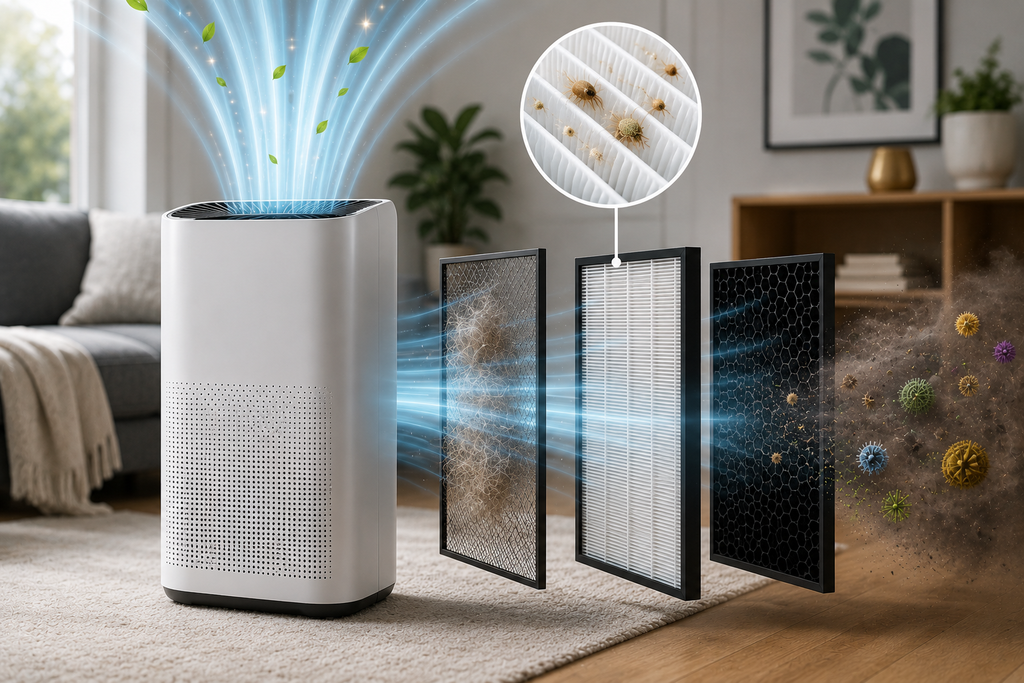
HEPA stands for High-Efficiency Particulate Air, and it’s the filtration standard most closely tied to effectively removing allergens, pet dander, and fine particles from the air.
True HEPA vs. “HEPA-Type”
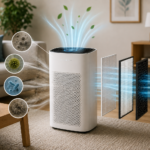
- True HEPA (sometimes labeled H13 HEPA) is a certified standard, capturing at least 99.97% of particles as small as 0.3 microns.
- “HEPA-type,” “HEPA-style,” or similar phrasing are marketing terms, not certified classifications — these filters can capture meaningfully fewer particles, sometimes only around 85%, despite sounding similar to True HEPA.
Buying tip: Look specifically for the words “True HEPA” or “H13 HEPA” on the product listing, and don’t assume the word “HEPA” alone guarantees the certified standard. Third-party certifications, like AHAM VERIFIDE, add another layer of confidence that the performance claims are independently verified.
Why HEPA Matters Specifically for Pets
Pet dander is a relatively large particle (roughly 5 to 10 microns), which means any properly certified True HEPA filter captures it effectively. The bigger challenge with pets isn’t whether HEPA can catch dander it’s keeping the filter system working efficiently as pet hair and dander accumulate faster than in a typical household.
The EPA backs this up directly it recommends using “an air cleaner with a HEPA filter” specifically to reduce common asthma triggers like pet dander, dust mite droppings and mold spores, noting that several studies using portable HEPA cleaners have shown measurable, if modest, improvements in respiratory health.
Understanding CADR (Clean Air Delivery Rate)
CADR measures how much filtered air a purifier produces per minute, expressed in cubic feet per minute (CFM). It’s arguably the single most useful number for comparing purifiers, since it reflects real-world performance rather than just filter type.
How CADR Relates to Room Size
- General household use: A common guideline is matching CADR to roughly two-thirds of your room’s square footage.
- Allergies or pet households: A more effective approach is matching CADR closely to your room’s actual square footage, aiming for more complete air turnover.
- Asthma or severe allergies: Aim for a higher number of air changes per hour (see below), since more frequent air turnover offers a more meaningful benefit for sensitive individuals.
CADR Guideline by Room Size
| Room Size | Minimum CADR (General Use) | Recommended CADR (Allergies/Pets) |
| 150 sq ft | ~100 CFM | ~150 CFM |
| 300 sq ft | ~200 CFM | ~300 CFM |
| 500 sq ft | ~330 CFM | ~500 CFM |
A note on manufacturer coverage claims: Some listed “covers up to X square feet” claims are based on just one air change per hour, which may not be sufficient for allergy or pet-related concerns. Checking the specific CADR number not just the square footage claim gives you a more accurate picture of real performance.
Understanding ACH (Air Changes per Hour)
ACH tells you how many times per hour a purifier can cycle all the air in a given room through its filter essentially, how thoroughly and how often the air gets cleaned, not just how much volume the unit is rated to cover.
- Standard/healthy adult use: Roughly 2 air changes per hour is often considered a baseline.
- General allergy relief: Aim for 4 to 6 ACH.
- Asthma or more severe sensitivities: Aim for 4 to 8 ACH for more meaningful symptom relief.
Why this matters: A unit that just barely meets the minimum CADR for a room’s square footage often won’t deliver the higher ACH that allergy or asthma sufferers actually benefit from. If allergies are a primary concern, it’s worth sizing up rather than choosing the bare minimum.
What to Look for Specifically With Pets in Mind
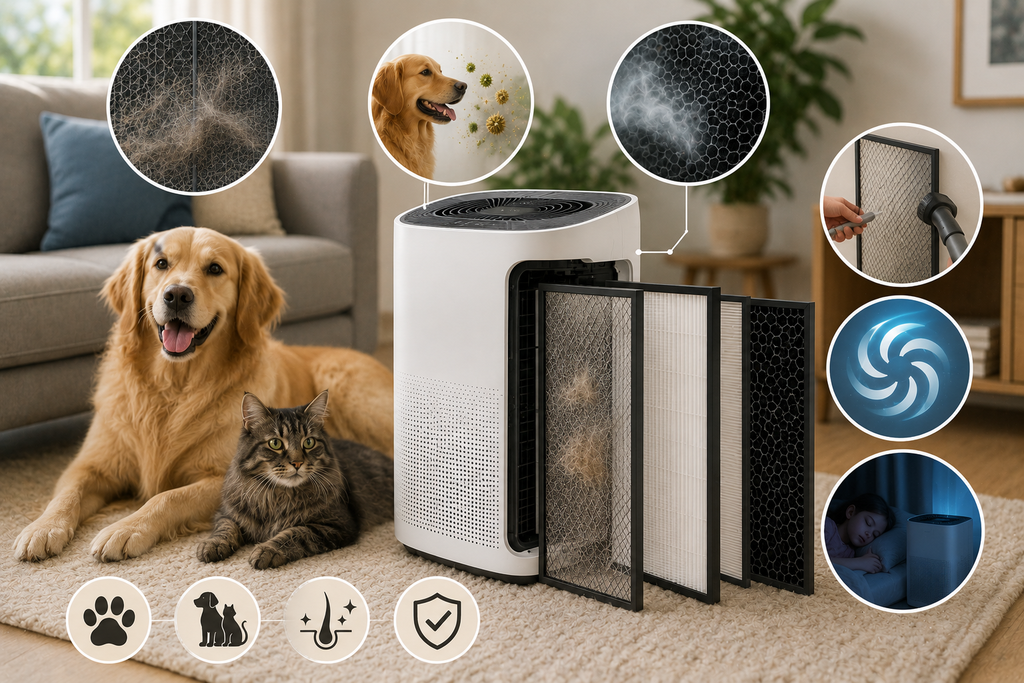
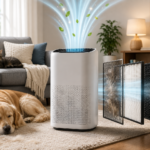
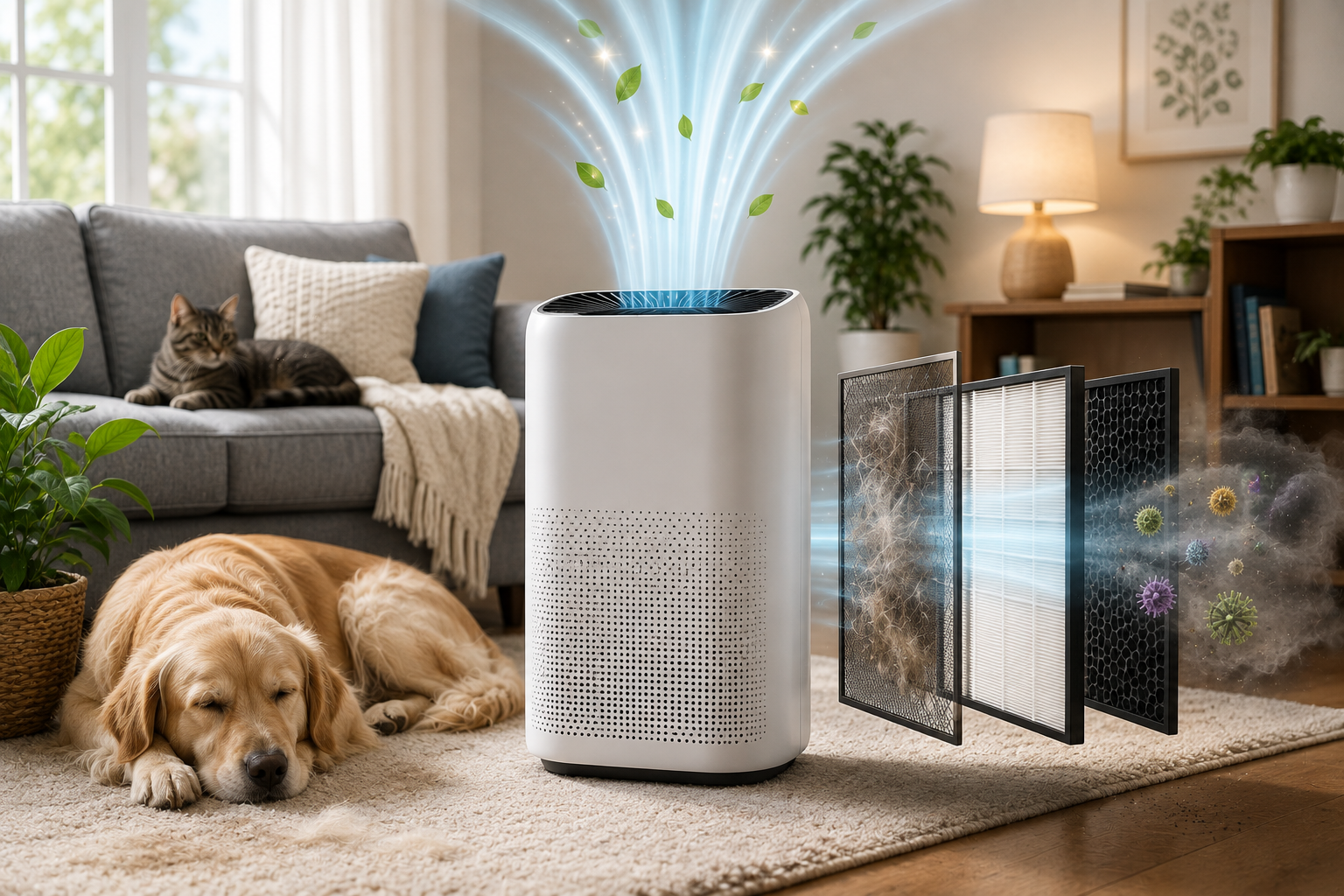
Pets introduce two challenges beyond standard allergen filtration: hair that clogs filters faster, and persistent odor that basic filtration doesn’t fully address.
Washable Pre-Filters
A washable pre-filter captures pet hair and larger debris before it reaches the main HEPA filter, extending the HEPA filter’s usable life and reducing how often you need to replace the more expensive component.
Activated Carbon for Odor Control
HEPA filters are excellent at capturing particles, but they don’t meaningfully address odors. An activated carbon filter stage is what actually helps with pet smells, litter box odor, and general household odors.
Buying tip: If odor is a significant concern multiple pets, litter boxes, or a smaller living space look for a purifier with a substantial carbon filter weight, not just a thin carbon layer included as an afterthought.
Higher CADR for Multi-Pet Households
Because pets continuously shed dander throughout the day, households with multiple pets or larger dogs generally benefit from a higher CADR than the minimum calculated for the room size alone, since the air needs cleaning more frequently to keep pace with ongoing shedding.
Room Size Considerations Beyond Square Footage
Square footage alone doesn’t tell the whole story ceiling height and room layout matter too.
- Standard coverage ratings typically assume an 8-foot ceiling. A room with vaulted or higher ceilings has meaningfully more air volume than the square footage suggests, requiring a higher-capacity unit than the floor space alone would indicate.
- Open floor plans and connected rooms increase the effective space a single purifier needs to handle, since air moves relatively freely between them.
- Closed doors block airflow. A single purifier, even a powerful one, generally can’t effectively clean multiple separate rooms air doesn’t travel through walls and closed doors, so multiple smaller units sized for each space often outperform one large unit placed centrally.
Noise Level: Why It Matters More for Bedrooms
If you plan to run a purifier overnight which is often when it matters most for allergy relief noise level at the lowest speed setting matters just as much as its maximum CADR rating.
- A larger, more powerful unit running on a low speed is often quieter than a smaller unit straining at full speed to cover the same room.
- Check the manufacturer’s stated decibel (dB) rating specifically at low or sleep-mode settings, not just the maximum output number, which tends to look better on paper but isn’t representative of nighttime use.
Filter Costs and Long-Term Ownership
The purchase price of an air purifier is only part of the total cost ongoing filter replacement adds up over time and should factor into your decision.
| Cost Category | Typical Range |
| Mid-range air purifier (unit only) | $150–$250 |
| Annual replacement filter cost | $30–$100+ per year |
| True HEPA filter lifespan | Roughly 3–12 months, depending on usage and air quality (some premium units last several years) |
Buying tip: Check replacement filter prices and availability before purchasing the unit itself. A cheaper purifier with expensive, hard-to-find replacement filters can end up costing more over time than a slightly pricier unit with affordable, widely available filters.
A Note on Ionizers and Ozone
Some air purifiers include an ionizer feature, marketed as an added air-cleaning boost. However, ionizers can produce ozone as a byproduct, which is itself a lung irritant — a particular concern for households already dealing with allergies or asthma.
Practical guidance: If avoiding ozone is a priority, look specifically for purifiers marketed as “ozone-free,” and be cautious of models that rely heavily on ionization as their primary or supplemental cleaning method.
This isn’t just a minor concern the Asthma and Allergy Foundation of America (AAFA) runs an independent certification program specifically requiring that air cleaners “do not contribute to ozone levels in the home” before earning their Asthma & Allergy Friendly® certification mark. Looking for that certification is one of the fastest ways to rule out ozone-generating units without reading a full spec sheet.
Where and How to Position Your Air Purifier
- Place it where you spend the most time, such as your bedroom (especially since you spend 7 to 8 hours there overnight) or main living area.
- Run it continuously, or on auto mode if the unit includes an air quality sensor, rather than only turning it on occasionally — consistent operation is what delivers the real benefit.
- Avoid placing it in a corner or behind furniture, which can restrict airflow and reduce its effective performance.
Air Purifiers Aren’t a Complete Solution on Their Own
Even the best air purifier can’t remove larger allergens like dust mites or pet hair that have already settled onto furniture, carpets, and surfaces — those need to be physically disturbed and vacuumed up, not filtered from the air.
Complementary habits worth pairing with an air purifier:
- Vacuum regularly using a vacuum with HEPA-certified filtration
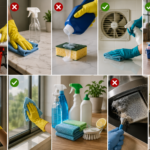
- Dust surfaces with a damp cloth rather than a dry one, which can just redistribute particles into the air
- Use exhaust fans in kitchens and bathrooms to reduce excess humidity and cooking-related particulates
- Ventilate by opening windows on days when outdoor air quality is good
Practical Buying Advice: A Quick Checklist
- Confirm True HEPA, not “HEPA-type.” This single detail has the biggest impact on actual filtration performance.
- Match CADR to your room size, sizing up rather than choosing the bare minimum if allergies or asthma are a concern.
- Look for a washable pre-filter and a substantial activated carbon stage if pets are part of your household.
- Check the decibel rating at low speed, especially for bedroom use.
- Factor in annual filter replacement costs, not just the sticker price of the unit.
- Consider ceiling height and open layouts, not just square footage, when estimating the right size.
- Avoid units with a heavy reliance on ionization if minimizing ozone exposure is a priority for your household.
Focus on the Specs, Not the Marketing
Choosing the right air purifier for allergies or a pet household comes down to a few key numbers True HEPA certification, a CADR that matches your room size, and a filtration system built to handle both particles and odor. Extra features like smart app controls and air quality displays are nice conveniences, but they don’t make up for a unit that’s undersized or missing the fundamentals.
Take the time to check the actual specs before buying, factor in the ongoing cost of filter replacements, and size your purifier to your specific room and household needs. Get those fundamentals right, and you’ll notice a real, meaningful difference in how your home’s air feels not just a purifier humming quietly in the corner.
FAQ
1- Do I really need “True HEPA,” or is “HEPA-type” good enough?
For allergies or pet dander specifically, True HEPA (or H13 HEPA) is worth prioritizing, since “HEPA-type” filters can capture meaningfully fewer particles despite similar-sounding marketing language.
2- What CADR do I need for a bedroom with a pet?
As a general guideline, aim for a CADR that roughly matches your room’s square footage rather than just two-thirds of it, especially if allergies or asthma are a concern for example, a 300-square-foot bedroom would benefit from a purifier with a CADR around 200 to 300 CFM.
3- Will an air purifier get rid of pet odor?
HEPA filtration alone mainly addresses particles, not odor. Look specifically for a unit with a substantial activated carbon filter stage if pet or litter box odor is a primary concern.
4- How often do I need to replace the filter?
Typically every 3 to 12 months, depending on usage and how much pollution or pet hair the unit is filtering households with pets, smokers, or higher dust levels generally need more frequent replacements.
5- Is a bigger, more expensive air purifier always better?
Not necessarily. What matters most is whether the CADR and True HEPA filtration match your specific room size and needs an appropriately sized mid-range unit often outperforms an oversized or poorly specified expensive one.
6- Can one air purifier clean my whole house?
Generally, no. Air doesn’t move freely through walls and closed doors, so a single unit is typically most effective in the room it’s placed in. For multiple rooms or open floor plans, using several appropriately sized units usually works better than one large central unit.