
Outdoor furniture is one of the best investments you can make for your patio, deck, or backyard. It creates a comfortable place to relax, entertain guests, enjoy family meals, and make the most of your outdoor living space. Like any investment, however, outdoor furniture doesn’t last forever. Constant exposure to sunlight, rain, humidity, snow, and changing temperatures gradually causes wear and tear, even when furniture is well maintained.
Many homeowners struggle to decide whether they should repair aging furniture or replace it entirely. A faded cushion may only need a replacement cover, while a rusted frame or cracked support can create safety concerns that make replacement the smarter option.
Knowing when to replace outdoor furniture helps you avoid spending money on repeated repairs while ensuring your outdoor space remains safe, comfortable, and attractive. This guide explains the common signs of aging furniture, expected lifespan by material, repair versus replacement considerations, and practical buying advice to help you make the right decision for your home.
Why Outdoor Furniture Doesn’t Last Forever
Outdoor furniture is built to withstand the elements, but no material is completely immune to weather. Years of exposure gradually weaken finishes, fabrics, fasteners, and structural components.
Several factors influence how long furniture lasts:
- Local climate
- Sun exposure
- Rain and humidity
- Winter weather
- Frequency of use
- Material quality
- Maintenance routine
Furniture that receives regular cleaning, seasonal protection, and proper storage generally lasts much longer than furniture left uncovered year-round.
Average Lifespan of Outdoor Furniture
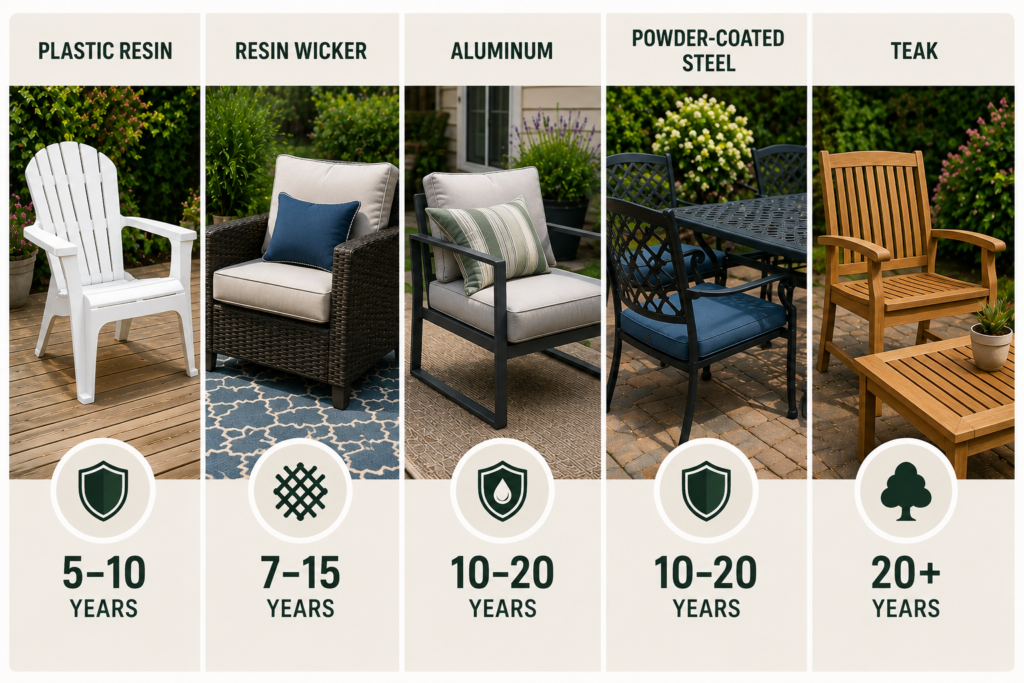
Understanding the typical lifespan of different materials helps set realistic expectations.
| Material | Average Lifespan* |
| Plastic Resin | 5–10 years |
| Resin Wicker | 7–15 years |
| Aluminum | 10–20 years |
| Powder-Coated Steel | 10–20 years |
| Teak | 20 years or more with proper care |
*Actual lifespan depends on climate, maintenance, and product quality.
Higher-quality furniture often costs more initially but may provide better long-term value through improved durability.
Sign #1: The Frame Is No Longer Stable
A stable frame is essential for safe outdoor seating.
It may be time to replace your furniture if you notice:
- Wobbling
- Bent legs
- Broken welds
- Cracked frames
- Loose joints that cannot be tightened
Structural damage affects both safety and comfort.
Although minor loose hardware can often be repaired, major frame damage usually indicates that replacement is the better option.
Sign #2: Rust Has Become Extensive
Small surface rust can often be cleaned and treated.
However, replacement becomes more practical when rust:
- Weakens the frame
- Creates holes
- Causes sharp edges
- Continues returning despite treatment
Once corrosion affects the strength of the furniture, repairs become increasingly difficult and less cost-effective.
Sign #3: Wood Is Cracking or Rotting
Wood naturally expands and contracts as weather conditions change.
Over time, this may lead to:
- Deep cracks
- Splitting
- Soft spots
- Rot
- Loose fasteners
Surface weathering can usually be restored through cleaning and refinishing, but widespread rot often means the furniture has reached the end of its useful life.
Sign #4: Wicker Is Breaking Apart
Modern resin wicker is highly durable, but years of UV exposure eventually cause fibers to weaken.
Watch for:
- Cracked weaving
- Brittle strands
- Large gaps
- Loose weaving
- Broken sections
Small repairs may restore appearance temporarily, but widespread damage usually affects both comfort and durability.
Sign #5: Cushions No Longer Provide Support
Outdoor cushions naturally lose resilience over time.
Common signs include:
- Flattened foam
- Permanent indentations
- Torn fabric
- Mold stains
- Persistent odors
- Water retention
Fortunately, replacing cushions is often much less expensive than replacing the entire furniture set.
If the furniture frame remains in excellent condition, new cushions can dramatically refresh its appearance.
Sign #6: The Furniture No Longer Fits Your Lifestyle
Replacement isn’t always about damage.
Sometimes your needs simply change.
For example:
- Your family has grown.
- You entertain more guests.
- You’ve renovated your patio.
- You built an outdoor kitchen.
- You now work from home outdoors.
Furniture that once met your needs may no longer provide enough seating or functionality.
Sign #7: Repairs Cost Too Much
Before repairing older furniture, compare the repair cost with the price of replacement.
Consider expenses such as:
- Replacement cushions
- Welding
- Rust removal
- Refinishing
- Replacement hardware
- Professional labor
If repair costs approach the price of new furniture, replacement often provides better long-term value.
Sign #8: Your Patio Looks Outdated
Although appearance is subjective, outdoor furniture contributes significantly to curb appeal.
Signs your furniture may be visually outdated include:
- Severely faded finishes
- Mismatched replacement pieces
- Peeling paint
- Discolored fabrics
- Worn tabletops
Refreshing your outdoor furniture can completely change the look of your backyard without requiring a full landscape renovation.
Sign #9: Replacement Parts Are Difficult to Find
Some manufacturers discontinue furniture collections after only a few years.
If replacement parts such as:
- Cushions
- Glass tabletops
- Chair slings
- Hardware
- Wheels
are no longer available, maintaining the furniture becomes increasingly difficult.
Choosing a newer set with readily available replacement components may be more practical.
Sign #10: Cleaning No Longer Improves the Appearance
Routine cleaning should restore much of your furniture’s appearance.
If repeated cleaning fails to remove:
- Heavy staining
- Deep discoloration
- Permanent mildew marks
- Oxidation
- Extensive fading
the materials themselves may have deteriorated beyond restoration.
Repair or Replace? Ask Yourself These Questions
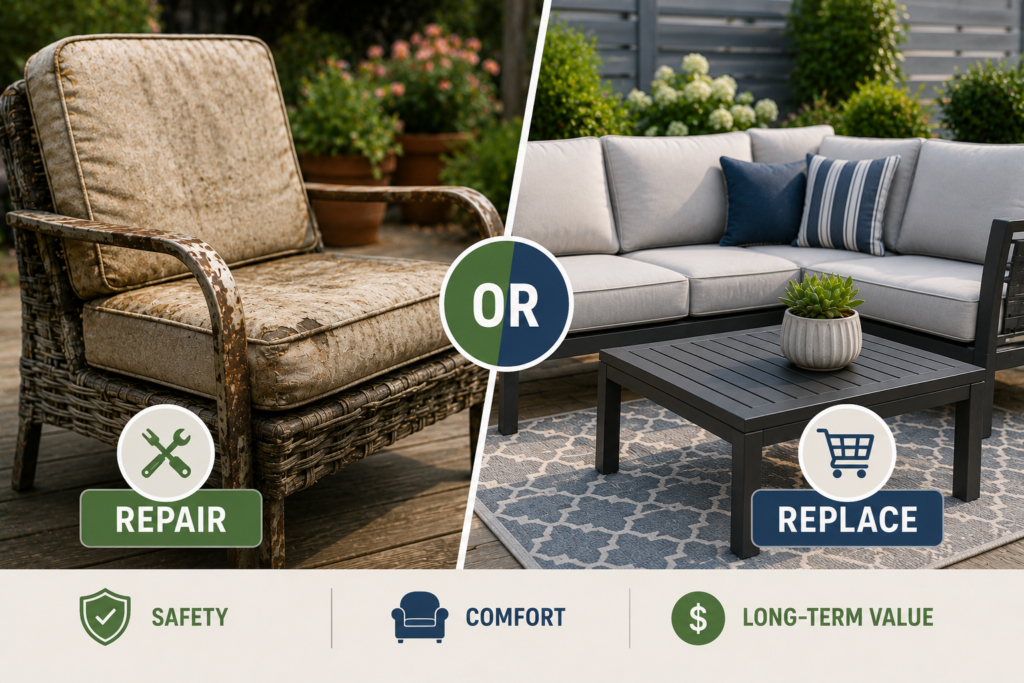
Before making a decision, consider:
- Is the frame structurally sound?
- Can replacement cushions solve the problem?
- Are repairs affordable?
- Will repairs extend the furniture’s life for several years?
- Does the furniture still meet my needs?
- Is replacement covered under warranty?
Answering these questions helps you make a practical, cost-effective decision.
Repair vs. Replace: How to Make the Right Decision
When outdoor furniture begins to show signs of wear, the biggest question is whether it can still be repaired or if replacing it is the smarter investment. The answer depends on the condition of the furniture, repair costs, and how much additional life you can realistically expect.
Use this comparison as a general guide.
| Problem | Repair | Replace |
| Loose screws or bolts | ✔ Yes | ✘ No |
| Minor surface rust | ✔ Yes | ✘ No |
| Worn cushions | ✔ Yes | ✘ No |
| Faded finish | ✔ Yes | ✘ No |
| Broken frame | ✘ Usually not | ✔ Yes |
| Severe rust damage | ✘ No | ✔ Yes |
| Extensive wood rot | ✘ No | ✔ Yes |
| Cracked resin frame | ✘ Rarely | ✔ Yes |
| Multiple broken parts | ✘ Usually not | ✔ Yes |
In many cases, replacing cushions, tightening hardware, or refinishing surfaces can extend the life of your furniture by several years. However, structural damage usually makes replacement the safer and more cost-effective choice.
How to Extend the Life of Outdoor Furniture
Replacing furniture can be expensive, so it’s worth taking simple steps to make your current set last as long as possible.
Clean Furniture Regularly
Dust, pollen, bird droppings, and tree sap gradually damage outdoor finishes.
Clean furniture every few weeks using:
- Mild soap
- Warm water
- Soft sponge
- Soft brush
- Garden hose
Avoid abrasive cleaners that may scratch protective coatings.
Use Furniture Covers
Quality outdoor furniture covers help protect against:
- Rain
- UV rays
- Snow
- Dust
- Falling leaves
- Bird droppings
Choose breathable covers that allow airflow while preventing moisture from becoming trapped underneath.
Store Cushions Properly
Although outdoor cushions are designed to resist moisture, they last much longer when stored during severe weather.
Store cushions in:
- Deck boxes
- Storage benches
- Garden sheds
- Garage shelves
Always allow cushions to dry completely before putting them away.
Protect Furniture from Direct Sunlight
Constant sun exposure accelerates fading and material breakdown.
Reduce UV exposure by using:
- Patio umbrellas
- Pergolas
- Shade sails
- Covered patios
Even partial shade can significantly extend the life of outdoor furniture.
Inspect Furniture Every Season
A quick inspection each season helps identify small problems before they become major repairs.
Check for:
- Loose bolts
- Rust spots
- Cracked wood
- Loose wicker
- Torn fabric
- Unstable legs
Early maintenance often prevents costly replacement later.
Signs It’s Time to Upgrade Instead of Replace Like-for-Like
Sometimes replacing furniture is also an opportunity to improve how your outdoor space functions.
Consider upgrading if you want:
- More seating for guests
- Better weather resistance
- Lower maintenance materials
- Modern designs
- Modular seating
- Built-in storage
- More comfortable cushions
For example, replacing an old steel set with rust-resistant aluminum or upgrading from a basic dining set to a modular conversation set may better suit your current lifestyle.
Features to Look for in New Outdoor Furniture
If you’ve decided it’s time to replace your furniture, focus on quality rather than simply choosing the lowest price.
Look for features such as:
- Rust-resistant frames
- UV-resistant finishes
- Weather-resistant cushions
- Quick-drying foam
- Powder-coated metal
- Durable hardware
- Replaceable cushion covers
- Manufacturer warranties
These features can increase the lifespan of your furniture and reduce future maintenance.
Choosing the Right Material for Your Climate
Different climates place different demands on outdoor furniture.
Hot and Sunny Regions
Choose materials that resist UV damage, such as:
- Aluminum
- Resin wicker
- High-quality outdoor fabrics
These materials maintain their appearance better under prolonged sunlight.
Humid or Rainy Areas
Look for furniture with:
- Rust-resistant frames
- Waterproof finishes
- Mold-resistant fabrics
- Quick-drying cushions
Proper drainage and airflow are equally important.
Cold and Snowy Climates
If winters are harsh, choose furniture that’s easy to cover or store indoors during the off-season.
Even durable materials benefit from additional protection during freezing weather.
Sustainable Ways to Dispose of Old Outdoor Furniture
If your furniture has reached the end of its life, consider environmentally responsible disposal options.
You may be able to:
- Recycle metal frames
- Donate usable furniture
- Repurpose wood into garden projects
- Replace only damaged components
- Contact local recycling programs
Keeping usable materials out of landfills is often a more sustainable choice than throwing away an entire furniture set.
Outdoor Furniture Replacement Checklist
Before replacing your furniture, review the following questions:
- ✓ Is the frame still structurally sound?
- ✓ Can simple repairs solve the problem?
- ✓ Are replacement cushions available?
- ✓ Do repair costs make financial sense?
- ✓ Does the furniture still fit my lifestyle?
- ✓ Is the furniture comfortable?
- ✓ Does it complement my outdoor space?
- ✓ Is the material appropriate for my climate?
- ✓ Will newer furniture require less maintenance?
- ✓ Have I compared warranty options before buying?
Taking a few minutes to answer these questions can help you make a confident purchasing decision.
Conclusion
Outdoor furniture naturally wears over time, but that doesn’t always mean it needs to be replaced immediately. Minor issues such as faded cushions, loose hardware, or surface rust can often be repaired, allowing you to enjoy your furniture for many more seasons. However, when structural damage, extensive corrosion, wood rot, or severe weathering affects safety and comfort, replacing the furniture is usually the better long-term investment.
The best approach is to inspect your furniture regularly, perform routine maintenance, and address small problems before they become major ones. When replacement becomes necessary, choose durable materials, weather-resistant finishes, and designs that match both your lifestyle and local climate. Investing in quality outdoor furniture and caring for it properly will help you create an attractive, comfortable outdoor living space that your family can enjoy for years to come.
Frequently Asked Questions
1- How often should outdoor furniture be replaced?
There’s no fixed timeline. High-quality outdoor furniture can last anywhere from several years to multiple decades, depending on the material, climate, and maintenance routine. Regular inspections help determine when replacement is necessary.
2- Can faded outdoor furniture be restored?
In many cases, yes. Cleaning, refinishing, repainting, or replacing cushions can improve appearance. However, if structural damage is present, restoration may not be worthwhile.
3- Is replacing cushions better than buying new furniture?
If the frame remains strong and stable, replacing cushions is often the most cost-effective solution. New cushions can refresh both comfort and appearance without replacing the entire set.
4- Which outdoor furniture lasts the longest?
Premium materials such as teak, aluminum, and high-quality powder-coated steel are known for their durability when properly maintained.
5- Should I replace one chair or the entire set?
If matching replacement pieces are available and the remaining furniture is still in good condition, replacing one chair may be sufficient. However, if multiple pieces show significant wear or the collection has been discontinued, replacing the entire set often provides a more consistent appearance and functionality.