
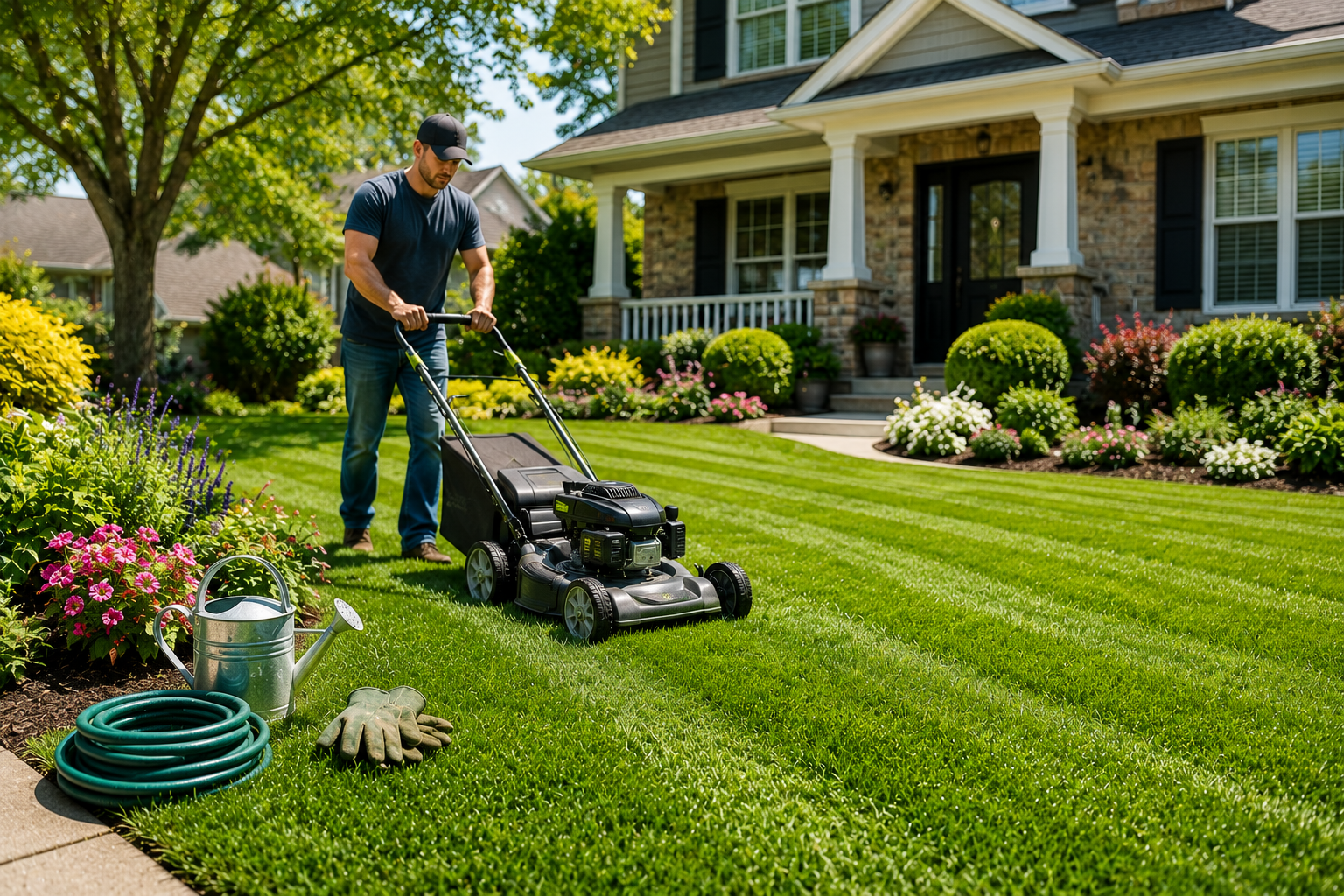
A healthy, green lawn isn’t the product of luck or an expensive lawn service, it comes down to a handful of consistent, well-timed habits that most beginners simply haven’t learned yet. Understanding lawn care for beginners means starting with the fundamentals, mowing correctly, watering deeply, and feeding your grass at the right times, rather than jumping straight to specialty products or complicated treatment schedules.
This guide walks through everything a new homeowner needs to know to build a genuinely healthy lawn from the ground up, covering grass identification, mowing, watering, fertilizing, weed control, and a full seasonal maintenance schedule.
Where to Start
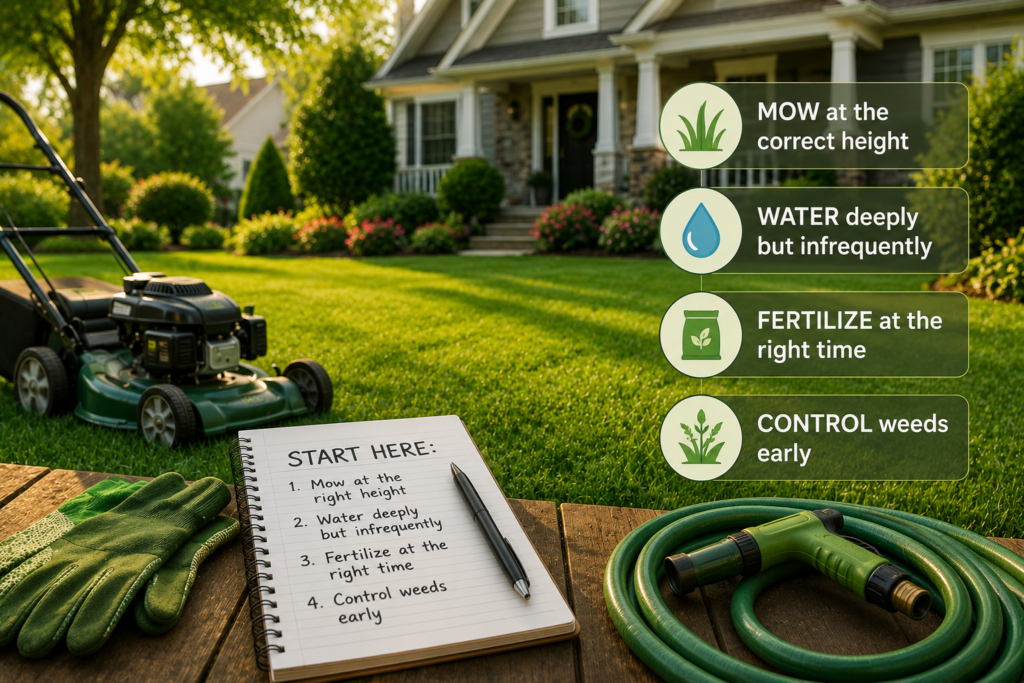
If you’re overwhelmed by where to begin, prioritize these four fundamentals first: mow at the correct height for your specific grass type, water deeply but infrequently rather than a little every day, fertilize according to your grass’s growing season (cool-season grasses in fall and spring, warm-season grasses in late spring through summer), and address weeds early before they spread. Getting these four basics right consistently will do more for your lawn’s health than any single specialty product or treatment.
Step 1: Identify Your Grass Type
Before making any specific lawn care decisions, you need to know whether you’re growing a cool-season or warm-season grass, since this affects nearly every other recommendation in this guide.
- Cool-Season Grasses
Common in the northern United States, cool-season grasses grow most actively during spring and fall, going semi-dormant during hot summer months. Common types include Kentucky bluegrass, tall fescue, perennial ryegrass, and fine fescue.
- Warm-Season Grasses
Common throughout the southern United States, warm-season grasses grow most actively during late spring through summer, going dormant and turning brown during cooler winter months. Common types include Bermuda grass, zoysia grass, St. Augustine grass, and centipede grass.
- Why This Matters
Nearly every lawn care decision, when to fertilize, when to overseed, ideal mowing height, and even watering needs, differs significantly between cool-season and warm-season grasses. If you’re unsure which type you have, your local agricultural extension office can help with identification, or you can compare your grass’s blade width, color, and growth pattern against reference photos for common types in your region.
Step 2: Master Proper Mowing Technique
- Mow at the Right Height
Cutting grass too short is one of the most common beginner mistakes, and it genuinely weakens the lawn by reducing the leaf surface available for photosynthesis and root development.
| Grass Type | Recommended Mowing Height |
| Kentucky bluegrass | 2.5–3.5 inches |
| Tall fescue | 3–4 inches |
| Perennial ryegrass | 2–3 inches |
| Bermuda grass | 1–2 inches |
| Zoysia grass | 1–2.5 inches |
| St. Augustine grass | 2.5–4 inches |
- Follow the One-Third Rule
Never remove more than one-third of the grass blade’s total height in a single mowing. Cutting more than this stresses the grass and can lead to a thin, patchy lawn over time, even if you’re technically cutting at the “correct” final height.
- Keep Mower Blades Sharp
Dull mower blades tear grass rather than cutting it cleanly, leaving ragged edges that turn brown and become more vulnerable to disease. Sharpening blades once or twice per mowing season is a simple habit that noticeably improves lawn appearance.
- Vary Your Mowing Pattern
Mowing in the same direction every time can gradually create ruts and cause grass to lean in one direction. Alternating your mowing pattern between sessions promotes more even, upright growth.
Step 3: Water Deeply and Infrequently
- Why Frequent, Shallow Watering Is a Mistake
Watering a little bit every day encourages grass roots to stay shallow, since they never need to grow deeper in search of moisture. This makes your lawn more vulnerable to drought stress and generally less resilient overall.
- The Better Approach
Water deeply, providing roughly 1 to 1.5 inches of water per week (including rainfall), but less frequently, typically two to three times per week rather than daily. This encourages roots to grow deeper into the soil, building a more drought-resistant lawn over time.
- Best Time to Water
Early morning, generally between 6 and 10 a.m., is the ideal time to water. This allows grass blades to dry before evening, reducing the risk of fungal disease that can develop when grass stays wet overnight.
- Signs Your Lawn Needs Water
Grass that doesn’t spring back after you walk across it, or that takes on a slightly grayish-blue tint, is signaling drought stress and needs watering soon.
Step 4: Understand Fertilizing Basics
- Timing Matters More Than Product Choice
For cool-season grasses, the most important fertilizing applications happen in early fall and again in spring, timed with the grass’s natural active growth periods. For warm-season grasses, fertilizing is most effective from late spring through summer, during their peak growing season.
- Reading a Fertilizer Label
Fertilizer bags display three numbers (like 20-5-10), representing the percentage of nitrogen, phosphorus, and potassium respectively. Nitrogen promotes leaf and blade growth, phosphorus supports root development, and potassium improves overall stress tolerance and disease resistance.
- Avoid Over-Fertilizing
More fertilizer isn’t automatically better, and over-application can actually damage grass, encourage excessive thatch buildup, and contribute to nutrient runoff into local waterways. Always follow the product’s specific application rate rather than assuming heavier application produces better results.
- Consider a Soil Test First
A basic soil test, often available through your local agricultural extension office, reveals your soil’s existing nutrient levels and pH, letting you choose a fertilizer that addresses your lawn’s actual specific needs rather than guessing.
Step 5: Address Weeds Early and Correctly
- Prevention vs Treatment
Pre-emergent herbicides, applied before weed seeds germinate (typically early spring for summer weeds like crabgrass, or early fall for winter weeds), prevent weeds from establishing in the first place. Post-emergent herbicides treat weeds that have already sprouted and are generally less effective the longer weeds are allowed to establish and spread.
- Common Beginner Weed Mistakes
Applying pre-emergent herbicide too late in the season, after weed seeds have already germinated, significantly reduces its effectiveness, since it works by preventing germination rather than killing established plants.
- A Healthy Lawn Is Your Best Weed Defense
Dense, healthy turf naturally crowds out weed seeds by limiting the sunlight and space available for them to establish. Consistent proper mowing, watering, and fertilizing does more long-term weed prevention work than herbicide alone.
Step 6: Aerate and Overseed as Needed
- Why Aeration Matters
Over time, soil becomes compacted, particularly in high-traffic areas, restricting water, air, and nutrients from reaching grass roots effectively. Core aeration, removing small plugs of soil, relieves this compaction and improves overall lawn health.
- When to Aerate
Cool-season lawns benefit most from aeration in early fall, while warm-season lawns are best aerated in late spring to early summer, timed just before their peak growing period.
- Overseeding Thin Areas
Overseeding, spreading new grass seed over existing turf, helps thicken thin or patchy areas and introduces improved grass varieties over time. This works particularly well immediately following aeration, since the aeration holes provide excellent seed-to-soil contact.
A Basic Seasonal Lawn Care Schedule
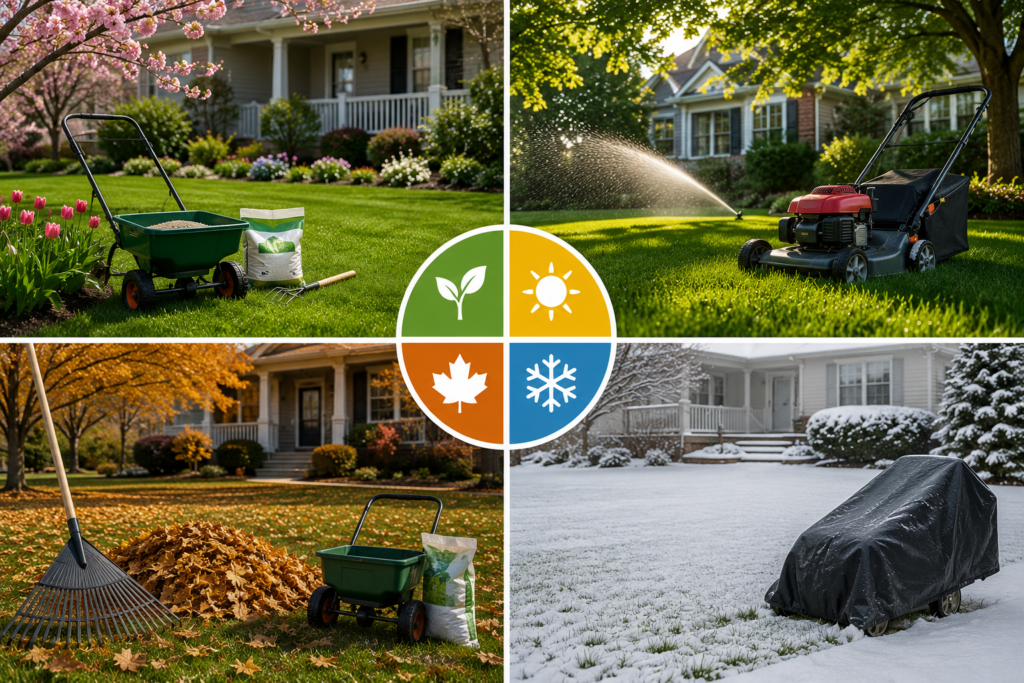
| Season | Cool-Season Grass Tasks | Warm-Season Grass Tasks |
| Spring | Light fertilizing, pre-emergent herbicide, begin regular mowing | Begin regular mowing, apply pre-emergent herbicide, first fertilizer application |
| Summer | Water deeply, mow regularly, monitor for heat stress | Peak fertilizing period, regular deep watering, active mowing |
| Fall | Primary fertilizing, aerate and overseed, apply pre-emergent for winter weeds | Reduce fertilizing as growth slows, final mowing before dormancy |
| Winter | Minimal activity, avoid walking on frosted grass | Lawn typically dormant and brown; minimal maintenance needed |
Common Lawn Problems and Their Likely Causes
| Problem | Likely Cause |
| Brown patches | Improper watering, disease, or pet urine spots |
| Thin, patchy grass | Compacted soil, insufficient sunlight, or improper mowing height |
| Yellowing grass | Nutrient deficiency, often nitrogen |
| Weeds taking over | Thin turf allowing weed seeds to establish |
| Excessive thatch buildup | Over-fertilizing or infrequent mowing |
Essential Beginner Lawn Care Tools
- A mower with adjustable height settings, allowing you to match cutting height to your specific grass type
- A garden hose or sprinkler system, for consistent, controllable watering
- A broadcast or drop spreader, for even fertilizer and seed application
- A core aerator (or access to a rental one), for annual or biannual soil aeration
- A soil test kit, to understand your lawn’s specific nutrient needs before fertilizing
Practical Tips for New Homeowners
- Start with the fundamentals, mowing height, watering, and fertilizing timing, before investing in specialty treatments or equipment
- Get a basic soil test early, since it removes much of the guesswork from fertilizer selection
- Be patient. A visibly healthier lawn typically takes one to two full growing seasons of consistent care to fully develop
- Match your grass care calendar specifically to whether you have cool-season or warm-season grass, since applying the wrong timing can waste effort and money
- When in doubt, your local agricultural extension office offers free or low-cost, region-specific lawn care guidance tailored to your local climate and soil conditions
Common Mistakes to Avoid
- Mowing too short, weakening the grass and increasing vulnerability to weeds and disease
- Watering too frequently but too shallowly, encouraging weak, shallow root systems
- Fertilizing at the wrong time of year for your specific grass type
- Skipping aeration, allowing soil compaction to gradually choke out healthy root development
- Treating weeds without addressing underlying lawn health, leading to a cycle of recurring weed problems
Conclusion
Building a healthy lawn as a beginner comes down to consistency with the fundamentals rather than chasing specialty products or complicated treatments. Identify your grass type, mow at the correct height, water deeply but infrequently, fertilize at the right time of year, and address weeds early, and you’ll see genuine, lasting improvement within a season or two. With these lawn care for beginners basics in place, you’ll have built a solid foundation that makes every other aspect of lawn maintenance considerably easier going forward.
Frequently Asked Questions
1- How often should I water my lawn as a beginner?
Aim for two to three deep waterings per week, providing roughly 1 to 1.5 inches total per week including rainfall, rather than daily light watering.
2- What is the best mowing height for a beginner’s lawn?
This depends on your specific grass type, but most cool-season grasses do well at 2.5 to 3.5 inches, while most warm-season grasses prefer a shorter 1 to 2.5 inch range.
3- When should I fertilize my lawn?
Cool-season grasses benefit most from fertilizing in early fall and spring, while warm-season grasses should be fertilized primarily from late spring through summer during their active growing period.
4- How do I know if I have cool-season or warm-season grass?
Check whether your grass stays green through winter (likely cool-season) or goes dormant and brown (likely warm-season), or consult your local agricultural extension office for region-specific identification help.
5- Do I need to aerate my lawn every year?
Not necessarily every year, but most lawns benefit from aeration every one to three years, particularly in high-traffic areas or lawns with heavy clay soil prone to compaction.
6- How long does it take to see results from a new lawn care routine?
Most homeowners notice meaningful improvement within one growing season of consistent care, though a fully thick, healthy lawn often takes one to two full seasons to develop.
7- Is it necessary to use pre-emergent herbicide every year?
For lawns with a history of weed problems like crabgrass, yes, applying pre-emergent annually at the correct time significantly reduces new weed establishment, though a genuinely healthy, dense lawn naturally reduces the need over time.