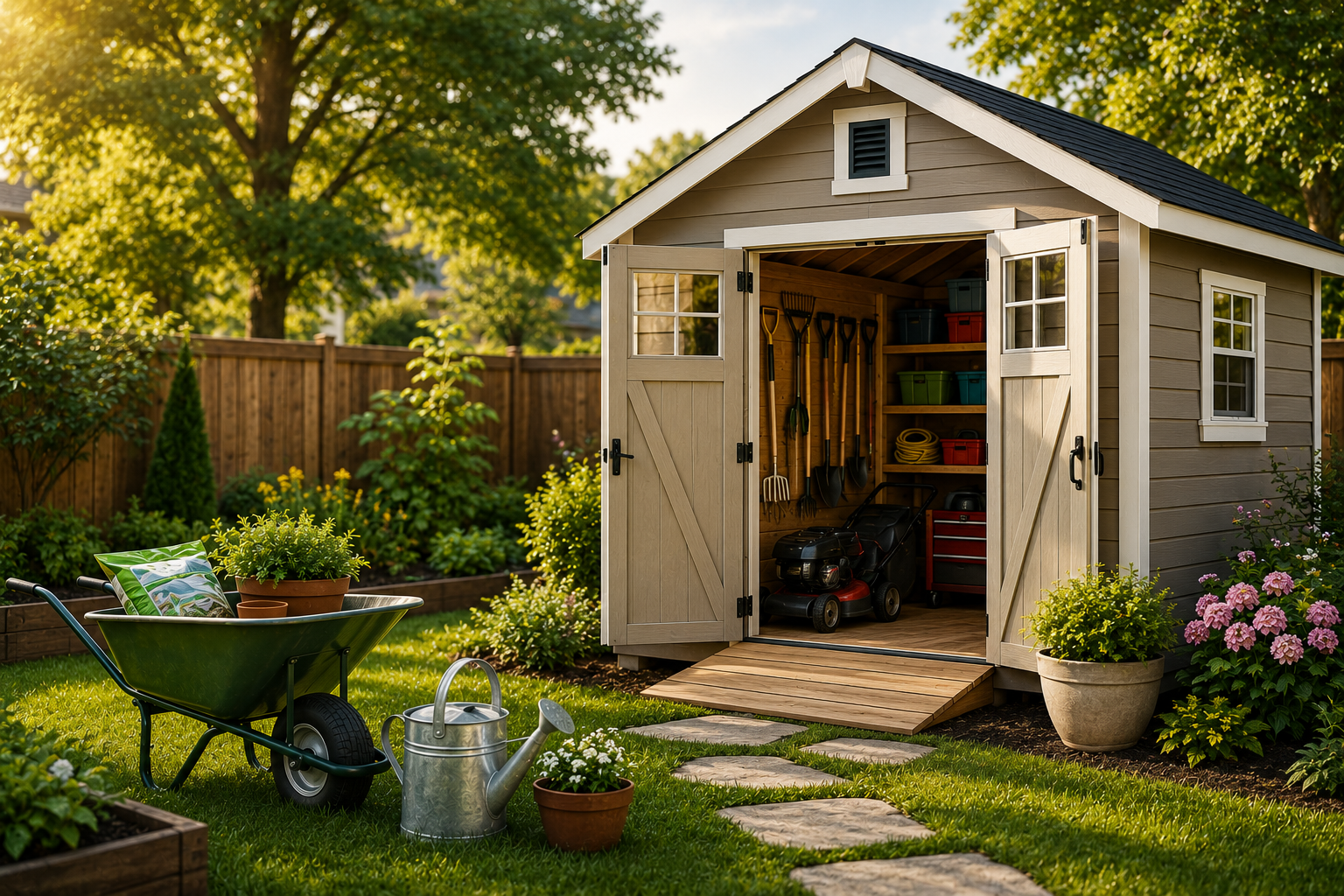
A storage shed is one of the most practical additions you can make to your property. Whether you need extra room for gardening tools, lawn equipment, bicycles, seasonal decorations, or outdoor furniture, a well-chosen shed helps keep your home organized while protecting valuable belongings from the weather.
However, buying a storage shed isn’t as simple as choosing the first model you see. Storage sheds come in many sizes, materials, styles, and price ranges. Selecting the wrong shed can leave you with too little storage space, ongoing maintenance, or a structure that doesn’t suit your backyard.
The best storage shed is one that matches your storage needs, available yard space, local climate, and long-term plans. By understanding the different types of sheds and the features that matter most, you can make a purchase you’ll be happy with for years.
This guide explains everything homeowners should know before buying a storage shed, including materials, sizes, roofing styles, flooring, security, maintenance, and practical buying tips.
Why Buy a Storage Shed?
Many homeowners eventually run out of garage or basement space.
A storage shed provides a dedicated area for keeping outdoor equipment organized and protected.
Common uses include storing:
- Lawn mowers
- Garden tools
- Outdoor furniture
- Grills
- Bicycles
- Power equipment
- Sports gear
- Holiday decorations
- Potting supplies
A well-organized shed also reduces clutter inside your home and garage.
Benefits of Owning a Storage Shed
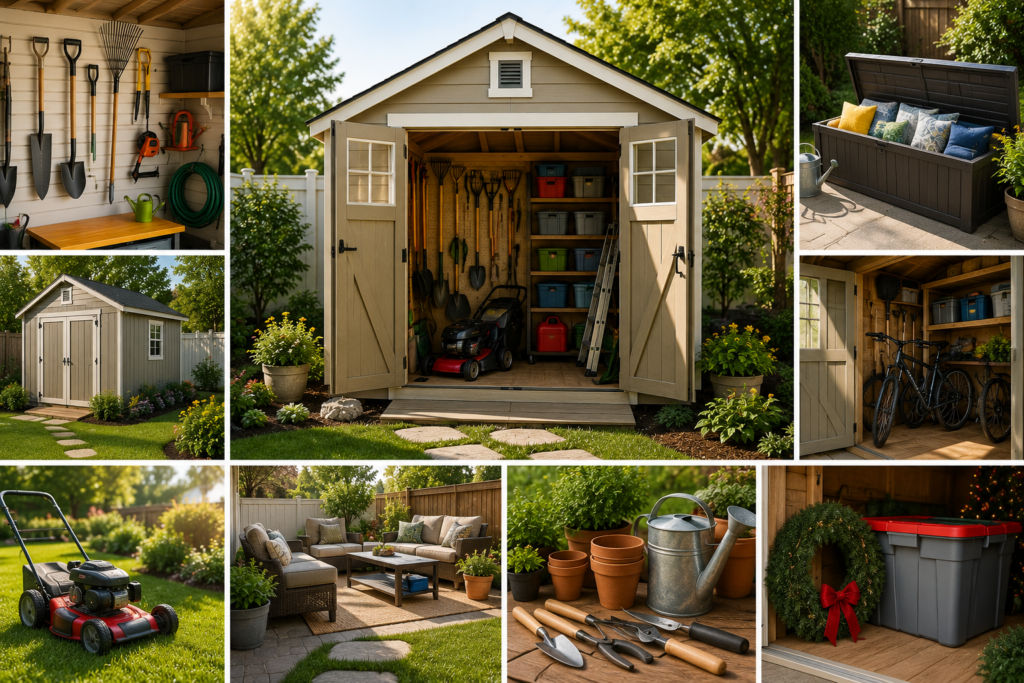
Adding a shed to your backyard offers several advantages.
Some of the biggest benefits include:
- More storage space
- Better organization
- Protection from rain and sunlight
- Easier access to outdoor equipment
- Cleaner garage
- Improved backyard functionality
- Increased property appeal
For many homeowners, a storage shed becomes one of the most useful structures on the property.
Types of Storage Sheds
Storage sheds are available in several materials, each with its own strengths.
Choosing the right material depends on your budget, maintenance preferences, and local weather.
| Material | Best For | Maintenance |
| Resin (Plastic) | Low maintenance | Very Low |
| Metal | Secure storage | Low |
| Wood | Traditional appearance | Moderate to High |
| Vinyl | Weather resistance | Low |
Each option offers different advantages.
Resin Storage Sheds
Resin sheds have become increasingly popular because they require minimal maintenance.
Advantages
- Resistant to rot
- Won’t rust
- Easy to clean
- Lightweight
- Weather resistant
- Simple assembly
Many homeowners choose resin sheds because they provide long-lasting durability without requiring regular painting or staining.
Considerations
Some resin sheds have fewer customization options than wood models.
Metal Storage Sheds
Metal sheds are known for their strength and security.
They work well for storing:
- Lawn equipment
- Power tools
- Bicycles
- Outdoor machinery
Advantages
- Strong construction
- Fire resistant
- Pest resistant
- Long lifespan
- Lower maintenance than wood
Considerations
Metal may become hot during summer and can be susceptible to condensation in certain climates.
Wooden Storage Sheds
Wood remains a popular choice for homeowners seeking a classic appearance.
Wood sheds often complement traditional homes and landscaped backyards.
Advantages
- Attractive appearance
- Easy to customize
- Can be painted or stained
- Supports shelving and storage systems
Considerations
Wood requires more maintenance than resin or metal.
Regular sealing, staining, or painting helps protect against moisture and insects.
Vinyl Storage Sheds
Vinyl sheds combine durability with relatively low maintenance.
Benefits include:
- Weather resistance
- Easy cleaning
- Long-lasting finish
- Good durability
Many vinyl sheds also resist fading better than some plastic alternatives.
Choosing the Right Shed Size
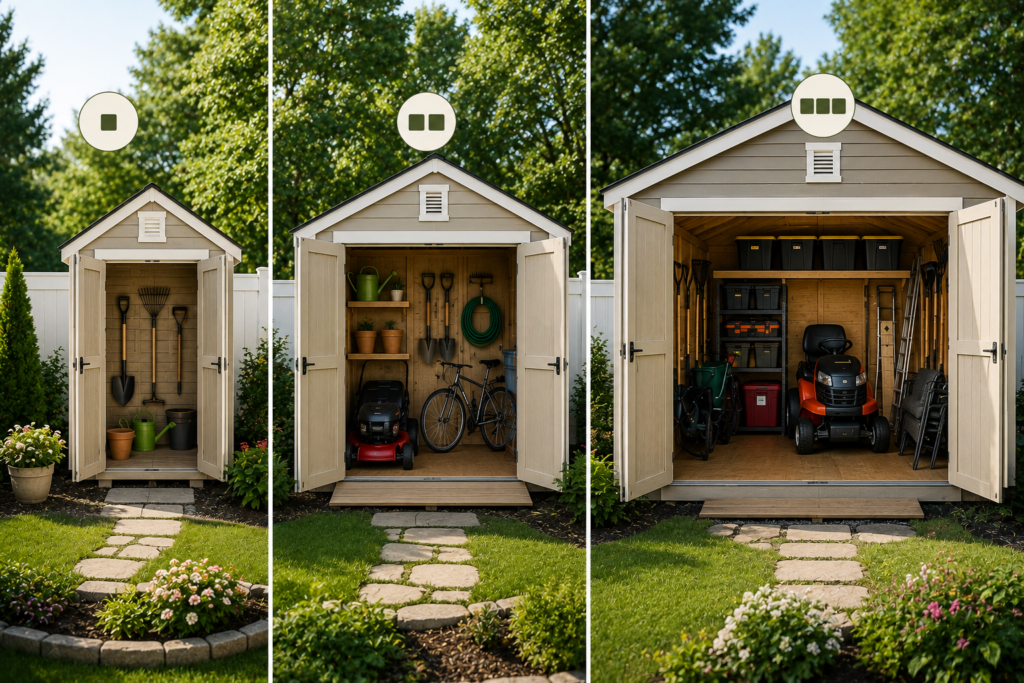
Size is one of the most important buying decisions.
A shed that’s too small quickly becomes overcrowded.
A shed that’s too large may waste space and increase costs unnecessarily.
Small Storage Sheds
Ideal for:
- Garden tools
- Hose reels
- Lawn chemicals
- Hand tools
Suitable for homeowners with limited yard space.
Medium Storage Sheds
Medium sheds provide room for:
- Lawn mower
- Gardening equipment
- Outdoor furniture
- Bicycles
They work well for most average households.
Large Storage Sheds
Large sheds are suitable for:
- Riding lawn mowers
- Workbenches
- Multiple bicycles
- Seasonal storage
- Bulk outdoor equipment
Some homeowners even create hobby workshops inside larger sheds.
Estimate Your Storage Needs
Before shopping, make a list of everything you plan to store.
Include:
- Current equipment
- Future purchases
- Seasonal items
- Shelving
- Workspace requirements
Leaving additional space for future storage needs often proves worthwhile.
Consider Your Backyard Space
Measure your available yard carefully before choosing a shed.
Think about:
- Property lines
- Trees
- Fencing
- Walkways
- Drainage
- Sunlight
The shed should fit comfortably without overcrowding your outdoor living space.
Roof Styles
Roof design affects both appearance and functionality.
Gable Roof
One of the most popular options.
Advantages include:
- Classic appearance
- Good water runoff
- Additional overhead storage
Gambrel Roof
Offers extra headroom.
Suitable for homeowners needing additional vertical storage.
Lean-To Roof
Designed to sit against another structure.
Works well in smaller yards where space is limited.
Flooring Options
Some sheds include flooring, while others require a separate foundation.
Common foundation choices include:
- Concrete slab
- Gravel base
- Pressure-treated wood platform
- Pavers
A solid, level foundation improves durability and helps prevent moisture problems.
Door Styles
Door design affects accessibility.
Common options include:
- Single door
- Double door
- Sliding door
Double doors make it easier to move larger equipment such as lawn tractors and wheelbarrows.
Windows and Ventilation
Natural light improves visibility inside the shed.
Windows can make organizing tools much easier.
Proper ventilation also helps:
- Reduce condensation
- Improve airflow
- Protect stored equipment
- Minimize moisture buildup
Roof vents and wall vents are especially useful in warmer climates.
Security Features to Consider
A storage shed often contains expensive equipment, so security should be part of your buying decision. Garden tools, lawn mowers, power tools, bicycles, and outdoor equipment can all be attractive targets for theft.
Look for sheds with features such as:
- Lockable doors
- Reinforced door frames
- Heavy-duty hinges
- Strong door handles
- Tamper-resistant hardware
If a lock isn’t included, choose a weather-resistant padlock designed for outdoor use. You may also consider adding motion-sensor lighting or a security camera if your shed stores valuable items.
Organizing Your Storage Shed
A well-organized shed makes it easier to find tools, maximize storage space, and keep everything in good condition.
Install Shelving
Shelves help keep smaller items off the floor.
They’re ideal for storing:
- Gardening gloves
- Fertilizers
- Hand tools
- Paint supplies
- Cleaning products
Vertical shelving makes better use of limited space.
Use Wall Hooks
Wall-mounted hooks keep frequently used tools within easy reach.
They work well for:
- Rakes
- Shovels
- Hoses
- Extension cords
- Ladders
Keeping these items off the floor also reduces tripping hazards.
Add Storage Bins
Clear storage bins make organizing seasonal items much easier.
Consider using labeled containers for:
- Holiday decorations
- Outdoor toys
- Pool supplies
- Planting supplies
- Sports equipment
Clear containers allow you to quickly identify what’s inside without opening each one.
Maintenance Tips for Long-Lasting Performance
Proper maintenance helps your storage shed remain functional and attractive for years.
Resin Sheds
Maintenance is simple.
Occasionally:
- Wash with mild soap and water.
- Remove leaves and debris from the roof.
- Inspect doors and hinges.
Metal Sheds
Inspect periodically for:
- Rust
- Scratches
- Loose fasteners
Touch up damaged areas according to the manufacturer’s recommendations to help prevent corrosion.
Wooden Sheds
Wood requires more regular care.
Depending on your climate, you may need to:
- Repaint or restain
- Seal exposed wood
- Check for insect damage
- Repair loose boards
Routine maintenance protects the structure from weather and extends its lifespan.
Vinyl Sheds
Vinyl sheds generally require only occasional washing.
Inspect for:
- Loose hardware
- Dirt buildup
- Damaged vents
Most vinyl sheds need very little ongoing maintenance.
Do You Need a Permit?
Permit requirements vary depending on where you live.
Some local governments require permits based on:
- Shed size
- Height
- Foundation type
- Property location
Before purchasing a shed, check your local building regulations or homeowners association (HOA) guidelines to understand any applicable requirements.
Common Storage Shed Buying Mistakes
Avoiding these common mistakes can help you choose a shed that meets your needs for many years.
Buying Too Small
Many homeowners underestimate how much storage they’ll need.
Remember to account for:
- Future equipment purchases
- Seasonal storage
- Shelving
- Walking space
Choosing a slightly larger shed often provides better long-term value.
Ignoring Foundation Requirements
A strong, level foundation is essential.
Without one, you may experience:
- Water intrusion
- Uneven floors
- Door alignment issues
- Premature wear
Investing in a proper foundation protects your shed and everything inside it.
Choosing Based Only on Price
The least expensive shed isn’t always the best investment.
Consider overall value, including:
- Material quality
- Warranty
- Maintenance requirements
- Durability
- Available features
A higher-quality shed may save money over time through reduced maintenance and longer service life.
Forgetting Ventilation
Poor ventilation can lead to:
- Moisture buildup
- Condensation
- Mold
- Rust on stored equipment
Choose a shed with built-in vents or windows whenever possible.
Overlooking Accessibility
Think about how you’ll move equipment in and out.
Wide doors and low thresholds make it much easier to store:
- Lawn mowers
- Wheelbarrows
- Snow blowers
- Garden carts
Storage Shed Buying Checklist
Before purchasing your shed, review the following checklist:
- ✓ Have I measured my available backyard space?
- ✓ Do I know everything I plan to store?
- ✓ Have I chosen the right shed material?
- ✓ Does the shed provide room for future storage?
- ✓ Is there adequate ventilation?
- ✓ Does it include secure, lockable doors?
- ✓ Will the shed fit on a proper foundation?
- ✓ Have I checked local permit requirements?
- ✓ Does the design complement my home’s exterior?
- ✓ Am I comfortable with the expected maintenance?
Completing this checklist can help you choose a shed that suits both your current and future storage needs.
Conclusion
A storage shed is more than just extra storage—it’s an investment in keeping your home organized, protecting valuable equipment, and making your outdoor space more functional. By carefully considering size, material, roof style, foundation, ventilation, and security features, you can select a shed that fits your property and supports your lifestyle for years to come.
Take time to evaluate what you need to store today while leaving room for future growth. Whether you choose a low-maintenance resin shed, a durable metal model, a traditional wooden design, or a weather-resistant vinyl option, selecting the right shed now will provide lasting convenience and help keep your backyard neat, organized, and ready for every season.
Frequently Asked Questions
1- What size storage shed do most homeowners need?
A medium-sized shed is suitable for many households because it provides enough room for lawn equipment, gardening tools, bicycles, and seasonal storage while fitting comfortably in most backyards.
2- Which shed material lasts the longest?
Durability depends on maintenance and climate. Resin, vinyl, metal, and properly maintained wood sheds can all provide many years of reliable service when installed on a solid foundation and cared for appropriately.
3- Do I need a foundation for a storage shed?
Most sheds benefit from a level, stable foundation. The appropriate foundation depends on the shed’s size, weight, and manufacturer recommendations.
4- Can a storage shed increase home value?
A well-maintained storage shed can improve the functionality and appeal of a property, particularly when it complements the home’s design and landscaping.
5- How do I prevent moisture inside my shed?
Good ventilation, a proper foundation, routine maintenance, and keeping the shed clean all help reduce moisture buildup.