
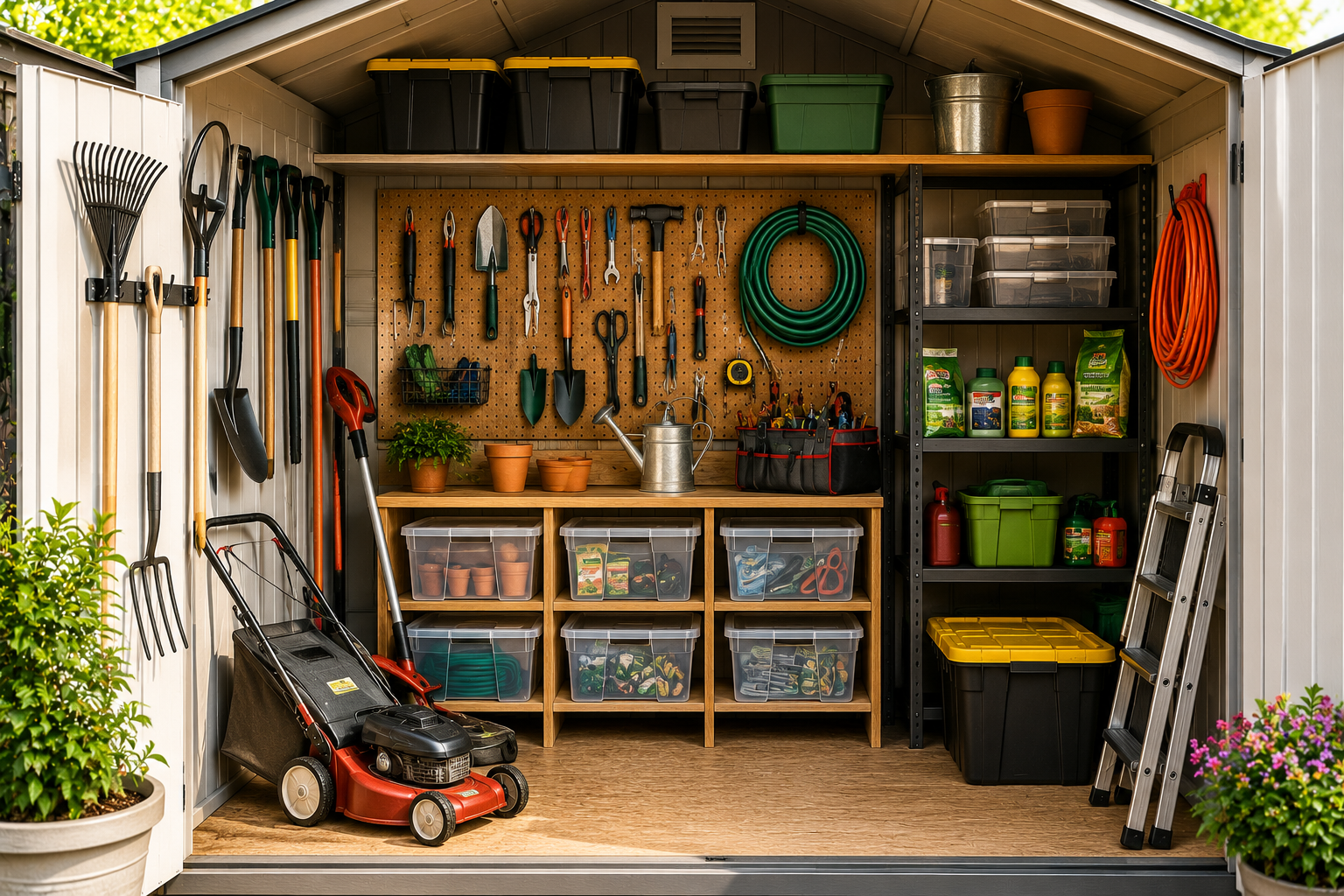
A storage shed can quickly become one of the most cluttered places on your property if it isn’t organized properly. Gardening tools pile up in corners, power equipment blocks walkways, and seasonal decorations disappear behind stacks of storage bins. Before long, finding a single shovel or extension cord becomes a frustrating task.
Fortunately, organizing your shed doesn’t require a complete renovation. With thoughtful planning and a few smart storage solutions, you can transform even a small shed into an efficient, organized workspace where everything has its place.
The secret isn’t simply buying more storage containers. It’s making better use of your existing space by organizing vertically, grouping similar items together, and choosing storage accessories that improve accessibility. Whether you own a compact garden shed or a large workshop, the right organization system can dramatically increase usable storage while making everyday tasks easier.
In this guide, you’ll learn practical shed organization ideas that help maximize storage, protect your equipment, and create a cleaner, more functional outdoor space.
Why Shed Organization Matters
A well-organized shed offers benefits beyond simply looking neat.
Good organization helps you:
- Find tools quickly
- Protect expensive equipment
- Reduce clutter
- Prevent damage
- Improve safety
- Maximize available storage
- Save time during yard work
Instead of digging through piles of equipment, you’ll know exactly where every item belongs.
Start by Emptying the Shed
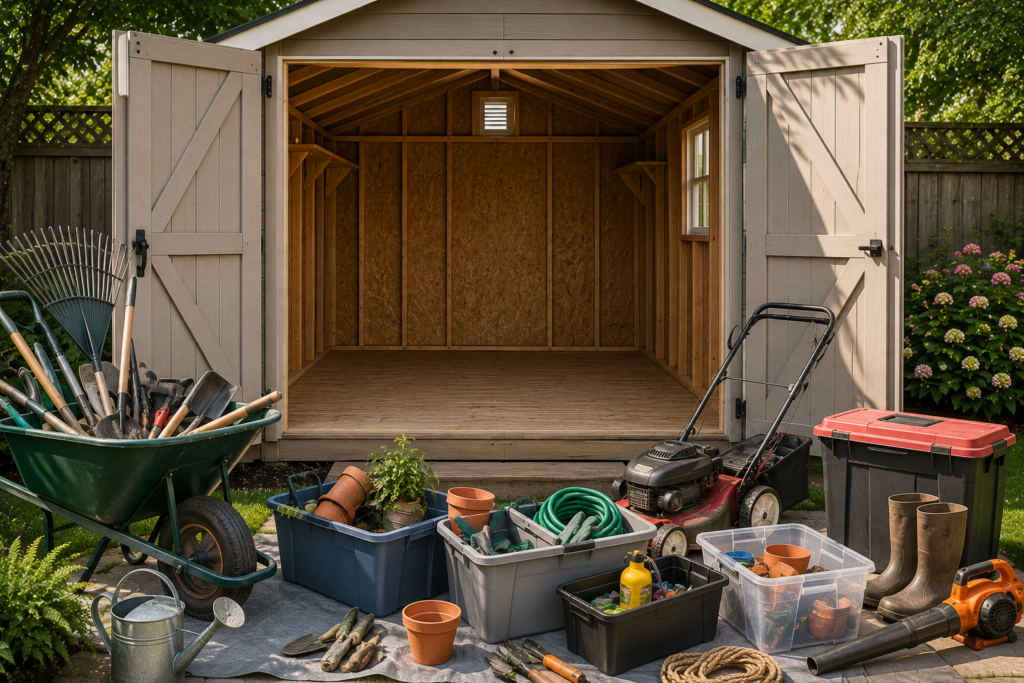
Before installing shelves or buying storage accessories, remove everything from the shed.
This allows you to:
- Clean the floor
- Inspect for damage
- Remove unwanted items
- Plan a better layout
Many homeowners discover tools or supplies they forgot they owned.
Declutter Before Organizing
Not everything needs to go back inside.
Sort your belongings into categories such as:
- Keep
- Donate
- Recycle
- Throw away
Removing broken tools and unused equipment creates valuable storage space before any organization begins.
Group Similar Items Together
Keeping similar items together makes your shed much easier to use.
Consider categories such as:
Gardening Equipment
- Hand trowels
- Pruners
- Gloves
- Watering cans
- Seeds
Lawn Care Equipment
- Lawn mower
- String trimmer
- Leaf blower
- Fuel containers
Power Tools
- Drills
- Extension cords
- Chargers
- Batteries
Seasonal Decorations
- Holiday lights
- Outdoor decorations
- Winter supplies
Organizing by category reduces searching and keeps frequently used items together.
Plan Your Shed Layout
Before moving everything back inside, decide where each category belongs.
Place:
- Frequently used tools near the entrance.
- Heavy equipment along the walls.
- Seasonal items toward the back.
- Small accessories on shelves.
A simple layout improves workflow every time you use the shed.
Use Vertical Storage
Vertical storage is one of the easiest ways to increase capacity.
Instead of filling floor space, use the walls.
Install:
- Wall hooks
- Pegboards
- Tool racks
- Adjustable shelving
- Hanging baskets
Vertical organization often doubles usable storage without making the shed larger.
Install Adjustable Shelving
Shelves create dedicated storage for smaller items.
They’re ideal for:
- Plant food
- Fertilizer
- Cleaning supplies
- Paint cans
- Gardening gloves
- Seed packets
Adjustable shelves provide flexibility as your storage needs change.
Add Pegboards for Small Tools
Pegboards make hand tools easy to see and access.
Common items include:
- Hammers
- Screwdrivers
- Wrenches
- Pliers
- Measuring tape
- Pruning shears
Using pegboards also frees valuable drawer and shelf space.
Hang Long-Handled Tools
Long-handled tools often create clutter when leaned against walls.
Install heavy-duty wall hooks for:
- Rakes
- Shovels
- Hoes
- Brooms
- Leaf rakes
Keeping these tools upright reduces tripping hazards while protecting tool handles.
Use Ceiling Storage
The ceiling is often overlooked.
Overhead storage works well for lightweight items such as:
- Folding chairs
- Seasonal decorations
- Empty storage bins
- Pool noodles
- Camping equipment
Always follow manufacturer recommendations for ceiling-mounted storage systems.
Store Small Items in Clear Containers
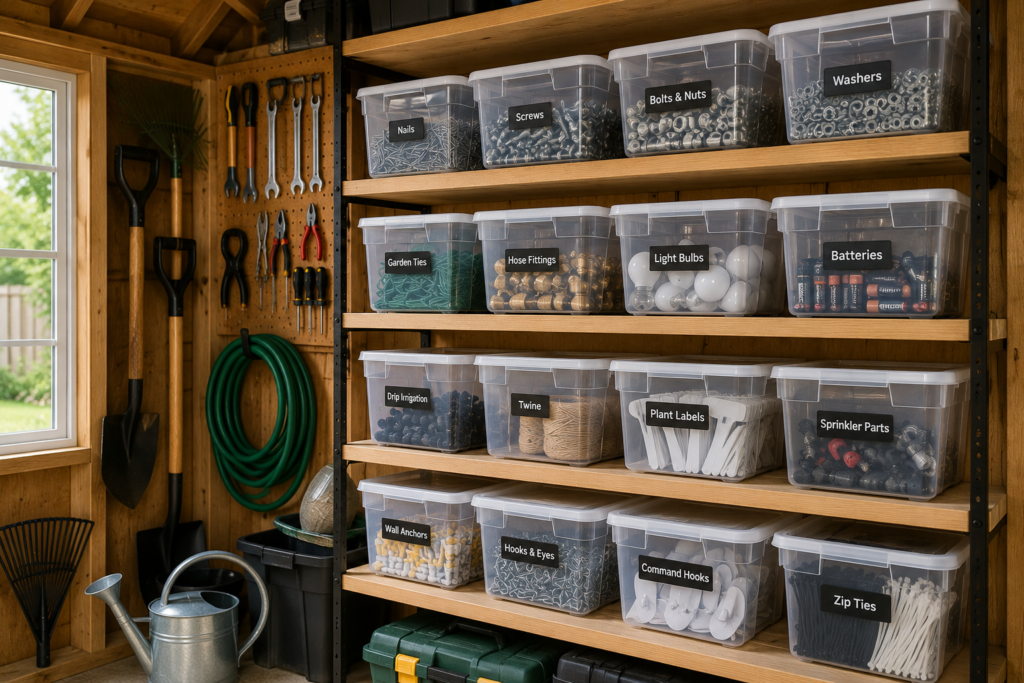
Clear storage bins simplify organization.
They’re ideal for:
- Nails
- Screws
- Garden ties
- Hose fittings
- Light bulbs
- Batteries
Label each container clearly so items are easy to locate.
Create a Gardening Station
If you enjoy gardening, dedicate one area of the shed to gardening supplies.
Include:
- Potting soil
- Hand tools
- Gloves
- Watering cans
- Plant food
- Empty pots
Keeping gardening supplies together makes planting projects much more efficient.
Build a Lawn Care Zone
Lawn equipment is often bulky.
Store items like:
- Lawn mower
- Leaf blower
- Fuel container
- Trimmer
- Edger
in one dedicated section.
This keeps larger equipment from blocking access to smaller tools.
Organize Frequently Used Tools Near the Door
Items you use every week should be easiest to reach.
Examples include:
- Garden gloves
- Hand shovel
- Water hose
- Broom
- Pruners
This simple adjustment saves time throughout the year.
Maximize Corners
Corners often become wasted space.
Consider adding:
- Corner shelving
- Vertical racks
- Tall cabinets
These solutions increase storage without reducing walking space.
Install Magnetic Tool Holders
Magnetic strips provide convenient storage for metal hand tools.
They’re especially useful for:
- Screwdrivers
- Pliers
- Utility knives
- Wrenches
Magnetic organizers keep tools visible and easy to grab.
Choose Multi-Purpose Storage Furniture
Some storage products perform multiple functions.
Examples include:
- Storage cabinets with shelves
- Workbenches with drawers
- Rolling tool carts
- Storage benches
These products improve organization while reducing clutter.
Keep Walkways Clear
No matter how much you store, always maintain a clear walking path.
A clutter-free walkway improves:
- Safety
- Accessibility
- Cleaning
- Equipment movement
Avoid stacking storage bins in front of doors or frequently used tools.
Use Rolling Storage Carts
Rolling storage carts make your shed more flexible, especially if you frequently work in different areas of your yard.
They’re ideal for storing:
- Hand tools
- Potting supplies
- Spray bottles
- Garden gloves
- Fertilizers
- Small power tools
Instead of making multiple trips across your yard, you can simply roll the cart to your workspace.
Add Cabinets for Hazardous Materials
Some outdoor products should be stored separately from everyday tools.
Consider using a lockable cabinet for:
- Fertilizers
- Weed killers
- Insecticides
- Paint
- Fuel containers
- Automotive fluids
Keeping these items organized and securely stored helps improve safety, especially if children or pets have access to your backyard.
Make Use of Door Storage
The inside of your shed door is valuable storage space that often goes unused.
Install:
- Wire baskets
- Small hooks
- Tool organizers
- Pocket organizers
These are perfect for lightweight items such as:
- Gardening gloves
- Twine
- Measuring tape
- Safety glasses
- Small hand tools
Label Everything
Labels make organization much easier to maintain.
Use waterproof labels on:
- Storage bins
- Shelves
- Drawers
- Cabinets
- Tool racks
Clear labels help every family member know where items belong and where to return them after use.
Store Seasonal Items Separately
Not everything in your shed is used year-round.
Store seasonal equipment together so it can be rotated as needed.
Spring and Summer
- Garden hoses
- Watering cans
- Lawn fertilizer
- Planting supplies
- Outdoor games
Fall
- Leaf bags
- Rakes
- Pruning tools
- Yard waste containers
Winter
- Snow shovel
- Ice melt
- Snow blower accessories
- Holiday decorations
Keeping seasonal items grouped reduces clutter during the rest of the year.
Protect Valuable Equipment
Proper organization also helps extend the life of your equipment.
Store expensive tools:
- Off the floor
- Away from moisture
- In dry, ventilated areas
- Inside lockable cabinets when possible
Adding rubber mats under heavy equipment can also help protect your shed floor.
Improve Shed Lighting
Good lighting makes organization much easier.
Consider adding:
- Battery-powered LED lights
- Solar-powered shed lights
- Motion-sensor lighting
- Rechargeable work lights
Better visibility helps you find tools quickly and improves safety.
Improve Ventilation
Proper airflow reduces moisture buildup inside your shed.
Good ventilation helps prevent:
- Rust
- Mold
- Mildew
- Musty odors
Keep air vents clear and avoid blocking them with storage bins or shelving.
Create a Maintenance Routine
Organization isn’t a one-time project.
Spend a few minutes every month to:
- Return tools to their proper place
- Sweep the floor
- Empty trash
- Tighten loose hardware
- Check shelving
- Remove unnecessary clutter
Regular maintenance keeps your organization system working effectively.
Best Storage Accessories to Consider
The right accessories can dramatically improve your shed’s storage capacity.
| Storage Accessory | Best For |
| Adjustable shelves | Small supplies |
| Pegboards | Hand tools |
| Wall hooks | Long-handled tools |
| Clear storage bins | Hardware and accessories |
| Magnetic strips | Metal tools |
| Rolling carts | Frequently used supplies |
| Ceiling racks | Seasonal storage |
| Lockable cabinets | Chemicals and valuables |
| Tool organizers | Garden equipment |
| Utility baskets | Gloves and small accessories |
Choose accessories based on your storage needs rather than buying everything at once.
Common Shed Organization Mistakes
Avoid these common mistakes when organizing your shed.
Keeping Everything on the Floor
Floor storage quickly creates clutter.
Use walls and vertical space whenever possible.
Forgetting Future Storage Needs
Leave some empty shelf space for future tools and equipment.
An overcrowded shed becomes difficult to maintain.
Mixing Different Categories
Avoid storing gardening supplies with power tools or holiday decorations.
Dedicated zones improve organization.
Ignoring Accessibility
Frequently used items should always remain easy to reach.
Avoid placing everyday tools behind seasonal storage bins.
Buying Too Many Storage Products
Purchase organizers gradually.
Start with shelves and hooks, then add additional accessories as needed.
Choosing the Right Organization System
The best organization system depends on how you use your shed.
Garden Storage
Focus on:
- Tool hooks
- Potting shelves
- Hose storage
- Seed organizers
Lawn Care Storage
Prioritize:
- Equipment parking space
- Fuel storage
- Wall-mounted racks
- Extension cord organizers
Workshop Storage
Consider:
- Pegboards
- Workbench drawers
- Tool cabinets
- Hardware organizers
General Household Storage
Use:
- Clear bins
- Adjustable shelves
- Labels
- Multi-purpose cabinets
Matching your storage system to your needs makes organization much more effective.
Shed Organization Checklist
Before finishing your organization project, review this checklist:
- ✓ Removed unnecessary clutter
- ✓ Grouped similar items together
- ✓ Installed wall storage
- ✓ Added adjustable shelving
- ✓ Used labeled storage bins
- ✓ Organized long-handled tools
- ✓ Created seasonal storage areas
- ✓ Improved lighting and ventilation
- ✓ Secured hazardous materials
- ✓ Left clear walking paths
Following this checklist helps create a shed that’s organized, efficient, and easy to maintain.
Conclusion
An organized shed does more than simply reduce clutter—it makes every outdoor project easier and more enjoyable. By using vertical storage, adjustable shelving, pegboards, hooks, labeled bins, and dedicated storage zones, you can maximize every inch of available space while protecting valuable tools and equipment. Even small improvements, such as hanging long-handled tools or adding clear storage containers, can dramatically increase efficiency.
The key is creating an organization system that matches your storage needs and is simple to maintain over time. Start by decluttering, group similar items together, and make frequently used tools easy to access. With thoughtful planning and a few practical storage accessories, your shed can become a clean, functional workspace that saves time, reduces frustration, and keeps your backyard organized throughout every season.
Frequently Asked Questions
1- What is the best way to organize a small shed?
The most effective approach is to maximize vertical storage with shelves, wall hooks, pegboards, and hanging organizers while keeping the floor as open as possible.
2- Should heavy items go on shelves?
Heavy equipment is generally best stored on the floor or on sturdy lower shelves. Lighter items can be placed higher to improve safety and stability.
3- Are pegboards worth installing?
Yes. Pegboards are one of the most affordable and efficient ways to organize hand tools while keeping them visible and easy to access.
4- How often should I reorganize my shed?
A quick monthly cleanup combined with a more thorough seasonal organization helps prevent clutter from building up.
5- What’s the biggest mistake homeowners make?
The most common mistake is relying only on floor storage instead of using walls, shelves, and overhead space to maximize storage capacity.