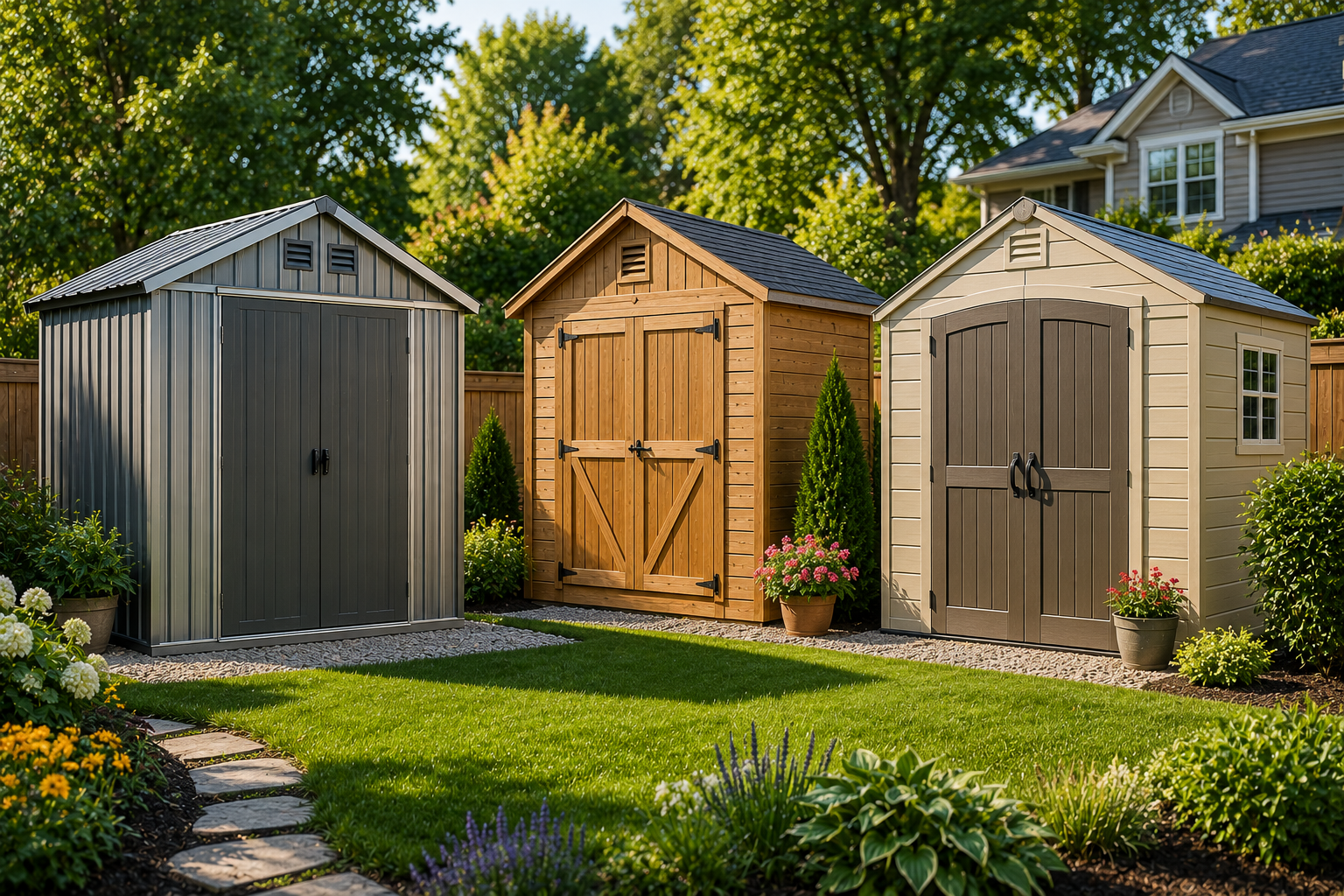
Choosing the right storage shed isn’t only about size or appearance. One of the biggest decisions you’ll make is selecting the right material. The three most popular options metal, wood, and resin—each offer unique advantages and disadvantages. The best choice depends on your budget, local climate, maintenance preferences, storage needs, and how you plan to use the shed.
Some homeowners want a maintenance-free shed that can withstand years of rain and sunshine with minimal care. Others prefer a traditional wooden structure that complements their home’s architecture. Some prioritize security and durability, making metal sheds an attractive option.
In this guide, we’ll compare metal, wood, and resin sheds across every important category, including durability, maintenance, weather resistance, appearance, security, installation, and overall value.
Quick Comparison Table
| Feature | Metal Shed | Wood Shed | Resin Shed |
| Durability | Excellent | Excellent with maintenance | Excellent |
| Maintenance | Low | High | Very Low |
| Appearance | Modern | Traditional | Modern |
| Weather Resistance | Good | Good with treatment | Excellent |
| Rust/Rot Resistance | May rust | Can rot | Won’t rust or rot |
| Customization | Limited | Excellent | Moderate |
| Cost | Moderate | Highest | Moderate |
| DIY Assembly | Moderate | Difficult | Easy to Moderate |
This table provides a quick overview before exploring each material in more detail.
Understanding Metal Storage Sheds
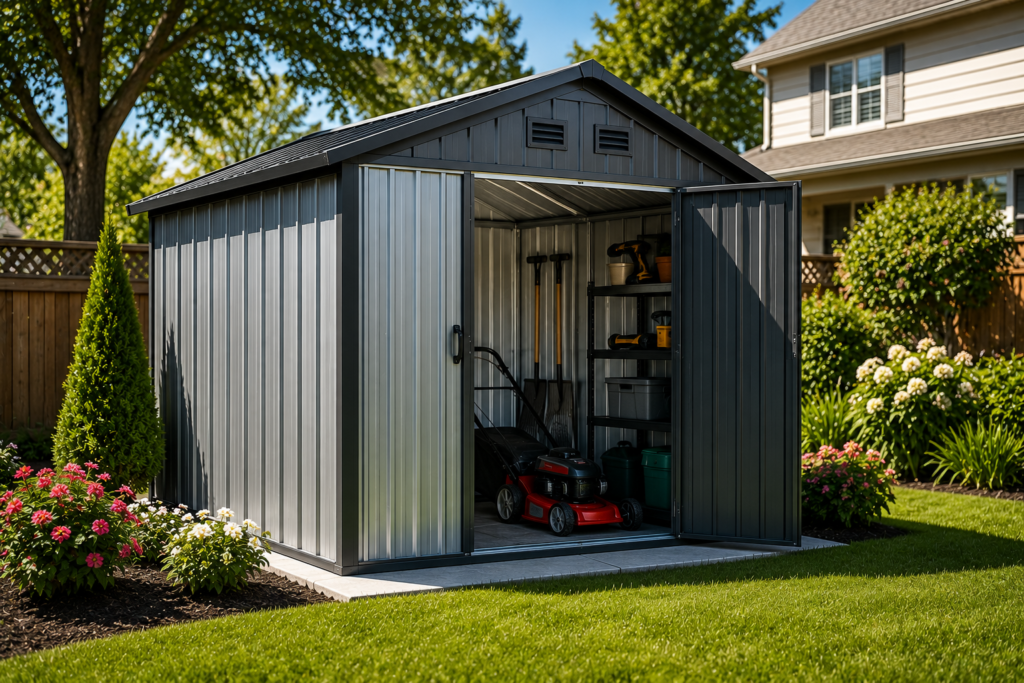
Metal sheds are commonly made from galvanized steel or aluminum and are known for their strength and security.
They are especially popular among homeowners who need dependable storage for expensive outdoor equipment.
Advantages of Metal Sheds
Metal sheds offer several benefits.
These include:
- Strong construction
- Excellent security
- Fire resistance
- Pest resistance
- Long lifespan
- Low maintenance
- Good value for money
Many homeowners appreciate the durability of steel sheds when storing lawn tractors, bicycles, generators, or power tools.
Disadvantages of Metal Sheds
Despite their strengths, metal sheds also have limitations.
Potential drawbacks include:
- Can become hot during summer
- Possible condensation inside
- Limited design customization
- May dent if struck
- Rust can develop if protective coatings become damaged
Proper ventilation helps reduce condensation inside metal sheds.
Understanding Wooden Storage Sheds
Wood sheds remain a favorite among homeowners looking for a classic backyard appearance.
Because wood is easy to modify, it’s often chosen for workshops, hobby spaces, and customized storage solutions.
Advantages of Wooden Sheds
Wood offers several unique benefits.
These include:
- Beautiful natural appearance
- Easy to customize
- Can be painted any color
- Supports shelving installation
- Blends well with landscaping
- Adds traditional charm
Many homeowners choose wood because it complements existing fencing, decks, and home exteriors.
Disadvantages of Wooden Sheds
Wood requires more care than other materials.
Possible disadvantages include:
- Regular painting or staining
- Higher maintenance
- Vulnerable to insects
- Susceptible to rot if neglected
- Usually higher purchase price
Routine maintenance helps wooden sheds remain attractive for many years.
Understanding Resin Storage Sheds
Resin sheds, sometimes called plastic sheds, have become increasingly popular because they combine durability with very little maintenance.
Modern resin sheds often feature reinforced construction and attractive wood-look finishes.
Advantages of Resin Sheds
Homeowners appreciate resin sheds because they are:
- Weather resistant
- Rust resistant
- Rot resistant
- Easy to clean
- UV resistant
- Lightweight
- Low maintenance
Unlike wood, resin never requires painting or staining.
Disadvantages of Resin Sheds
Although highly practical, resin sheds do have a few limitations.
These include:
- Fewer customization options
- Limited structural modifications
- Some models have lower weight capacity for shelving
- Premium resin sheds may cost more than basic metal models
Even so, many homeowners find resin offers the best balance between durability and convenience.
Durability Comparison
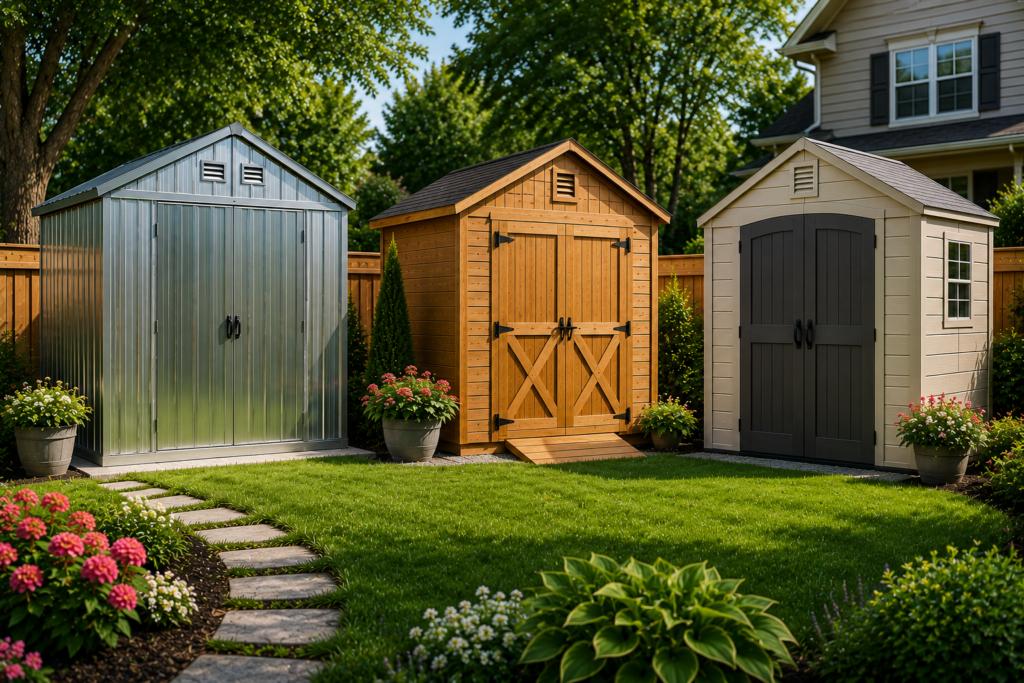
Durability is one of the most important considerations when investing in a storage shed.
Metal
Metal performs extremely well against impact and general wear.
However, scratched coatings may eventually allow rust to develop if not repaired.
Wood
Wood can last for decades with proper maintenance.
Without regular sealing or painting, moisture may eventually cause deterioration.
Resin
High-quality resin resists:
- Rain
- Snow
- UV rays
- Rot
- Rust
- Insects
For homeowners seeking low-maintenance durability, resin is often an excellent option.
Weather Resistance
Outdoor storage sheds remain exposed to changing weather throughout the year.
Heavy Rain
Resin performs exceptionally well because it doesn’t absorb moisture.
Metal also handles rain effectively but should be inspected periodically for damaged coatings.
Wood performs well when properly sealed.
Snow
All three materials can perform well under snow loads when constructed according to manufacturer recommendations.
Choose a roof style designed for your local climate.
Sunlight
Modern resin sheds include UV-resistant materials that help reduce fading.
Wood may require repainting over time.
Metal can become noticeably warmer under direct sunlight.
Maintenance Requirements
Maintenance differs considerably between materials.
Metal Maintenance
Typically involves:
- Cleaning dirt
- Inspecting for rust
- Tightening hardware
- Washing exterior
Overall maintenance requirements remain relatively low.
Wood Maintenance
Requires more attention.
Tasks may include:
- Painting
- Staining
- Sealing
- Inspecting for insects
- Replacing damaged boards
While maintenance requires additional effort, many homeowners appreciate wood’s timeless appearance.
Resin Maintenance
Resin is the easiest material to maintain.
Routine care usually involves:
- Washing with mild soap
- Removing leaves
- Inspecting hinges
- Cleaning vents
No painting or sealing is normally required.
Appearance and Curb Appeal
A storage shed should complement your home’s exterior.
Wood
Wood offers the most traditional appearance.
It easily blends with:
- Gardens
- Fences
- Pergolas
- Wooden decks
It also provides the greatest flexibility for customization.
Metal
Metal sheds provide a clean, practical appearance.
Modern finishes help improve aesthetics compared to older designs.
Resin
Many newer resin sheds imitate painted wood while maintaining the advantages of synthetic materials.
Some homeowners find this combination especially attractive.
Security Comparison
If you plan to store expensive lawn equipment, bicycles, power tools, or seasonal outdoor items, security should be one of your top priorities.
Each shed material provides a different level of protection.
Metal Sheds
Metal sheds are generally considered the most secure option.
Their rigid construction makes them more difficult to break into than many lightweight alternatives.
Advantages include:
- Strong steel panels
- Reinforced doors
- Heavy-duty locking systems
- Better resistance to forced entry
For homeowners storing valuable equipment, metal sheds often provide the greatest peace of mind.
Wooden Sheds
Wood sheds also offer good security.
Because wood is sturdy, quality locks and reinforced doors can provide excellent protection.
Many homeowners also like that wooden sheds can easily be upgraded with:
- Deadbolt locks
- Security bars
- Motion lighting
- Alarm systems
Resin Sheds
Modern resin sheds are much stronger than earlier plastic models.
Most include lockable doors, but lightweight resin generally doesn’t provide the same level of forced-entry resistance as steel.
For storing everyday gardening equipment and outdoor supplies, resin security is usually sufficient.
Cost Comparison
Budget is another important consideration when choosing a storage shed.
Although prices vary by size and brand, each material falls into a general price range.
| Material | Typical Initial Cost | Long-Term Maintenance Cost |
| Metal | Moderate | Low |
| Wood | Highest | Highest |
| Resin | Moderate to High | Very Low |
When comparing prices, remember to include long-term maintenance expenses.
A less expensive shed may require more maintenance over its lifetime, increasing the total cost of ownership.
Ease of Installation
Some homeowners prefer assembling a shed themselves, while others hire professional installers.
Metal Sheds
Metal sheds usually arrive as panel kits.
Assembly often requires:
- Multiple people
- Basic tools
- Careful alignment
- Several hours or an entire weekend
Following the manufacturer’s instructions carefully helps simplify installation.
Wooden Sheds
Wood sheds generally require the most time and skill to assemble.
Some larger wooden sheds resemble small buildings and may require professional installation.
Resin Sheds
Resin sheds are often the easiest option for DIY installation.
Many manufacturers design resin panels to:
- Snap together
- Require fewer tools
- Reduce assembly time
For first-time homeowners, resin sheds are often the most beginner-friendly choice.
Which Shed Lasts the Longest?
With proper care, all three materials can provide many years of reliable use.
However, lifespan depends on several factors:
- Climate
- Foundation quality
- Maintenance
- Installation
- Exposure to weather
Generally speaking:
- A properly maintained wood shed can last for decades.
- Metal sheds offer excellent structural durability with minimal maintenance.
- High-quality resin sheds resist many common causes of deterioration, including rust, rot, and insects.
The “longest-lasting” shed is often the one that best matches your environment and maintenance habits.
Best Shed Material for Different Homeowners
Different households have different priorities.
Here’s a simple guide to help narrow your decision.
Choose a Metal Shed If You:
- Need maximum security
- Store expensive equipment
- Prefer low maintenance
- Want strong weather resistance
- Like practical functionality
Choose a Wood Shed If You:
- Want a traditional appearance
- Enjoy customizing your shed
- Need workshop potential
- Don’t mind regular maintenance
- Want the shed to match your home
Choose a Resin Shed If You:
- Want minimal maintenance
- Prefer quick assembly
- Live in a wet climate
- Want resistance to rust and rot
- Need dependable everyday storage
Climate Considerations
Your local weather can influence which shed material performs best.
Humid Climates
High humidity increases the risk of moisture-related damage.
Resin performs especially well because it won’t rot or rust.
Wood requires consistent sealing, while metal should be inspected for corrosion if protective coatings become damaged.
Cold Climates
Snow loads place additional stress on roofing systems.
Choose a shed designed for your area’s snow conditions regardless of material.
Hot Climates
Direct sunlight can increase interior temperatures.
Ventilation is important for every shed type.
Windows, roof vents, and wall vents improve airflow and reduce heat buildup.
Common Buying Mistakes
Avoiding a few common mistakes can help ensure you’re satisfied with your purchase.
Choosing Only by Appearance
A beautiful shed isn’t always the most practical.
Consider:
- Maintenance
- Durability
- Storage needs
- Weather resistance
before making your final decision.
Ignoring Future Storage Needs
Many homeowners purchase a shed that fits today’s equipment but leaves no room for future purchases.
Allow extra space for:
- New gardening tools
- Outdoor furniture
- Lawn equipment
- Seasonal decorations
Forgetting Maintenance Requirements
Wood may require painting every few years.
Metal may need occasional rust inspections.
Resin typically requires only routine washing.
Choose a material that fits the amount of maintenance you’re willing to perform.
Buying Without Measuring
Always measure:
- Backyard space
- Access paths
- Gate openings
- Foundation area
A shed that doesn’t fit your property creates unnecessary complications during installation.
Final Buying Checklist
Before choosing your storage shed, confirm that you’ve considered the following:
- ✓ Selected the right material
- ✓ Measured available backyard space
- ✓ Estimated current and future storage needs
- ✓ Planned a proper foundation
- ✓ Considered your local climate
- ✓ Compared maintenance requirements
- ✓ Evaluated security features
- ✓ Reviewed installation requirements
- ✓ Checked local building regulations
- ✓ Chosen a style that complements your home
Completing this checklist helps you select a shed that will continue meeting your needs for years to come.
Conclusion
Choosing between a metal, wood, and resin shed comes down to understanding your priorities as a homeowner. Metal sheds are ideal for those who value strength, security, and low maintenance. Wood sheds offer unmatched customization and traditional curb appeal but require ongoing care to remain in excellent condition. Resin sheds provide outstanding weather resistance, minimal maintenance, and easy installation, making them an excellent choice for many modern households.
Rather than focusing on a single “best” material, think about how you plan to use your shed, the weather conditions in your area, your available budget, and how much maintenance you’re comfortable performing. By selecting a shed that aligns with your lifestyle and storage needs, you’ll enjoy a durable, organized, and functional outdoor storage solution that adds value to your property for many years.
Frequently Asked Questions
1- Which shed material requires the least maintenance?
Resin sheds generally require the least maintenance because they resist rust, rot, insects, and weather damage. Occasional cleaning is usually all that’s needed.
2- Are metal sheds better than wood sheds?
Neither material is universally better. Metal offers excellent durability and security with lower maintenance, while wood provides greater customization and a classic appearance.
3- Do resin sheds fade in sunlight?
Most modern resin sheds include UV-resistant materials that help minimize fading over time, though appearance may gradually change after many years of outdoor exposure.
4- Which shed is best for storing power tools?
Metal and high-quality wooden sheds both work well for storing valuable power tools, especially when equipped with strong locking systems and proper ventilation.
5- Can I install a shed myself?
Many homeowners successfully install resin and smaller metal sheds themselves. Larger wood sheds or complex installations may benefit from professional assembly.