
Introduction
Outdoor furniture faces a genuinely tougher job than anything indoors; sun, rain, humidity, and temperature swings all take a toll in ways your living room sofa never has to endure. Getting this outdoor furniture buying guide right from the start means thinking beyond style alone, toward material durability, proper sizing, and how a piece will actually hold up through a full year of real outdoor exposure.
This guide walks through everything to consider before buying patio furniture, from material selection and cushion fabric to sizing your space correctly and setting a realistic budget, so your outdoor furniture investment actually lasts.
Step 1: Assess Your Climate and Exposure
Full Sun vs Shaded Patios
Furniture in full, direct sun experiences more UV fading and heat-related material stress than furniture under a covered porch or shaded pergola. If your outdoor space gets consistent direct sun, prioritize UV-resistant materials and fade-resistant cushion fabrics specifically.
Humid and Coastal Climates
Salt air and high humidity accelerate rust on uncoated metal and can promote mold or mildew on porous materials. Coastal homeowners should prioritize powder-coated aluminum or genuinely marine-grade materials over standard steel or untreated wood.
Cold Climates and Winter Storage
In regions with harsh winters, furniture that can’t be easily stored indoors or under cover needs materials genuinely rated for freeze-thaw cycles and prolonged cold exposure, since not all “outdoor” furniture is built to withstand winter left outside.
Step 2: Choose the Right Material for Your Needs
Quick Material Overview
| Material | Durability | Maintenance | Weight | Best For |
| Aluminum | High (rust-resistant) | Low | Light | Most climates, easy to move |
| Teak (wood) | Very high | Moderate (or low if left to gray) | Moderate | Classic look, long-term investment |
| Wicker (resin/synthetic) | High | Low | Light to moderate | Casual, textured style |
| Steel/wrought iron | High (if coated) | Moderate | Heavy | Traditional style, windy areas |
| Wicker (natural) | Low outdoors | High | Light | Covered porches only |
For a full breakdown of how wood, metal, and wicker specifically compare, see our companion guide on choosing between them.
Matching Material to Your Priorities
If low maintenance matters most, aluminum or resin wicker generally requires the least ongoing care. If you want furniture that improves with age and don’t mind occasional maintenance, teak is worth the investment. If you’re furnishing a windy, exposed patio, heavier materials like wrought iron or steel resist tipping and shifting better than lightweight aluminum.
Step 3: Understand Cushion and Fabric Options
Solution-Dyed Acrylic
This is generally considered the gold standard for outdoor cushion fabric, since the color is embedded throughout each fiber rather than applied as a surface coating, making it significantly more fade- and stain-resistant than standard printed or piece-dyed fabrics.
Polyester Outdoor Fabric
A more budget-friendly alternative, polyester outdoor fabrics have improved considerably in fade resistance in recent years, though they generally don’t match solution-dyed acrylic’s long-term color retention and durability.
Foam Fill Considerations
Look specifically for quick-drying, open-cell foam designed for outdoor use, which allows water to drain through rather than becoming waterlogged and developing mold, unlike standard indoor cushion foam.
Cushion Storage and Covers
Regardless of fabric quality, cushions last considerably longer with proper storage during off-seasons or extended rain, and investing in a storage bin or waterproof cover is one of the most cost-effective ways to extend your furniture’s overall lifespan.
Step 4: Measure Your Space Before Shopping
Account for Walkways and Clearance
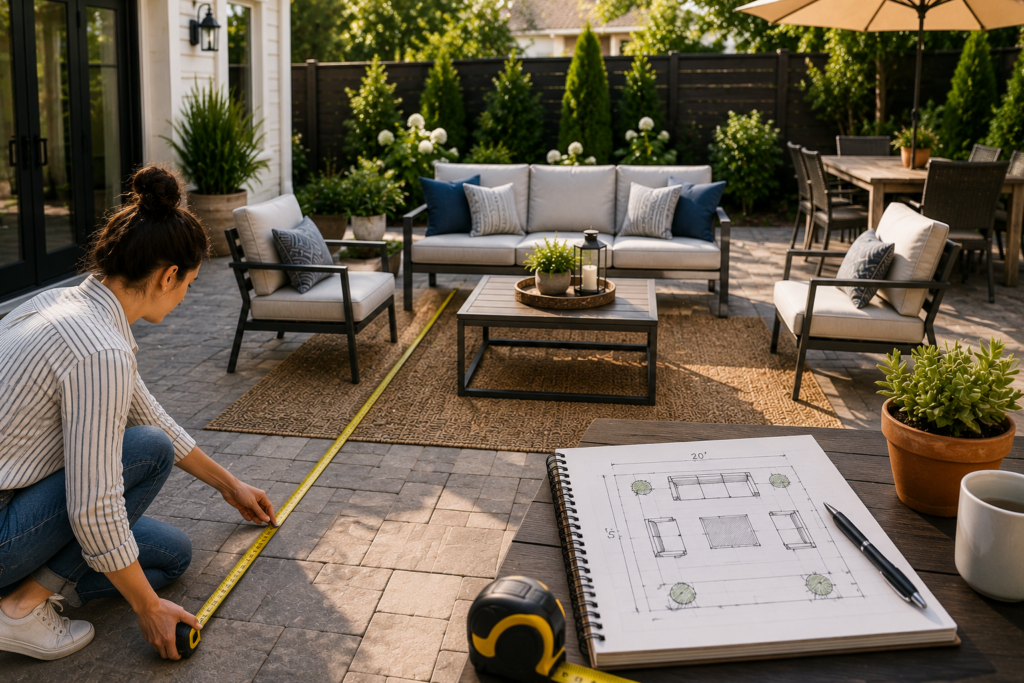
Leave at least 3 feet of walking clearance around dining sets and seating arrangements, ensuring furniture doesn’t block natural movement through your outdoor space.
Consider Your Space’s Primary Use
A patio primarily used for dining needs a table sized to your typical group, while a space focused on lounging and relaxing benefits more from generous seating with a smaller side table footprint.
Measure Doorways for Delivery
Larger furniture pieces, particularly sectionals and dining tables, need to physically reach your outdoor space, so measure gates, side doors, or any path the furniture will travel during delivery or installation.
Step 5: Choose Furniture for Your Space Size
Best Outdoor Furniture for Small Spaces
Compact bistro sets, foldable chairs, and furniture with a slim profile maximize function on balconies, small patios, and tight courtyards without overwhelming the space. Look specifically for stackable or foldable designs that can be stored away when not in use, freeing up space entirely between uses.
Furnishing Larger Patios and Yards
Larger outdoor spaces can accommodate sectional seating, larger dining sets, and distinct zones (a dining area separate from a lounge area), though it’s still worth leaving some open space rather than filling every available square foot.
Step 6: Set a Realistic Budget
What Drives Price
Material quality, cushion fabric grade, and brand all significantly affect price. Budget sets generally use powder-coated steel or basic resin wicker with polyester cushions, while premium sets feature teak, cast aluminum, or genuinely marine-grade materials with solution-dyed acrylic fabric.
Don’t Forget Add-On Costs
Cushions, covers, and any assembly requirements can add meaningfully to your total cost beyond the furniture’s sticker price, so factor these into your overall budget rather than being surprised afterward.
Where to Invest vs Save
It’s generally worth spending more on frame material and construction quality, since this determines how long the core furniture lasts, while cushion covers can be replaced more affordably over time if the underlying frame remains solid.
Step 7: Check Assembly and Maintenance Requirements
Assembly Complexity
Some outdoor furniture arrives fully assembled, while other pieces require meaningful assembly time and tools. Check product listings or reviews specifically for assembly difficulty before purchasing if this matters to your timeline.
Ongoing Maintenance by Material
Aluminum and resin wicker require minimal ongoing care beyond occasional cleaning. Teak benefits from periodic oiling if you want to maintain its original color, though it can also be left untreated to weather naturally to a silvery gray. Steel and wrought iron need periodic inspection for rust or chipped coating, with touch-up paint applied promptly if damage appears.
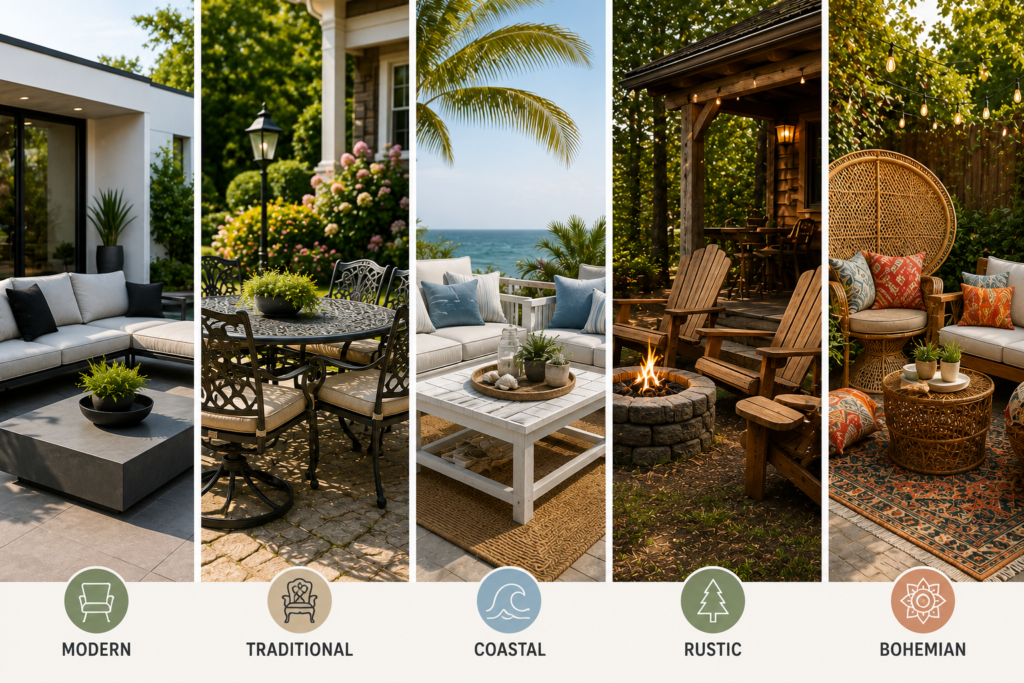
Common Outdoor Furniture Styles
Modern and Minimalist
Clean lines, powder-coated aluminum frames, and neutral cushion colors define this style, suiting contemporary homes and smaller spaces particularly well.
Traditional and Classic
Wrought iron detailing, richer wood tones, and more ornate silhouettes suit traditional home exteriors and larger, established outdoor spaces.
Coastal and Casual
Woven wicker textures, lighter color palettes, and relaxed silhouettes suit beach-adjacent homes and casual entertaining spaces.
Rustic and Farmhouse
Natural wood finishes, simple functional designs, and weathered aesthetics suit country-style homes and covered porch settings.
Common Mistakes to Avoid
- Buying based on style alone, without confirming the material suits your specific climate and sun exposure
- Skipping measurements, resulting in furniture that overcrowds walkways or doesn’t fit through access points
- Underestimating cushion and cover costs, being surprised by add-on expenses beyond the furniture’s sticker price
- Choosing natural wicker for full outdoor exposure, when it’s genuinely only suited to covered, protected spaces
- Neglecting maintenance requirements, letting metal furniture rust or wood deteriorate from lack of basic upkeep
Conclusion
Choosing the right outdoor furniture comes down to matching material and construction quality to your specific climate and space, rather than shopping by style alone. Measure your space carefully, prioritize weather-appropriate materials and fade-resistant cushion fabric, and budget realistically for the furniture plus its ongoing care needs. With the right choices in place, quality outdoor furniture can genuinely last for many years of regular seasonal use rather than needing replacement after just one or two summers.
Frequently Asked Questions
1- What is the most durable material for outdoor furniture?
Powder-coated aluminum and teak are both widely considered among the most durable options, offering strong resistance to rust, rot, and weather damage with relatively low maintenance requirements.
2- What outdoor furniture requires the least maintenance?
Aluminum and synthetic resin wicker generally require the least ongoing maintenance, needing only occasional cleaning rather than periodic oiling, sealing, or rust prevention.
3- Is wicker furniture good for outdoor use?
Synthetic resin wicker is well suited to full outdoor exposure, while natural wicker is not weather-resistant and should be reserved for covered porches or brought indoors during rain and extreme weather.
4- How do I choose outdoor furniture for a small patio or balcony?
Prioritize compact, foldable, or stackable pieces with a slim profile, allowing you to maximize function without overwhelming a limited space.
5- What cushion fabric is best for outdoor furniture?
Solution-dyed acrylic fabric offers the best overall fade and stain resistance for outdoor use, since the color is embedded throughout the fiber rather than applied as a surface treatment.
6- Should I bring outdoor furniture inside during winter?
This depends on the material and your climate. Even weather-resistant materials generally last longer with some protection during harsh winter conditions, ideally covered storage or bringing cushions indoors at minimum.
7- How much should I budget for outdoor furniture?
This varies significantly by material and set size, but it’s worth budgeting separately for the furniture itself plus cushions, covers, and any assembly needs, rather than assuming the furniture’s listed price covers everything.