
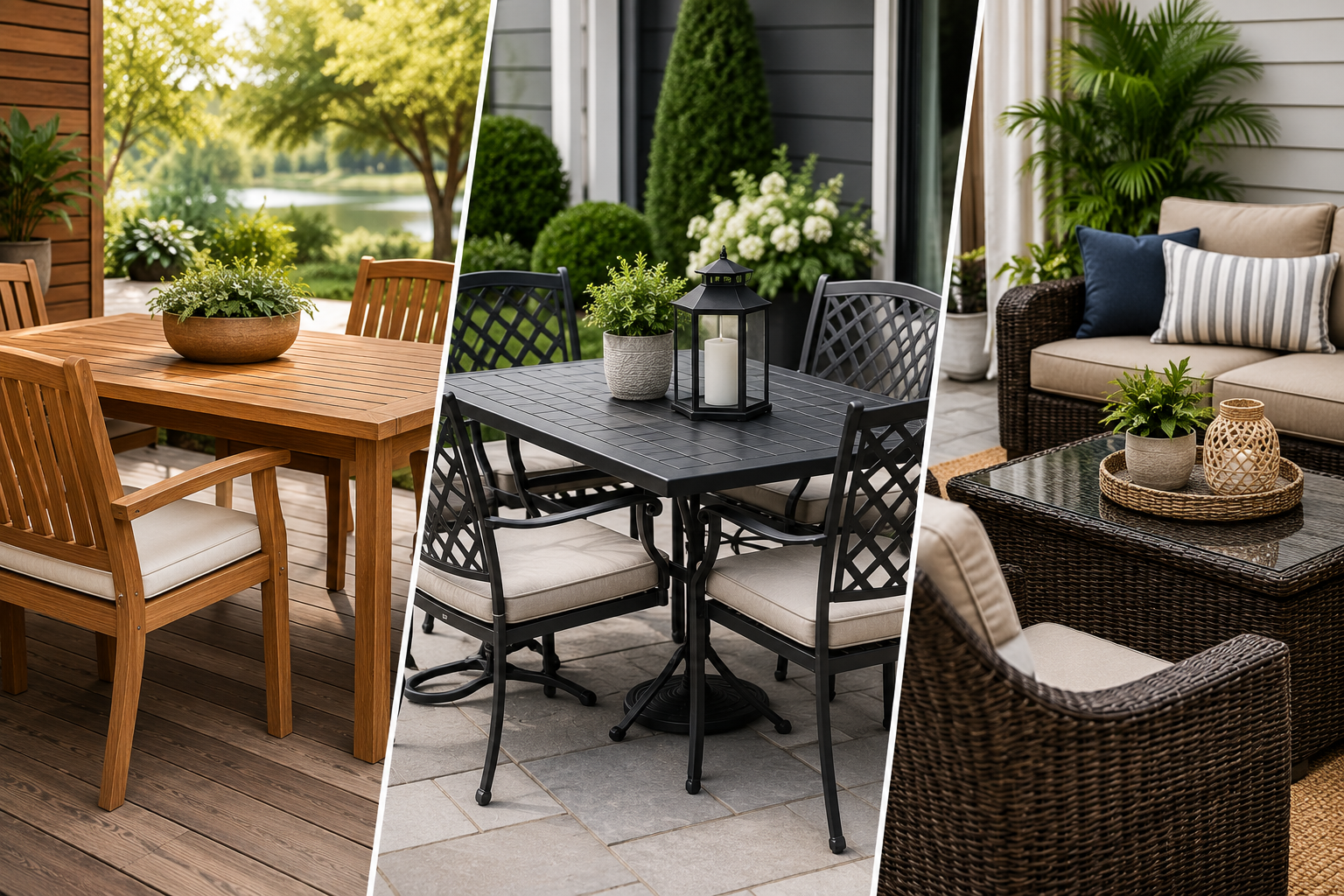
Once you’ve decided you need new patio furniture, the next big decision comes down to material, and wood vs metal vs wicker patio furniture each bring genuinely different strengths to an outdoor space. Durability, maintenance needs, weight, and overall look all vary considerably between these three categories, and the right choice depends heavily on your climate, your maintenance tolerance, and the specific look you’re going for.
This guide compares these three materials in depth, covering how each performs against sun, rain, and temperature swings, so you can choose the option that will genuinely serve your outdoor space well for years.
Wood vs Metal vs Wicker Patio Furniture
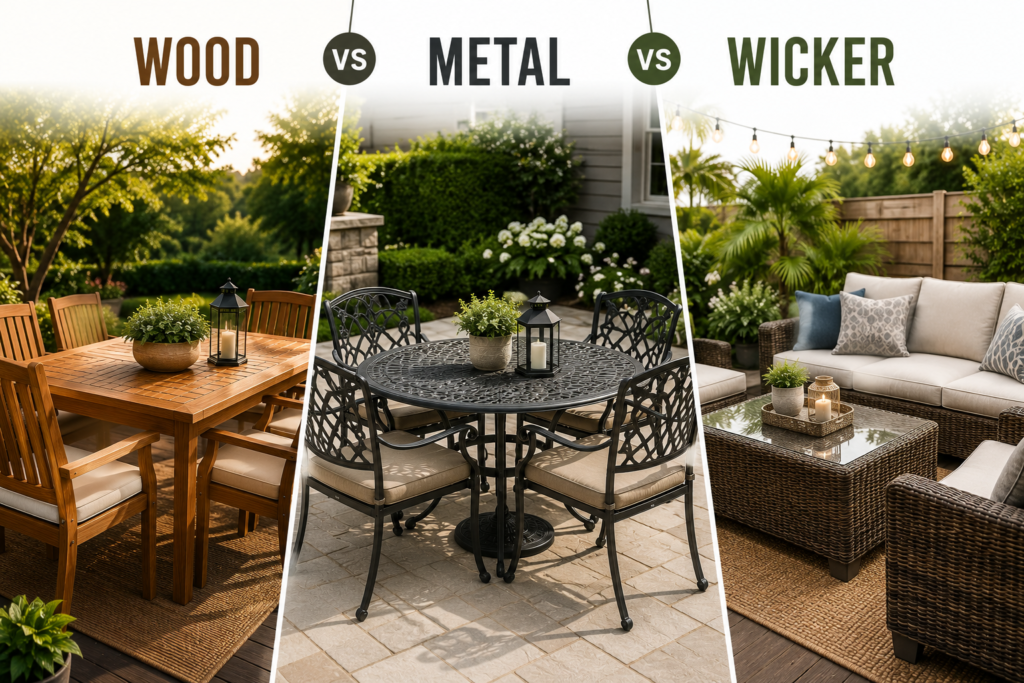
Wood, particularly teak, offers a classic, warm aesthetic and strong natural durability, but requires periodic maintenance (or acceptance of natural graying) to maintain its best appearance. Metal, especially powder-coated aluminum, offers excellent weather resistance and low maintenance in a lightweight package, though wrought iron and steel are heavier and need rust monitoring over time. Wicker, when made from synthetic resin rather than natural rattan, offers a textured, casual look with strong weather resistance and low maintenance, while natural wicker is genuinely unsuited to full outdoor exposure. Most homeowners choose based on climate practicality first, then narrow to the specific look that fits their outdoor style.
Wood Patio Furniture
Common Wood Types for Outdoor Use
Teak is widely considered the gold standard for outdoor wood furniture, thanks to naturally high oil content that provides excellent built-in resistance to moisture, rot, and insects. Eucalyptus offers a more budget-friendly alternative with reasonable durability, though it generally requires more regular maintenance than teak to prevent cracking or graying unevenly. Cedar and acacia are also common outdoor wood choices, each offering decent natural weather resistance at accessible price points, though generally less durable long-term than teak specifically.
How Wood Weathers Over Time
Left untreated, most outdoor woods, including teak, will gradually weather to a silvery-gray patina, a natural and, for many homeowners, aesthetically desirable process rather than a sign of damage. If you prefer to maintain the wood’s original warm color, periodic oiling (typically once or twice a year) is necessary to prevent this natural graying process.
Wood Maintenance Requirements
Beyond optional oiling for color maintenance, wood furniture benefits from occasional cleaning to remove dirt, mildew, or debris buildup, along with periodic inspection for any joint loosening or cracking that develops from repeated wet-dry cycles over multiple seasons.
Metal Patio Furniture
Aluminum
Powder-coated aluminum is one of the most popular outdoor furniture materials today, offering genuine rust resistance (aluminum doesn’t rust the way steel or iron can) combined with a notably lightweight build that makes it easy to rearrange or move for cleaning and storage.
Wrought Iron
Wrought iron offers a heavier, more traditional aesthetic with excellent stability in windy conditions, though it requires a quality protective coating to prevent rust, and any chips or scratches in that coating need prompt touch-up to prevent rust from spreading.
Steel
Similar to wrought iron in requiring rust protection, steel furniture is generally more affordable while still offering solid durability, provided the protective coating is well maintained over time.
Metal Maintenance Requirements
Aluminum requires minimal ongoing maintenance beyond basic cleaning, thanks to its natural rust resistance. Wrought iron and steel need periodic inspection for coating damage, with any exposed metal touched up promptly to prevent rust from spreading and compromising the furniture’s structural integrity over time.
Wicker Patio Furniture
Natural Wicker (Rattan)
Traditional natural wicker, woven from rattan or similar plant fibers, offers a genuinely beautiful, classic texture, but it is not weather-resistant and will deteriorate relatively quickly with direct sun and moisture exposure. Natural wicker is best reserved for covered porches, sunrooms, or furniture that’s regularly brought indoors during poor weather.
Synthetic Resin Wicker
All-weather resin wicker replicates the look and texture of natural wicker using synthetic materials specifically engineered for outdoor durability, offering genuine UV and moisture resistance that natural wicker simply can’t match. This is the appropriate choice for wicker-style furniture that will remain outdoors through varied weather conditions.
Wicker Maintenance Requirements
Resin wicker requires minimal maintenance, typically just occasional cleaning with mild soap and water. Natural wicker, if used outdoors in any capacity, needs considerably more frequent care and protection, along with acceptance of a shorter overall lifespan compared to synthetic alternatives.
Side-by-Side Comparison
| Feature | Wood (Teak) | Metal (Aluminum) | Wicker (Resin) |
| Weather resistance | High (natural oils) | High (rust-resistant) | High (synthetic) |
| Maintenance | Moderate (or none if allowing graying) | Low | Low |
| Weight | Moderate | Light | Light to moderate |
| Typical lifespan | Very long (decades) | Long | Long |
| Aesthetic | Warm, classic, natural | Modern, sleek | Casual, textured |
| Price range | Higher | Moderate to higher | Moderate |
| Rust risk | None | None (aluminum) | None |
Durability Comparison in Different Conditions
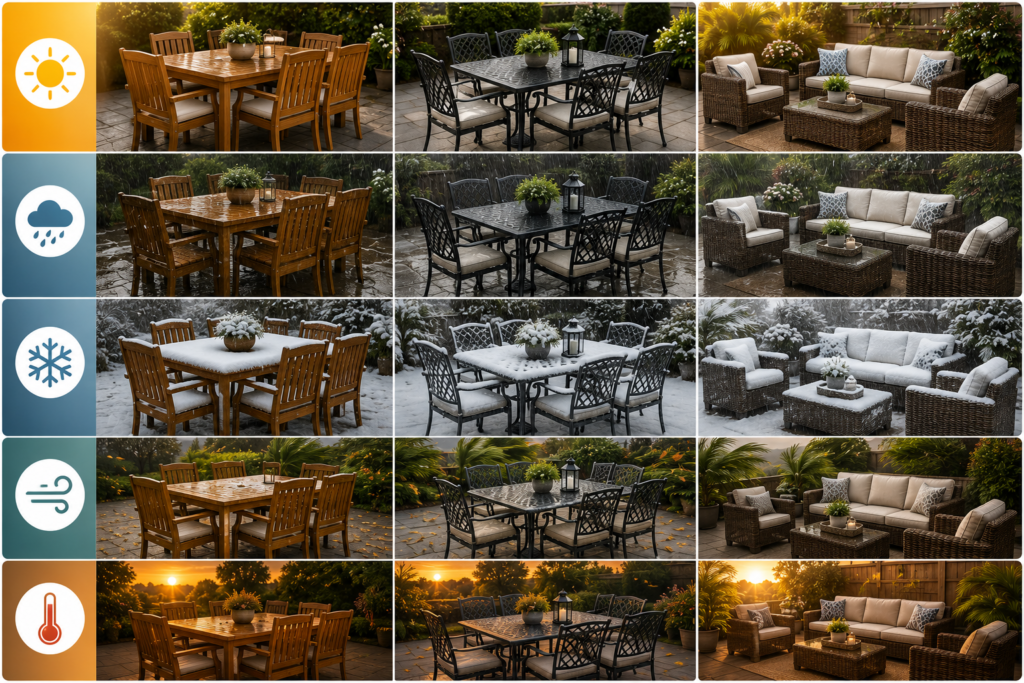
In Coastal, Salt-Air Climates
Aluminum and resin wicker generally outperform wood and untreated metal in coastal environments, since salt air accelerates corrosion on standard steel and can affect wood finishes more aggressively than in inland climates. Teak’s natural oils do offer reasonable coastal performance, though aluminum remains the more consistently low-maintenance coastal choice.
In Hot, Sunny Climates
All three materials handle heat reasonably well, though metal furniture can become notably hot to the touch in direct, intense sun, worth considering for frequently used seating. UV exposure affects cushion fabric more significantly than the frame material itself across all three categories.
In Cold, Snowy Climates
Metal and resin wicker generally handle freeze-thaw cycles better than wood, which can be more prone to cracking from repeated moisture absorption and freezing if left outdoors without cover through harsh winters.
Weight and Portability Considerations
Aluminum is the lightest of the three materials, making it the easiest to move for cleaning, rearranging, or seasonal storage. Wood and resin wicker fall in a moderate weight range, manageable but requiring more effort to relocate than aluminum. Wrought iron and steel are considerably heavier, offering excellent stability in windy conditions but making the furniture more cumbersome to move or store.
Style and Aesthetic Differences
Wood’s Aesthetic Appeal
Wood brings natural warmth and a timeless, classic look that suits nearly any outdoor style, from traditional to rustic to even certain modern designs when paired with clean-lined construction.
Metal’s Aesthetic Appeal
Metal furniture, particularly aluminum, tends to suit modern and contemporary outdoor spaces well, with clean lines and often a more streamlined profile than wood or wicker alternatives.
Wicker’s Aesthetic Appeal
Wicker brings a distinctive woven texture that suits casual, coastal, and bohemian-style outdoor spaces particularly well, offering visual interest that flat wood or metal surfaces don’t provide on their own.
Which Material Should You Choose?
Choose Wood If:
You want a classic, warm aesthetic, don’t mind occasional maintenance (or are happy to let it weather naturally), and are willing to invest more upfront for furniture that can genuinely last for decades with proper care.
Choose Metal If:
You prioritize low maintenance and strong weather resistance, particularly in coastal or salt-air climates, and want a lightweight (if choosing aluminum) or highly stable (if choosing wrought iron) option depending on your specific needs.
Choose Wicker If:
You want a casual, textured look suited to relaxed outdoor entertaining, and you specifically choose synthetic resin wicker rather than natural rattan for any furniture that will remain outdoors regularly.
Consider Mixing Materials
Many well-designed outdoor spaces combine materials intentionally, such as an aluminum dining set paired with resin wicker lounge seating, for example, rather than committing to a single material across the entire space, creating visual interest while still matching each piece’s material to its specific use and exposure.
Common Mistakes to Avoid
- Choosing natural wicker for full outdoor exposure, when it’s genuinely only suited to covered or indoor-adjacent spaces
- Assuming all metal furniture behaves the same, when aluminum’s rust resistance differs significantly from wrought iron or steel’s coating-dependent protection
- Underestimating wood maintenance if color retention matters to you, being surprised when untreated teak grays faster than expected
- Ignoring climate-specific performance, choosing a material poorly suited to coastal salt air or harsh winter freeze-thaw cycles
- Overlooking weight when portability matters, choosing heavy wrought iron for a space where furniture needs regular rearranging
Conclusion
The wood vs metal vs wicker decision for your patio furniture ultimately comes down to balancing aesthetic preference against your specific climate and maintenance tolerance. Wood offers timeless warmth for those willing to invest in upkeep or accept natural weathering, metal delivers durability and low maintenance, particularly suited to coastal or high-exposure environments, and synthetic wicker brings casual texture with genuine weather resistance when chosen in resin rather than natural form. Whichever material you choose, matching it honestly to your climate and how much maintenance you’re realistically willing to do will determine whether your outdoor furniture investment lasts for years or needs replacing after just one tough season.
Frequently Asked Questions
1- Is teak or aluminum better for patio furniture?
Neither is universally better; they suit different priorities. Teak offers a warmer, classic aesthetic with strong natural durability, while aluminum offers lighter weight, lower maintenance, and excellent rust resistance, particularly valuable in coastal climates.
2- Is wicker patio furniture durable?
Synthetic resin wicker is genuinely durable for outdoor use, offering strong UV and moisture resistance. Natural wicker (rattan) is not durable outdoors and should be reserved for covered or indoor-adjacent spaces.
3- Does wood patio furniture need to be sealed or oiled?
Only if you want to maintain its original color; otherwise, most outdoor woods, including teak, will naturally weather to an attractive silvery gray without any treatment, which is a normal process rather than damage.
4- Which patio furniture material is best for coastal climates?
Aluminum and synthetic resin wicker generally perform best in coastal, salt-air environments, offering strong corrosion resistance compared to untreated steel or wrought iron.
5- Is metal or wood patio furniture heavier?
This depends on the specific type. Aluminum is generally lighter than wood, while wrought iron and steel are typically heavier than most outdoor wood furniture.
6- Can I mix wood, metal, and wicker furniture in the same outdoor space?
Yes, many well-designed outdoor spaces intentionally combine materials, matching each piece’s material to its specific use and creating visual interest rather than committing to a single material throughout.
7- What’s the most low-maintenance patio furniture material?
Aluminum and synthetic resin wicker both require minimal ongoing maintenance, typically just occasional cleaning, compared to wood’s optional oiling or metal alternatives requiring rust monitoring.