Most kitchen appliances don’t fail suddenly. They wear down gradually, often due to small maintenance habits that get skipped week after week. The good news is that consistent, simple upkeep can meaningfully extend appliance lifespan without much time or money.
This guide covers 15 essential kitchen appliance maintenance tips, organized by appliance type, so you can keep your refrigerator, dishwasher, range, and other essentials running well for years longer. We’ll also cover appliance care, maintenance schedules, and practical upkeep advice for American homeowners.
By the end, you’ll have a clear, actionable routine for maintaining every major kitchen appliance, helping you avoid premature breakdowns and costly repairs.
Why Regular Maintenance Matters
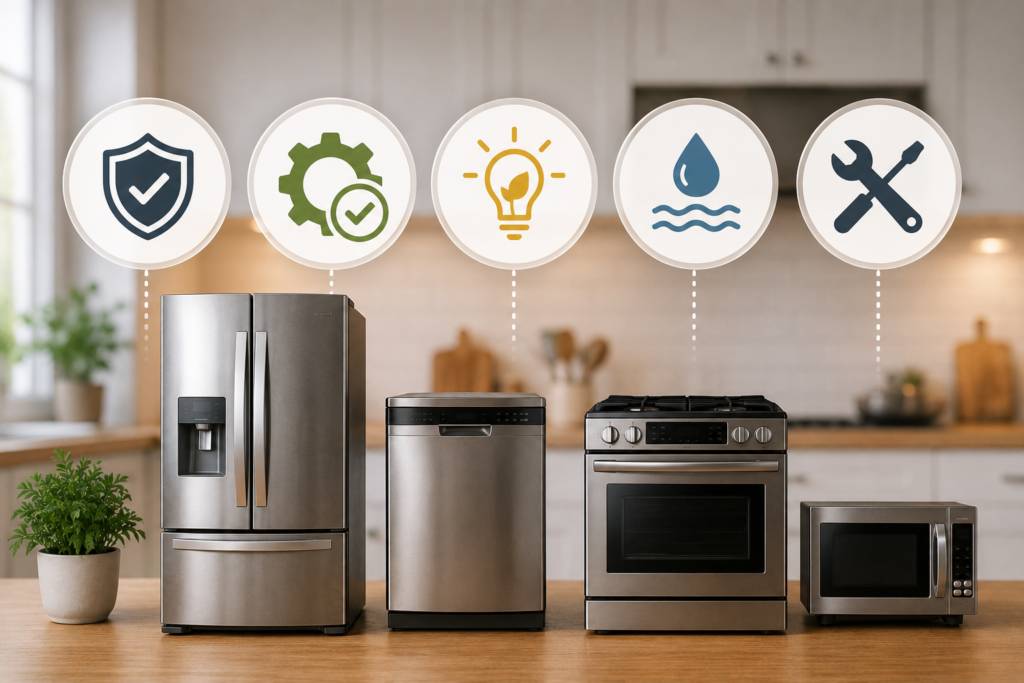
Kitchen appliances endure daily wear from heat, moisture, and constant use, all of which gradually break down components over time. Regular cleaning, proper usage, and basic upkeep can meaningfully extend the working life of most appliances by several years, while neglect tends to accelerate the very failures that lead to early replacement.
Beyond simply avoiding breakdowns, well-maintained appliances also tend to run more efficiently, which can translate into lower energy and water bills over time.
Refrigerator Maintenance Tips
Your refrigerator runs continuously, making it one of the most important appliances to maintain properly.
1. Clean the Condenser Coils Regularly
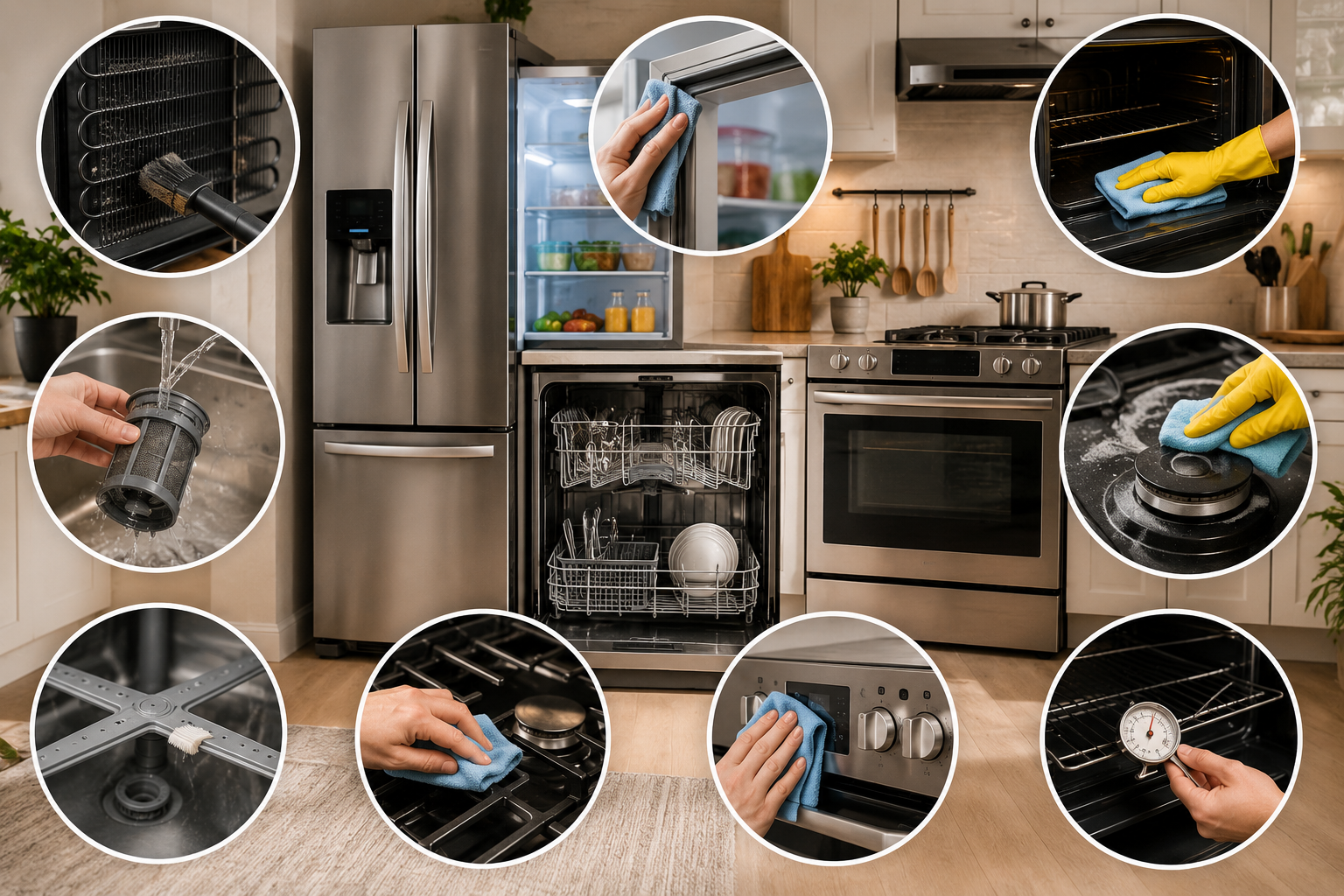
Dust and debris on condenser coils force the compressor to work harder than necessary, which can shorten its lifespan over time. Vacuum or brush the coils, typically located at the back or bottom of the unit, every six months to keep the cooling system running efficiently.
2. Check and Clean Door Seals
Worn or dirty door gaskets let cool air escape, forcing the compressor to run more frequently to maintain temperature. Wipe seals with warm soapy water regularly, and replace them if you notice cracking, tearing, or a weak seal when closing the door.
3. Maintain the Right Temperature Settings
Keep your refrigerator between 37°F and 40°F and your freezer at 0°F for optimal efficiency and food safety. Temperatures set too low force the compressor to work harder than necessary, adding unnecessary strain over time.
4. Avoid Overpacking the Fridge
Overloading your refrigerator restricts airflow, forcing the cooling system to work harder to maintain even temperatures throughout the unit. Leave some space between items to allow cold air to circulate properly.
Dishwasher Maintenance Tips
Dishwashers deal with constant water exposure and food debris, making regular upkeep particularly important for this appliance.
1. Clean the Filter Monthly
A clogged dishwasher filter reduces cleaning performance and can strain the pump over time. Remove and rinse the filter under running water at least once a month, more often if you frequently run heavily soiled loads.
2. Run a Monthly Cleaning Cycle
Mineral deposits and grease buildup inside the dishwasher can affect both performance and longevity. Running an empty cycle with a dishwasher-safe cleaning solution once a month helps remove buildup that regular washing cycles miss.
3. Inspect and Clean the Spray Arms
Food particles and mineral deposits can clog the small holes in spray arms, reducing water pressure and cleaning effectiveness. Periodically remove the spray arms and clear any blockages with a toothpick or small brush.
4. Avoid Overloading Racks
Overloading dishwasher racks blocks water and detergent from reaching all dishes properly, and it also places unnecessary strain on the motor and spray mechanism. Follow the manufacturer’s recommended loading capacity for best results.
Range and Oven Maintenance Tips
Cooking appliances handle intense heat regularly, making proper maintenance essential for both performance and safety.
1. Clean Spills Promptly
Food and grease left to bake onto burners or oven interiors become significantly harder to remove over time and can affect heating efficiency. Wipe up spills as soon as the appliance has cooled to prevent buildup.
2. Limit Use of the Self-Cleaning Cycle
Self-cleaning cycles run at extremely high temperatures, sometimes exceeding 1,000°F, which can place significant stress on internal components and shorten the oven’s overall lifespan. Use this feature sparingly, and consider manual cleaning for lighter messes instead.
3. Check and Clean Burner Components
For gas ranges, keep burner ports clear of food debris and grease to maintain consistent flame and efficient gas usage. For electric ranges, ensure coil connections are clean and properly seated to maintain reliable heating.
4. Calibrate Oven Temperature Periodically
Ovens can drift out of calibration over time, leading to inconsistent cooking results and potentially causing you to run the oven hotter than necessary to compensate. An oven thermometer can help you check accuracy, and many ovens allow for simple temperature calibration adjustments.
Microwave Maintenance Tips
Microwaves see frequent daily use, and a few simple habits can help extend their comparatively shorter average lifespan.
1. Clean the Interior Regularly
Food splatters left inside a microwave can absorb into surfaces and affect performance over time, particularly around the door seal. Wipe down the interior after use, and consider a steam-cleaning method with water and vinegar for tougher buildup.
2. Avoid Running the Microwave Empty
Running a microwave without food or liquid inside can damage the magnetron, the core component responsible for generating heat, since there’s nothing to absorb the microwave energy. Always ensure there’s something inside before starting a cycle.
Garbage Disposal Maintenance Tips
Garbage disposals are often overlooked in maintenance routines, despite regular daily use in most kitchens.
1. Run Cold Water During and After Use
Running cold water while operating your disposal, and for a short time afterward, helps flush food particles through the pipes and keeps the motor from overheating. Avoid putting fibrous foods, grease, or bones down the disposal, since these can cause jams and premature motor strain.
General Maintenance Habits That Apply to Every Appliance
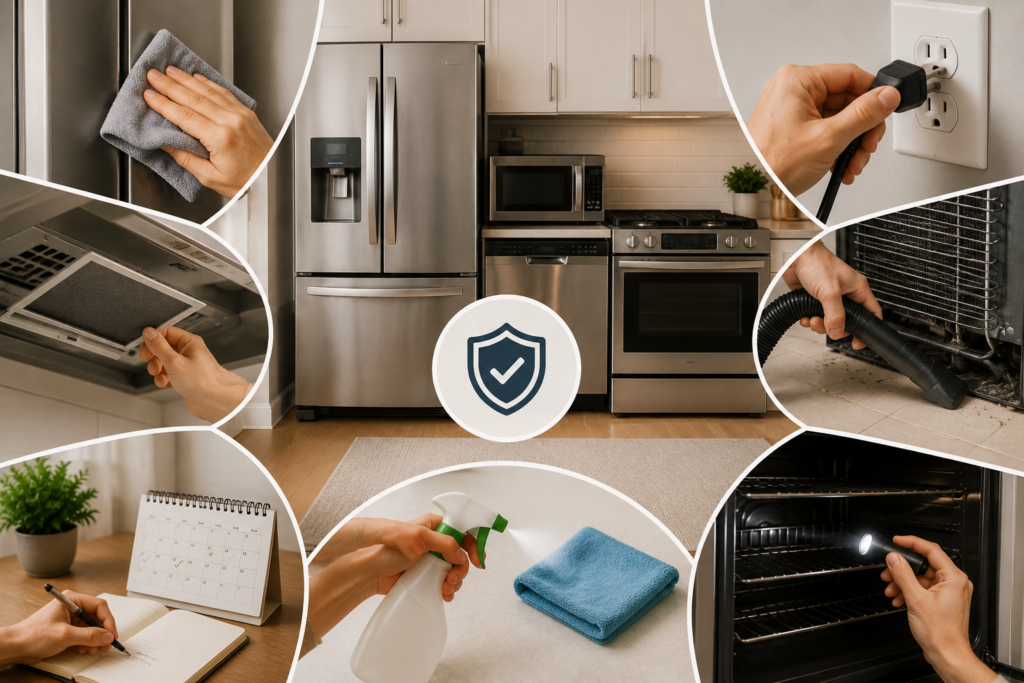
Beyond appliance-specific tips, a few broader habits support the longevity of your entire kitchen appliance lineup.
- Follow manufacturer guidelines: Each appliance’s manual includes specific care instructions and recommended maintenance schedules tailored to that model.
- Schedule periodic professional inspections: An annual tune-up from a qualified technician can catch small issues before they develop into costly repairs.
- Address leaks immediately: Water leaks from any appliance can cause damage well beyond the appliance itself, including cabinetry and flooring, if left unaddressed.
- Use appliances as intended: Avoid using appliances for purposes outside their design, such as overloading capacity limits or using incorrect cleaning products.
- Keep appliances properly ventilated: Adequate airflow around refrigerators, ranges, and ovens helps components run at appropriate temperatures and reduces unnecessary strain.
A Simple Maintenance Schedule
Staying consistent is often the hardest part of appliance maintenance. Here’s a general schedule to help you stay on track.
| Frequency | Tasks |
| Weekly | Wipe spills, clean stovetop, wipe microwave interior |
| Monthly | Clean dishwasher filter, run dishwasher cleaning cycle, clean disposal |
| Every 6 months | Clean refrigerator coils, check door seals, clean oven vents |
| Annually | Professional inspection, oven calibration check, deep clean all appliances |
How Maintenance Affects Appliance Lifespan
Consistent maintenance doesn’t just prevent breakdowns; it can genuinely extend how long an appliance lasts overall. Appliances that receive regular cleaning and care often outperform their typical expected lifespan, while neglected appliances frequently fail earlier than average.
This is particularly true for components affected by buildup and blockages, such as refrigerator coils, dishwasher filters, and disposal motors, all of which are directly influenced by how consistently they’re cleaned and maintained.
Signs Maintenance Isn’t Enough
While regular upkeep helps significantly, it’s worth recognizing when an appliance issue goes beyond what maintenance can fix. Persistent problems despite consistent care, unusual noises that don’t resolve, or appliances already near the end of their typical lifespan may signal it’s time to consider repair or replacement rather than continued troubleshooting.
If you find yourself performing the same fix repeatedly without lasting improvement, that’s usually a sign the underlying component has worn out rather than simply needing routine care.
Common Maintenance Mistakes to Avoid
- Skipping the manual: Manufacturer instructions often include specific care details that generic advice can’t fully replace.
- Using harsh or incorrect cleaning products: Some cleaners can damage specific finishes or components, so it’s worth confirming what’s safe for each appliance.
- Ignoring small issues: Minor problems like slow drainage or inconsistent heating often worsen over time if left unaddressed.
- Over-relying on self-cleaning features: Features like self-cleaning oven cycles can cause more strain than manual cleaning, especially on older units.
- Forgetting less-visible appliances: Garbage disposals and range hood filters are often overlooked simply because they’re less visible during daily use.
Tools and Supplies for Basic Appliance Maintenance
Most kitchen appliance maintenance requires only a handful of inexpensive supplies.
- Soft cloths and microfiber towels: Useful for wiping down interiors, seals, and exterior surfaces without scratching
- A soft-bristle brush or old toothbrush: Helpful for cleaning spray arm holes, burner ports, and tight corners
- Mild dish soap and warm water: A safe, effective cleaning solution for most interior surfaces
- White vinegar and baking soda: Useful natural options for descaling and cutting through grease or mineral buildup
- A vacuum with a brush attachment: Ideal for cleaning refrigerator condenser coils and range hood vents
- An oven thermometer: Helps verify your oven’s actual temperature against its displayed setting
Keeping these basic supplies on hand makes it far easier to stay consistent with maintenance tasks, rather than needing to gather materials each time a task comes up.
The Real Cost of Skipping Maintenance
It’s worth understanding what’s actually at stake when routine maintenance gets pushed aside for months or years at a time.
Neglected appliances often draw more energy and water than well-maintained ones, since components working under buildup or restricted airflow have to work harder to achieve the same results. This translates directly into higher utility bills, even before any visible performance issues appear.
Skipped maintenance also tends to accelerate the very failures that lead to costly repairs or early replacement. A refrigerator with dirty coils, for example, forces its compressor to run longer and harder than necessary, which can shorten the compressor’s lifespan considerably compared with a well-maintained unit. Similarly, a dishwasher with a neglected filter can develop pump issues that might have been avoided with a simple monthly cleaning habit.
Over the life of a kitchen appliance, the cumulative cost of higher energy bills and premature repairs often far exceeds the minimal time investment required for regular upkeep.
Building Maintenance Into Your Routine
The biggest challenge with appliance maintenance usually isn’t knowing what to do, it’s remembering to do it consistently. A few practical strategies can turn these tasks into lasting habits.
- Pair tasks with existing routines: Cleaning the dishwasher filter while doing your weekly kitchen deep-clean, for example, makes the task easier to remember.
- Set calendar reminders: A simple recurring reminder for monthly and biannual tasks removes the guesswork of trying to recall when you last cleaned something.
- Keep a simple checklist visible: A printed or digital checklist near your kitchen can serve as a quick visual reminder of upcoming maintenance tasks.
- Involve the whole household: Sharing simple tasks, like wiping spills promptly or running cold water with the disposal, spreads the responsibility and builds better habits across everyone using the kitchen.
Conclusion
Extending the lifespan of your kitchen appliances doesn’t require major investment, just consistent, simple habits applied regularly over time. Cleaning coils, filters, and seals, avoiding overloading, and addressing small issues promptly can add meaningful years to your refrigerator, dishwasher, range, microwave, and disposal alike. Building these tasks into a simple weekly, monthly, and annual routine makes maintenance far easier to stay on top of than tackling everything reactively. With consistent care, your kitchen appliances are far more likely to reach, or even exceed, their expected lifespan, saving you money and stress in the process.
Frequently Asked Questions
1- How often should I clean my refrigerator coils?
Refrigerator condenser coils should generally be cleaned every six months to maintain efficient cooling performance and reduce strain on the compressor.
2- Does regular maintenance actually extend appliance lifespan?
Yes, consistent cleaning and care can meaningfully extend the working life of most kitchen appliances, while neglect tends to accelerate wear and premature failure.
3- How often should I clean my dishwasher filter?
Most manufacturers recommend cleaning the dishwasher filter at least once a month, though more frequent cleaning may be needed for heavy daily use.
4- Is it bad to run the self-cleaning cycle on my oven often?
Yes, self-cleaning cycles run at extremely high temperatures that can place additional stress on internal components, so it’s best used sparingly rather than as a regular cleaning method.
5- What’s the easiest appliance maintenance task to forget?
Garbage disposal care and range hood filter cleaning are commonly overlooked, simply because these components are less visible during everyday kitchen use.
6- Can maintenance fix every appliance problem?
No, some issues stem from worn components that maintenance alone can’t resolve, particularly on appliances already near the end of their typical lifespan.