A pressure cooker can turn an hour-long braise into a 20-minute meal, which is exactly why it’s become one of the most popular kitchen appliances in American homes. But finding the best pressure cookers for home cooking means understanding there isn’t one single “best” model, the right choice depends on how much you cook, how many functions you actually want, and whether you prefer the simplicity of a stovetop model or the convenience of an electric multi-cooker.
This guide covers well-regarded pressure cookers across both categories, along with a complete buying guide covering capacity, safety features, and which type suits which kind of home cook.
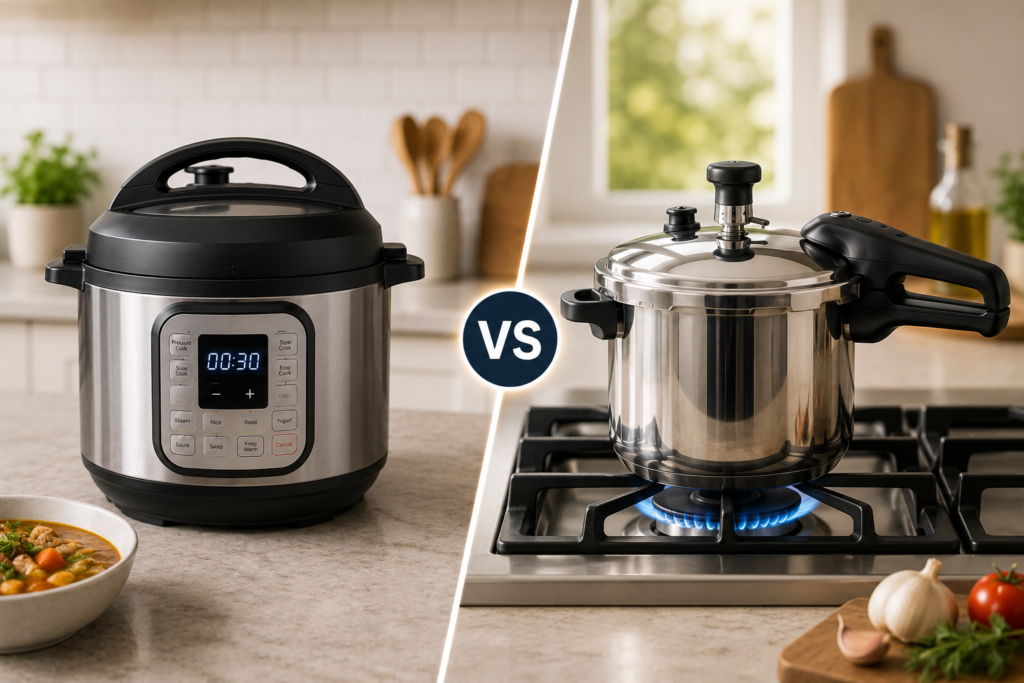
Electric vs Stovetop Pressure Cookers: The Core Decision
Before comparing specific models, it’s worth understanding the fundamental difference between these two pressure cooker types, since this affects nearly every other buying decision.
Electric Pressure Cookers
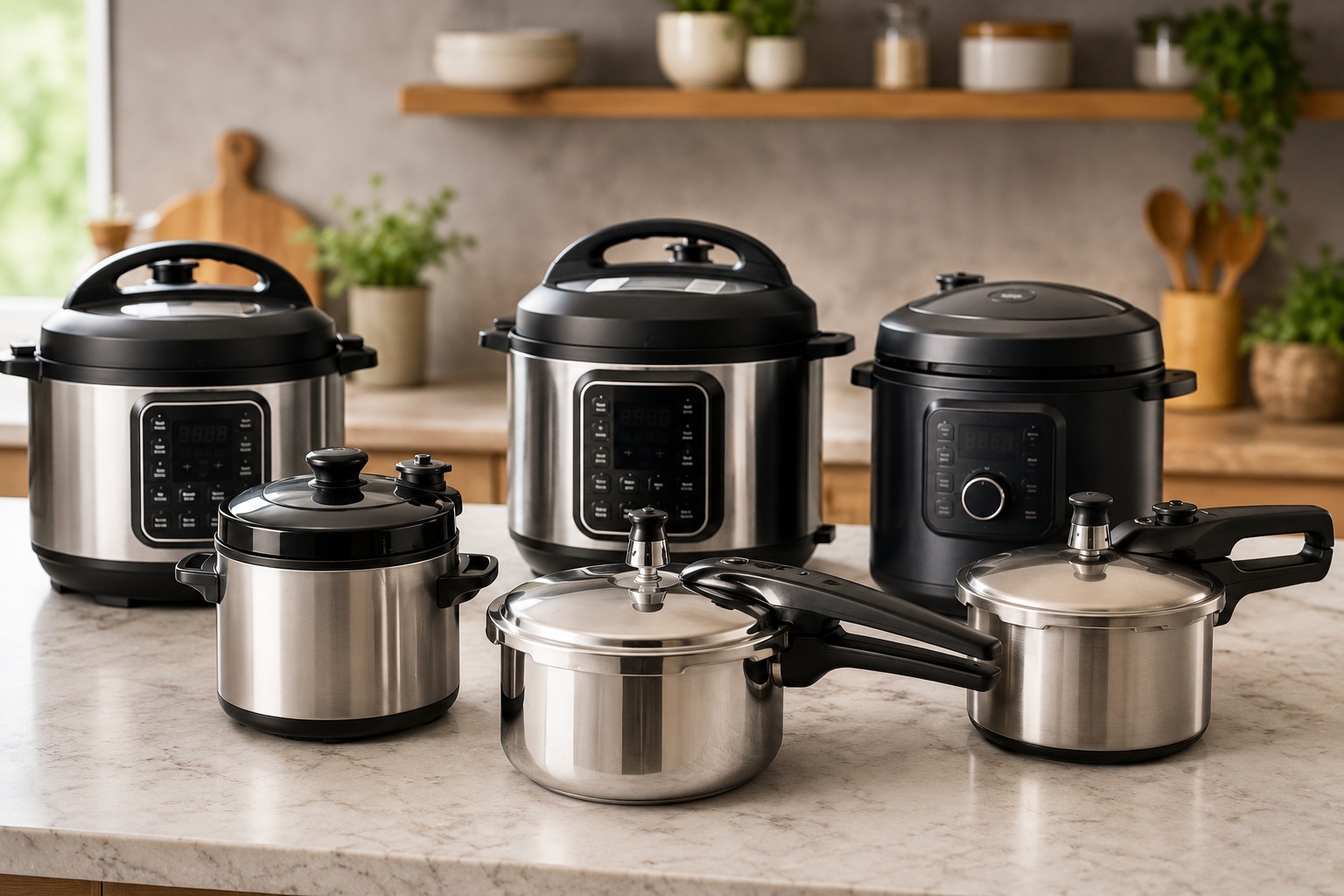
Electric pressure cookers, often called multi-cookers or referred to generically as “Instant Pots” after the popular brand, are standalone countertop appliances with built-in heating elements and digital controls. They offer programmable timers, automatic pressure and temperature regulation, and typically combine several cooking functions, slow cooking, rice cooking, steaming, sautéing, and yogurt making, into a single appliance.
Stovetop Pressure Cookers
Stovetop pressure cookers rely on your existing stove for heat, using a sealed pot and a pressure-regulating valve to build and maintain pressure manually. These models tend to reach higher pressure levels than electric versions and often cook somewhat faster once at pressure, though they require more direct attention and manual adjustment during cooking.
8 Top Pressure Cooker Picks for Home Cooking
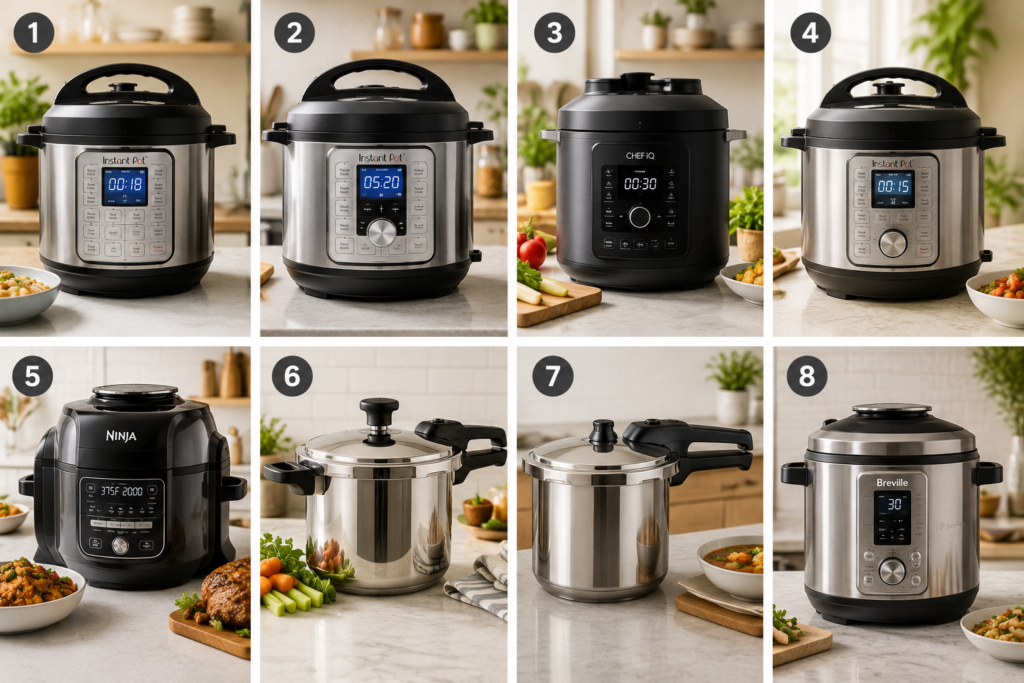
1- Instant Pot Duo Plus
Widely recognized as one of the best value electric pressure cookers available, the Duo Plus offers nine functions in one appliance, including pressure cooking, slow cooking, rice cooking, steaming, sautéing, and yogurt making. It’s frequently praised for its ease of use and wide array of settings, making it a strong entry point for households new to pressure cooking.
2- Instant Pot Pro 10-in-1
This model builds on the Duo Plus with additional functions, including sous vide, sterilizing, and baking, alongside the standard pressure cooking, slow cooking, and steaming modes. It’s recommended for households wanting maximum versatility from a single appliance, effectively replacing several smaller countertop tools.
3- Chef iQ Smart Cooker
Positioned as a top value alternative to Instant Pot, the Chef iQ features a more minimal design with customizable cook functions and app connectivity, appealing to households wanting a sleeker aesthetic alongside strong core performance.
4- Instant Pot 7.5QT RIO Wide
Designed specifically for larger households, this model combines a spacious 7.5-quart capacity with a wider base that provides more cooking surface area for better searing and more even heat distribution. Its whisper-quiet steam release system adds a meaningful convenience upgrade for families cooking large meals or prepping for gatherings.
5- Ninja Foodi
The Foodi’s key differentiator is its ability to pressure cook first, then crisp food afterward using a separate function, something standard electric pressure cookers can’t do in a single appliance. This makes it a strong pick for households wanting to replace multiple kitchen tools with one machine, though it comes with a bulkier footprint that takes up more counter space.
6- Presto 01362 Stainless Steel Pressure Cooker
This stovetop model is frequently highlighted for its reliability, offering the more direct, hands-on control that stovetop pressure cooking provides without the added digital complexity of an electric multi-cooker.
7- Presto 01241
A compact stovetop option well suited to smaller households or simple, straightforward cooking needs, this model prioritizes speed and affordability over multi-function versatility.
8- Breville Fast Slow Pro
This premium electric model is feature-rich, offering multiple cooking presets and a more polished design, appealing to home cooks wanting a higher-end appliance with additional customization options beyond the basics.
A Quick Comparison Table
| Pressure Cooker | Type | Capacity | Key Functions | Best For |
| Instant Pot Duo Plus | Electric | 6 quarts | 9-in-1: pressure cook, slow cook, rice, steam, sauté, yogurt | Best overall value |
| Instant Pot Pro 10-in-1 | Electric | 6 quarts | 10-in-1: adds sous vide, sterilize, bake | Versatility seekers |
| Chef iQ Smart Cooker | Electric | Varies | Customizable cook functions, app connectivity | Minimalist design, smart features |
| Instant Pot 7.5QT RIO Wide | Electric | 7.5 quarts | 7-in-1, wide base for searing | Large families, meal prep |
| Ninja Foodi | Electric | Varies | Pressure cook plus crisp/air fry | Households wanting an all-in-one tool |
| Presto 01362 | Stovetop | Varies | Manual pressure cooking | Reliability, simplicity |
| Presto 01241 | Stovetop | Compact | Manual pressure cooking | Small households, budget |
| Breville Fast Slow Pro | Electric | Varies | Pressure cook, slow cook, multiple presets | Feature-rich, premium cooking |
Electric vs Stovetop: Which Should You Choose?
Choose Electric If:
You want convenience and safety above all else, with automatic pressure and temperature regulation handling the technical details for you. Electric models suit busy households wanting set-it-and-forget-it functionality, along with the bonus of multiple cooking functions in one appliance.
Choose Stovetop If:
You prioritize speed and more direct control over the cooking process. Stovetop pressure cookers generally reach higher pressure levels and can cook slightly faster once at pressure, appealing to more experienced cooks comfortable managing heat and timing manually.
Understanding Pressure Cooker Functions
Modern electric pressure cookers typically combine several functions well beyond basic pressure cooking:
- Pressure cook: The core function, cooking food quickly under sealed, high-pressure conditions
- Slow cook: Functions similarly to a standalone slow cooker for low, extended cooking
- Sauté: Allows browning or searing ingredients directly in the pot before pressure cooking
- Steam: Uses a rack and moderate pressure for gentler cooking, suited to vegetables and delicate proteins
- Rice/grain cook: A dedicated setting calibrated specifically for consistent rice and grain texture
- Yogurt maker: Maintains a low, consistent temperature suited to yogurt culturing
- Sous vide (select premium models): Maintains a precise low temperature for water-bath style cooking
- Warm: Keeps finished food at serving temperature without continuing to cook it
Not every household needs every function, so it’s worth prioritizing based on how you actually cook rather than choosing the model with the longest feature list.
Safety Features to Look For
Pressure cookers have a reputation from older stovetop models for being intimidating or risky, but modern models, especially electric versions, include multiple built-in safety mechanisms that address these older concerns directly.
Look for models with lid-locking mechanisms that prevent the lid from opening while the pot is still pressurized, along with automatic pressure release valves and overpressure protection that vents excess pressure safely if levels get too high. Many electric models also include whisper-quiet steam release systems, reducing both noise and the risk of accidental contact with hot steam during manual release.
Choosing the Right Capacity
Pressure cooker capacity is measured in quarts, and matching it to your household size affects both cooking efficiency and how well the appliance fits your typical meals.
| Household Size | Recommended Capacity |
| 1–2 people | 3–4 quarts |
| 3–4 people | 6 quarts |
| 5–6 people | 6–8 quarts |
| 7+ people or meal prep/gatherings | 7.5+ quarts |
A 6-quart model works well for most households, offering enough capacity for family meals while remaining manageable on the counter and easy to store.
Cooking Speed and Time Savings
One of the most significant practical benefits of pressure cooking is time savings. Meals that traditionally take an hour on the stovetop or in the oven can often be completed in around 20 minutes using a pressure cooker, since the sealed, high-pressure environment cooks food considerably faster than open-air methods.
This makes pressure cookers particularly valuable for tougher cuts of meat, dried beans, and other ingredients that traditionally require long cooking times to become tender, effectively compressing hours of cooking into a fraction of the time.
Nutrition and Flavor Considerations
Because pressure cooking uses a sealed, airtight environment, it tends to preserve more nutrients compared to boiling, since there’s no ongoing evaporation carrying away water-soluble vitamins during the cooking process. The sealed environment also helps retain moisture and flavor, since steam and liquid stay contained within the pot rather than evaporating away over a long cooking time.
Practical Buying Tips
A few practical considerations can help guide your final decision:
- Think honestly about which functions you’ll actually use regularly, rather than paying for an extensive feature list you won’t use
- Match capacity to your typical household size and meal prep habits
- Consider counter space and storage, particularly for larger or multi-function models
- If choosing electric, prioritize models with a quiet steam release and lid-locking safety features
- If choosing stovetop, look for a reliable pressure-regulating valve and consistent reviews for long-term durability
Common Mistakes to Avoid
- Choosing too small a capacity, resulting in a pressure cooker that can’t comfortably handle family-sized meals
- Overpaying for unused functions, particularly multi-cooker models with features like sous vide or yogurt making that go unused
- Overlooking safety features, especially for households new to pressure cooking
- Ignoring counter space requirements, particularly for bulkier multi-function models like combined pressure-and-crisp appliances
- Assuming all electric pressure cookers perform identically, without comparing pressure levels, capacity, and specific included functions
Conclusion
Finding the best pressure cookers for home cooking comes down to matching capacity, function, and cooking style to your household’s actual routine, whether that’s a straightforward stovetop model for hands-on cooking or a full-featured electric multi-cooker designed to replace several separate appliances. Think honestly about which functions you’ll use regularly, how many people you typically cook for, and whether convenience or direct control matters more to your cooking style. With the right pressure cooker in place, you’ll gain one of the most genuinely time-saving appliances available for a busy American kitchen.
Frequently Asked Questions
1- Is an electric pressure cooker as fast as a stovetop model?
Stovetop pressure cookers generally reach higher pressure and can cook slightly faster once at pressure, though electric models remain significantly faster than conventional cooking methods and offer more hands-off convenience.
2- Are modern pressure cookers safe?
Yes. Modern pressure cookers, particularly electric models, include multiple built-in safety mechanisms, such as lid-locking systems and automatic pressure release valves, that address the safety concerns associated with older stovetop designs.
3- What size pressure cooker do I need for a family of four?
A 6-quart electric pressure cooker generally works well for most households of four, offering enough capacity for typical family meals with some room for leftovers.
4- Can a pressure cooker replace a slow cooker?
Many electric pressure cookers include a dedicated slow cook function, effectively combining both appliances into one, though dedicated slow cookers may offer more precise temperature control for extended low-and-slow cooking specifically.
5- Does pressure cooking affect nutrition compared to other cooking methods?
Pressure cooking often preserves more nutrients than boiling, since the sealed cooking environment reduces water-soluble vitamin loss that typically occurs through extended exposure to boiling water and evaporation.
6- What’s the difference between an Instant Pot and a generic electric pressure cooker?
Instant Pot is a specific brand name that has become commonly used to refer to electric pressure cookers generally, similar to how some brand names become generic terms. Other brands, including Chef iQ, Ninja, and Breville, offer comparable electric multi-cooker functionality.
7- Is a multi-function pressure cooker worth the extra cost over a basic model?
It depends on how many of the additional functions, such as air frying, sous vide, or yogurt making, you’ll genuinely use. For households wanting to consolidate several kitchen appliances into one, the added cost is often worthwhile.