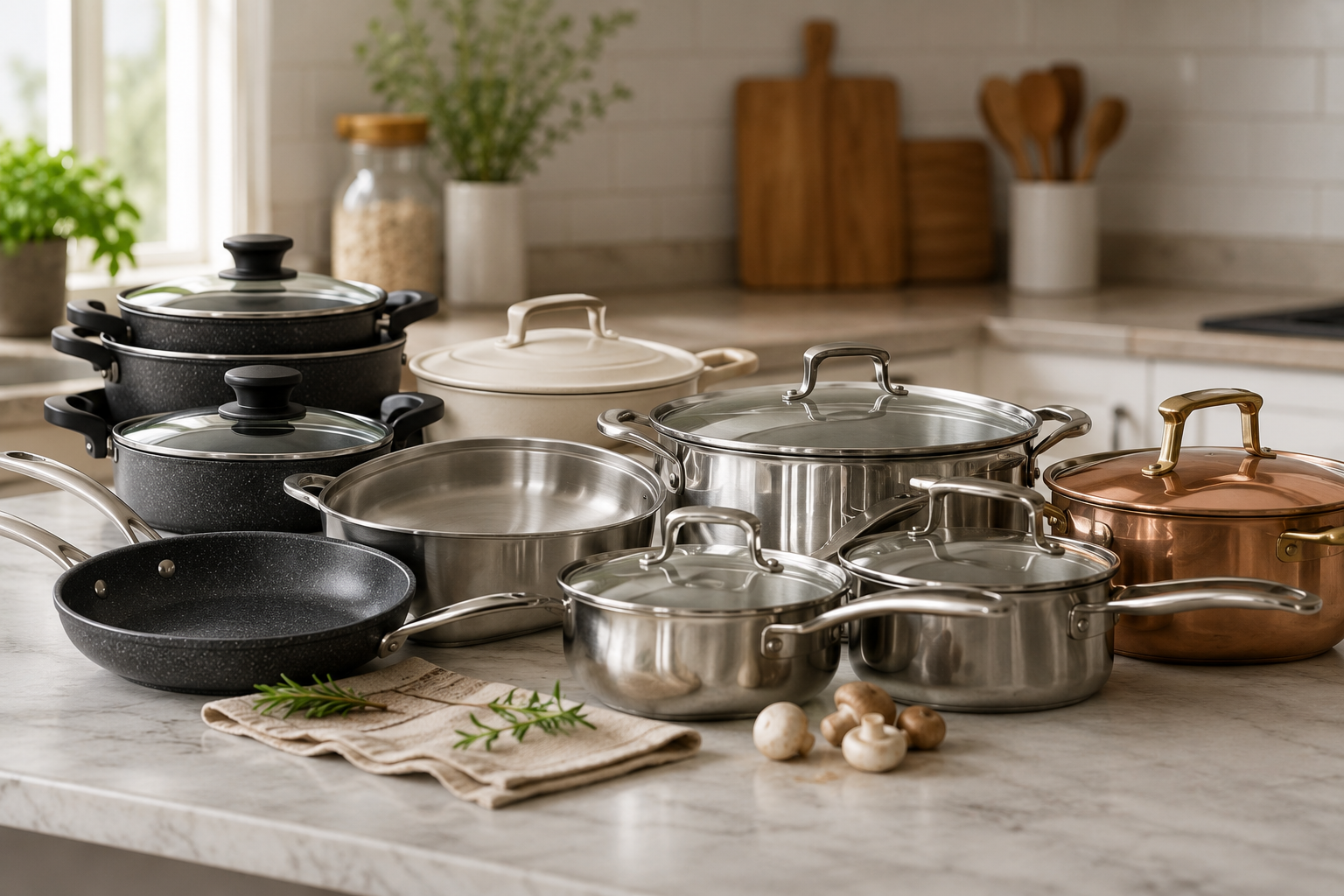
Finding the best pots and pans sets doesn’t require choosing between quality and affordability, current cookware options span a genuinely wide range, and excellent sets exist at nearly every price point. What matters more than budget alone is understanding what you’re actually getting: material quality, piece count versus real usefulness, and whether a set matches how you actually cook.
This guide breaks down strong cookware set options across budget, mid-range, and premium tiers, along with practical advice for choosing based on your cooking habits, kitchen size, and what genuinely matters versus marketing extras you’ll never use.
The Best Budget-Freindly Pots & Pans
For budget-conscious shoppers, sets like the CAROTE 21-piece nonstick collection or the Amazon Basics 8-piece starter set deliver solid everyday performance at an accessible price. For mid-range buyers wanting a meaningful step up in durability and evenness, the Cuisinart MCP-12N stainless steel set, the Ninja Extended Life Premium Ceramic set, or the GreenPan Reserve Ceramic set all perform well in independent testing. For those with a larger budget prioritizing long-term investment pieces, Tramontina’s 12-piece clad stainless steel set and premium collections from All-Clad or Made In represent the top tier, with performance and construction quality that can genuinely last a lifetime.
What “Piece Count” Actually Means
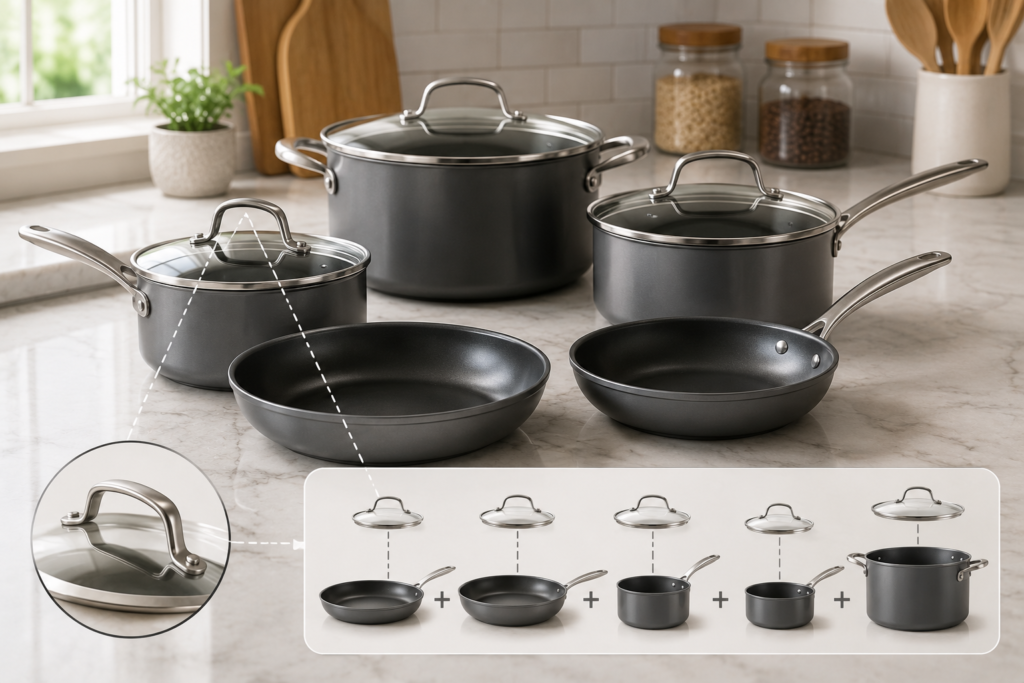
Before comparing specific sets, it’s worth understanding a common source of confusion: cookware sets typically range from five to fifteen pieces, but manufacturers count lids as individual pieces in that total. A “12-piece set” doesn’t mean twelve pots and pans, it often means five or six actual cooking vessels plus their corresponding lids. Always check the specific breakdown of what’s included, rather than assuming a higher piece count automatically means more usable cookware.
Budget Tier: What to Expect and Where It Delivers
- What Budget Sets Do Well
Budget cookware sets, generally priced well under $200, can offer genuinely solid everyday performance, particularly nonstick sets designed for straightforward daily cooking. Many budget-friendly options now use PFOA-free or ceramic nonstick coatings, addressing a common concern shoppers have about older nonstick technology.
- Where Budget Sets Show Their Limits
Truly cheap pots and pans can develop warped bottoms, scraped coatings, loose knobs, and rickety handles over time, particularly with heavy daily use or exposure to high heat. This doesn’t mean every budget set is a poor investment, it means it’s worth reading specifically for handle durability and coating longevity feedback before choosing among lower-priced options.
- Strong Budget Options
The CAROTE 21-piece nonstick set is frequently highlighted as a strong overall budget pick, offering a large, non-toxic collection with solid nonstick performance and compatibility across all cooktop types, including induction. For smaller kitchens, RVs, or dorms, space-saving sets with a removable handle design (like the Astercook Non Stick set) let you nest multiple pan bodies together using a single detachable handle. For those wanting the simplest, most affordable entry point, an 8-piece starter set represents one of the most accessible ways to outfit a first kitchen.
Mid-Range Tier: The Best Value Sweet Spot
Why Mid-Range Often Offers the Best Value
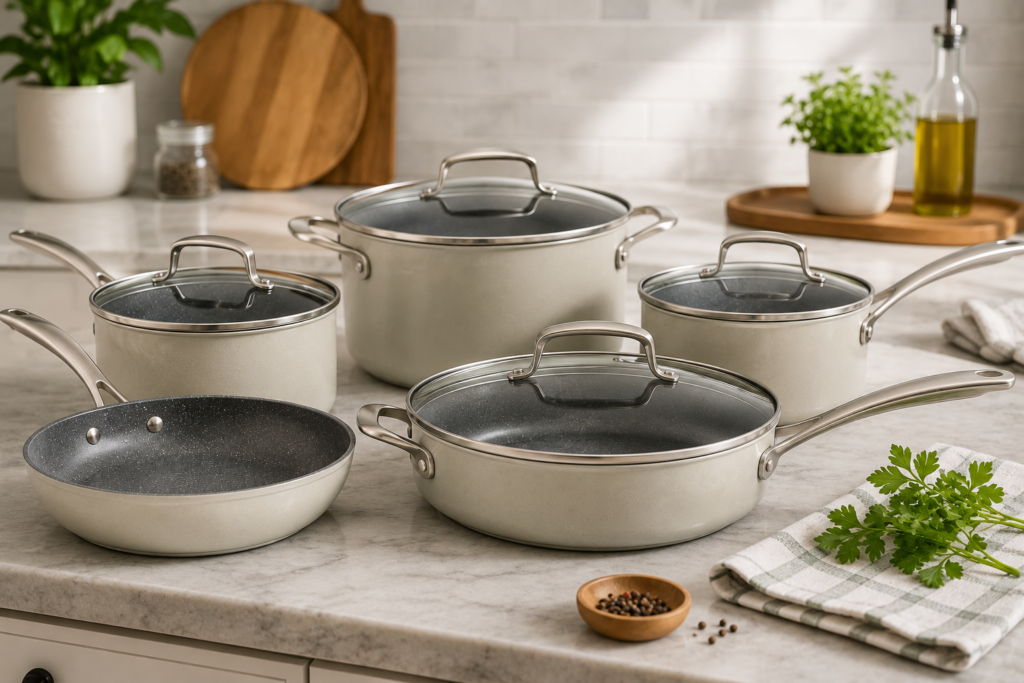
This tier, generally in the $150 to $400 range, is where independent testing consistently finds the strongest balance between performance, durability, and price. Many mid-range sets now use ceramic coatings over a hard-anodized or aluminum core, delivering excellent food release alongside better heat distribution than budget alternatives.
Standout Mid-Range Sets
The Cuisinart MCP-12N Stainless Steel 12-Piece Cookware Set is frequently cited among the top overall picks in this category, offering genuine stainless steel construction and versatility at an accessible price point. The Ninja Extended Life Premium Ceramic 9-piece Cookware Set has drawn praise for consistent performance and a durable ceramic coating, described as PFAS-free and designed to withstand metal utensil use without significant scratching, a notable claim given how quickly many ceramic coatings typically degrade under similar conditions.
The GreenPan Reserve Ceramic Nonstick set, a 10-piece collection including frying pans, saucepans, a sauté pan, and a stockpot, scores well across cooking evenness tests, with particularly strong marks for heating speed and handle sturdiness that stays cool during use. The Figmint 12-piece Nonstick Ceramic Coated Aluminum set also performs strongly in independent cooking evenness and food release testing, offering induction compatibility and oven safety up to 450°F, though testers noted its handle sturdiness scored only moderately well compared to competitors.
Premium Tier: What You’re Actually Paying For
The Case for Investing More
At the premium end, generally $400 and above, you’re typically paying for superior construction (thicker-gauge, fully-clad stainless steel), better heat distribution through multi-layer aluminum or copper cores, refined ergonomic handle design, and, in many cases, meaningfully higher oven-safe temperature ratings.
Standout Premium Sets
Tramontina’s 12-piece clad stainless steel set has been recognized as offering some of the strongest overall value at the premium tier, delivering performance close to considerably pricier competitors at roughly half the cost of some top-tier alternatives. For those wanting a step further, Made In’s 10-piece stainless steel set features a refined matte finish, wide flared rims, and an oven-safe rating up to 800°F, with particularly strong marks for heat distribution and food release in comparative testing, though its price point positions it firmly as a splurge purchase rather than an everyday recommendation for most households.
All-Clad remains one of the most consistently recognized names in premium American cookware, known for fully-clad stainless steel construction that delivers excellent, even heat distribution across the entire cooking surface, not just the base.
Comparison Table: Budget Tiers at a Glance
| Tier | Price Range | Best For | Example Sets |
| Budget | Under $200 | First kitchens, light everyday use | CAROTE 21-piece, Amazon Basics 8-piece |
| Mid-range | $150–$400 | Best overall value, regular home cooking | Cuisinart MCP-12N, Ninja Extended Life Ceramic, GreenPan Reserve |
| Premium | $400+ | Long-term investment, frequent/serious cooking | Tramontina 12-piece clad, Made In, All-Clad |
Nonstick vs Stainless Steel vs Ceramic Sets
Nonstick Sets
Best suited to those newer to cooking or wanting the simplest possible cleanup, nonstick sets excel at eggs, delicate fish, and low-oil cooking, though traditional PTFE coatings degrade over a few years of regular use regardless of care.
Stainless Steel Sets
For those who cook often and have developed comfort with proper heat and oil technique, stainless steel sets offer the best long-term durability and versatility, excelling particularly at searing and sauces without any coating to wear down over time.
Ceramic-Coated Sets
Ceramic cookware sets offer a middle ground: nonstick-style food release without traditional PTFE coatings, generally with better high-heat and oven tolerance than standard nonstick, making them a strong choice for those wanting nonstick convenience while avoiding PFAS-related coatings specifically.
Questions to Ask Before Choosing a Set
What Do You Actually Cook Most Often?
If your cooking leans heavily toward eggs, delicate fish, or low-fat dishes, prioritize strong nonstick or ceramic performance. If you sear meat and make pan sauces regularly, prioritize stainless steel construction quality instead.
How Many People Are You Cooking For?
Smaller households or individuals often don’t need a full 10-to-12-piece set, a smaller 5-to-7-piece collection covering the essentials avoids paying for pieces that will sit unused in a cabinet.
What’s Your Tolerance for Maintenance?
Stainless steel requires more attention to technique (proper preheating, adequate oil) to avoid sticking, while nonstick and ceramic sets are more forgiving for less experienced cooks but require gentler handling to preserve their coatings.
What’s Your Actual Budget Ceiling?
Setting a firm budget range before shopping helps filter meaningfully, since cookware set pricing spans from under $100 to well over $800 for top-tier collections, and independent testing consistently shows strong performance is achievable well below the most expensive options.
Building vs Buying: Is a Set Actually the Best Value?
You can build your own cookware collection piece by piece rather than buying a set, but researching compatible pots and pans individually takes considerably more time, and piecemealing a collection often ends up costing more overall than a coordinated set covering the same core pieces. For most home cooks, a well-chosen set remains the more time- and cost-efficient starting point, with individual specialty pieces (like a dedicated cast iron skillet) added afterward as specific needs become clear.
What to Look for Regardless of Budget
- Riveted handles generally outlast welded or screwed alternatives for long-term durability
- Even heat distribution, ideally verified through independent testing rather than manufacturer claims alone
- Induction compatibility, if you have or plan to have an induction cooktop, since not all materials work with this heating method
- Realistic oven-safe temperature ratings, since this affects versatility for stovetop-to-oven dishes
- Material safety disclosures, particularly PFOA-free or PFAS-free labeling for nonstick and ceramic coatings
Common Mistakes to Avoid
- Choosing based on piece count alone, without checking how many are actual cooking vessels versus lids
- Buying the largest set available, when a smaller, more intentional collection would better suit a smaller household
- Ignoring handle durability feedback, a common weak point even among otherwise well-performing sets
- Assuming premium always means better for your needs, when a well-reviewed mid-range set often delivers comparable everyday performance
- Overlooking cooktop compatibility, particularly for induction cooktops requiring magnetic cookware
Conclusion
The best pots and pans sets aren’t necessarily the most expensive ones, they’re the ones that genuinely match your cooking habits, household size, and maintenance tolerance. Budget sets can deliver solid everyday performance for straightforward cooking, mid-range sets consistently offer the strongest overall value in independent testing, and premium collections reward frequent, serious cooks willing to invest in decades-long durability. Whatever your budget, focus on real construction quality, honest piece counts, and material suited to how you actually cook, and you’ll end up with cookware that performs well for years rather than needing replacement within a season or two.
Frequently Asked Questions
1- What is the best cookware set for someone new to cooking?
Nonstick or ceramic cookware sets with a limited number of pieces tend to suit beginners well, offering forgiving, easy-release cooking while you build comfort and technique.
2- Is a more expensive cookware set always better?
Not necessarily. Independent testing consistently finds strong performance among mid-range sets, with premium pricing often reflecting refined design and marginally superior heat distribution rather than a dramatic performance gap.
3- How many pieces do I actually need in a cookware set?
Most households genuinely use five to seven core pieces regularly: a large skillet, a smaller pan, one or two saucepans, and a stockpot. Larger sets often include specialty pieces that go underused.
4- Are ceramic cookware sets as durable as stainless steel?
Generally not for identical lifespans, ceramic coatings, like traditional nonstick, gradually lose effectiveness over years of use, while stainless steel has no coating to degrade and can last considerably longer with proper care.
5- What does “PFOA-free” mean on a cookware label?
It indicates the product doesn’t contain PFOA, a specific chemical once commonly used in nonstick coating manufacturing that has been largely phased out industry-wide due to health and environmental concerns.
6- Can I use metal utensils on ceramic cookware sets?
Some ceramic-coated sets are specifically designed and marketed as metal-utensil safe, though this varies by manufacturer, so it’s worth checking a specific product’s care instructions before regularly using metal tools.
7- Is it cheaper to buy a set or individual pieces?
For most home cooks, a coordinated set typically offers better overall value than piecing together individual items, which often ends up costing more for equivalent coverage of core cooking tasks.