
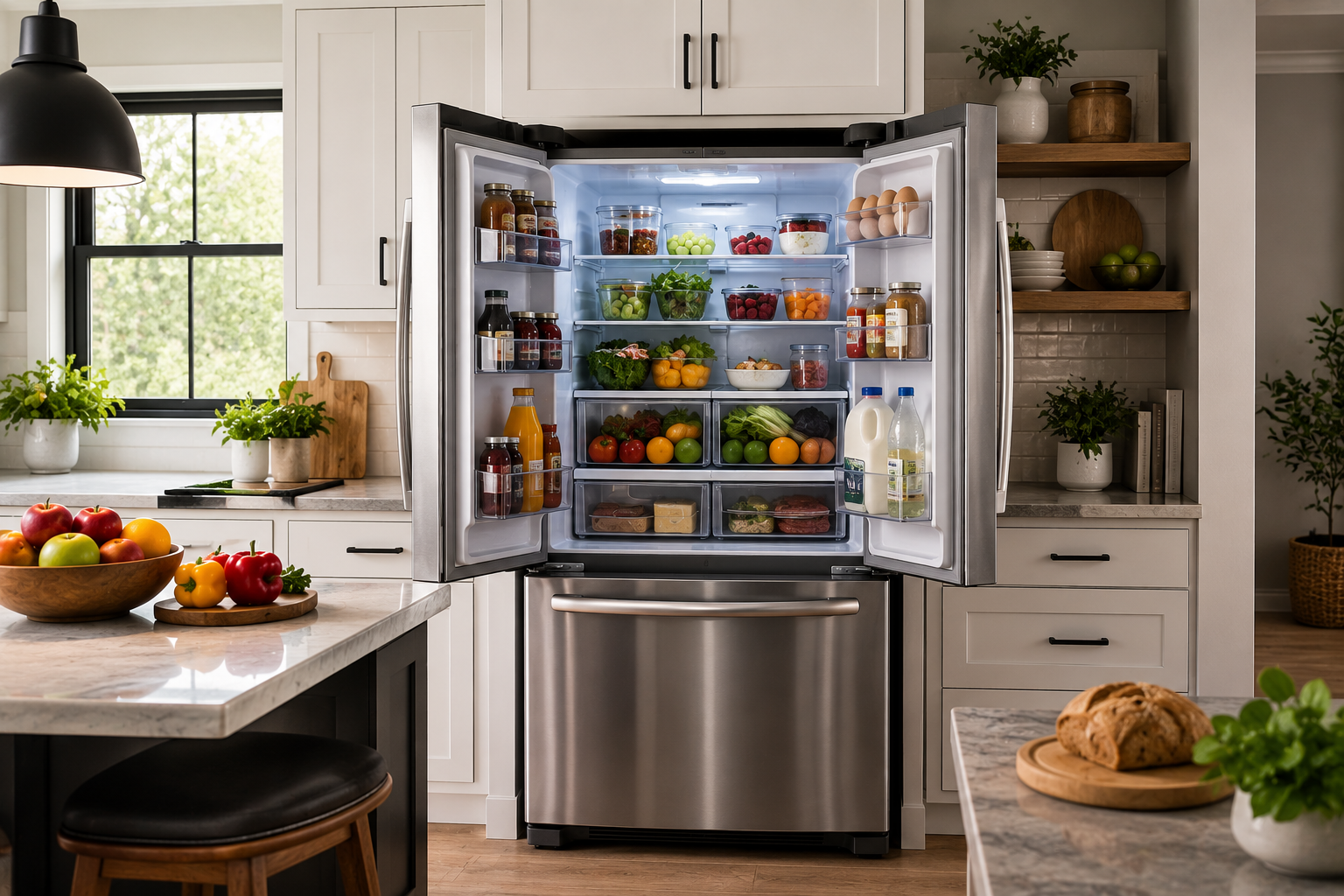
A refrigerator is one of the most expensive and heavily used appliances in any home, running continuously for a decade or more once installed. Getting the wrong one, too small, poorly configured, or missing features your household actually needs, is a mistake you’ll live with every single day.
This refrigerator buying guide walks through everything American homeowners need to know before buying, including size, configuration, features, energy efficiency, and cost. Rather than pushing a single “best” model, this guide focuses on how to choose a refrigerator that genuinely fits your kitchen, your household, and your budget.
Start With Your Kitchen Space
Before comparing features or styles, the most practical first step is understanding exactly what will physically fit in your kitchen.
Measure the Opening
Measure the width, height, and depth of your existing refrigerator space, including the space above for venting and any surrounding cabinetry. Add at least an inch of clearance on each side and at the top to allow for proper airflow and door swing.
Check Doorway Clearance
Refrigerators are large, heavy appliances, and it’s worth measuring hallways, doorways, and any tight corners between your entrance and the kitchen. A refrigerator that fits your kitchen space perfectly won’t help if it can’t get through the door.
Consider Door Swing and Walkway Space
Think about which direction the refrigerator door will open and whether it will bump into an island, counter, or wall when fully open. In tighter kitchens, this can meaningfully affect which door configuration works best.
Refrigerator Types Explained
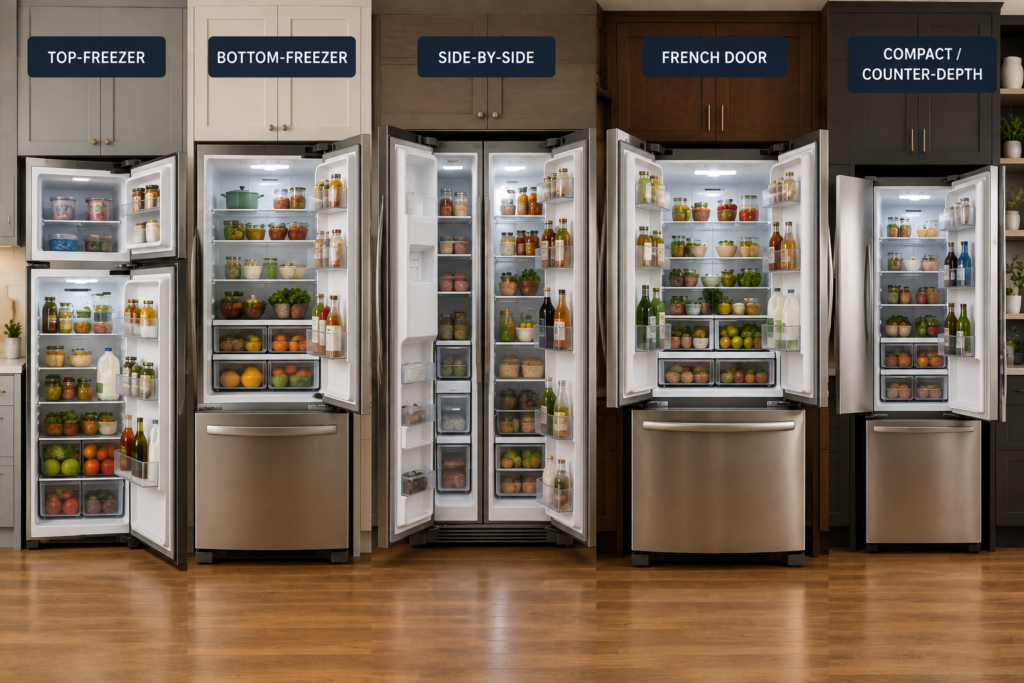
Refrigerators come in several distinct configurations, each with its own strengths depending on kitchen layout and household needs.
Top-Freezer Refrigerators
This traditional layout places the freezer above the refrigerator compartment. Top-freezer models are generally the most affordable and energy-efficient option, though they place fresh food storage at a lower, less convenient height.
Bottom-Freezer Refrigerators
Bottom-freezer models put the refrigerator section at eye level, making everyday fresh food more accessible, while the freezer sits in a pull-out drawer below. This layout tends to cost more than top-freezer models but offers a more convenient daily experience for most households.
Side-by-Side Refrigerators
Side-by-side models split the refrigerator and freezer vertically, with narrower doors on each side. This configuration works well in kitchens with limited door swing clearance, though the narrower compartments can make it harder to fit wide items like sheet pans or large platters.
French Door Refrigerators
French door refrigerators combine two narrower doors for the refrigerator section on top with a freezer drawer below. This has become one of the most popular configurations in American kitchens, offering wide, easy-access shelving and generally better organization for larger households.
Compact and Counter-Depth Refrigerators
Compact refrigerators suit small kitchens, apartments, or secondary spaces like a garage or home bar. Counter-depth refrigerators are full-size but shallower than standard depth models, sitting flush with surrounding counters for a more built-in look, often at a higher price point for the same capacity.
Refrigerator Types Comparison
| Type | Best For | Price Range | Accessibility |
| Top-Freezer | Budget-conscious buyers | Lowest | Moderate |
| Bottom-Freezer | Households prioritizing fresh food access | Mid-range | High |
| Side-by-Side | Narrow kitchens, limited door clearance | Mid-range | Moderate |
| French Door | Larger households, frequent cooks | Mid to high | High |
| Counter-Depth | Built-in, seamless kitchen look | Highest | High |
Choosing the Right Size
Refrigerator size is typically measured in cubic feet of total capacity, and choosing the right size depends heavily on household size and shopping habits.
| Household Size | Recommended Capacity |
| 1–2 people | 10–18 cubic feet |
| 3–4 people | 18–22 cubic feet |
| 5+ people | 22+ cubic feet |
Households that shop for groceries less frequently, buying in bulk every week or two, generally benefit from sizing up within their range, while those who shop more often can comfortably size down.
Refrigerator Features to Consider
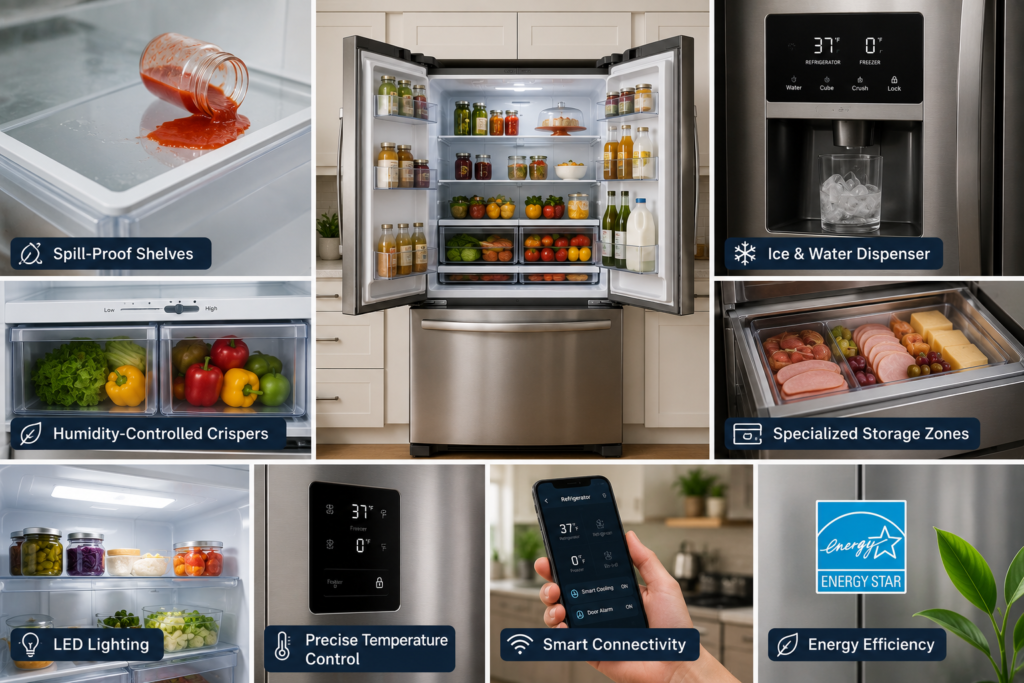
Modern refrigerators come with a wide range of features, and it’s worth thinking through which ones genuinely matter to your household rather than paying for features you won’t use.
Adjustable and Spill-Proof Shelving
Adjustable shelves let you reconfigure the interior for taller items, while spill-proof shelf edges contain leaks before they reach lower shelves, reducing cleanup considerably.
Humidity-Controlled Crisper Drawers
Separate humidity settings for different crisper drawers help produce last longer, since fruits and vegetables often require different humidity levels to stay fresh.
Ice and Water Dispensers
Built-in dispensers offer convenience but typically reduce usable interior storage space slightly and add a point of potential maintenance down the line, such as filter replacement or occasional repairs.
Smart Refrigerator Features
Some newer models include Wi-Fi connectivity, internal cameras, or touchscreen displays for tracking groceries or leaving notes. These add convenience for tech-focused households but also add to the overall price and potential long-term maintenance considerations.
Door-in-Door Storage
This feature adds a secondary compartment within the main door, allowing quick access to frequently used items like drinks or condiments without opening the entire refrigerator, which can help with energy efficiency by reducing how often cold air escapes.
Dual Compressors or Dual Cooling Systems
Dual cooling systems maintain separate temperature and humidity levels for the refrigerator and freezer sections independently, which can help reduce freezer odors transferring to fresh food and improve overall freshness.
Energy Efficiency
Refrigerators run continuously, making energy efficiency a meaningful factor in long-term cost, not just the upfront purchase price.
ENERGY STAR Certification
Look for the ENERGY STAR label, which indicates a refrigerator meets federal energy efficiency guidelines. Certified models typically use less electricity than standard models of a similar size, translating to real savings over years of continuous operation.
Factors That Affect Efficiency
Larger refrigerators generally use more energy than smaller ones, though very old or poorly insulated smaller units can sometimes be less efficient than a modern, well-insulated larger model. Features like ice makers and water dispensers can also slightly increase overall energy use.
If lowering your overall utility bills is a priority, our Best Energy-Efficient Appliances guide breaks down which upgrades save the most money across your whole home.
Refrigerator Materials and Finishes
Stainless Steel
Stainless steel remains one of the most popular finishes, offering a clean, modern look that suits most kitchen styles. It shows fingerprints more readily than other finishes, though many newer models include smudge-resistant coatings.
Black Stainless Steel
This finish offers a similar look to standard stainless steel with a darker tone, and it typically shows fingerprints and smudges less noticeably.
Panel-Ready
Panel-ready refrigerators are designed to accept custom cabinet panels that match surrounding kitchen cabinetry, creating a fully built-in appearance. This option costs more, both for the appliance and the custom panel, but offers the most seamless integrated look.
Traditional White or Black Finishes
Standard white or black finishes remain more budget-friendly than stainless steel options and can suit a range of kitchen styles, particularly more traditional designs.
Refrigerator Buying Tips
A few practical refrigerator buying tips can help narrow down your decision more efficiently:
- Measure your space thoroughly before shopping, including doorways and walkways leading to the kitchen
- Prioritize configuration and size over specific brand names, since capacity and layout affect daily use far more than branding
- Consider your household’s shopping habits, since infrequent bulk shoppers benefit from more storage than frequent shoppers
- Factor in long-term energy costs, not just the upfront purchase price
- Think honestly about which smart features you’ll actually use regularly, rather than paying for features that go unused
Matching a Refrigerator to Your Lifestyle
Small Households or Apartments
Compact or standard top-freezer models generally offer sufficient capacity without unnecessary expense, and their smaller footprint suits tighter kitchen layouts well.
Families With Kids
Larger capacity models, particularly French door or side-by-side configurations, tend to handle the higher grocery volume and organizational needs of larger households more comfortably.
Frequent Home Cooks
Wider shelving, French door configurations, and flexible interior storage help accommodate larger platters, sheet pans, and bulk ingredients more easily than narrower side-by-side layouts.
Buyers Wanting a Built-In Look
Counter-depth or panel-ready refrigerators offer a more seamless, integrated appearance, though typically at a higher price point than standard depth models of similar capacity.
Budget Planning
Refrigerator prices vary considerably based on size, configuration, and features. Basic top-freezer models represent the most affordable entry point, offering solid functionality without premium features. Bottom-freezer and side-by-side models occupy the mid-range, balancing convenience with reasonable cost. French door and counter-depth models, particularly those with smart features or premium finishes, represent the higher end of the price range.
It’s worth setting a budget range before shopping and factoring in delivery and installation costs, along with the removal of your old refrigerator if that service isn’t included.
Common Mistakes to Avoid
A handful of avoidable mistakes come up repeatedly during refrigerator shopping:
- Skipping measurements, resulting in a refrigerator that doesn’t fit the available space or can’t get through doorways
- Buying based on capacity alone, without considering configuration and daily accessibility
- Overlooking door swing clearance, particularly in kitchens with nearby islands or counters
- Choosing features you won’t use, adding unnecessary cost without genuine benefit
- Ignoring long-term energy costs, focusing only on the upfront purchase price
- Not accounting for delivery logistics, including tight stairwells, elevators, or narrow hallways
Refrigerator Maintenance Basics
Regardless of which model you choose, a few basic maintenance habits help extend a refrigerator’s lifespan and maintain its efficiency over time.
Clean the condenser coils periodically, since dust buildup can reduce cooling efficiency and increase energy use. Replace water and ice filters according to the manufacturer’s recommended schedule if your model includes a dispenser. Check door seals periodically for wear, since a poor seal allows cold air to escape and forces the refrigerator to work harder than necessary.
Conclusion
Choosing the best refrigerator for home use comes down to balancing size, configuration, features, and budget against your household’s actual daily habits, not simply choosing the model with the most features or the lowest price. Measure your space carefully, think honestly about how your family shops and cooks, and prioritise energy efficiency and reliable configuration over flashy extras you may not use. With the right refrigerator in place, you’ll have an appliance that quietly and reliably serves your household for well over a decade. Looking for more kitchen upgrades? Browse our full Kitchen & Dining guides for appliances, cookware, and furniture picks.
Frequently Asked Questions
1- What size refrigerator do I need for my household?
As a general guide, allow 4 to 6 cubic feet of capacity per household member, adjusting upward if you shop for groceries infrequently or downward if you shop more often.
2- What is the most reliable type of refrigerator?
Reliability varies by brand and specific model rather than configuration type alone, though simpler designs with fewer built-in features, like basic top-freezer models, generally have fewer components that can require repair over time.
3- Is a French door refrigerator worth the extra cost?
For larger households or frequent cooks, the wider shelving and easier access to fresh food often justify the added cost. Smaller households may find a top-freezer or bottom-freezer model offers similar practical value at a lower price.
4- How much does it cost to run a refrigerator per year?
This varies based on size, age, and efficiency rating, but ENERGY STAR certified models generally offer lower operating costs than standard, non-certified models of similar capacity.
5- Should I buy a counter-depth refrigerator?
Counter-depth models offer a more built-in, seamless look and take up less kitchen floor depth, though they typically hold less capacity than standard-depth models of the same width and cost more for equivalent storage.