A malfunctioning kitchen appliance can throw off your entire routine, whether it’s a fridge that’s not cooling or a dishwasher leaving dishes dirty. The good news is that many common kitchen appliance problems have simple, safe fixes you can try before calling in a professional.
This guide walks through the most frequent issues homeowners run into with refrigerators, dishwashers, ranges, microwaves, and garbage disposals, along with practical troubleshooting steps for each. We’ll also cover appliance repair, troubleshooting tips, and clear guidance on when a problem needs professional attention.
By the end, you’ll know which issues are safe to tackle yourself and which ones genuinely call for a licensed technician.
Important Safety Note Before You Start
Before troubleshooting any appliance, always unplug it or switch off its power source first, and never attempt repairs involving gas lines, electrical wiring, or sealed refrigeration systems unless you’re a qualified professional. Simple cleaning, resets, and basic part replacements are generally safe for most homeowners, but anything involving gas connections, high-voltage components, or refrigerant should always be handled by a licensed technician. Taking a few extra minutes to confirm power is fully disconnected before you begin is a small step that meaningfully reduces the risk of injury or further appliance damage.
Common Refrigerator Problems and Fixes
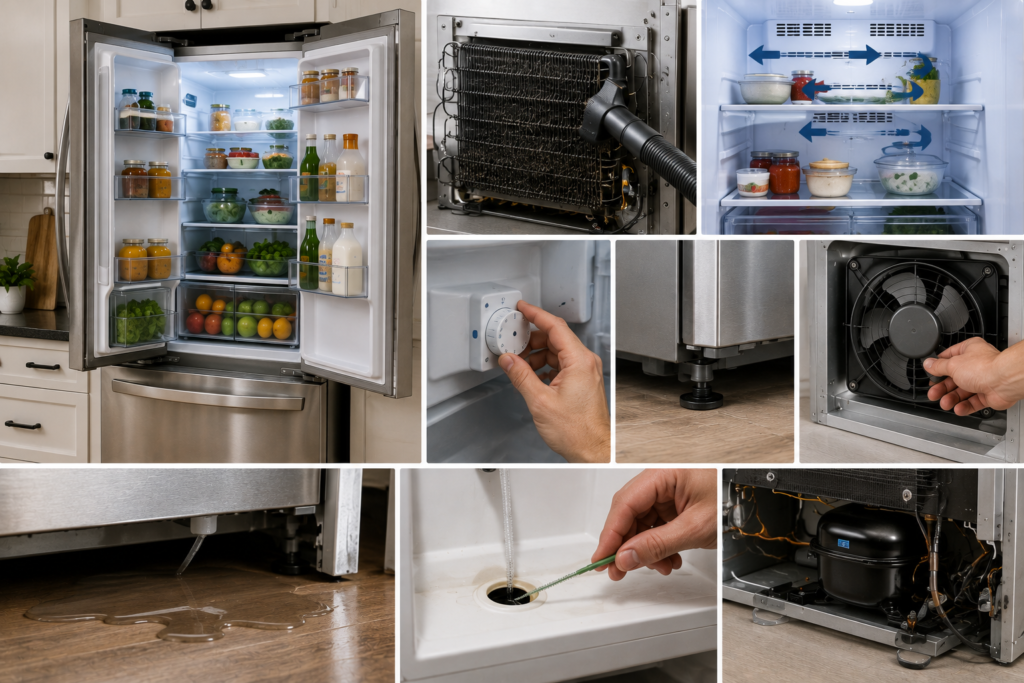
Refrigerators run continuously, so even small issues can quickly affect food safety and energy costs.
1- Refrigerator Isn’t Cooling Properly
Possible causes: Dirty condenser coils, a blocked air vent inside the fridge, or an incorrect temperature setting are among the most common culprits.
Simple fix: Vacuum or brush the condenser coils, typically located at the back or underneath the unit, and check that food items aren’t blocking internal air vents. Confirm your fridge is set between 37°F and 40°F, and your freezer at 0°F.
When to call a professional: If cooling issues persist after cleaning coils and checking settings, this often points to a compressor or sealed-system issue that requires professional diagnosis.
2- Refrigerator Is Making Unusual Noises
Possible causes: A buzzing or humming sound is often normal compressor operation, while clicking, rattling, or grinding noises can indicate a fan or motor issue.
Simple fix: Check that the fridge is level and nothing is touching the back panel, since vibration against nearby surfaces can cause rattling. Clear any debris from the fan area if accessible.
When to call a professional: Persistent grinding or knocking noises that don’t resolve with basic checks usually indicate a failing internal component.
3- Water Pooling Inside or Underneath the Fridge
Possible causes: A clogged defrost drain is one of the most common causes of water pooling inside the refrigerator or leaking onto the floor.
Simple fix: Locate the defrost drain, usually at the back of the interior near the bottom, and clear any ice or debris blocking it using warm water or a pipe cleaner.
When to call a professional: If clearing the drain doesn’t resolve the leak, or if you notice water coming from underneath the unit itself, a professional inspection is worth scheduling.
Common Dishwasher Problems and Fixes
Dishwashers combine water, heat, and moving parts, which means several common issues tend to repeat across most models.
1- Dishes Aren’t Coming Out Clean
Possible causes: Clogged spray arms, a dirty filter, or overloading the racks are the most frequent reasons for poor cleaning performance.
Simple fix: Remove and rinse the filter, check spray arm holes for blockages, and avoid overloading racks so water can circulate properly around all dishes.
When to call a professional: If cleaning performance doesn’t improve after these steps, the water inlet valve or pump may need inspection.
2- Dishwasher Won’t Drain
Possible causes: A clogged drain hose, blocked filter, or garbage disposal connection issue often causes standing water after a cycle.
Simple fix: Check and clear the filter, and if your dishwasher connects to a garbage disposal, confirm the disposal’s knockout plug was removed during installation, since a forgotten plug is a common and easy-to-miss cause.
When to call a professional: If water still won’t drain after checking the filter and disposal connection, the drain pump itself may need replacement.
3- Dishwasher Is Leaking
Possible causes: A worn door gasket, an overfilled detergent dispenser, or an improperly loaded rack blocking the door can all cause leaks.
Simple fix: Inspect the door gasket for visible cracks or gaps, and confirm dishes and utensils aren’t obstructing the door from sealing fully.
When to call a professional: Leaks originating from underneath the unit, rather than around the door, typically indicate a pump or hose issue requiring professional repair.
Common Range and Oven Problems and Fixes
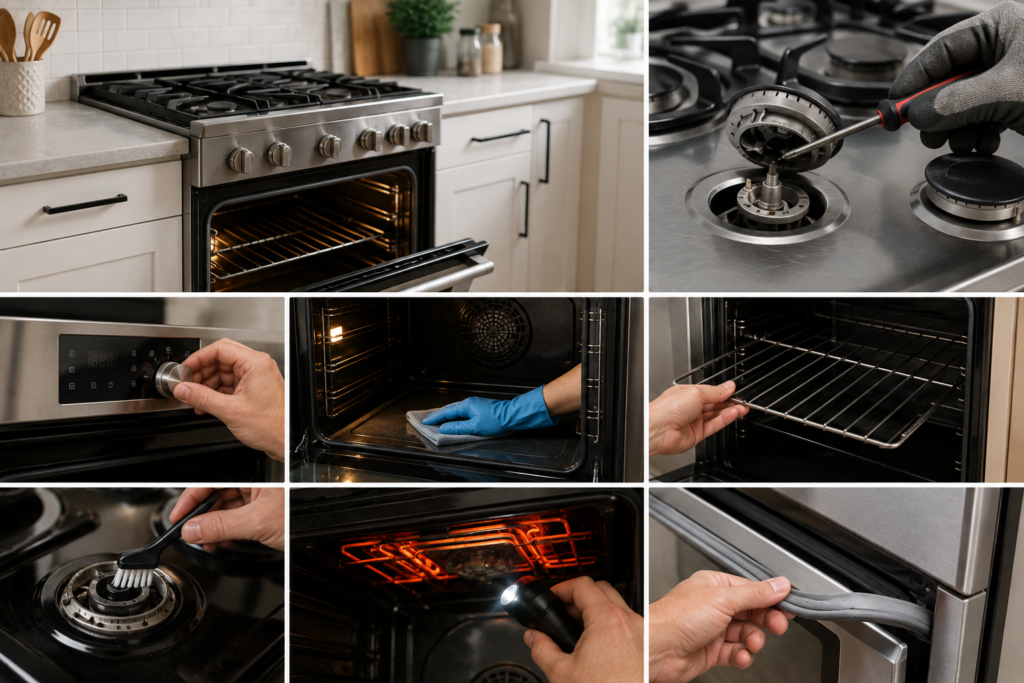
Cooking appliances handle both heat and, in gas models, fuel lines, so it’s worth being especially cautious with certain repairs here.
1- Oven Isn’t Heating Evenly
Possible causes: A faulty heating element, worn door seal, or inaccurate thermostat calibration are common causes of uneven cooking results.
Simple fix: Use an oven thermometer to check actual temperature accuracy against the display, and inspect the door seal for gaps that could be letting heat escape.
When to call a professional: A visibly damaged or discolored heating element typically needs replacement by a technician, since this involves electrical components.
2- Gas Burner Won’t Light
Possible causes: Food debris clogging the burner ports or a dirty igniter are common, non-electrical causes of lighting issues.
Simple fix: Clean the burner ports and igniter area with a soft brush, ensuring the burner cap is properly seated after cleaning.
When to call a professional: If burners still won’t light after cleaning, or if you smell gas at any point, turn off the gas supply immediately and contact a licensed technician or your gas utility provider.
3- Electric Burner Isn’t Heating
Possible causes: A loose connection at the burner socket or a worn heating coil are frequent causes of electric burner issues.
Simple fix: Turn off and unplug the range, then check that the burner coil is properly seated in its socket. Many electric coil burners can be swapped between working sockets to help isolate whether the issue is the burner or the socket itself.
When to call a professional: Socket or wiring issues should be handled by a qualified appliance technician or electrician.
Common Microwave Problems and Fixes
Microwaves are relatively simple appliances, but a few issues come up frequently across most households.
1- Microwave Isn’t Heating Food
Possible causes: A failing magnetron, the component responsible for generating microwave energy, is the most common cause of heating failure.
Simple fix: Confirm the door is closing and latching properly, since safety interlocks prevent operation if the door isn’t fully sealed.
When to call a professional: Magnetron replacement typically isn’t cost-effective compared with replacing the microwave outright, especially on older units.
2- Microwave Turntable Isn’t Spinning
Possible causes: A misaligned turntable, a worn drive motor, or debris under the turntable ring are common causes.
Simple fix: Remove the turntable and support ring, clean underneath, and confirm both pieces are properly seated when replaced.
When to call a professional: If the turntable still doesn’t spin after cleaning and proper reseating, the drive motor likely needs replacement.
3- Microwave Is Sparking
Possible causes: Metal objects inside the microwave, or damage to the interior wall coating, are the most common causes of sparking.
Simple fix: Stop use immediately, remove any metal items, and inspect the interior for visible damage or exposed metal beneath the coating.
When to call a professional: Visible interior damage causing sparks is a safety concern, and the microwave should be repaired by a professional or replaced rather than continuing to use it.
Common Garbage Disposal Problems and Fixes
Garbage disposals see frequent daily use, and most common issues have straightforward solutions.
1- Disposal Won’t Turn On
Possible causes: A tripped reset button or overloaded motor is the most frequent cause of a disposal that won’t start.
Simple fix: Locate the reset button, usually on the underside of the unit, and press it firmly. If the disposal still won’t start, check your home’s circuit breaker.
When to call a professional: If resetting doesn’t resolve the issue, the motor itself may have failed and typically requires replacement of the unit.
2- Disposal Is Jammed
Possible causes: Fibrous foods, bones, or foreign objects are common causes of jams inside the disposal chamber.
Simple fix: With the power off, use a disposal wrench or the offset wrench often included with the unit to manually rotate the flywheel and clear the jam.
When to call a professional: Never place your hand inside a disposal to clear a jam. If a wrench doesn’t resolve the issue, contact a professional.
3- Disposal Has a Persistent Odor
Possible causes: Trapped food particles or grease buildup inside the disposal chamber are the most common causes of lingering odors.
Simple fix: Run cold water with ice cubes and a small amount of citrus peel through the disposal to help clean and freshen the chamber.
When to call a professional: Persistent odors that don’t improve with regular cleaning may indicate deeper buildup requiring professional cleaning.
Quick Reference: Problems and Fixes by Appliance
| Appliance | Common Problem | Simple Fix |
| Refrigerator | Not cooling | Clean coils, check vents and settings |
| Refrigerator | Water pooling | Clear defrost drain |
| Dishwasher | Dishes not clean | Clean filter and spray arms |
| Dishwasher | Won’t drain | Check filter and disposal knockout plug |
| Range/Oven | Uneven heating | Check thermostat and door seal |
| Microwave | Not heating | Confirm door seal, check for interlock issue |
| Garbage Disposal | Won’t turn on | Press reset button, check breaker |
When to Repair vs Replace
Not every problem is worth fixing, especially on older appliances nearing the end of their typical lifespan. As a general guideline, if repair costs exceed roughly 50 percent of the appliance’s replacement value, particularly on a unit already past the midpoint of its expected lifespan, replacement is usually the more sensible financial choice.
Simple fixes like cleaning filters, clearing drains, or resetting a disposal are almost always worth attempting first, since they cost nothing beyond a few minutes of time. More involved repairs, particularly those involving electrical components, motors, or sealed systems, are worth weighing against the appliance’s age and overall condition before committing to a repair.
Preventing Common Problems Before They Start
Many of the issues covered above can be avoided entirely with basic, regular maintenance. A little consistency goes a long way toward reducing how often you run into these problems in the first place.
- Clean filters and coils on a consistent schedule to prevent buildup-related problems before they start
- Avoid overloading dishwashers and disposals, since this is a leading cause of performance issues
- Address small leaks or noises promptly, rather than waiting for them to worsen into bigger repairs
- Follow manufacturer guidelines for cleaning products, loading capacity, and general usage limits
- Schedule occasional professional inspections, particularly for gas appliances and refrigeration systems, to catch developing issues early
Conclusion
Many common kitchen appliance problems have simple, safe solutions you can try before scheduling a repair visit, from clearing a clogged filter to resetting a tripped disposal switch. Knowing which fixes are safe to attempt yourself, and which genuinely require a licensed professional, particularly for gas and electrical issues, helps you save time and money while staying safe. When in doubt, weigh the repair cost against your appliance’s age and typical lifespan before deciding whether a fix is worth pursuing or if it’s time to consider replacement instead.
Frequently Asked Questions
1- Is it safe to fix a gas appliance myself?
No, gas-related repairs should always be handled by a licensed technician or your gas utility provider, particularly if you smell gas at any point.
2- Why does my dishwasher smell bad?
Trapped food debris and grease buildup are the most common causes of dishwasher odors, and running a cleaning cycle with a dishwasher-safe cleaner usually resolves it.
3- Can I fix a refrigerator that’s not cooling myself?
Basic steps like cleaning coils and checking vents are safe to try yourself, but persistent cooling issues after these checks usually require a professional due to the complexity of sealed refrigeration systems.
4- What should I do if my garbage disposal is jammed?
Turn off the power first, then use a disposal wrench to manually clear the jam. Never place your hand inside the unit to clear a blockage.
5- Why isn’t my microwave heating food?
A failing magnetron is the most common cause, and since replacement is often not cost-effective, this issue frequently signals it’s time to replace the microwave.
6- How do I know if an appliance problem is worth repairing?
If the repair cost is under roughly 50 percent of the appliance’s replacement value and the unit isn’t near the end of its typical lifespan, repair is usually worthwhile.