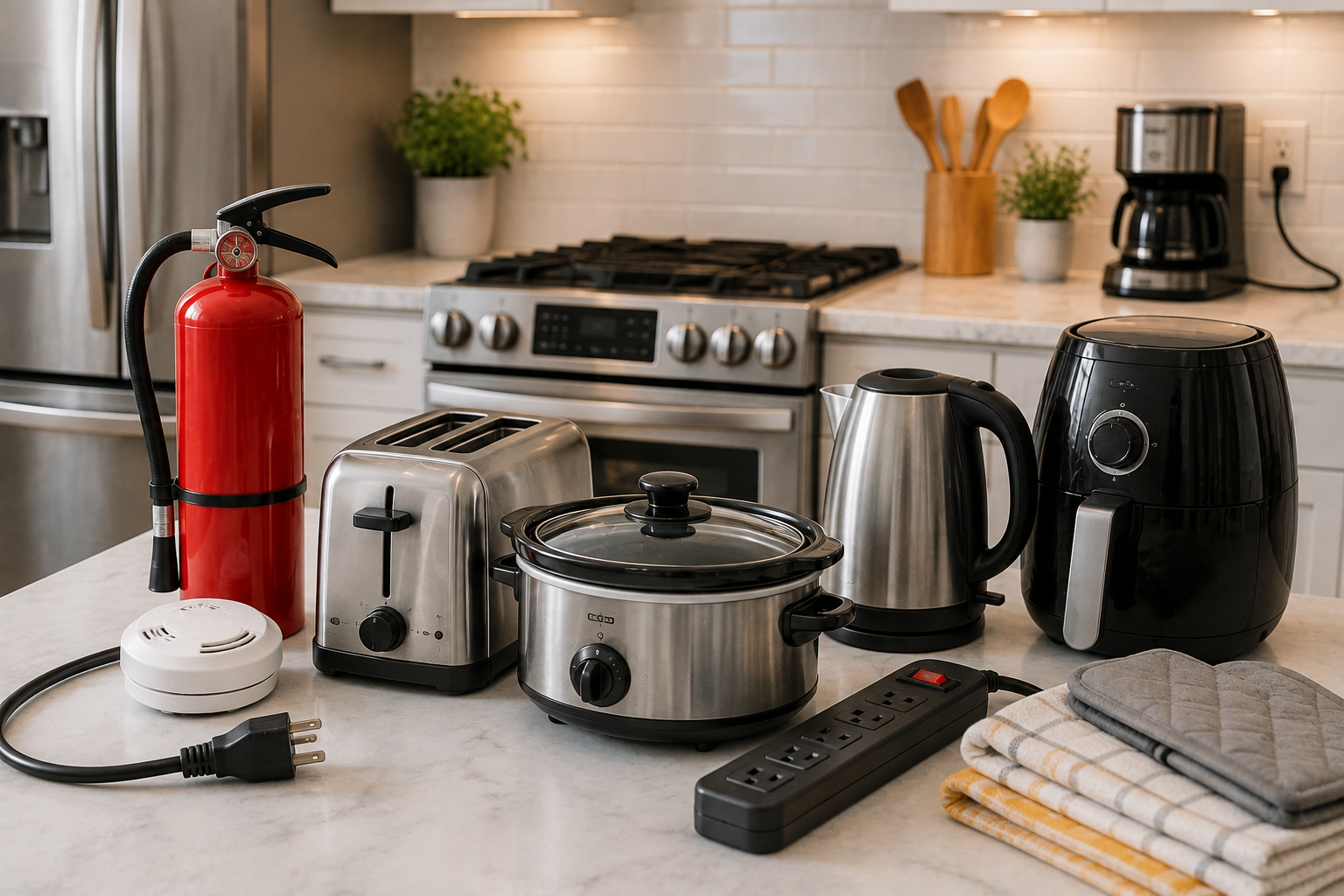
The kitchen is one of the most-used rooms in any home, and it’s also the room where most home fires and a significant share of household injuries actually start. Understanding basic kitchen appliance safety tips isn’t about being overly cautious, it’s about knowing the specific, practical habits that meaningfully reduce real risks from the appliances you use every single day.
This guide covers safety essentials across major and small kitchen appliances, electrical safety basics, fire prevention, and how to stay informed about product recalls, so you can use your kitchen with genuine confidence rather than guesswork.
The Highest-Priority Safety Habits
If you take away just a few habits from this guide, prioritize these: never leave cooking unattended, especially anything involving oil or high heat; keep flammable items like towels, paper, and curtains away from stovetops and toasters; test smoke detectors regularly and keep a fire extinguisher accessible in or near the kitchen; and periodically check whether any of your appliances have been recalled through the official Consumer Product Safety Commission (CPSC) database. These few habits address the majority of serious kitchen appliance risks.
Understanding Kitchen Fire Risks
1- Why Cooking Is the Leading Cause of Home Fires
Cooking equipment consistently ranks as one of the leading causes of residential fires in the United States, and unattended cooking specifically is one of the most common contributing factors. This makes “never leave cooking unattended” more than a generic warning, it’s the single highest-impact habit for reducing kitchen fire risk.
2- Grease Fires Require Different Handling
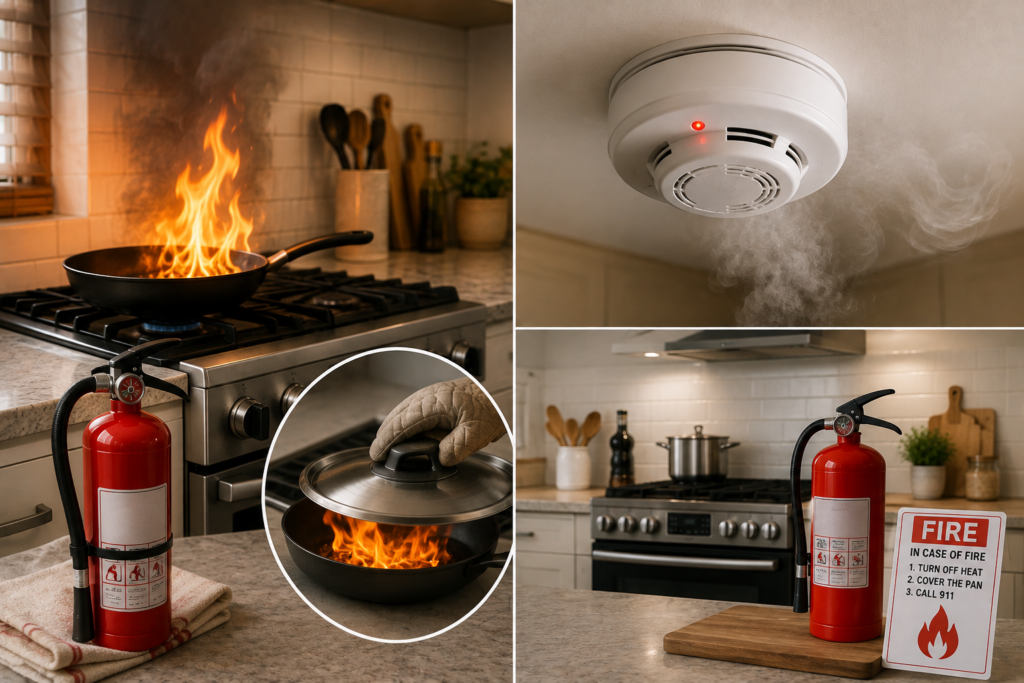
A grease fire behaves differently from a typical fire, and using water on it can actually spread the flames rather than extinguish them. If a grease fire starts in a pan, the safer response is turning off the heat source and covering the pan with a metal lid to smother the flames, never attempting to carry a flaming pan or pour water on it.
3- Keep a Class K or Multi-Purpose Fire Extinguisher Accessible
A fire extinguisher rated for kitchen fires (Class K, or a multi-purpose ABC extinguisher) should be stored somewhere accessible but not directly next to the stove, since you need to be able to reach it without leaning over an active fire.
4- Stovetop and Oven Safety
- Never Leave Cooking Unattended
This applies especially to frying, broiling, grilling, or anything using oil at high heat, since these methods can escalate to a dangerous situation faster than simmering or baking.
- Keep Flammable Items Clear
Dish towels, paper towel rolls, oven mitts, and curtains should stay well clear of stovetop burners and the oven’s heat vents, since these common kitchen items are frequent fuel sources for accidental fires.
- Use Back Burners When Possible, Especially With Children Nearby
Positioning pots and pans on back burners, with handles turned inward, reduces the risk of accidental spills, tipping, or burns, particularly in households with young children who might reach up toward the stovetop.
- Check Gas Connections Periodically
For gas ranges, periodically checking connections for leaks, using a simple soapy water test on connection points, since bubbling indicates a leak, adds an extra layer of safety beyond what’s visible day to day.
5- Electrical Safety in the Kitchen
- Avoid Overloading Outlets
Kitchens often host multiple high-wattage appliances, coffee makers, toasters, air fryers, and more, and plugging too many into a single outlet or power strip increases fire risk. Distribute higher-wattage appliances across separate outlets and circuits where possible.
- Inspect Cords Regularly
Frayed, cracked, or damaged appliance cords should be replaced or repaired before continued use, since exposed wiring presents both electrical shock and fire risks.
- Keep Appliances Away From Water
Countertop appliances, particularly toasters, coffee makers, and blenders, should stay a safe distance from sinks and any water sources, and hands should always be dry before plugging in or unplugging any electrical appliance.
- Understand GFCI Outlets
Ground Fault Circuit Interrupter (GFCI) outlets, recognizable by their built-in test and reset buttons, are specifically designed to cut power quickly if they detect a ground fault, reducing electrical shock risk near water sources. Most modern kitchens include GFCI outlets near sinks and countertops, and it’s worth testing them periodically using the built-in test button to confirm they’re functioning correctly.
6- Small Appliance Safety
- Unplug When Not in Use
Toasters, blenders, and other small countertop appliances should be unplugged when not actively in use, both to reduce unnecessary standby electrical risk and to prevent accidental activation.
- Keep Cords Away from Counter Edges
Dangling cords near counter edges create a risk of appliances being accidentally pulled down, particularly in households with young children who might grab a hanging cord within reach.
- Don’t Insert Metal Utensils Into Toasters
A common but genuinely risky habit, using a metal knife or fork to dislodge stuck toast while the toaster is still plugged in, creates a real electrical shock risk and should always be avoided; unplug the toaster first.
- Follow Manufacturer Guidelines for Liquid Levels
Blenders, multi-cookers, and pressure cookers all have specific maximum fill lines, and exceeding them can cause overheating, pressure buildup, or spillage during operation.
7- Pressure Cooker and Multi-Cooker Safety
- Never Force the Lid Open
Modern electric pressure cookers include lid-locking mechanisms that prevent opening while the pot remains pressurized. Never attempt to force a lid open before the pressure has fully released, since this can cause a dangerous, sudden release of hot steam and contents.
- Check the Sealing Ring Regularly
The silicone sealing ring should be inspected periodically for wear, cracks, or damage, since a compromised seal can prevent the appliance from building or maintaining pressure safely and effectively.
- Use the Correct Release Method
Follow the recipe or manufacturer’s guidance on whether to use a quick pressure release or a natural release, since some dishes, particularly those with a lot of liquid volume, can spatter or overflow if the pressure is released too quickly.
8- Microwave Safety
- Never Run a Microwave Empty
Running a microwave with nothing inside can damage the appliance and potentially create a fire risk, since there’s no food or liquid to absorb the microwave energy.
- Avoid Metal and Foil
Metal containers, aluminum foil, and dishes with metallic trim can spark and cause fires inside a microwave, and should never be used unless the appliance is specifically designed and labeled for that purpose.
- Use Microwave-Safe Containers Only
Containers not labeled microwave-safe may leach chemicals into food or warp under heat, so it’s worth confirming any container’s rating before regular microwave use.
9- Refrigerator and Freezer Safety
- Maintain Proper Temperatures
Keeping your refrigerator at or below 40°F and your freezer at 0°F helps prevent bacterial growth that can lead to foodborne illness, a genuine safety concern separate from fire or electrical risks.
- Don’t Overload Outlets With Refrigerator Cords
Refrigerators should generally be plugged directly into a wall outlet rather than sharing a power strip or extension cord with other appliances, given their continuous, higher electrical draw.
- Keep the Area Behind and Around the Fridge Clear
Adequate airflow around a refrigerator’s coils and ventilation points helps prevent overheating and improves overall efficiency, so avoid pushing the appliance flush against a wall or surrounding it with stored items.
10- Dishwasher Safety
- Load Sharp Items Carefully
Position knives and sharp utensils blade-down in the utensil basket to reduce the risk of injury when loading or unloading.
- Check Hose Connections Periodically
Dishwasher supply and drain hoses should be inspected periodically for wear or leaks, since water damage from a slow, undetected leak can become a significant problem over time.
- Don’t Overload the Dishwasher
Overloading can block the spray arms and prevent items from being properly cleaned, and in some cases can strain the door seal or hinges over repeated use.
How to Check for Appliance Recalls
- Why Recall Checks Matter
Appliance recalls happen more often than most homeowners realize, and issues can range from minor defects to genuine fire or shock hazards. Checking whether your specific appliances have ever been recalled is a simple, often-overlooked safety habit.
- Where to Check
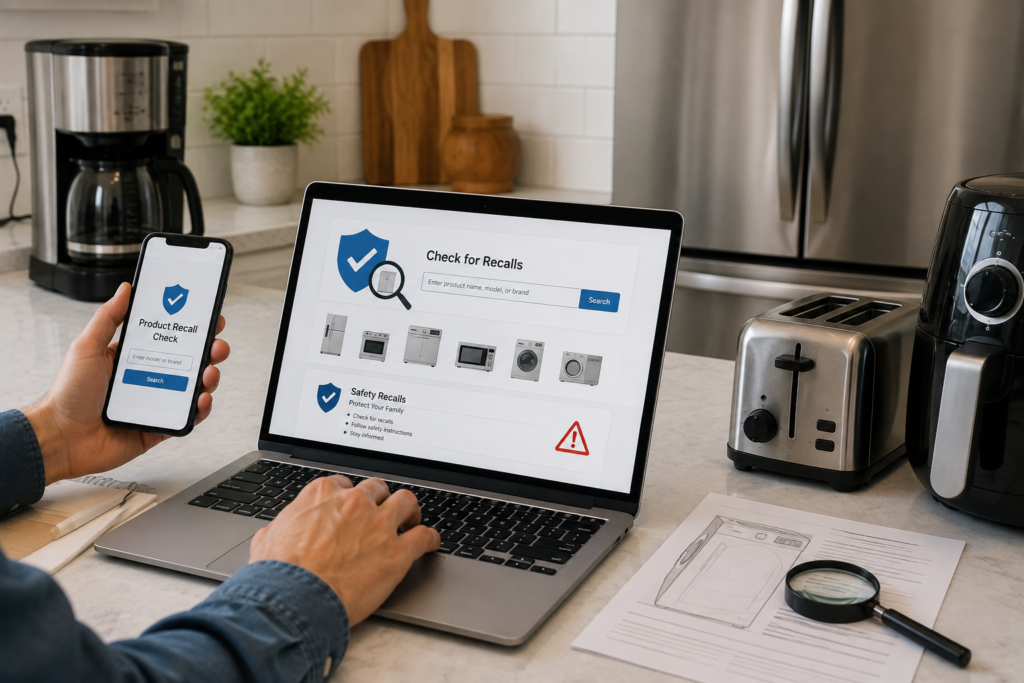
The Consumer Product Safety Commission (CPSC) maintains an official, searchable database of product recalls, including kitchen appliances, at their website. Searching by brand, model number, or general product category lets you confirm whether a specific appliance in your kitchen has an active recall or safety notice.
- What to Do If You Find a Recall
If you discover your appliance has been recalled, follow the manufacturer’s specific guidance, which may include a free repair, replacement part, refund, or in some cases, an instruction to stop using the appliance entirely until the issue is resolved.
Building a Simple Kitchen Safety Checklist
| Safety Area | Key Habit |
| Cooking | Never leave stovetop or oven cooking unattended |
| Fire response | Know how to smother a grease fire; keep an extinguisher accessible |
| Electrical | Avoid overloaded outlets; inspect cords regularly |
| Small appliances | Unplug when not in use; never insert metal into a plugged-in toaster |
| Pressure cookers | Never force the lid open; inspect the sealing ring regularly |
| Microwaves | Avoid metal/foil; never run empty |
| Refrigerators | Maintain 40°F or below; ensure proper airflow around the unit |
| Recalls | Periodically check the CPSC database by brand and model number |
Special Considerations for Households With Children
Households with young children benefit from a few additional precautions: using back burners and turning pot handles inward, installing stove knob covers if children can reach the controls, keeping small countertop appliances and their cords out of easy reach, and storing any appliance manuals or warranty information in case questions about safe use come up later.
Special Considerations for Older Appliances
Appliances that are a decade or more old warrant closer attention, since components like cords, seals, and internal wiring degrade over time even with normal use. If an older appliance shows signs of wear, unusual noises, burning smells, or inconsistent performance, it’s worth having it inspected or considering replacement rather than continuing to use it as-is.
Common Mistakes to Avoid
- Leaving cooking unattended, even briefly, particularly when frying or using high heat
- Using water on a grease fire, which can spread flames rather than extinguish them
- Overloading outlets or power strips with multiple high-wattage kitchen appliances
- Ignoring frayed or damaged cords, continuing to use appliances with visible wear
- Skipping recall checks, particularly for appliances purchased used or inherited from a previous homeowner
- Forcing open a pressurized cooker, rather than waiting for pressure to fully release
Conclusion
Genuine kitchen safety comes down to a handful of consistent, practical habits rather than constant worry. Staying present while cooking, keeping electrical basics in mind, handling pressure cookers and microwaves correctly, and periodically checking for appliance recalls covers the vast majority of real risks in a typical American kitchen. Building these kitchen appliance safety tips into your regular routine takes very little extra effort, but it makes a meaningful, lasting difference in how safely your household uses the kitchen every single day.
Frequently Asked Questions
1- What should I do if a grease fire starts on my stove?
Turn off the heat source immediately and cover the pan with a metal lid to smother the flames. Never use water on a grease fire, since it can cause the flames to spread rather than extinguish.
2- How often should I check my appliances for recalls?
Checking periodically, particularly after purchasing a used appliance or moving into a home with existing appliances, is a reasonable habit. The CPSC’s online database allows quick searches by brand and model number at any time.
3- Is it safe to use an extension cord with kitchen appliances?
Generally, major appliances like refrigerators should be plugged directly into a wall outlet rather than an extension cord. For smaller appliances, use only cords rated for the appliance’s wattage, and avoid daisy-chaining multiple extension cords together.
4- What temperature should my refrigerator be set to for food safety?
Refrigerators should be kept at or below 40°F, and freezers at 0°F, to prevent bacterial growth that can lead to foodborne illness.
5- Can I put metal in the microwave if it’s just a small amount of foil?
No, unless the microwave is specifically designed and labeled to accommodate it. Metal and foil can spark and potentially start a fire inside a standard microwave.
6- How do I know if my pressure cooker’s sealing ring needs replacing?
Inspect the ring periodically for visible cracks, stiffness, or damage. If the appliance struggles to build or maintain pressure, or if you notice steam escaping from the lid seal during normal operation, the ring likely needs replacing.
7- Where can I find official information about a specific appliance recall?
The Consumer Product Safety Commission maintains an official, searchable recall database on its website, where you can search by brand name, model number, or general product category.