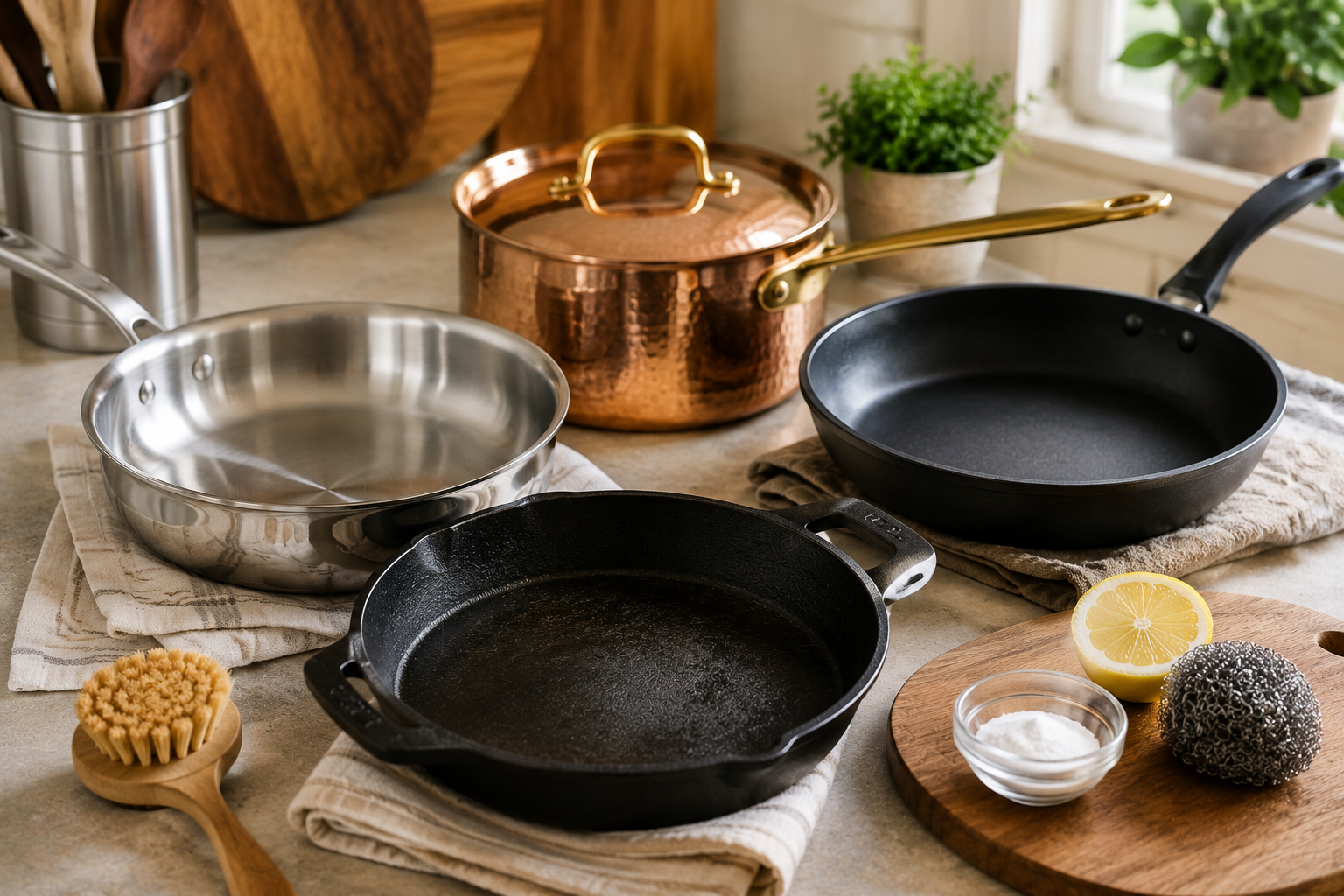
Good cookware is an investment, and how you care for it determines whether it lasts years or decades. Different materials need different care routines, and the wrong cleaning method can quietly damage even high-quality pots and pans over time.
This guide covers how to clean, season, and maintain cast iron, stainless steel, non-stick, and copper cookware, along with practical storage and troubleshooting tips. We’ll also cover cookware maintenance, seasoning cast iron, and non-stick pan care for American homeowners.
By the end, you’ll know exactly how to care for whatever’s in your kitchen cabinet, helping your cookware perform well and last for years to come.
General Cookware Care Principles
While each material has specific needs, a few universal principles apply across almost all cookware types. Always let pans cool before washing them, avoid extreme temperature changes that can cause warping, use appropriate utensils to prevent scratching, and dry cookware thoroughly before storing to prevent rust or water spots.
Beyond these basics, the right care routine depends heavily on your cookware’s specific material, since cast iron, stainless steel, non-stick, and copper each respond very differently to heat, moisture, and cleaning products.
Cast Iron Cookware Care
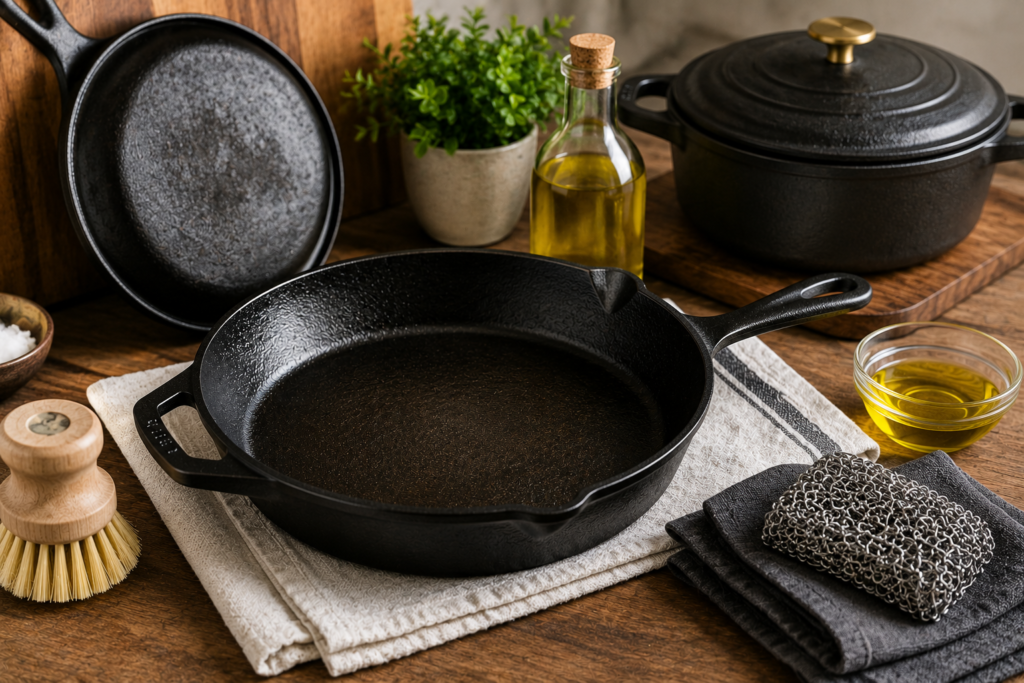
Cast iron is prized for its durability and heat retention, but it requires a distinct care routine that differs significantly from most other cookware materials.
Seasoning Cast Iron
Seasoning refers to the layer of polymerized oil that gives cast iron its natural non-stick surface and protects it from rust. New cast iron often comes pre-seasoned, but building up layers over time improves performance.
To season cast iron:
- Wash the pan with warm water and a small amount of mild soap, then dry thoroughly
- Apply a thin layer of a high-smoke-point oil, such as vegetable or flaxseed oil, across the entire surface, including the handle
- Wipe off excess oil so the surface looks nearly dry, not greasy
- Place the pan upside down in an oven preheated to around 450-500°F for about an hour
- Let the pan cool completely inside the oven before removing
Cleaning Cast Iron
Avoid soaking cast iron or leaving it wet, since prolonged moisture exposure leads to rust. Clean with hot water and a stiff brush or non-abrasive scrubber, using soap sparingly since heavy soap use can strip seasoning over time, though modern seasoning generally tolerates occasional mild soap without major issues.
Dry the pan immediately and thoroughly after washing, ideally by placing it on low heat on the stovetop for a few minutes to ensure all moisture evaporates before storing.
Preventing and Fixing Rust
If rust does develop, scrub the affected area with steel wool until the rust is removed, then re-season the pan following the steps above. Storing cast iron in a dry environment and avoiding extended soaking are the most effective ways to prevent rust from forming in the first place.
What to Avoid With Cast Iron
- Soaking in water for extended periods
- Using harsh detergents or abrasive cleaners regularly
- Cooking highly acidic foods like tomato sauce for long periods, especially in newer or thinly seasoned pans
- Putting cast iron in the dishwasher
Stainless Steel Cookware Care
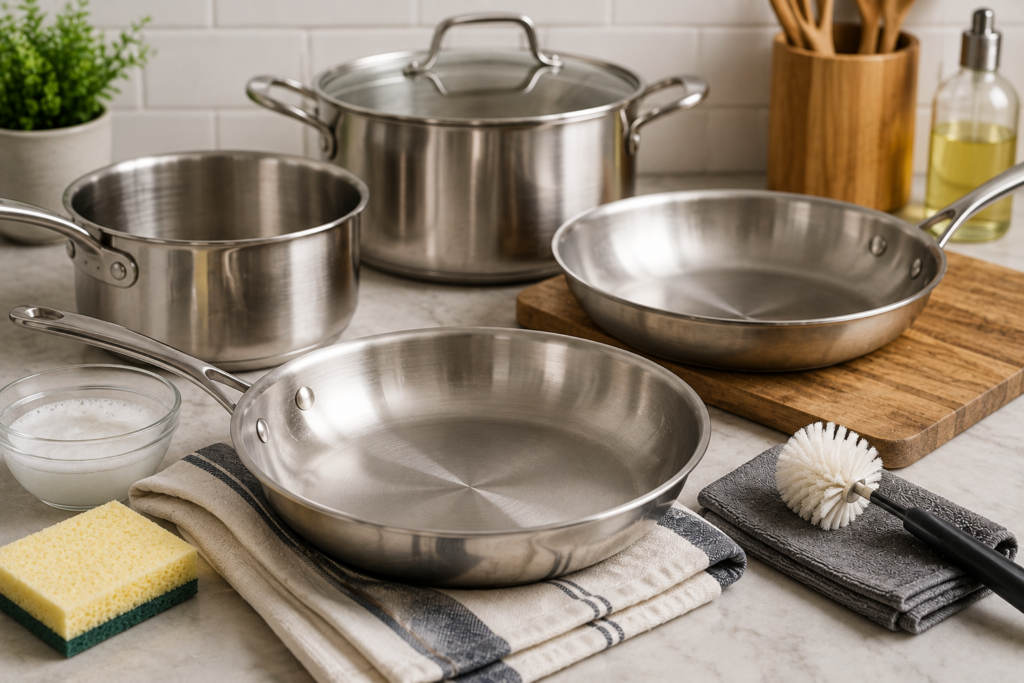
Stainless steel is valued for its durability and rust resistance, though it needs specific techniques to prevent sticking and maintain its appearance.
Cleaning Stainless Steel
Most stainless steel cookware can be cleaned with warm soapy water and a non-abrasive sponge for everyday use. For stuck-on food or discoloration, a paste of baking soda and water, or a dedicated stainless steel cleaner, can help restore the surface without scratching.
Removing Discoloration and Stains
Stainless steel can develop rainbow-colored discoloration from overheating, known as heat tint. This is generally cosmetic rather than damaging, and can often be reduced with a stainless steel cleaner or a vinegar-and-water solution applied with a soft cloth.
Preventing Food From Sticking
Proper preheating is one of the most effective ways to prevent sticking on stainless steel. Heat the empty pan first, then add oil once it’s warm, and wait until the oil shimmers before adding food, since adding food too early is a common cause of sticking.
Maintenance Tips for Stainless Steel
- Avoid extreme temperature shocks, such as running cold water over a very hot pan, since this can cause warping over time
- Use wooden, silicone, or nylon utensils to avoid scratching the surface
- Dry immediately after washing to prevent water spots
- Most stainless steel cookware is dishwasher-safe, though hand washing generally helps maintain its appearance longer
Non-Stick Cookware Care
Non-stick pans require the gentlest care of any common cookware material, since their coating is more delicate than cast iron or steel.
Proper Cleaning Techniques
Always let non-stick pans cool completely before washing, since sudden temperature changes can warp the pan or damage the coating. Wash with warm soapy water and a soft sponge, avoiding abrasive scrubbers or steel wool that can scratch the non-stick surface.
Using the Right Utensils
Metal utensils can scratch and damage non-stick coatings over time, even on pans marketed as scratch-resistant. Stick to wooden, silicone, or nylon utensils to preserve the coating’s integrity and extend the pan’s usable lifespan.
Heat Management
Non-stick cookware generally performs best at low to medium heat, and many manufacturers specifically advise against high-heat cooking. Non-stick coatings (PTFE) begin to break down above roughly 500°F (260°C), and an empty pan left on a burner can reach that temperature in just a couple of minutes which is why never preheating an empty non-stick pan is one of the most important safety habits, alongside good ventilation and using a low-to-medium flame
When to Replace Non-Stick Cookware
Non-stick pans have a shorter functional lifespan than cast iron or stainless steel, generally needing replacement every few years depending on usage frequency and care. Visible scratching, peeling, or a noticeable loss of non-stick performance are all signs it’s time to replace the pan rather than continue using a damaged coating.
Copper Cookware Care
Copper cookware is prized for its excellent heat conductivity, though it needs more maintenance than most materials to keep its look and performance intact.
Cleaning Copper Exteriors
Copper naturally develops a patina, a dulling or darkening of its surface, over time through normal use and oxidation. If you prefer copper’s original shine, a dedicated copper cleaner or a paste of salt, flour, and vinegar can help restore the surface’s brightness.
Caring for the Interior Lining
Most copper cookware is lined with tin or stainless steel, since cooking directly on copper isn’t food-safe. Follow care guidelines specific to the lining material, generally treating tin linings more gently than stainless steel linings, since tin is softer and more prone to scratching.
Storage and Handling
Copper cookware can dent if handled roughly or stacked without protection, so store pieces separately or with soft padding between them. Avoid using metal utensils directly on tin-lined copper cookware, since tin scratches more easily than stainless steel.
Comparing Care Requirements by Material
| Material | Cleaning Difficulty | Special Care Needed | Typical Lifespan |
| Cast Iron | Moderate | Seasoning, avoid soaking | Decades with care |
| Stainless Steel | Easy | Preheat to prevent sticking | Decades |
| Non-Stick | Easy | Gentle utensils, low-medium heat | A few years |
| Copper | Moderate-High | Patina maintenance, lining care | Decades with proper care |
General Cookware Storage Tips
Proper storage prevents unnecessary wear and extends the life of virtually any cookware material.
- Use pan protectors or cloth between stacked pieces to prevent scratching, particularly important for non-stick and copper cookware
- Hang pots and pans when possible to avoid stacking pressure altogether
- Store cast iron in a dry environment to prevent rust from forming
- Avoid nesting non-stick pans directly without a protective liner between surfaces
- Keep lids separate or padded to prevent chips and scratches on both lids and cookware surfaces
Common Cookware Care Mistakes to Avoid
- Using metal utensils on non-stick or tin-lined copper: This is one of the most common causes of premature coating damage across delicate cookware surfaces.
- Soaking cast iron for extended periods: Prolonged water exposure is the leading cause of rust on cast iron cookware.
- Washing hot pans with cold water: Sudden temperature changes can warp stainless steel and damage non-stick coatings over time.
- Using high heat with non-stick cookware: Excessive heat degrades non-stick coatings faster than manufacturer-recommended temperature ranges.
- Skipping the drying step: Leaving any cookware wet, especially cast iron and carbon steel, invites rust and surface damage.
- Ignoring manufacturer care instructions: Specific cookware lines sometimes have unique care requirements that generic advice doesn’t fully cover.
How to Extend the Life of Your Cookware
A few consistent habits can meaningfully extend the usable life of any cookware set, regardless of material.
- Match utensils to your cookware material: Wooden, silicone, or nylon utensils are generally safe across all cookware types, while metal utensils should be reserved for cast iron and bare stainless steel.
- Avoid drastic temperature changes: Let pans cool gradually rather than plunging hot cookware into cold water, which stresses the metal and can cause warping.
- Clean promptly after use: Allowing food residue to dry and harden makes cleaning more difficult and can require more abrasive methods that risk damaging the surface.
- Follow heat guidelines specific to your cookware: Non-stick performs best at lower heat, while cast iron and stainless steel handle higher temperatures more safely.
- Re-season cast iron periodically: Even well-maintained cast iron benefits from occasional re-seasoning to maintain its non-stick surface and rust resistance.
Choosing the Right Cookware Material for Your Cooking Style
Understanding care requirements can also help you decide which cookware material suits your household before buying replacements.
- If you cook a lot of high-heat, seared dishes: Cast iron or stainless steel handle high temperatures well and can develop excellent searing results with practice and proper technique.
- If you prioritize easy weeknight cleanup: Non-stick cookware offers the most convenient day-to-day cleaning experience, though it comes with a shorter overall lifespan than more durable materials.
- If even heating matters most for delicate sauces: Copper’s superior heat conductivity makes it a favorite among home cooks who frequently work with sauces or dishes requiring precise temperature control.
- If you want cookware that lasts decades with minimal replacement: Cast iron and stainless steel are generally the most durable options, often lasting a lifetime or longer with proper care.
- Many households find a mixed set works best, using stainless steel or cast iron for high-heat searing, and one or two non-stick pans for eggs and other delicate foods.
Signs Your Cookware Needs Attention or Replacement
Even well-cared-for cookware eventually shows signs it needs restoration or replacement, and recognizing these early helps you act before it affects your cooking.
- Warping: A pan that no longer sits flat on the stovetop can cause uneven heating and is generally not repairable, particularly for thinner stainless steel or non-stick cookware.
- Persistent sticking despite proper technique: If food consistently sticks even with correct preheating and oiling, the cookware’s surface may be too worn to restore fully.
- Visible coating damage: Peeling, flaking, or deep scratches on non-stick surfaces are a clear signal it’s time to replace the pan rather than continue using a compromised coating.
- Rust that won’t fully clean off cast iron: Light surface rust is usually fixable with steel wool and re-seasoning, but deeply pitted rust may require more extensive restoration or eventual replacement.
Conclusion
Proper cookware care comes down to understanding your specific material’s needs, whether that’s seasoning cast iron, preheating stainless steel, using gentle utensils on non-stick coatings, or maintaining copper’s patina and lining. Consistent, simple habits like drying cookware thoroughly, avoiding sudden temperature changes, and using the right utensils can add years of usable life to any cookware set. With the right routine for each material in your kitchen, your cookware will perform better and last significantly longer, protecting the investment you’ve already made in quality pots and pans.
Frequently Asked Questions
1- Can I put cast iron in the dishwasher?
No, cast iron should always be hand washed, since dishwasher detergents and prolonged water exposure can strip seasoning and cause rust.
2- Why does my stainless steel pan food stick even though I’m using oil?
Food typically sticks to stainless steel when the pan isn’t properly preheated before adding oil and food. Heat the pan first, then add oil, and wait until it shimmers before cooking.
3- How often should I re-season my cast iron pan?
This depends on usage, but occasional re-seasoning, whenever the surface looks dull or food starts sticking more than usual, helps maintain performance and rust resistance.
4- Is it safe to use metal utensils on non-stick pans?
No, metal utensils can scratch and damage non-stick coatings over time, even on pans marketed as scratch-resistant. Stick to wooden, silicone, or nylon utensils instead.
5- How long should non-stick cookware last?
Non-stick pans generally have a shorter lifespan than cast iron or stainless steel, often needing replacement every few years depending on usage and care.
6- Is patina on copper cookware a problem?
No, patina is a natural, cosmetic change from oxidation and doesn’t affect the cookware’s performance. It can be cleaned off if you prefer copper’s original shine.