
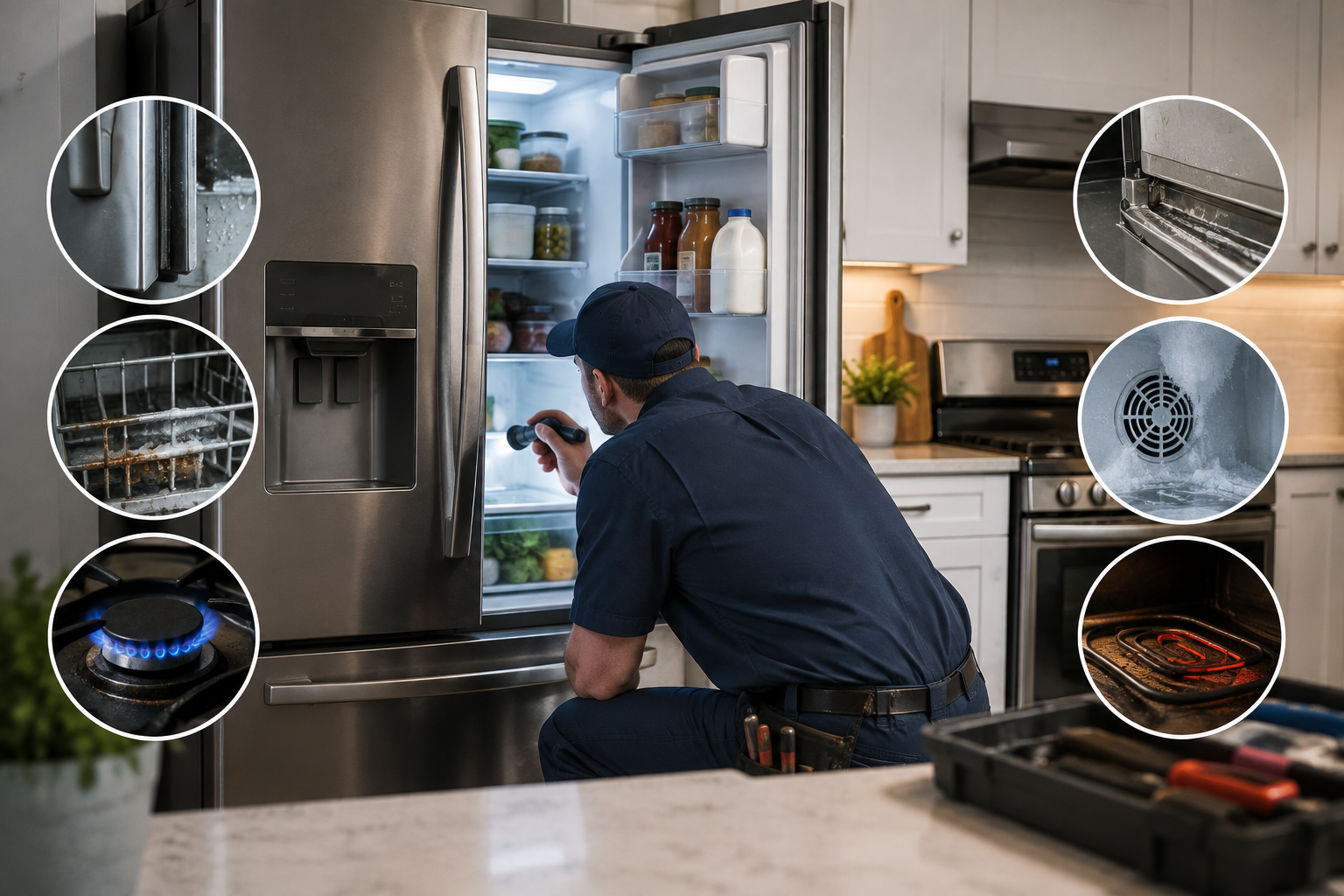
A kitchen appliance rarely fails without warning. Most give off small, easy-to-miss signals for weeks or months before they finally break down completely, and catching those signals early can save you from an emergency replacement at the worst possible time.
This guide walks through the clearest signs it’s time to replace your kitchen appliances, how appliance age factors into the decision, and a practical framework for choosing between repair and replacement. We’ll also cover appliance lifespan, warning signs, and repair-versus-replace guidance built specifically for American homeowners.
By the end, you’ll know exactly what to watch for across your refrigerator, dishwasher, range, and other major kitchen appliances, so you can plan ahead with confidence instead of reacting to a sudden breakdown.
When Should You Replace an Appliance?
As a general rule, replacement makes more financial sense than repair when the repair cost exceeds roughly 50 percent of the appliance’s replacement value, particularly if the unit is already past the midpoint of its typical lifespan. A newer appliance well within its expected lifespan is usually worth repairing, while an older one nearing the end of its typical range often makes more sense to replace.
Beyond that general rule, several specific warning signs, from rising energy bills to strange noises, can signal it’s time to start shopping for a replacement even before a full breakdown happens.
Average Appliance Lifespans: A Quick Reference
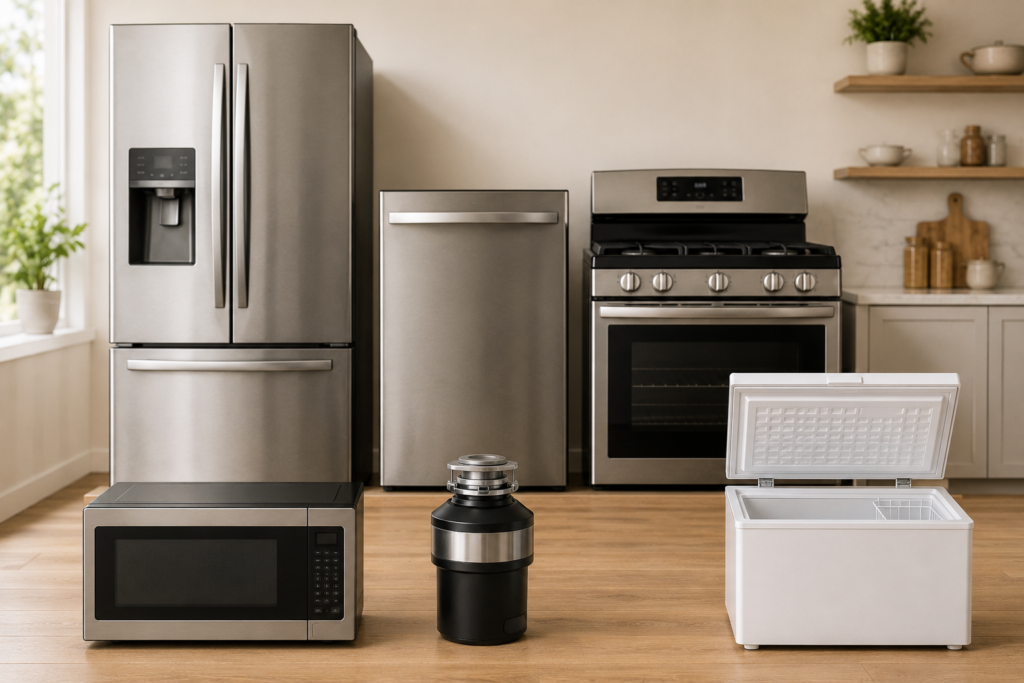
Knowing roughly how long your appliance is supposed to last helps you interpret warning signs more accurately. An unusual noise from a five-year-old refrigerator means something different than the same noise from a fifteen-year-old one.
| Appliance | Typical Lifespan |
| Refrigerator | 9–15 years |
| Dishwasher | 8–12 years |
| Gas range | 15–17 years |
| Electric range | 13–15 years |
| Microwave | 7–10 years |
| Garbage disposal | 8–12 years |
| Standalone freezer | 12–20 years |
If your appliance is already near or past the upper end of its typical lifespan range, it’s worth paying closer attention to any of the warning signs below.
Signs It’s Time to Replace Your Refrigerator
Your refrigerator runs continuously, which means its warning signs often show up gradually rather than all at once.
- Inconsistent temperatures: If food spoils faster than it used to, or you notice your fridge running warmer in certain areas, the cooling system may be struggling to keep up.
- Excessive condensation or moisture: Persistent condensation inside the fridge or on the exterior can indicate a failing door seal or a cooling system issue.
- The motor runs constantly or loudly: A compressor working overtime to maintain temperature is a common sign of an aging or failing cooling system.
- Frequent repairs: If you’ve called a technician more than once or twice in the past year or two, ongoing repair costs are likely approaching the value of a new unit.
- Rising energy bills: Older refrigerators are often significantly less efficient than newer Energy Star-certified models, and a jump in your electricity bill without other explanation can point to a struggling compressor.
- Sealed-system failure: Repairs involving the compressor or evaporator coil can cost between $800 and $1,200 for parts and labor, close to 50 to 70 percent of the cost of a new refrigerator, making replacement the more sensible choice in most cases.
Signs It’s Time to Replace Your Dishwasher
Dishwashers already have one of the shorter average lifespans among kitchen appliances, so it’s worth watching for these signs a bit earlier.
- Dishes come out dirty or wet: If you’re regularly needing to rewash or hand-dry dishes, the wash or dry cycle may no longer be functioning properly.
- Rust inside the tub or on racks: Visible rust often signals the tub’s protective coating has broken down, which can affect both performance and food safety.
- Persistent leaks: Water pooling around the base after a cycle usually points to a door seal or pump issue that’s often not worth repairing on an older unit.
- Unusual noises: Grinding, buzzing, or knocking sounds during a cycle can indicate pump or motor problems developing.
- Frequent error codes or cycle failures: Repeated malfunctions, especially on a machine already past 8 to 10 years old, are a strong signal replacement will be more cost-effective than ongoing repairs.
- Repair costs climbing: Pump or electronic control repairs typically average $200 to $400. If you’re facing this cost on a dishwasher already near or past its expected lifespan, replacement is usually the better value.
Signs It’s Time to Replace Your Range or Oven
Cooking appliances tend to last longer than most other kitchen appliances, but they still show clear warning signs when nearing the end of their service life.
- Uneven cooking or baking: If your oven consistently over- or under-cooks food despite correct temperature settings, the heating element or thermostat may be failing.
- Pilot light or igniter issues (gas models): Recurring problems lighting burners or the oven can point to an aging igniter system that’s becoming less reliable over time.
- Visible damage to heating elements: Cracked, warped, or discolored bake elements on electric ranges are a clear sign of wear.
- Inconsistent burner flame or heat: Uneven flame color or inconsistent stovetop heat on electric coils often signals a failing component.
- The self-cleaning cycle causes issues: Since self-cleaning cycles run at extremely high temperatures, older ranges sometimes develop new problems after use, revealing components already close to failure.
- Age past 15 years: Given that ranges and ovens are among the most durable kitchen appliances, one nearing or past 15 years old showing any of the above signs is a reasonable candidate for replacement.
Signs It’s Time to Replace Your Microwave
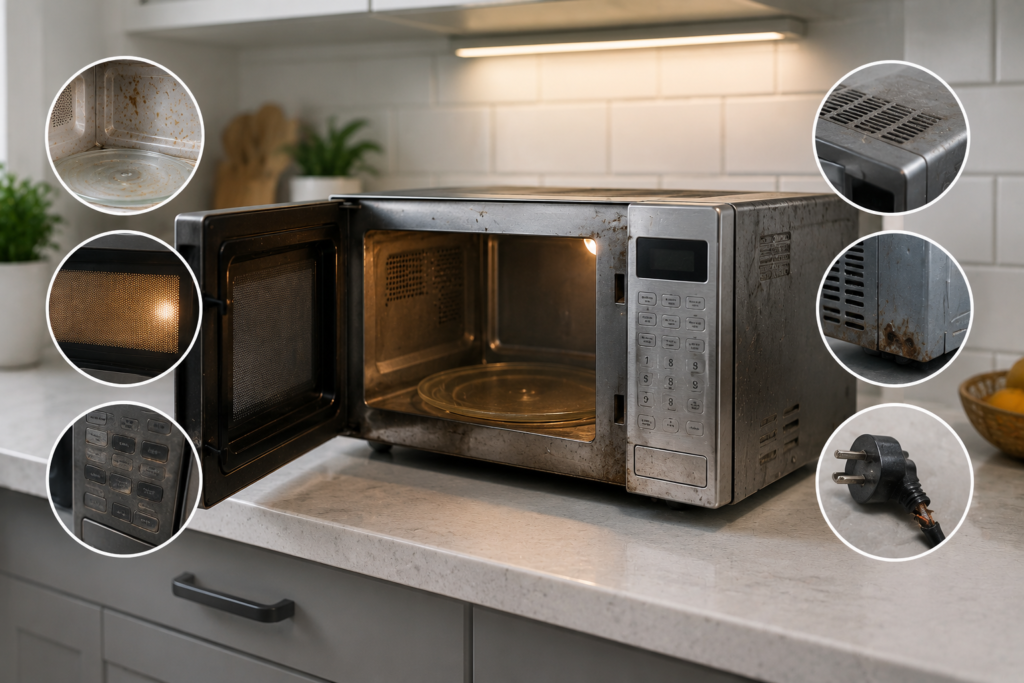
Microwaves have some of the shorter lifespans in the kitchen, generally lasting 7 to 10 years, so replacement signs often show up sooner than with other appliances.
- Food isn’t heating evenly or fully: A noticeable drop in heating performance often points to a weakening magnetron, the component responsible for generating heat.
- Strange smells or smoke: Any burning smell or visible smoke is a safety concern and a clear signal to stop using the appliance immediately.
- Sparking inside the unit: Sparks during operation, especially without metal inside, can indicate interior damage and should be addressed right away.
- Buttons or display stop responding reliably: Inconsistent controls are a common sign of aging electronic components nearing failure.
- Unusual noises during operation: Grinding or humming beyond the microwave’s normal operating sound can indicate a failing turntable motor or other internal component.
Signs It’s Time to Replace Your Garbage Disposal
Garbage disposals typically last 8 to 12 years, and their warning signs are usually easy to notice during everyday use.
- Frequent jams: If your disposal jams regularly even with proper use, internal components may be wearing down.
- Persistent bad odors: Ongoing smells despite regular cleaning can indicate debris trapped in worn seals or components that are harder to fully clean.
- Leaking from the unit: Leaks around the base often point to worn seals that are generally not cost-effective to repair on an older unit.
- Frequent resets needed: If you’re constantly hitting the reset button, the motor may be struggling and nearing the end of its service life.
General Warning Signs Across All Kitchen Appliances
Beyond appliance-specific signs, a few universal indicators apply across virtually every major kitchen appliance.
- Rising utility bills without a clear explanation often point to declining efficiency in an aging appliance
- Increasingly frequent repairs signal that ongoing maintenance costs are approaching or exceeding replacement value
- Visible rust, corrosion, or physical damage typically indicate deeper underlying wear
- Unusual noises that weren’t present before are almost always worth investigating
- The appliance is near or past its typical lifespan range, making any new issue more likely to be the start of a bigger problem
- Parts are becoming harder to find for older or discontinued models, which can make future repairs more expensive or impossible
Repair or Replace? A Practical Decision Framework
When a kitchen appliance starts showing problems, it helps to work through a clear, practical framework rather than deciding based on frustration alone.
| Scenario | Recommended Action |
| Appliance under half its expected lifespan, repair cost is low | Repair |
| Appliance nearing or past expected lifespan, repair cost is high | Replace |
| Multiple repairs needed within the past year | Consider replacement |
| Appliance still under manufacturer warranty | Repair through manufacturer |
| Repair cost exceeds 50% of replacement value | Replace |
This framework isn’t a strict rule for every situation, but it offers a practical starting point for weighing the financial trade-offs involved.
How Appliance Age Should Influence Your Decision
Age matters just as much as the specific problem you’re experiencing. A five-year-old dishwasher with a minor pump issue is usually worth repairing, while the same issue on a twelve-year-old dishwasher, already near the top of its typical lifespan, is a stronger case for replacement.
It’s also worth considering that once an appliance starts developing multiple unrelated issues, this often signals broader wear across the whole unit rather than one isolated problem. In these cases, even a successful individual repair may only delay the next issue by a short time.
The Hidden Cost of Delaying Replacement
Waiting too long to replace a failing appliance can carry hidden costs beyond the obvious inconvenience of a breakdown.
Older, less efficient appliances typically consume more energy and water than modern Energy Star-certified equivalents, meaning ongoing utility costs quietly add up the longer you delay replacement. A failing refrigerator can also risk food spoilage, while a leaking dishwasher or disposal can cause water damage to cabinetry and flooring if left unaddressed.
Weighing these hidden, ongoing costs alongside the upfront price of a new appliance often makes replacement look like better value than it initially appears.
How to Extend Your Appliance’s Life Before Replacing It
Before deciding on replacement, it’s worth checking whether a few simple maintenance steps could resolve the issue or at least buy you more time.
- Clean condenser coils and filters: Dust buildup on refrigerator coils or clogged dishwasher filters can mimic more serious mechanical problems, and cleaning them is often a free, first troubleshooting step.
- Check door seals and gaskets: Worn seals on refrigerators, ovens, and dishwashers can cause many of the symptoms described above, and gasket replacement is usually far cheaper than replacing the whole appliance.
- Descale water-connected appliances: Mineral buildup from hard water can affect dishwasher performance and disposal function, and regular descaling can restore performance without a full replacement.
- Review your usage habits: Overloading dishwashers, ignoring load capacity guidelines, or misusing self-cleaning oven cycles can all accelerate wear that might otherwise be avoidable.
- If you’ve addressed these basics and the issue persists, or if the appliance is already near the end of its typical lifespan, that’s usually a clearer signal that replacement is the right next step rather than another round of troubleshooting.
Conclusion
Recognizing the early warning signs of a failing kitchen appliance gives you the power to plan a replacement on your own timeline, rather than being caught off guard by a sudden breakdown. Pay attention to inconsistent performance, rising utility bills, frequent repairs, and unusual noises across your refrigerator, dishwasher, range, microwave, and garbage disposal. When in doubt, weigh the repair cost against the appliance’s age and remaining expected lifespan using the 50 percent rule as a practical guide. Acting on these signs early, rather than waiting for a full breakdown, will save you both money and the stress of an emergency replacement down the line.
Frequently Asked Questions
1- How do I know if it’s cheaper to repair or replace an appliance?
As a general guideline, if repair costs exceed roughly 50 percent of the appliance’s replacement value, especially on an older unit, replacement is typically the more cost-effective choice.
2- What’s the clearest sign a refrigerator needs replacing?
Persistent temperature inconsistency combined with rising energy bills is one of the clearest signals that the cooling system is failing and replacement is worth considering.
3- Should I replace an appliance still under warranty?
No, appliances under warranty should generally be repaired through the manufacturer first, since this typically costs little to nothing out of pocket.
4- Is it normal for appliances to make some noise?
Yes, all appliances produce some operating noise, but new or unusual sounds that weren’t present before are usually worth investigating.
5- How often should I expect to repair a kitchen appliance?
Occasional repairs are normal, particularly for appliances with moving parts like dishwashers and disposals, but frequent repairs within a short timeframe usually signal it’s time to consider replacement instead.
6- Does delaying replacement ever cost more in the long run?
Yes, older appliances often use more energy and water than newer models, and continuing repairs on a failing unit can add up to more than the cost of replacement over time.