
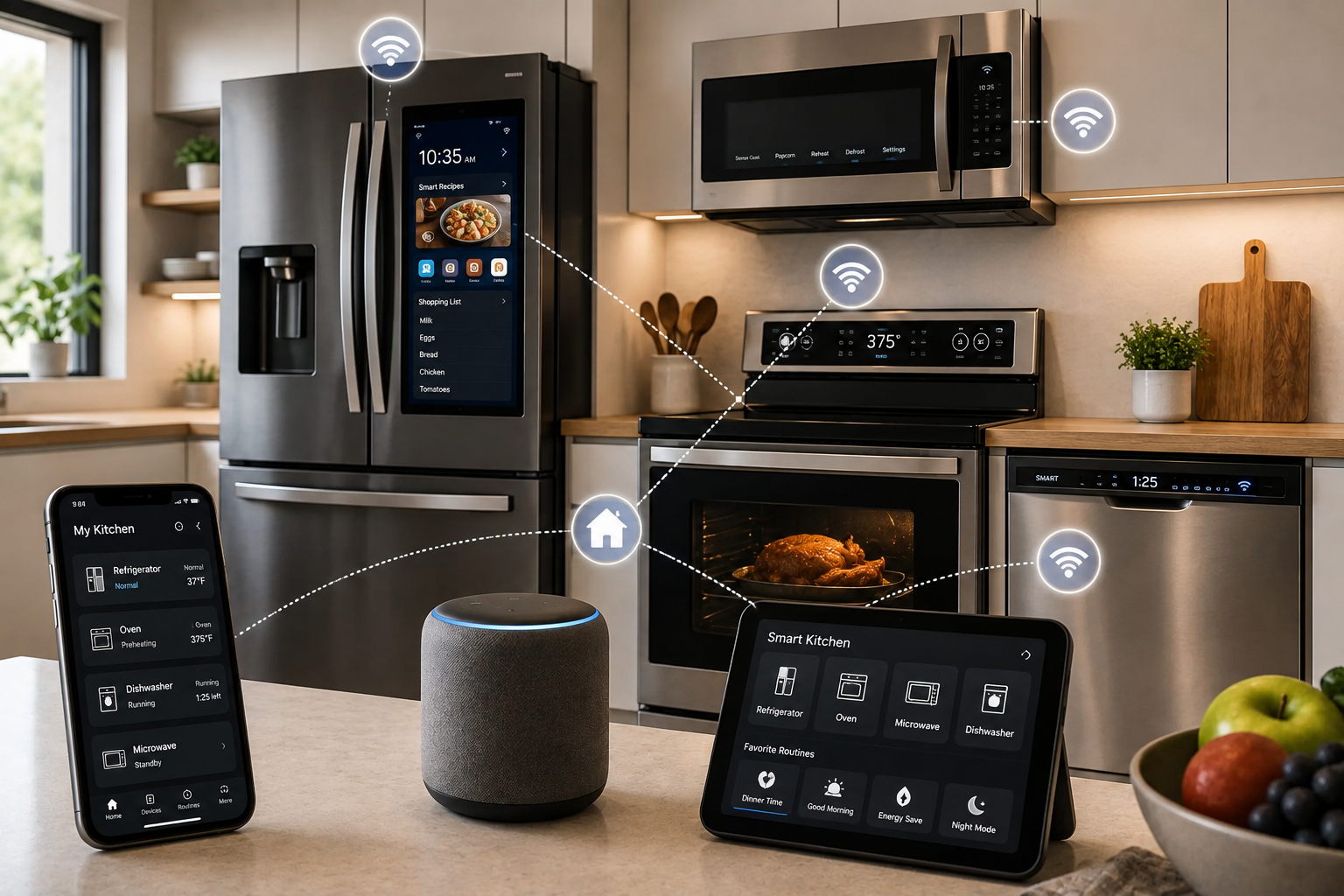
Smart kitchen appliances have moved well past the novelty phase. Refrigerators that build shopping lists, ovens that adjust temperature based on what’s cooking, and voice-activated “dinner mode” routines that trigger multiple appliances at once are now genuinely available, not just concept-stage marketing. But smart kitchen appliances also come with a real price premium, and not every connected feature translates into daily value once the initial novelty wears off.
This guide gives you an honest, balanced look at what’s genuinely useful, what’s still more gimmick than substance, and how to decide whether the added cost of going smart makes sense for your household.
Are Smart Kitchen Appliances Actually Worth It?
Smart kitchen appliances are worth it when the specific connected features solve a real, recurring problem in your kitchen, precise temperature monitoring for cooking, remote preheat for busy schedules, or genuine energy savings from a smart refrigerator’s improved insulation and compressor technology. They’re less worth it when you’re paying extra primarily for novelty features you’ll use once or twice before ignoring, like a WiFi-connected dishwasher’s remote start, which most owners rarely use in practice since they start the dishwasher when they fill it. The honest answer depends less on the technology itself and more on whether your specific habits align with what that technology actually improves.
What Actually Counts as a “Smart” Appliance?
The term “smart appliance” gets used loosely enough that it’s worth defining clearly. A genuinely smart kitchen appliance is any device that connects to Wi-Fi, a companion app, or a voice assistant to provide remote control, automation, or some form of learning or adaptive behavior, not simply a digital display or programmable timer, which non-smart appliances have offered for years.
Smart Refrigerators: What’s Actually Useful
- The Genuine Upside
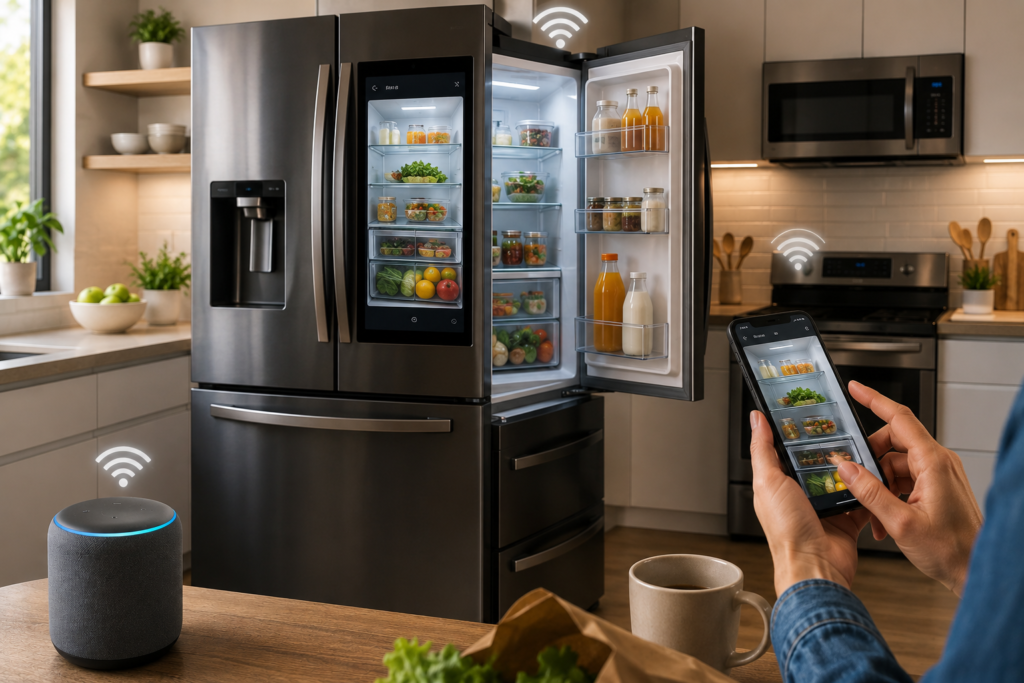
Current-generation smart refrigerators, particularly models like the LG InstaView ThinQ and Samsung Family Hub, have addressed a real complaint about earlier smart fridges: many of their features simply went unused. Interior cameras that let you check contents remotely while grocery shopping, and integration with home automation hubs like Apple HomeKit, Google Home, or Samsung SmartThings, offer genuine convenience for busy households managing frequent grocery runs.
Beyond connectivity features, smart inverter refrigerators with vacuum-insulated panels also tend to offer meaningfully better energy efficiency and lower noise levels than older refrigerator technology, a benefit that exists independent of the “smart” branding but often comes bundled with these newer, higher-end models.
- The Honest Drawback
Smart refrigerators represent a significant investment, typically landing well above standard refrigerator pricing for current-generation smart models. If your household doesn’t regularly forget grocery items or wouldn’t meaningfully use remote viewing features, much of that premium goes toward capability you’re unlikely to use day to day.
Smart Ovens: One of the Stronger Cases for “Worth It”
Smart ovens represent one of the more genuinely useful categories in the smart kitchen space. Real-time temperature and moisture monitoring in modern smart ovens makes it noticeably harder to overcook or undercook a meal, directly addressing a common, everyday cooking frustration rather than adding convenience for its own sake.
Remote preheat functionality, letting you start warming the oven from your phone before you’re even home, solves a genuine timing problem for busy households, and features like automatic temperature adjustment based on what’s being cooked reduce guesswork for less experienced cooks.
This is one of the categories where the added cost more consistently translates into a meaningfully different cooking experience, rather than simply duplicating what a standard oven already does with an app layered on top.
Smart Microwaves: Depends Heavily on Your Habits
Smart microwaves connect to your home’s Wi-Fi network and can communicate with your smartphone, broader smart home ecosystem, and in some cases, online recipe or scan-to-cook databases. Whether this is worth the added cost depends heavily on your specific cooking habits.
For families who regularly rely on even defrosting and multi-stage meal prep, guided cook programs and precise sensor-based cooking can genuinely reduce trial and error. For households that mainly use a microwave for quick reheating, the added smart functionality offers considerably less practical benefit relative to its higher price tag compared to a standard model.
Smart Dishwashers: A Weaker Case
Dishwashers are frequently cited as one of the weaker smart appliance investments. WiFi-connected dishwashers with remote start capability sound convenient in theory, but in practice, most owners simply start the dishwasher when they finish loading it, making the remote-start feature rarely used day to day.
Where smart dishwashers can offer more genuine value is through soil-sensing technology that automatically adjusts water use and cycle length, a feature that improves both cleaning results and energy efficiency regardless of whether you ever open the companion app.
Induction Cooktops: Smart Technology With Real Substance
While not always marketed under the “smart appliance” umbrella specifically, induction cooktops represent one of the clearer cases of genuinely valuable kitchen technology. The direct heating function of induction cooktops provides better temperature control because it heats cookware directly, minimizing heat loss compared to traditional electric or gas heating methods.
This translates into real, measurable benefits, faster heating, more precise temperature control, and improved energy efficiency, independent of any app or Wi-Fi connectivity, making induction a strong investment on its cooking merits alone.
Where the “Gimmick” Concerns Are Most Valid
A few specific categories consistently draw more skepticism from industry observers regarding genuine day-to-day value:
- AI-powered coffee makers with subscription dependencies: Recurring software fees for a coffee maker rarely justify themselves for most households
- WiFi-connected dishwashers: The signature remote-start feature is rarely used in actual daily routines
- Overlapping app ecosystems: If your refrigerator, oven, and dishwasher come from different brands, you may end up juggling multiple separate apps rather than one unified system, undermining much of the promised convenience
Real Costs to Expect
| Smart Appliance Category | Typical Investment Range |
| Smart refrigerator (current generation) | $2,500–$6,500 |
| Smart oven or range (mainstream brand) | Moderate mid-range premium over standard models |
| Smart touch-to-open cabinet hardware | $800–$1,800 per drawer/door |
| Smart dishwasher | Moderate premium over standard models |
At the everyday end, a single smart oven, refrigerator, or dishwasher from a mainstream brand typically represents a meaningful step up in price from a comparable non-smart equivalent, though it generally remains well short of luxury-tier smart appliance pricing.
Compatibility: The Detail Most Buyers Overlook
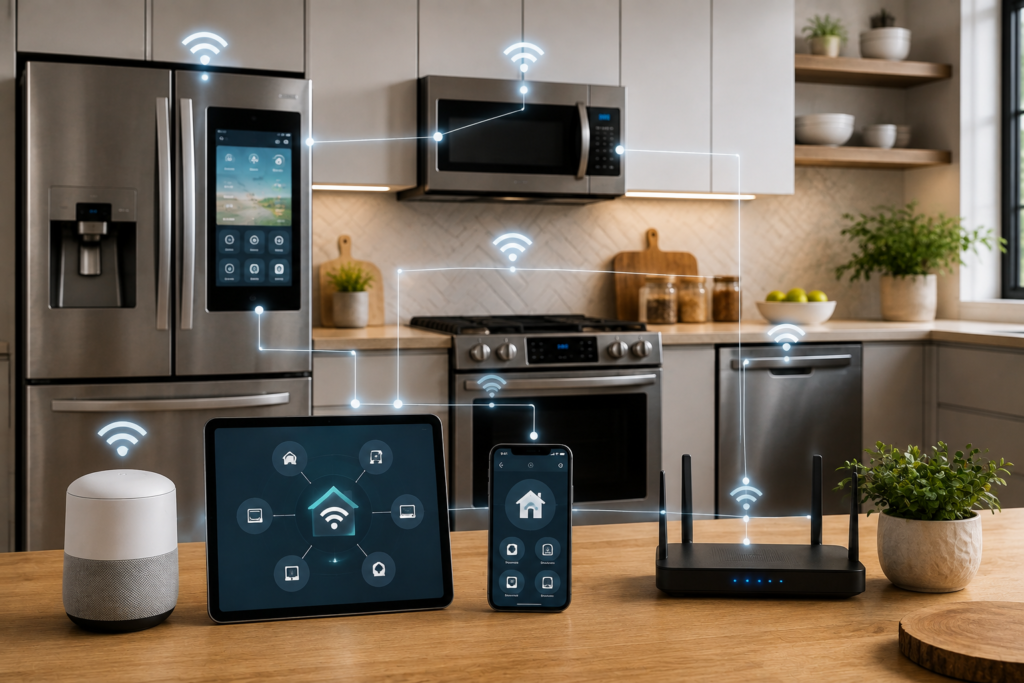
Before buying any smart appliance, check for Matter, Thread, or Zigbee support if you want your devices to actually communicate with each other and with your broader smart home setup. Compatibility standards vary across brands, and buying smart appliances from multiple manufacturers without confirming they share a compatible ecosystem can leave you with several disconnected “smart” devices rather than one integrated, genuinely convenient kitchen.
Practical Questions to Ask Before Buying Smart
Will You Actually Use the Connected Features?
Be honest about your habits. If you’re unlikely to check your fridge’s interior camera from the grocery store or set up voice-activated “dinner mode” routines, much of the smart premium may not translate into real daily value for your household.
Does It Depend on Wi-Fi to Function at All?
Some smart functions stop working entirely if your Wi-Fi goes down, which is worth checking before you buy, not after. Confirm that core appliance functionality, actually cooking, cooling, or washing, doesn’t depend on an active internet connection.
What’s the Brand’s Track Record?
Longevity is genuinely unproven for some newer smart appliance entrants. Established brands with decades of engineering experience tend to outlast newer companies chasing the smart-home trend, which is worth weighing against a slightly lower price from a less established name.
Do You Already Use a Smart Home Ecosystem?
If your home already runs on Apple HomeKit, Google Home, or Samsung SmartThings, choosing appliances compatible with that existing ecosystem meaningfully increases the odds you’ll actually use the integrated features, rather than managing yet another standalone app.
When Smart Appliances Make the Most Sense
- Busy families with frequent grocery runs, who benefit from remote fridge viewing and shopping list features
- Households that cook often and want more consistent results, where smart oven temperature and moisture monitoring genuinely reduces cooking mistakes
- Anyone already invested in a smart home ecosystem, where new appliances can integrate into existing voice commands and automated routines
- Buyers prioritizing energy efficiency, where newer smart-generation appliances often include genuinely improved insulation and compressor technology alongside their connected features
When a Standard Appliance Makes More Sense
- Budget-conscious buyers who would rather put the smart-feature premium toward a higher-quality standard appliance instead
- Households with inconsistent or unreliable Wi-Fi, where connectivity-dependent features may become a source of frustration rather than convenience
- Buyers who value long-term reliability over cutting-edge features, particularly from brands without an established smart appliance track record
- Anyone who primarily wants a specific appliance to do its core job well, without needing app control or remote monitoring layered on top
Conclusion
Whether smart kitchen appliances are worth it comes down to an honest look at your own habits, not the impressiveness of the feature list. Smart ovens and induction cooktops tend to offer the clearest, most consistent day-to-day value, while smart dishwashers and subscription-dependent gadgets draw more legitimate skepticism about real-world use. Before paying the smart-feature premium, ask yourself whether you’ll genuinely use the connected capabilities regularly, check compatibility with any existing smart home setup, and weigh established brand reliability against newer entrants still building their track record. Get those questions answered honestly, and you’ll know exactly where going smart is worth it for your kitchen, and where a reliable standard appliance will serve you just as well.
Frequently Asked Questions
1- Are smart refrigerators worth the extra cost?
For households that regularly use remote viewing, shopping list features, or smart home integration, yes. For those unlikely to use these specific features, a well-reviewed standard refrigerator often delivers similar core performance at a lower price.
2- Do smart ovens actually cook better than standard ovens?
Not necessarily “better” in a technical sense, but real-time temperature and moisture monitoring in smart ovens does make it genuinely easier to avoid over- or undercooking, which can meaningfully improve results for less experienced cooks.
3- Is a smart dishwasher worth buying?
This is one of the weaker cases for smart technology specifically, since the signature remote-start feature is rarely used in practice. Soil-sensing technology, which improves cleaning and efficiency, offers more genuine value regardless of app connectivity.
4- What happens to smart appliances if my Wi-Fi goes down?
This varies by appliance and brand. Some smart functions stop working entirely without an internet connection, though core appliance functions like cooling or cooking typically continue operating normally. It’s worth confirming this specifically before purchasing.
5- Do I need all my smart appliances to be the same brand?
Not necessarily, but checking for shared compatibility standards like Matter, Thread, or Zigbee helps ensure appliances from different brands can still communicate with each other and a shared smart home hub.
6- Are induction cooktops considered “smart” appliances?
Not always marketed that way, but induction technology offers genuine, measurable cooking benefits, faster heating and more precise temperature control, independent of any app or connectivity features.
7- How much more do smart appliances typically cost than standard models?
This varies significantly by category and brand, but smart features generally add a meaningful premium to an appliance’s price, and can add considerably more at the luxury end of the market.