
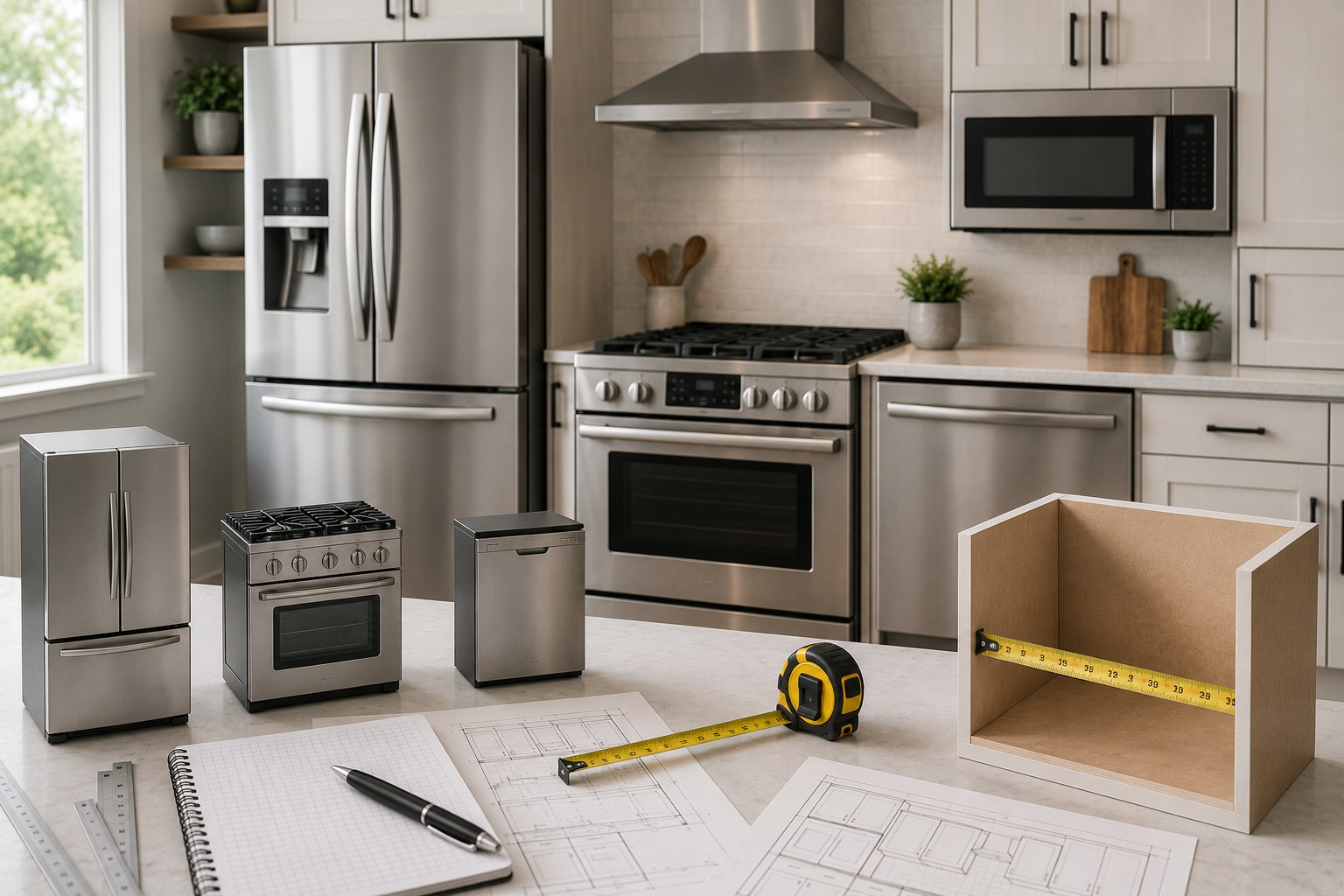
Buying a new kitchen appliance sounds straightforward until you’re standing in your kitchen with a tape measure, realizing the “standard” size listed online doesn’t actually match your existing cutout, cabinet opening, or doorway. Understanding kitchen appliance sizes before you shop is one of the simplest ways to avoid a costly, frustrating mismatch, whether you’re replacing a single appliance or planning a full kitchen renovation.
This step-by-step guide walks through standard dimensions for every major kitchen appliance, how to measure your space correctly, and the specific clearance details that get overlooked most often. By the end, you’ll know exactly what numbers to write down before you start shopping.
Steps To Understand Kitchen Appliance Sizes
Step 1: Understand Why “Standard” Sizes Still Vary
Appliance categories generally follow common width increments, refrigerators, ranges, and dishwashers all cluster around a handful of typical widths, but “standard” doesn’t mean identical across every brand and model. Depth, height, and door clearance can vary meaningfully even among appliances with the same stated width.
This is why measuring your actual space, and comparing those measurements against a specific model’s listed dimensions, matters more than assuming a general “standard size” will automatically fit.
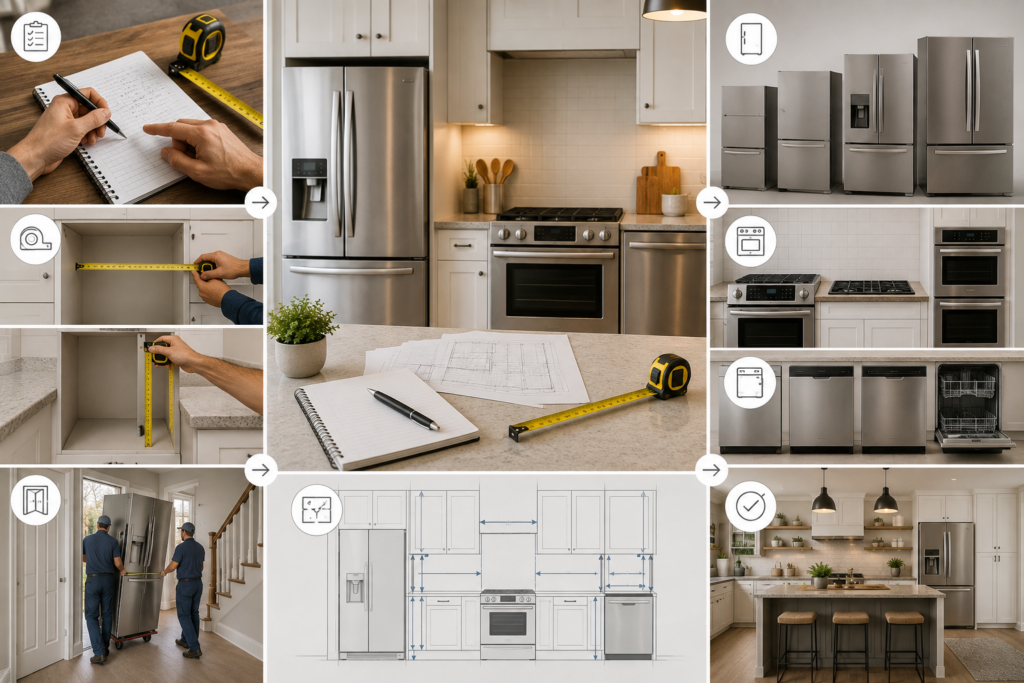
Step 2: Measure Your Existing Space Correctly
Before comparing any specific appliance, gather accurate measurements of the space you’re working with.
- Width
Measure the full width of the opening or cutout at its narrowest point, since cabinets or trim can sometimes narrow slightly at certain heights.
- Height
Measure from the floor to the bottom of any overhead cabinet or obstruction, and note whether your flooring will change (like adding new tile) since this can affect final clearance.
- Depth
Measure from the wall to the front edge of surrounding cabinetry or counters, and separately note the depth needed for the appliance itself plus clearance for doors, hoses, or venting at the back.
Doorway and Hallway Clearance
Measure every doorway, hallway, and staircase turn between your entrance and the kitchen, not just the final installation space. A refrigerator that fits your kitchen perfectly won’t help if it can’t get through the front door.
Step 3: Learn Standard Refrigerator Dimensions
Refrigerators vary more in depth and configuration than almost any other kitchen appliance, making this category worth understanding in detail.
| Refrigerator Type | Typical Width | Typical Depth | Typical Height |
| Top-freezer | 28–32 inches | 28–34 inches | 61–66 inches |
| Bottom-freezer | 29–36 inches | 29–35 inches | 67–70 inches |
| Side-by-side | 32–36 inches | 29–35 inches | 67–71 inches |
| French door | 29–36 inches | 29–35 inches | 68–70 inches |
| Counter-depth | 29–36 inches | 23–27 inches | 68–70 inches |
| Compact/mini | 18–24 inches | 20–24 inches | 32–34 inches |
A Note on Counter-Depth Models
Counter-depth refrigerators are specifically designed to sit flush with surrounding countertops rather than protruding into the kitchen, offering a more built-in look. They typically hold less capacity than standard-depth models of the same width, since the reduced depth directly reduces interior volume.
Step 4: Learn Standard Range and Cooktop Dimensions
Ranges and cooktops follow fairly consistent width increments, though height and depth can vary based on configuration.
| Appliance Type | Typical Width | Typical Depth | Typical Height |
| Standard freestanding range | 30 inches | 25–28 inches | 35–36 inches |
| Slide-in range | 30 inches | 24–25 inches | 35–36 inches |
| Compact range | 20–24 inches | 24–25 inches | 35–36 inches |
| Cooktop (built-in) | 30–36 inches | 20–21 inches | N/A (drops into counter) |
| Wall oven (single) | 24–30 inches | 23–25 inches | 28–30 inches |
| Wall oven (double) | 24–30 inches | 23–25 inches | 50–53 inches |
Freestanding vs Slide-In Ranges
Freestanding ranges include finished side panels and a back control panel, making them flexible for standalone placement anywhere in a kitchen layout. Slide-in ranges are designed to sit flush between surrounding cabinetry, generally without visible side panels, creating a more built-in appearance but requiring a properly sized gap on installation.
Step 5: Learn Standard Dishwasher Dimensions
Dishwashers are one of the more standardized appliance categories, though slim and compact options have become increasingly common.
| Dishwasher Type | Typical Width | Typical Depth | Typical Height |
| Standard built-in | 24 inches | 24–25 inches | 34–35 inches |
| Slim/compact built-in | 18 inches | 24–25 inches | 34–35 inches |
| Portable/countertop | 17–18 inches | 19–22 inches | 17–20 inches |
| Drawer dishwasher (single) | 24 inches | 24 inches | 17 inches |
| Drawer dishwasher (double) | 24 inches | 24 inches | 34–35 inches |
Standard 24-inch built-in dishwashers remain the most common configuration in American kitchens, fitting the typical cabinet opening width found in most kitchen layouts. Slim 18-inch models suit smaller kitchens or households needing less capacity, without requiring an unusual cabinet modification.
Step 6: Learn Standard Microwave Dimensions
Microwave sizing varies more by configuration type than almost any other kitchen appliance category.
| Microwave Type | Typical Width | Typical Depth | Typical Height |
| Countertop (compact) | 17–20 inches | 12–15 inches | 10–12 inches |
| Countertop (full-size) | 21–24 inches | 15–18 inches | 12–14 inches |
| Over-the-range | 29–30 inches | 15–16 inches | 16–18 inches |
| Built-in/trim kit | 24–30 inches | 22–24 inches | 17–19 inches |
| Drawer microwave | 24–30 inches | 22–24 inches | 15–17 inches |
Over-the-range microwaves are designed to fit within the standard 30-inch cabinet opening typically reserved above a range, matching the same width convention as most freestanding ranges below them.
Step 7: Learn Standard Small Appliance Footprints
While small appliances don’t require the same installation precision as major built-in appliances, understanding typical counter footprints helps with kitchen layout planning.
| Small Appliance | Typical Footprint |
| Toaster oven (compact) | 14–16″ W x 11–13″ D |
| Stand mixer | 14–16″ W x 9–10″ D |
| Air fryer (medium) | 12–14″ W x 12–14″ D |
| Coffee maker (drip) | 8–10″ W x 10–14″ D |
| Blender (full-size) | 7–9″ W x 8–10″ D |
| Multi-cooker (6-quart) | 12–13″ W x 12–13″ D |
Standard vs Counter-Depth vs Compact: Choosing the Right Category
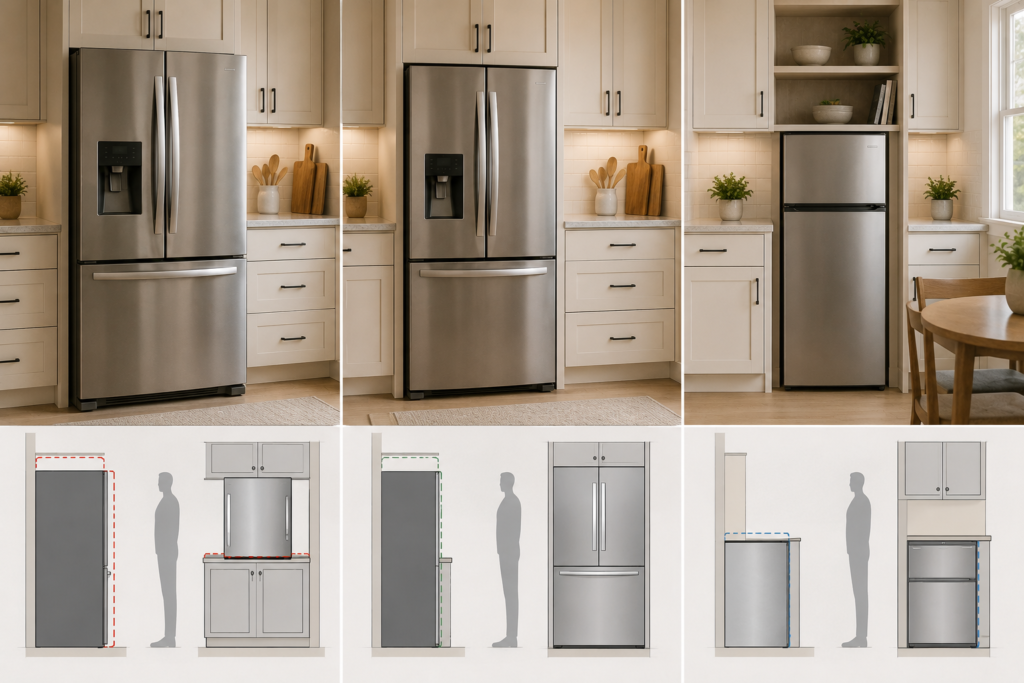
Beyond just fitting the space, choosing the right size category affects daily functionality, not just installation.
- Standard Depth
Standard-depth appliances, particularly refrigerators, maximize interior capacity but typically protrude several inches beyond surrounding counters, which some homeowners find visually bulky in an otherwise streamlined kitchen.
- Counter-Depth
Counter-depth models sit flush with surrounding cabinetry for a built-in look, trading some interior capacity for a cleaner overall appearance, and generally costing more than standard-depth models of similar width.
- Compact and Apartment-Sized
Compact appliances suit smaller kitchens, secondary spaces, or households with lighter capacity needs, offering meaningful space savings but with reduced storage or cooking volume compared to standard sizing.
How to Measure for a Replacement Appliance Step by Step
If you’re replacing an existing appliance rather than planning new construction, following a consistent measurement process avoids the most common sizing mistakes.
- Measure the current appliance’s exact dimensions, width, height, and depth, including any handles or doors at their widest point.
- Measure the actual cutout or cabinet opening separately, since it may differ slightly from the old appliance’s dimensions.
- Check for utility connections, noting the exact position of electrical outlets, water lines, or gas connections relative to the opening.
- Measure doorway and hallway clearance from your home’s entrance to the installation point.
- Add clearance space for doors, drawers, and ventilation according to the new appliance’s specific installation requirements, not just its exterior dimensions.
- Compare against the new appliance’s full spec sheet, not just the headline dimensions, since manufacturers often list separate figures for the appliance body versus handles, hinges, or venting clearance.
Common Sizing Mistakes to Avoid
- Measuring only the appliance’s main body, forgetting to account for door swing, handles, or venting clearance
- Assuming “standard” means identical across brands, when depth and height can vary meaningfully even among same-width models
- Skipping doorway and hallway measurements, resulting in an appliance that fits the kitchen but can’t reach it
- Overlooking utility connection placement, particularly for gas ranges or plumbed refrigerators with specific hookup requirements
- Forgetting to measure for new flooring, if a renovation includes flooring changes that will affect final height clearance
- Ignoring counter overhang, particularly for dishwashers and ranges installed beneath or beside countertops with a lip or overhang
Appliance Size Considerations for Small Kitchens
For smaller kitchens specifically, a few sizing principles help maximize function without overcrowding the space.
Choosing slim or compact configurations, an 18-inch dishwasher instead of a standard 24-inch model, or a counter-depth refrigerator instead of standard depth, can meaningfully improve walkway space and visual flow in a tight layout. Combination appliances, like a microwave-convection oven or an air fryer toaster oven, also reduce how many separate footprints you need to accommodate across your available counter and cabinet space.
Appliance Size Considerations for Larger Kitchens
Larger kitchens offer more flexibility, but it’s still worth choosing appliance sizes deliberately rather than defaulting to the largest available option in every category. Oversized appliances in a large kitchen can still disrupt the kitchen work triangle, the natural path between stove, sink, and refrigerator, if placed without considering overall layout and walkway space.
Frequently Asked Questions
1- What is the standard width for a kitchen refrigerator?
Most standard refrigerators range from 29 to 36 inches wide, depending on configuration, with narrower top-freezer models often starting around 28 inches.
2- What is the standard size for a kitchen range?
The most common freestanding range width in American kitchens is 30 inches, though compact ranges as narrow as 20 to 24 inches are available for smaller kitchens.
3- Is an 18-inch dishwasher big enough for a family?
An 18-inch slim dishwasher generally suits smaller households or couples well, though larger families typically benefit from the additional capacity of a standard 24-inch model.
4- How do I know if a refrigerator will fit through my doorway?
Measure the width and height of every doorway and hallway turn between your entrance and the kitchen, then compare those measurements against the refrigerator’s full dimensions, including any handles or protruding features.
5- What’s the difference between standard depth and counter-depth refrigerators?
Counter-depth refrigerators are shallower, designed to sit flush with surrounding countertops for a built-in look, while standard-depth models protrude further into the kitchen but generally offer more interior storage capacity for the same width.
6- Do I need extra clearance space around a built-in appliance?
Yes, most built-in appliances require some additional clearance beyond their exact exterior dimensions for proper ventilation, door swing, or utility connections, detailed in the manufacturer’s specific installation guide.
7- How much clearance does a dishwasher need for the door to open fully?
Most dishwashers need roughly 24 to 30 inches of clear floor space in front of the unit for the door to open fully and allow comfortable loading and unloading.