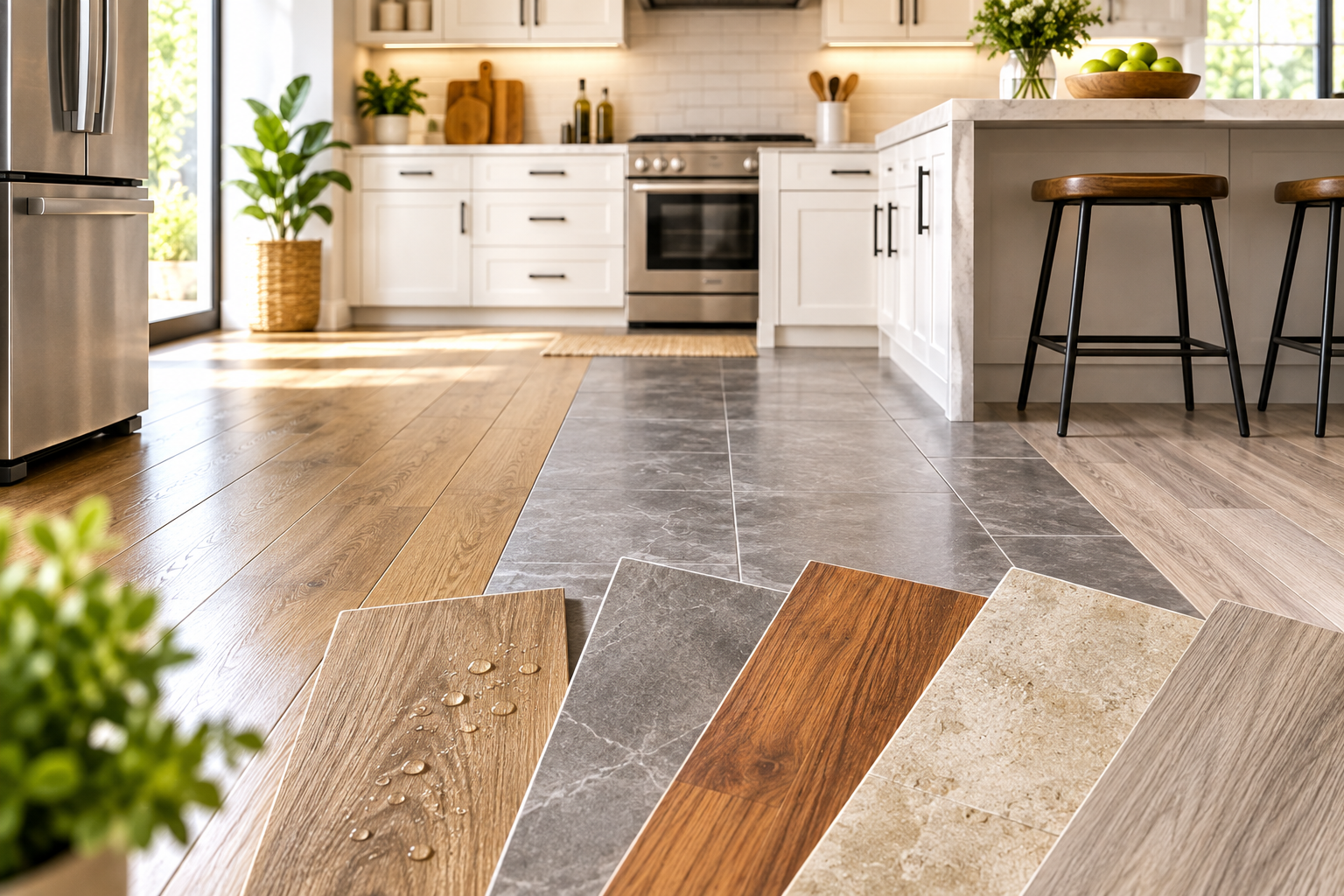
Kitchen flooring works harder than almost any other flooring in your home. It deals with dropped pots, spilled sauces, grease splatters, constant foot traffic, and, for many people, hours of standing at the counter or stove. Choosing the best flooring for kitchens means weighing water resistance, durability, and comfort together, rather than picking based on appearance alone.
This guide walks through every major kitchen flooring option, ranks them against the specific demands a kitchen presents, and covers practical considerations like comfort for standing, grease resistance, and how flooring interacts with kitchen layout and cabinetry.
Best Flooring for Kitchens
For most American kitchens, luxury vinyl plank (LVP) offers the best overall balance of water resistance, durability, comfort, and cost, making it the most frequently recommended option across a wide range of budgets and household needs. Porcelain tile remains an excellent choice for households prioritizing maximum water resistance and long-term durability above comfort. Hardwood works well for kitchens open to adjoining living spaces where visual continuity and standing comfort matter most, provided spills are cleaned up promptly. Laminate is generally the least suited option for kitchens specifically, given its more limited water resistance compared to the alternatives.
What Makes Kitchen Flooring Different From Other Rooms
Constant Moisture Exposure
Sinks, dishwashers, refrigerators with ice makers, and general cooking all introduce regular moisture into a kitchen, whether from direct spills, condensation, or minor appliance leaks that go unnoticed for a period of time.
Heavy, Concentrated Foot Traffic
Kitchens see some of the highest foot traffic of any room in a home, often concentrated in specific zones (the path between the sink, stove, and refrigerator, commonly called the kitchen work triangle) rather than evenly distributed.
Dropped Items and Impact Risk
Pots, pans, dishes, and utensils get dropped in kitchens more than in most other rooms, making impact and dent resistance a genuinely practical consideration beyond just scratch resistance.
Grease and Stain Exposure
Cooking naturally introduces grease splatters and food staining risk that other rooms don’t typically face, making surface stain resistance and ease of cleaning meaningful factors specific to kitchen flooring.
Extended Standing Time
Many people spend considerable time standing in place while cooking, washing dishes, or prepping food, making comfort underfoot a genuinely practical, not just aesthetic, consideration for kitchen flooring.
Ranking the Best Flooring Options for Kitchens
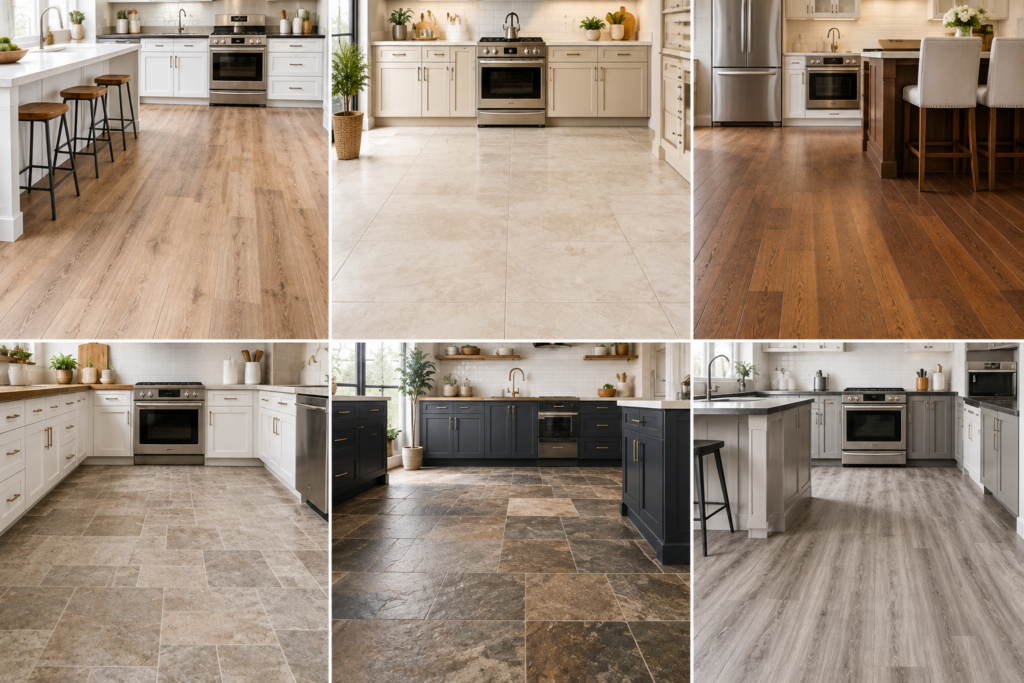
1. Luxury Vinyl Plank (LVP)
LVP consistently ranks as one of the top overall choices for kitchens, combining genuine water resistance (many products are fully waterproof), strong scratch and dent resistance, and a softer, more comfortable feel underfoot than harder materials like tile. It’s also among the more budget-friendly options relative to its performance, and DIY-friendly installation methods make it accessible for a wide range of homeowners.
2. Porcelain Tile
Porcelain tile offers outstanding water resistance and is essentially impervious to scratching or denting, making it a genuinely excellent long-term choice for kitchens prioritizing maximum durability. Its main drawbacks are a hard, cold surface underfoot (addressable with radiant heating) and the periodic maintenance grout lines require.
3. Engineered Hardwood
Engineered hardwood, with proper sealing and prompt spill cleanup, can work well in kitchens, particularly those open to adjoining living or dining spaces already floored in wood. It offers superior comfort underfoot compared to tile or vinyl, though it carries meaningfully more moisture risk than either.
4. Ceramic Tile
Similar to porcelain in water resistance and durability, though generally slightly more porous and marginally less impact-resistant. Ceramic remains a solid, often more budget-friendly kitchen flooring choice.
5. Natural Stone
Materials like granite or slate offer a genuinely premium look and excellent durability, though they typically require periodic sealing to maintain water and stain resistance, and represent one of the higher-cost options for a kitchen floor.
6. Laminate
Laminate is generally the least suited of the common options for kitchens specifically, given its more limited water resistance compared to LVP or tile. Some water-resistant laminate products have improved this somewhat, but it still falls short of vinyl or tile’s moisture performance in a room where spills are routine.
Kitchen Flooring Comparison Table
| Material | Water Resistance | Durability | Comfort Underfoot | Cost | Best For |
| Luxury vinyl plank (LVP) | Excellent | Very high | Good | Lower to moderate | Best all-around choice |
| Porcelain tile | Excellent | Very high | Poor (hard, cold) | Moderate | Maximum durability priority |
| Engineered hardwood | Fair (with care) | Moderate to high | Very good | Moderate to higher | Visual continuity with adjoining wood floors |
| Ceramic tile | Excellent | High | Poor (hard, cold) | Lower to moderate | Budget-friendly durability |
| Natural stone | Good (with sealing) | Very high | Poor | Higher | Premium, distinctive look |
| Laminate | Fair | Moderate to high | Moderate | Lower to moderate | Lower priority for kitchens specifically |
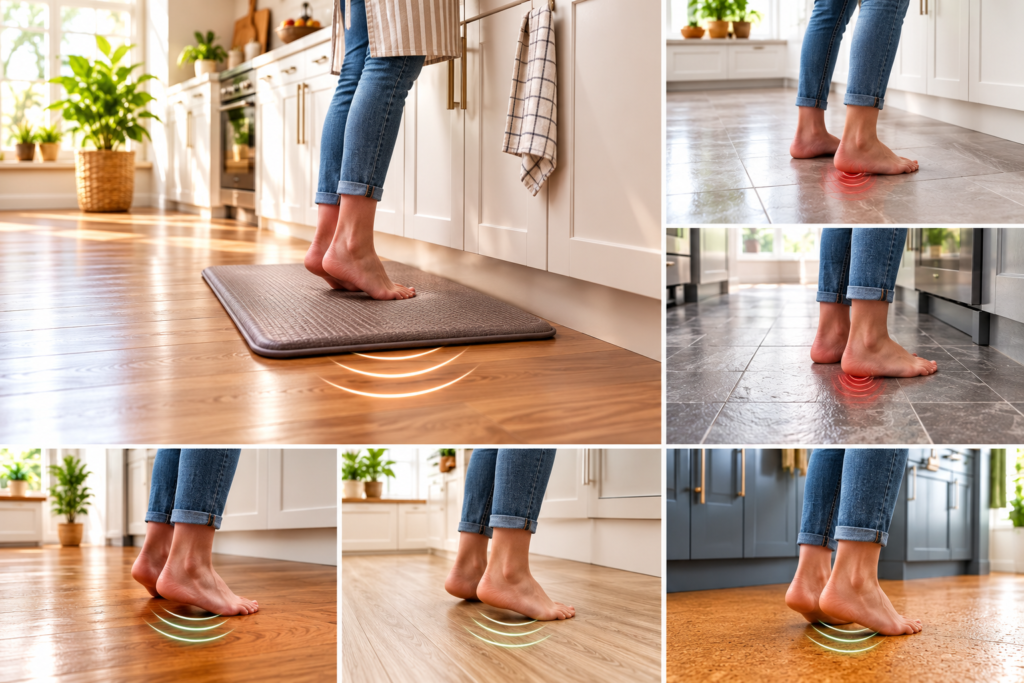
Comfort for Standing: A Genuinely Practical Consideration
Why Comfort Matters More in Kitchens
Unlike a living room or bedroom, kitchens involve extended periods of standing in a fixed position, at the sink, the stove, or a prep counter, making surface comfort a real, daily consideration rather than a minor preference.
Materials That Offer the Most Comfort
Hardwood and cushioned-backing LVP generally offer the most give and comfort underfoot among common kitchen flooring options, reducing fatigue during longer cooking or cleanup sessions compared to harder surfaces like tile or stone.
Anti-Fatigue Mats as a Practical Addition
Regardless of your chosen flooring material, a quality anti-fatigue mat placed at your primary standing zones (in front of the sink or stove) can meaningfully improve comfort, particularly valuable if you’ve chosen a harder material like tile specifically for its durability and water resistance advantages.
Waterproof Kitchen Flooring: What to Actually Look For
Understanding True Waterproof Claims
For genuinely waterproof kitchen flooring, look specifically for LVP products with a rigid SPC (stone plastic composite) or WPC (wood plastic composite) core explicitly labeled as waterproof, rather than simply “water-resistant.” These products are engineered so the plank material itself won’t swell or warp from standing water.
Tile’s Water Resistance Comes With a Caveat
While tile itself is essentially waterproof, grout lines are more porous and can allow moisture through if not properly sealed and maintained, making periodic grout resealing an important part of maintaining a tile kitchen floor’s overall water resistance.
Where Water Actually Causes Problems
Even with waterproof flooring, water that pools and sits for extended periods near appliance connections (dishwashers, refrigerators, sinks) can eventually affect subfloor materials or cabinetry if leaks go unnoticed. Genuinely waterproof flooring reduces this risk considerably but doesn’t eliminate the value of addressing appliance leaks promptly.
Grease, Stain, and Cleaning Considerations
Easiest Materials to Clean
LVP and tile both offer smooth, non-porous surfaces that wipe clean easily, making them particularly practical for kitchens where grease splatters and food staining are a regular occurrence.
Hardwood’s Cleaning Considerations
Hardwood requires slightly more careful cleaning, avoiding excessive water during mopping and promptly wiping up grease or food spills to prevent staining or moisture absorption into the wood’s surface.
Grout Lines and Cleaning Effort
Tile’s grout lines, while durable, require more regular attention to prevent staining and buildup compared to the smooth, seamless surface of vinyl, making tile marginally more maintenance-intensive for day-to-day cleaning despite its excellent overall durability.
Kitchen Layout and Flooring Considerations
Flooring Around Kitchen Islands
Kitchen islands introduce additional cutting and layout considerations during installation, particularly for tile, where planning grout line alignment around an island’s footprint matters for a cohesive, professional-looking result.
Flooring Under Cabinetry
Standard practice generally installs flooring before cabinets in new construction or full renovations, though replacement projects in existing kitchens often work around existing cabinetry, worth discussing with your installer regardless of material choice.
Transition Points to Adjoining Rooms
If your kitchen opens to a dining or living area with different flooring, plan for a clean transition strip or threshold, particularly important when combining materials with different thicknesses, like tile transitioning to hardwood or carpet.
Radiant Heat Flooring for Kitchens
For homeowners specifically concerned about a hard material’s cold surface, radiant floor heating installed beneath tile or stone can meaningfully improve comfort, particularly valuable in colder climates or for households that spend considerable time barefoot in the kitchen. This addition is less commonly paired with LVP or hardwood, given tile and stone’s superior heat conductivity for this specific application.
Budget Planning for Kitchen Flooring
Luxury vinyl plank and laminate generally represent the most budget-friendly entry points for kitchen flooring, with LVP offering meaningfully better water resistance at a similar price point. Ceramic tile and mid-range engineered hardwood occupy a moderate price range, balancing durability and cost. Porcelain tile, natural stone, and premium hardwood represent the higher end of kitchen flooring investment, often justified by superior longevity, distinctive appearance, or, in hardwood’s case, potential resale value benefits.
Matching Kitchen Flooring to Household Type
Busy Families With Kids
LVP is generally the strongest choice, offering water resistance for spills, scratch and dent resistance for dropped items and toys, and a reasonably comfortable, forgiving surface for a high-activity room.
Households That Cook Frequently
Consider comfort underfoot alongside durability, hardwood or cushioned LVP reduces fatigue during longer cooking sessions, while tile’s durability advantage matters more if heavy pots and pans are frequently set down or dropped.
Open-Concept Homes
For kitchens visually connected to adjoining living or dining spaces, engineered hardwood or wood-look LVP can create a seamless visual flow, avoiding an abrupt material change between connected rooms.
Renters or Budget-Conscious Renovators
LVP’s combination of lower cost, strong performance, and often peel-and-stick or click-lock installation options makes it a particularly practical choice for rental properties or renovation projects on a tighter budget.
Common Mistakes to Avoid
- Choosing laminate for a kitchen specifically, when its water resistance falls meaningfully short of vinyl or tile for a room with routine spill risk
- Overlooking comfort underfoot, choosing tile or stone without considering an anti-fatigue mat or radiant heating for extended standing comfort
- Skipping grout sealing on tile floors, allowing water resistance to diminish at the more vulnerable grout lines over time
- Installing hardwood without a plan for prompt spill cleanup, given the kitchen’s inherently higher moisture exposure compared to other rooms
- Ignoring transition planning to adjoining rooms, resulting in an awkward or unfinished-looking threshold between different flooring materials
Conclusion
Choosing the best flooring for kitchens comes down to balancing water resistance, durability, and comfort against your household’s specific priorities and budget. Luxury vinyl plank offers the strongest overall combination of these factors for most households, while porcelain tile rewards those prioritizing maximum durability, and hardwood suits kitchens where visual continuity and standing comfort matter most. Whichever material you choose, planning for proper water resistance, comfortable standing zones, and clean transitions to adjoining rooms will give you a kitchen floor that holds up to years of genuinely heavy daily use.
Frequently Asked Questions
1- What is the most durable flooring for a kitchen?
Porcelain tile is generally considered the most durable option, offering outstanding resistance to scratching, denting, and water damage, though luxury vinyl plank with a thick wear layer also performs exceptionally well.
2- What is the most comfortable flooring for standing in a kitchen?
Hardwood and cushioned-backing luxury vinyl plank generally offer the most comfort underfoot, reducing fatigue during extended cooking or cleanup sessions compared to harder materials like tile or stone.
3- Is vinyl plank flooring good for kitchens?
Yes, luxury vinyl plank is one of the most frequently recommended kitchen flooring options, combining genuine water resistance, strong durability, and reasonable comfort underfoot at a budget-friendly price point.
4- Can I use laminate flooring in a kitchen?
It’s possible, but generally not the best choice specifically for kitchens, since laminate’s water resistance falls short of vinyl or tile, and kitchens experience routine spill risk that makes this a meaningful limitation.
5- Is hardwood a good choice for kitchen flooring?
It can work well, particularly in kitchens open to adjoining wood-floored living spaces, provided spills are cleaned up promptly given hardwood’s vulnerability to moisture damage compared to tile or vinyl.
6- Do I need radiant heating under kitchen tile?
Not necessarily, but it can meaningfully improve comfort in colder climates or for households that spend significant barefoot time in the kitchen, addressing tile’s naturally cold surface.
7- What kitchen flooring is easiest to clean?
Luxury vinyl plank and tile both offer smooth, easy-to-clean surfaces well suited to grease splatters and food spills, though tile’s grout lines require somewhat more regular attention than vinyl’s seamless surface.