
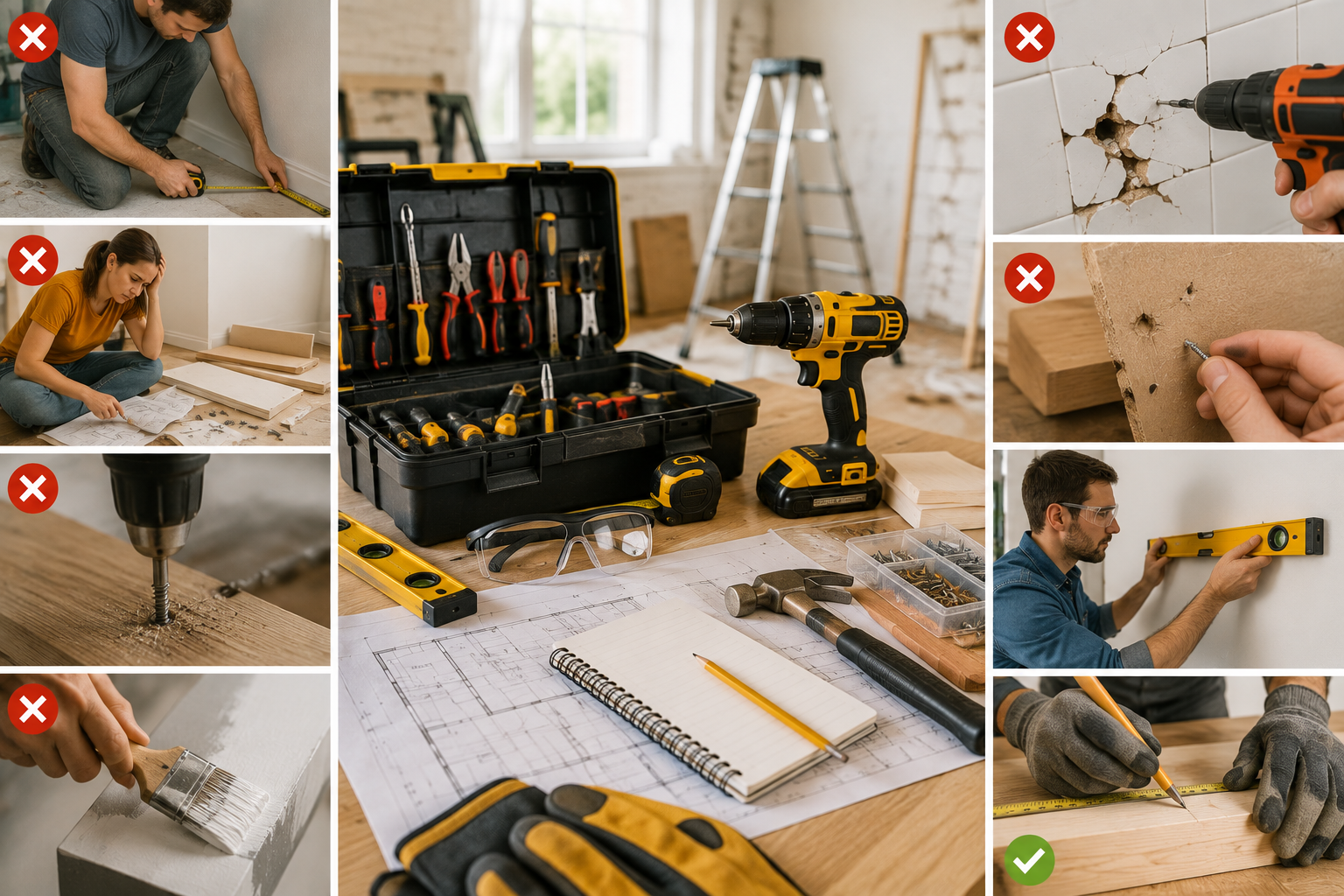
Nearly every home improvement project, from hanging a simple shelf to a full weekend renovation, runs into the same recurring set of mistakes. Understanding these common DIY mistakes in advance and why they happen so consistently is one of the most effective ways to avoid the wasted time, extra cost, and genuine frustration they cause.
This guide walks through the mistakes homeowners run into most often across planning, tools, technique, and safety, along with practical, straightforward ways to avoid each one before it derails your next project.
Common DIY Mistakes to Avoid
Most DIY mistakes trace back to a handful of root causes: skipping proper measurements, underestimating a project’s true scope and timeline, using the wrong tool for the job, and rushing through steps that actually require patience, like letting adhesives or paint fully cure. Slowing down at the planning stage, measuring twice before cutting or drilling once, and being honest with yourself about a project’s actual difficulty level prevents the overwhelming majority of DIY headaches before they start.
Planning and Preparation Mistakes
Skipping Measurements Entirely
This is arguably the single most common DIY mistake across every type of project, buying furniture that doesn’t fit a space, cutting a board too short, or hanging shelving at an awkward height, all because a measurement was skipped or estimated rather than actually taken.
How to avoid it: Measure twice before cutting or committing to any purchase, and write measurements down rather than relying on memory, especially when shopping away from the actual project space.
Underestimating Project Scope and Time
DIY projects consistently take longer than initially expected, particularly for anyone without extensive hands-on experience with that specific task. This mismatch between expectation and reality often leads to rushed work in the final stages, precisely when accuracy and care matter most.
How to avoid it: Research the typical time required for your specific project type before starting, and build in meaningful buffer time rather than assuming everything will go smoothly on the first attempt.
Not Checking for Permits or Codes
Certain projects, electrical work, plumbing changes, structural modifications, may require permits or need to meet specific local building codes, even for relatively modest home improvement projects.
How to avoid it: Check with your local building department before starting any project involving electrical, plumbing, or structural changes, since skipping this step can create real problems later, particularly if you ever sell the home.
Failing to Read Instructions Fully Before Starting
Jumping straight into assembly or installation without reading through the complete instructions first often means missing a critical step that’s considerably harder, or sometimes impossible, to correct once you’ve moved past that point in the process.
How to avoid it: Read through the entire instruction set before beginning any project, identifying tools and materials you’ll need at each stage rather than discovering a gap mid-project.
Tool and Material Mistakes
Using the Wrong Tool for the Job
Attempting to force a task with an ill-suited tool, using a screwdriver as a makeshift chisel, or a standard drill for masonry work, often produces poor results and can damage both the tool and the material.
How to avoid it: Confirm you have the appropriate tool for each specific task before starting, and if you don’t own it, consider whether purchasing, renting, or borrowing makes more sense than attempting a workaround.
Buying Low-Quality Materials to Save Money
Cutting costs on materials that directly affect a project’s durability, cheap paint that requires multiple extra coats, or low-grade lumber prone to warping, often ends up costing more in the long run through redone work or premature failure.
How to avoid it: Prioritize quality specifically for materials that affect structural integrity, weather exposure, or long-term appearance, while reserving cost-cutting for less consequential aspects of a project.
Not Buying Enough Material
Underestimating how much paint, lumber, tile, or other material a project requires often leads to a frustrating mid-project trip back to the store, sometimes discovering the exact product or dye lot is no longer available.
How to avoid it: Calculate material needs carefully before starting, and purchase a modest buffer beyond your calculated estimate, particularly for materials like paint or tile where matching a later purchase to an earlier batch isn’t guaranteed.
Using Dull or Damaged Tools
A dull blade, worn drill bit, or damaged tool doesn’t just produce worse results; it’s often genuinely more dangerous to use than a properly maintained one, since it requires more force and is more prone to slipping.
How to avoid it: Inspect tools before starting a project, sharpening blades or replacing worn bits as needed, rather than pushing through with equipment that’s clearly past its useful condition.
Common Mistakes by Project Type
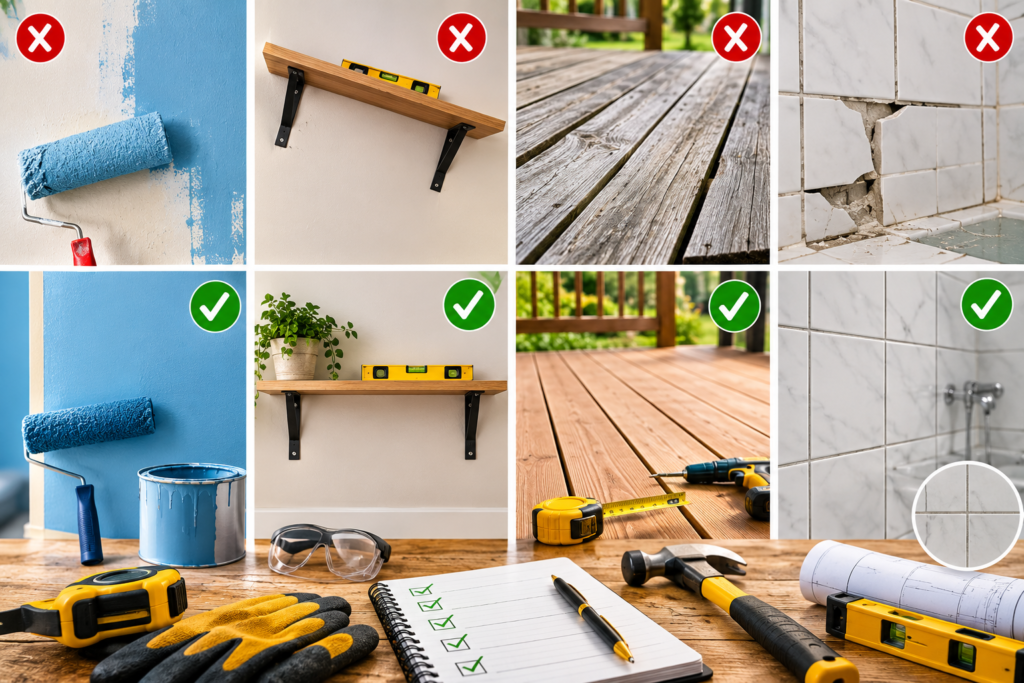
Painting Mistakes
- Skipping surface preparation: Painting over dirty, glossy, or unprimed surfaces often leads to poor adhesion and premature peeling.
Fix: Clean, sand (if glossy), and prime surfaces appropriately before applying paint. - Applying paint too thick: Rushing to finish with fewer, heavier coats often results in drips, uneven texture, and considerably longer dry times.
Fix: Apply thinner, even coats, allowing proper dry time between each one according to the product’s specific instructions. - Removing painter’s tape too late (or too early): Waiting until paint is fully dry before removing tape can pull off dried paint along with it, while removing tape too early can smudge fresh paint.
Fix: Follow the specific tape and paint product’s recommended removal timing, generally when paint is dry to the touch but not yet fully cured.
Drywall Repair Mistakes
- Applying too much joint compound at once: This leads to excessive sanding, longer dry times, and an uneven final surface.
Fix: Apply thin, multiple layers of joint compound, sanding lightly between coats rather than attempting to achieve a smooth finish in a single thick application. - Skipping primer before painting patched areas: Unprimed patched drywall often absorbs paint differently than the surrounding wall, creating a visible flashing or texture difference.
Fix: Prime patched areas before painting to ensure consistent texture and sheen across the full wall.
Furniture Assembly Mistakes
- Fully tightening screws before all pieces are aligned: This can make final adjustments difficult or impossible, sometimes requiring you to loosen and redo already-completed steps.
Fix: Leave screws slightly loose until the entire piece is assembled and properly aligned, then fully tighten everything at the end. - Ignoring the assembly instruction sequence: Skipping ahead or reordering steps based on assumption rather than the actual instructions often leads to needing to partially disassemble completed sections.
Fix: Follow the manufacturer’s specific assembly sequence, even if an alternative order seems more intuitive.
Tiling Mistakes
- Not planning tile layout before starting: Beginning installation from a random starting point, rather than planning the layout, often results in awkward, small tile cuts at highly visible edges.
Fix: Dry-lay tiles or measure and mark a planned layout before applying any adhesive, adjusting the starting point to avoid small, visually awkward cuts in prominent locations. - Rushing grout application before adhesive fully cures: Grouting too soon can shift tiles or compromise the adhesive bond.
Fix: Follow the specific adhesive product’s recommended cure time before beginning grout application, even if it feels like an unnecessary delay.
Common DIY Mistakes and Fixes at a Glance
| Mistake | Common Result | Fix |
| Skipping measurements | Wrong-sized furniture, cuts, or installations | Measure twice, write it down |
| Underestimating project time | Rushed, lower-quality final steps | Research typical timelines, build in buffer |
| Wrong tool for the task | Poor results, damaged materials | Confirm the right tool before starting |
| Cheap materials on key elements | Premature failure, redone work | Prioritize quality where it structurally matters |
| Not buying enough material | Mid-project store trips, mismatched batches | Calculate needs plus a buffer |
| Skipping surface prep before painting | Poor adhesion, peeling | Clean, sand, and prime as needed |
| Overtightening furniture screws early | Difficult final alignment | Leave screws loose until fully assembled |
| No tile layout planning | Awkward cuts at visible edges | Dry-lay and plan before installing |
Safety-Related Mistakes
Skipping Protective Equipment
Treating safety glasses, gloves, or a dust mask as optional, particularly for “quick” tasks, is a common but genuinely risky shortcut, since injury risk exists even during brief cutting, drilling, or sanding work.
How to avoid it: Keep basic safety equipment, safety glasses, gloves, and a dust mask, easily accessible, and make putting them on part of your standard project start-up routine rather than an afterthought.
Ignoring Electrical Safety Basics
Working on outlets, switches, or fixtures without confirming the relevant circuit is off at the breaker is a genuinely dangerous shortcut that’s unfortunately common among DIYers rushing through a project.
How to avoid it: Always confirm power is off at the breaker (not just the switch) before working on any electrical component, and use a voltage tester to double-check before touching wiring directly.
Overloading Ladders or Working Beyond Their Rated Range
Standing on a ladder’s top rung, overreaching to the side rather than repositioning, or exceeding the ladder’s weight rating are common causes of DIY falls.
How to avoid it: Follow basic ladder safety practices, maintaining three points of contact, staying within the ladder’s stable range, and repositioning rather than overreaching, even when it feels like a minor inconvenience.
Overconfidence Mistakes
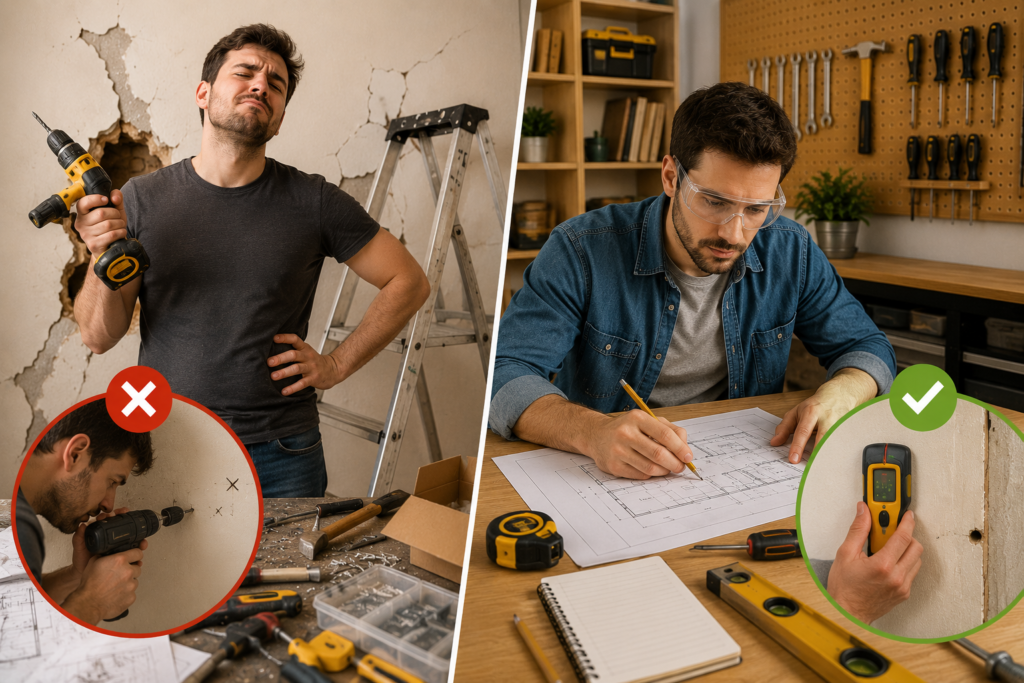
Tackling a Project Beyond Your Current Skill Level
Attempting complex electrical, structural, or plumbing work without adequate experience or research can lead to genuinely unsafe outcomes, not just a disappointing result.
How to avoid it: Be honest about your actual skill level for a specific project, and know when to research more thoroughly, start with a smaller practice version, or bring in a professional for tasks with real safety implications.
Not Testing on a Small, Inconspicuous Area First
Applying a new product, stain, paint, or adhesive directly to a large, visible area without first testing on a small, hidden spot can lead to unwanted results that are difficult or costly to reverse.
How to avoid it: Test new products on a small, inconspicuous area first, confirming color, adhesion, or compatibility before committing to the full project.
Cleanup and Finishing Mistakes
Rushing the Cleanup Process
Leaving tools, materials, or debris scattered after a project increases the risk of tripping hazards and makes locating tools for the next project considerably more difficult.
How to avoid it: Build cleanup time into your project timeline from the start, rather than treating it as an optional final step you might skip if you’re tired or running late.
Not Properly Disposing of Hazardous Materials
Certain DIY byproducts, old paint, solvents, or certain adhesives, require specific disposal methods rather than standard household trash.
How to avoid it: Check your local municipality’s guidelines for hazardous waste disposal before starting a project involving these materials, since many areas have designated drop-off locations or specific collection days.
Building Better DIY Habits Going Forward
Keep a Project Log
Noting what worked, what didn’t, and any measurements or product choices from past projects creates a genuinely useful reference for future work, particularly for recurring tasks like touch-up painting or furniture repair.
Start Smaller Before Scaling Up
If you’re newer to DIY work generally, starting with smaller, lower-stakes projects before attempting more ambitious ones builds genuine skill and confidence, reducing the likelihood of costly mistakes on larger, more consequential projects.
Don’t Skip the Research Step
A few minutes spent watching a tutorial or reading through a project guide before starting often reveals potential pitfalls specific to that task, ones a general DIY mindset alone wouldn’t necessarily anticipate.
Common Mistakes to Avoid
- Skipping measurements, leading to wrong-sized cuts, purchases, or installations
- Underestimating project time and scope, resulting in rushed final steps
- Using the wrong tool, producing poor results or damaged materials
- Cutting corners on key materials, leading to premature failure
- Skipping safety equipment, even for tasks that seem quick or low-risk
- Ignoring electrical safety basics, creating genuinely dangerous situations
- Not testing new products on a small area first, risking difficult-to-reverse mistakes
Conclusion
Most common DIY mistakes aren’t the result of a lack of ability, they come from rushing past the planning, preparation, and patience that good project outcomes genuinely require. Taking the time to measure accurately, research realistic timelines, use the right tools and materials, and follow proper safety practices addresses the overwhelming majority of issues before they ever become a problem. With these habits in place, you’ll spend far less time troubleshooting and redoing work, and considerably more time enjoying the results of a project done right the first time.
Frequently Asked Questions
1- What is the most common DIY mistake homeowners make?
Skipping or estimating measurements rather than actually taking and recording them is among the most frequent mistakes, affecting projects ranging from furniture purchases to cutting materials.
2- How can I avoid underestimating how long a DIY project will take?
Research the typical timeline for your specific project type before starting, and build in meaningful buffer time rather than assuming everything will proceed smoothly on the first attempt.
3- Why is surface preparation so important before painting?
Painting over dirty, glossy, or unprimed surfaces often leads to poor adhesion and premature peeling, making proper cleaning, sanding, and priming essential steps rather than optional ones.
4- Do I need a permit for home improvement projects?
This depends on the specific project and your local regulations, but electrical, plumbing, and structural changes often require permits even for relatively modest projects, so checking with your local building department beforehand is worthwhile.
5- Why should I test new products on a small area first?
Testing paint, stain, or adhesive on a small, inconspicuous area first lets you confirm color, adhesion, or compatibility before committing to a full, highly visible project, avoiding potentially difficult-to-reverse mistakes.
6- What’s the safest way to work on electrical outlets or switches?
Always confirm the relevant circuit is off at the breaker, not just the switch, and use a voltage tester to double-check before touching any wiring directly.
7- How do I know if a DIY project is beyond my skill level?
Be honest about your actual hands-on experience with that specific type of task, particularly for electrical, structural, or plumbing work, and consider starting smaller, researching more thoroughly, or consulting a professional for anything with genuine safety implications.