
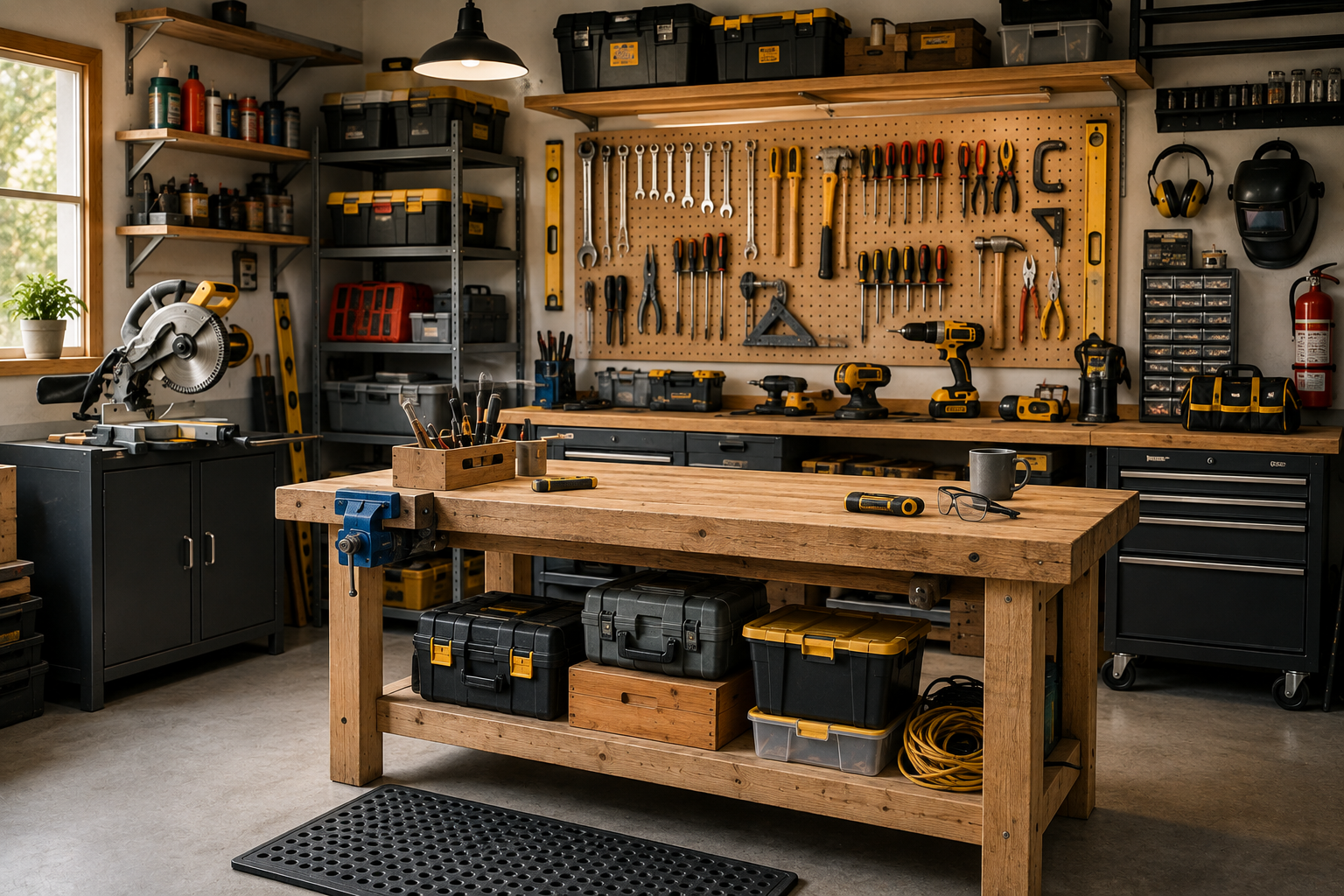
Setting up a home workshop can feel overwhelming, especially with endless tool options and conflicting advice about what you actually need. The good news is a genuinely functional DIY workshop doesn’t require every tool on the market, just the right essentials arranged well.
This guide covers the essential tools, storage solutions, safety gear, and layout considerations for building a practical home workshop. We’ll also cover DIY workshop setup, essential hand tools, and garage workshop organization for American homeowners.
By the end, you’ll have a clear roadmap for building a workshop that supports your DIY projects without unnecessary clutter or expense.
What Does Every Workshop Need?
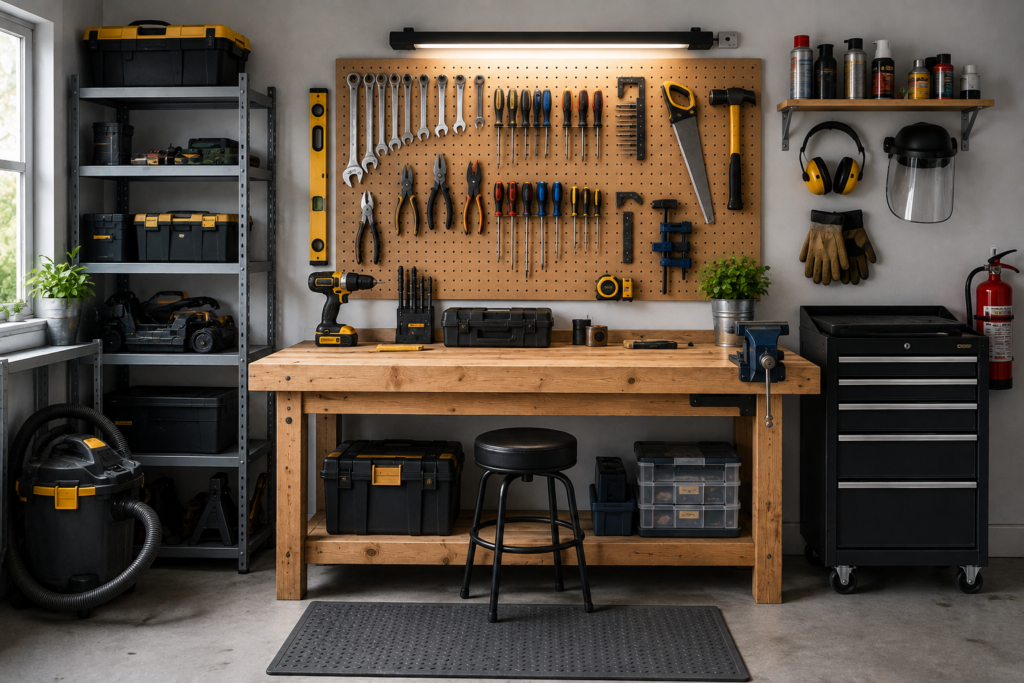
At minimum, a functional home workshop needs a stable workbench, basic hand tools, a few essential power tools, proper storage, and adequate safety gear. Beyond these basics, additional tools and equipment should be added gradually based on the specific projects you actually take on.
Rather than buying everything at once, it makes sense to start with core essentials and expand your workshop over time as your skills and project needs grow.
08 Most Important Workshop Essentials for Home DIY
1- Choosing the Right Workshop Space
Before gathering tools, it helps to think through where your workshop will actually live, since this affects both layout and what equipment makes sense.
- Garage Workshops
A garage is one of the most common workshop locations, offering ample space, durable flooring, and easy access for larger materials or vehicles. The main trade-off is sharing the space with parked cars or seasonal storage, which requires more flexible organization.
- Basement Workshops
Basements offer a permanent, climate-controlled space that’s protected from weather extremes, making them ideal for tools sensitive to humidity or temperature swings. Ceiling height and stairs for moving materials can be limiting factors worth considering.
- Shed or Outbuilding Workshops
A dedicated shed provides a separate space entirely devoted to DIY work, without competing with vehicle storage or household items. Insulation and electrical access become important considerations for sheds used year-round.
- Small Space or Apartment Workshops
Even without a dedicated garage or basement, a compact workshop setup using wall-mounted storage, a foldable workbench, and portable tool storage can support many DIY projects in limited space.
2- The Essential Workbench
A sturdy workbench is arguably the single most important element of any home workshop, serving as the foundation for nearly every project.
Key features to look for in a workbench:
- A stable, level surface that doesn’t wobble during use
- Sufficient weight capacity for your typical project materials
- A durable work surface, such as hardwood or heavy-duty MDF, that can handle cutting, hammering, and clamping
- Built-in storage or shelving underneath for frequently used tools
- Appropriate height for comfortable standing work, typically around waist height
For smaller spaces, a foldable or wall-mounted workbench offers similar functionality while allowing the space to be cleared when not in use.
3- Essential Hand Tools
A solid collection of hand tools forms the backbone of any home workshop, covering the majority of basic repair and building tasks.
Core hand tool checklist:
- A claw hammer for general use
- A set of screwdrivers, including both flathead and Phillips in various sizes
- An adjustable wrench
- A set of pliers, including standard and needle-nose varieties
- A tape measure
- A level
- A utility knife
- A hand saw
- A set of chisels for basic woodworking
- Clamps in a few different sizes for holding materials in place
These tools cover the vast majority of basic repair, assembly, and small building projects without requiring any specialized equipment.
4- Essential Power Tools
While hand tools cover many tasks, a few key power tools significantly expand what you can accomplish and speed up most projects.
- Cordless Drill
A cordless drill is arguably the single most versatile power tool for any home workshop, handling everything from driving screws to drilling holes for a wide range of projects.
- Circular Saw
A circular saw provides straightforward, portable cutting capability for wood and other materials, making it a practical alternative to a full table saw for many home projects.
- Random Orbital Sander
A random orbital sander speeds up sanding tasks considerably compared with hand sanding, producing smoother, more even results across furniture, trim, and other wood surfaces.
- Jigsaw
A jigsaw handles curved cuts and detail work that a circular saw can’t manage, making it a useful complement for more detailed woodworking or trim projects.
- Impact Driver
An impact driver delivers more torque than a standard drill for driving longer screws or working with denser materials, making it a valuable addition once basic drilling needs are covered.
Comparing Essential Power Tools
| Tool | Primary Use | Beginner Priority |
| Cordless drill | Drilling holes, driving screws | Highest |
| Circular saw | Straight cuts in wood and sheet materials | High |
| Random orbital sander | Smoothing wood surfaces | Moderate |
| Jigsaw | Curved and detail cuts | Moderate |
| Impact driver | High-torque fastening | Lower, add as needed |
5- Storage and Organization Solutions
Proper storage keeps your workshop functional and prevents both wasted time searching for tools and unnecessary wear from disorganized storage.
- Pegboards
Pegboards offer flexible, visible storage for frequently used hand tools, allowing you to see your entire tool collection at a glance and quickly grab what you need.
- Toolboxes and Tool Chests
A quality toolbox or rolling tool chest keeps smaller tools organized and protected, particularly useful for tools you might need to transport to different areas of your home.
- Wall-Mounted Shelving
Wall-mounted shelves free up valuable floor space for larger equipment or work areas, while keeping supplies and less frequently used items accessible but out of the way.
- Clear Storage Bins
Labeled, clear storage bins help organize hardware, fasteners, and small parts, making it far easier to find specific items compared with a single catch-all container.
- Cabinet Storage
Enclosed cabinets protect tools from dust and moisture, particularly valuable for power tools and anything with sensitive electronic components.
6- Essential Safety Equipment
Safety gear is just as essential as any tool in your workshop, protecting you from the genuine risks involved in most DIY projects.
- Safety glasses: Essential for any cutting, drilling, or sanding work to protect against flying debris
- Hearing protection: Important for extended use of loud power tools like saws and sanders
- Work gloves: Protect hands during general handling, though should be removed when operating certain power tools where loose gloves can pose a snag risk
- A dust mask or respirator: Important when sanding, cutting certain materials, or working with finishes and adhesives
- A first aid kit: Keep a basic first aid kit in your workshop for minor cuts or injuries
- A fire extinguisher: A basic fire extinguisher rated for your workshop’s materials adds an important layer of safety
7- Workshop Lighting Considerations
Good lighting is often overlooked but genuinely affects both safety and work quality in a home workshop.
Natural light is ideal where available, but most workshops benefit from supplemental task lighting positioned to reduce shadows on your primary work surfaces. LED shop lights offer bright, even illumination without generating excessive heat, making them a practical choice for most home workshop setups.
8- Electrical and Power Considerations
Before setting up a workshop, confirm your space has adequate electrical capacity for the tools you plan to use, particularly if you anticipate adding larger equipment over time.
Practical electrical tips:
- Use a dedicated circuit for your workshop if running multiple power tools regularly
- Install sufficient outlets around your workspace to avoid relying on extension cords for permanent setups
- Consider a power strip with surge protection for smaller tools and chargers
- Consult a licensed electrician if you need to add new circuits or outlets
Building Your Workshop Gradually
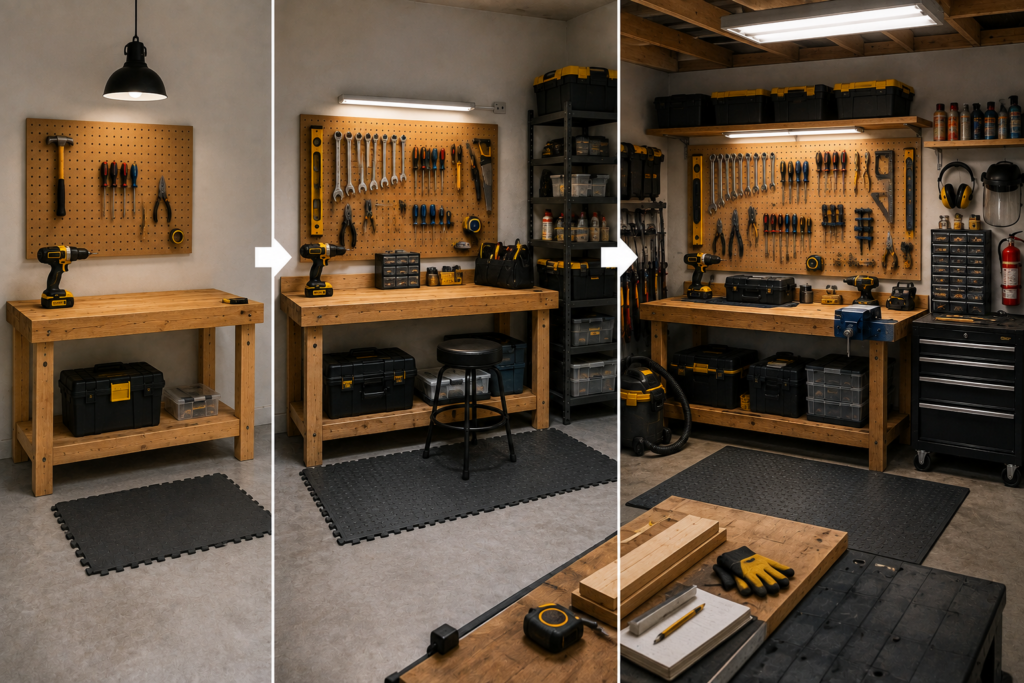
Rather than purchasing every tool at once, building your workshop gradually based on actual project needs tends to produce better results.
- Start with core essentials: A workbench, basic hand tools, and a cordless drill cover the majority of beginner projects.
- Add power tools as specific projects require them: Rather than buying a table saw before you’ve ever needed one, add specialized tools once a genuine project calls for them.
- Invest in quality for frequently used tools: Tools you’ll use often, like your primary drill or workbench, are worth a higher quality investment compared with occasional-use specialty items.
- Reassess your storage needs as your collection grows: What works for a handful of hand tools may need rethinking once you’ve added several power tools and accessories.
Workshop Layout and Workflow Tips
How you arrange your workshop affects efficiency just as much as which tools you own, particularly in smaller spaces.
- Group tools by function: Keep cutting tools, measuring tools, and fastening tools in separate, logical areas so you can quickly find what you need for each stage of a project.
- Keep your workbench clear: Reserve your main work surface for active projects rather than using it as general storage, which keeps your primary workspace genuinely usable.
- Position frequently used tools within easy reach: Tools you reach for constantly, like your tape measure or cordless drill, should be stored closer to your workbench than occasional-use items.
- Leave adequate clearance around equipment: Power tools like table saws or miter saws need clear space around them for safe operation and material handling.
- Plan for material storage separately from tools: Lumber, hardware, and project materials benefit from dedicated storage separate from your tool organization system, keeping both easier to manage.
Ventilation and Dust Management
Many workshop activities, from sanding to painting, generate dust or fumes needing proper management for comfort and safety.
Basic ventilation options:
- A simple box fan positioned to draw air and dust away from your work area
- A shop vacuum with dust collection attachments for power tools that generate significant sawdust
- Open windows or doors when weather permits, to encourage natural airflow
- A dedicated dust collection system for workshops with frequent heavy sanding or cutting
For workshops in enclosed spaces like basements or small sheds, ventilation becomes especially important, since fumes from paints, stains, or adhesives can build up quickly without adequate airflow.
Climate Considerations for Your Workshop
Temperature and humidity affect both your comfort while working and the condition of your tools and materials.
- Humidity control: High humidity accelerates rust on metal tools and can affect wood materials, making a dehumidifier a worthwhile addition for basement or garage workshops in humid climates.
- Temperature extremes: Extremely hot or cold workshop conditions can affect both your ability to work comfortably and the performance of certain adhesives, finishes, and battery-powered tools.
- Insulation for sheds and garages: Adding basic insulation can make a significant difference in workshop comfort and usability across different seasons, particularly for spaces used year-round.
Conclusion
Building a functional home workshop comes down to starting with genuine essentials, a sturdy workbench, core hand tools, a versatile cordless drill, and proper safety gear, rather than trying to acquire every available tool at once. Adding storage solutions and additional power tools gradually, based on your actual project needs, helps you build a workshop that genuinely supports your DIY goals without unnecessary clutter or expense. With the right foundation in place, your home workshop will be ready to support whatever project comes next, safely and efficiently.
Frequently Asked Questions
1- What’s the most important tool to buy first for a home workshop?
A cordless drill is generally considered the most versatile and essential first power tool purchase, covering a wide range of basic tasks.
2- Do I need a dedicated workshop space to do DIY projects?
No, a compact setup using wall-mounted storage and a foldable workbench can support many DIY projects even in limited spaces like apartments.
3- How much should I budget for a basic home workshop?
A basic setup with core hand tools, a cordless drill, and simple storage can be assembled affordably, with costs increasing as you add specialized power tools over time.
4- Is a garage or basement better for a workshop?
Both work well depending on your climate and available space; garages typically offer more room, while basements provide better climate control and protection from weather extremes.
5- What safety gear is essential for a beginner workshop?
Safety glasses, hearing protection for loud tools, and a dust mask for sanding or cutting are the most essential safety items for beginners to prioritize.
6- Should I buy a full tool set or individual tools?
Individual, quality tools purchased as needed often provide better long-term value than an all-in-one set that may include tools you’ll rarely use.