No room in your home deals with more consistent water exposure than the bathroom, standing water around the tub and shower, humidity from hot showers, and splashing around the sink all happen daily. Choosing the best flooring for bathrooms means prioritizing genuine water resistance and slip safety above nearly everything else, since the wrong material here doesn’t just wear out faster, it can create real safety and moisture damage problems.
This guide walks through every practical bathroom flooring option, covers slip resistance and waterproofing in detail, and offers room-specific advice for full bathrooms, half baths, and wet areas like showers, so you can choose flooring that’s both beautiful and genuinely functional.
Best Flooring for Bathrooms
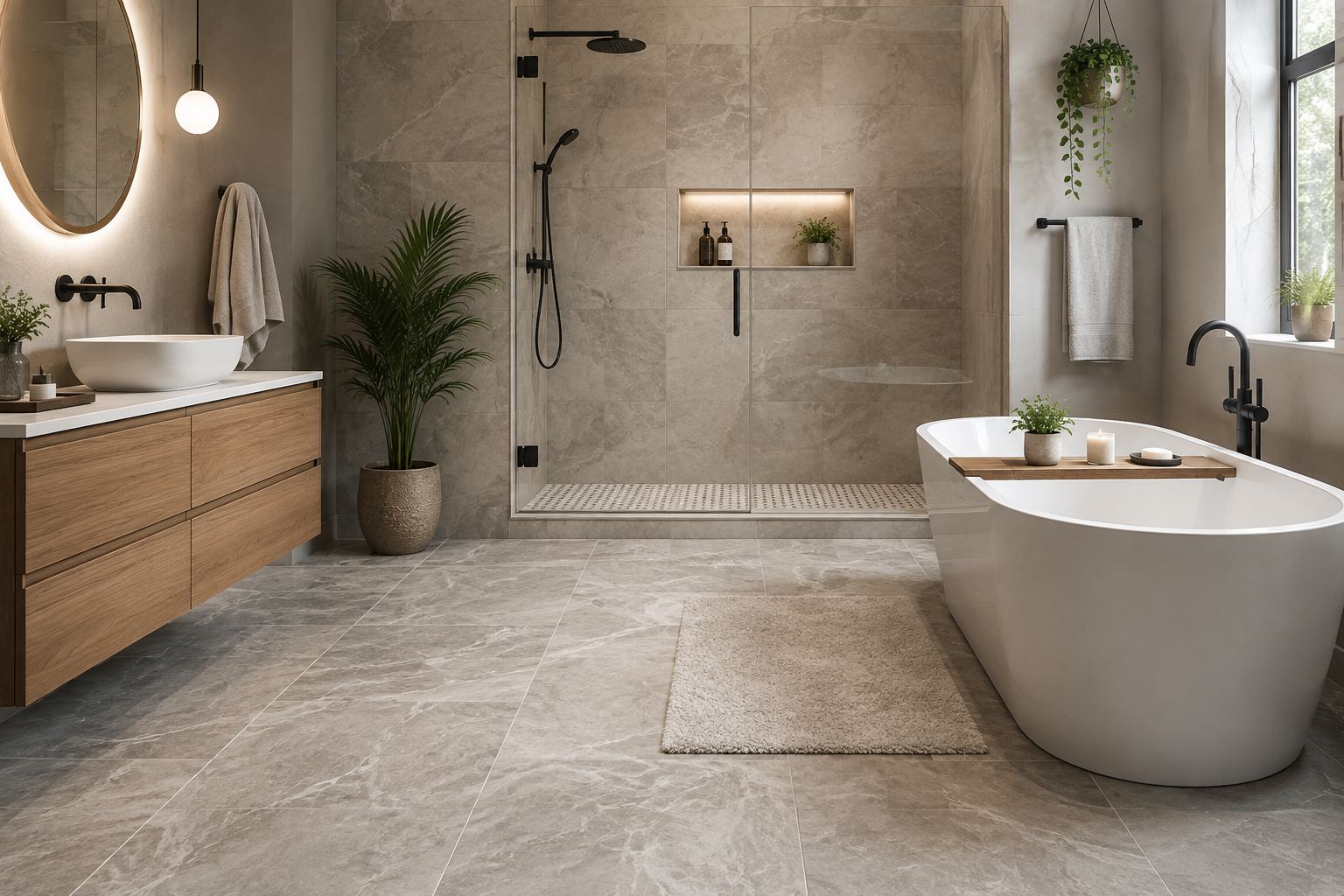
Porcelain and ceramic tile remain the gold standard for bathroom flooring, offering outstanding water resistance, durability, and a wide range of slip-resistant finish options. Luxury vinyl plank (LVP) and luxury vinyl tile (LVT) have become an increasingly popular, more budget-friendly alternative, offering genuine waterproof performance with a warmer, softer feel underfoot than tile. Natural stone offers a premium look with good water resistance when properly sealed, though it requires more ongoing maintenance. Materials like solid hardwood, laminate, and carpet are generally not recommended for full bathrooms, given their vulnerability to consistent moisture exposure.
Why Bathroom Flooring Requirements Are Different
Constant and Concentrated Moisture
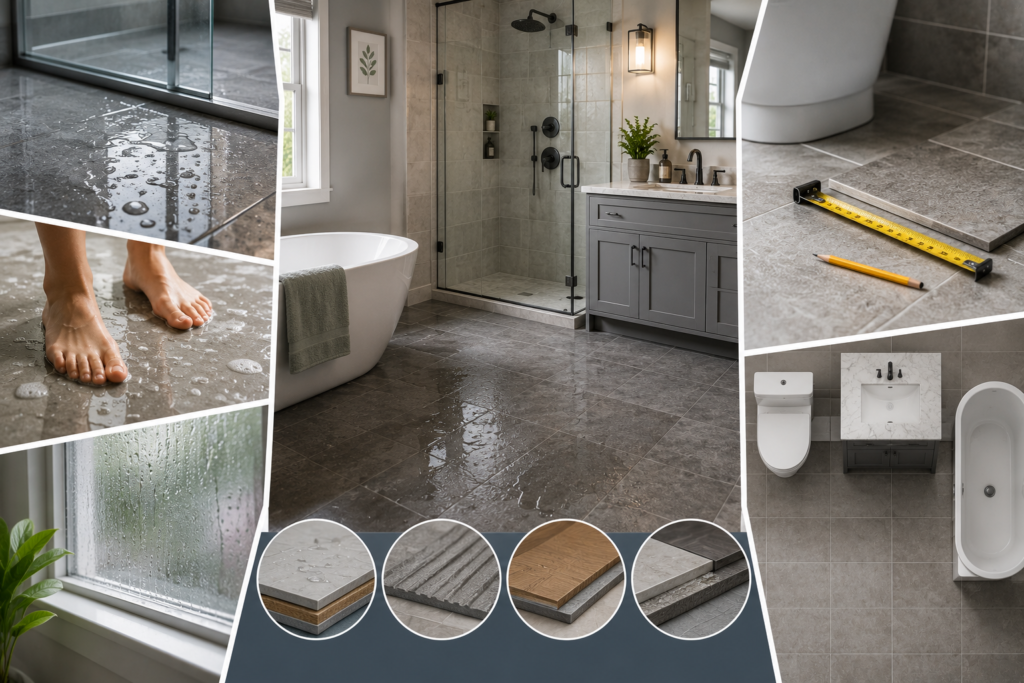
Unlike a kitchen where spills are occasional, bathrooms deal with routine, concentrated moisture, standing water on the floor after a shower, condensation, and splashing around the tub and sink, day after day.
Slip Safety Is a Genuine Concern
Wet floors combined with bare feet create real slip risk, making surface texture and slip resistance a genuinely important safety consideration, not just a comfort or style preference.
Humidity Exposure
Beyond direct water contact, bathrooms experience elevated humidity levels from showers and baths, which can affect materials differently than direct water exposure alone, particularly for anything with a wood-based core.
Smaller, More Detailed Spaces
Bathrooms are typically smaller than kitchens or living rooms, often involving more cuts, corners, and fixtures (toilets, vanities, tub surrounds) to work around during installation, which can affect both material choice and installation complexity.
Best Bathroom Flooring Options Ranked
1. Porcelain Tile
Porcelain remains the traditional top choice for bathrooms, offering outstanding water resistance, exceptional durability, and, importantly, a wide range of finish options including textured or matte surfaces specifically designed for improved slip resistance in wet areas.
2. Ceramic Tile
Similar to porcelain in overall performance, though generally slightly more porous and marginally less impact-resistant. Ceramic remains an excellent, often more budget-friendly bathroom flooring choice with equally strong water resistance for typical residential use.
3. Luxury Vinyl Plank/Tile (LVP/LVT)
LVP and LVT have become a genuinely strong alternative to tile in bathrooms, offering waterproof performance in many products, a warmer and softer feel underfoot, and often simpler, more DIY-accessible installation than tile.
4. Natural Stone
Materials like marble, travertine, and slate offer a distinctive, premium bathroom aesthetic with good water resistance when properly sealed, though they require more diligent, ongoing maintenance than tile or vinyl to maintain that water resistance over time.
5. Sheet Vinyl
Traditional sheet vinyl, installed in large, mostly seamless sections, offers excellent water resistance with minimal seams for water to penetrate, making it a practical, budget-friendly option, particularly for smaller bathrooms where fewer seams are needed overall.
6. Engineered Hardwood (Limited Application)
While not generally recommended for full bathrooms with tubs or showers, engineered hardwood can sometimes work in powder rooms or half baths without direct water exposure, though it still carries meaningfully more moisture risk than tile or vinyl even in these lower-exposure spaces.
Bathroom Flooring Comparison Table
| Material | Water Resistance | Slip Resistance Options | Comfort Underfoot | Cost | Best For |
| Porcelain tile | Excellent | Excellent (textured finishes available) | Poor (hard, cold) | Moderate | Maximum durability and water resistance |
| Ceramic tile | Excellent | Good to excellent | Poor (hard, cold) | Lower to moderate | Budget-friendly durability |
| LVP/LVT | Excellent (many waterproof) | Good | Good (softer, warmer) | Lower to moderate | Best overall balance |
| Natural stone | Good (with sealing) | Varies by finish | Poor | Higher | Premium, distinctive look |
| Sheet vinyl | Excellent | Moderate to good | Good | Lower | Small bathrooms, budget-conscious |
| Engineered hardwood | Fair (limited use) | Poor to moderate | Very good | Moderate | Powder rooms only, not full baths |
Waterproof Bathroom Flooring: What to Look For
True Waterproof vs Water-Resistant
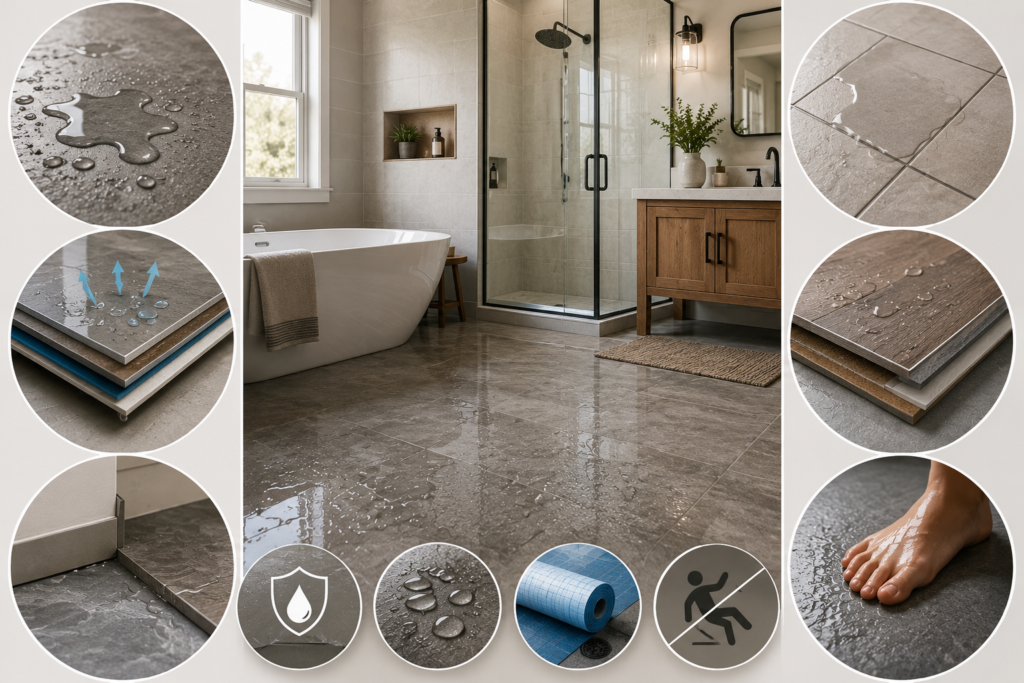
For bathroom flooring specifically, prioritize products explicitly labeled waterproof rather than simply water-resistant. Waterproof LVP, tile itself, and sheet vinyl all genuinely resist water penetration into the material, while water-resistant products may only handle moderate, brief exposure without risk of damage.
Grout and Seam Considerations
Even with waterproof tile, grout lines remain the more vulnerable point for water penetration if not properly sealed. Similarly, LVP click-lock seams, while generally well-sealed in quality products, benefit from careful installation attention in consistently wet zones like directly around a shower threshold.
Subfloor Waterproofing
Beyond the visible flooring material itself, proper subfloor waterproofing (often involving a waterproof membrane beneath tile in wet areas) adds an important additional layer of protection, particularly around showers and tubs where water exposure is most concentrated.
Slip-Resistant Bathroom Flooring: A Genuine Safety Priority
Understanding Slip Resistance Ratings
Tile slip resistance is sometimes measured using a coefficient of friction (COF) rating, with higher numbers indicating better slip resistance. For bathroom floors, look for tile specifically marketed or rated for wet-area use rather than assuming all tile offers adequate slip resistance.
Textured and Matte Finishes
Textured, matte, or slightly rough tile finishes generally offer better slip resistance than smooth, glossy tile, an important consideration specifically for bathroom floors where water contact is routine, even if a glossy finish might be visually appealing.
Vinyl’s Natural Slip Resistance Advantage
LVP and LVT often provide reasonably good slip resistance due to their slightly softer, more textured surface compared to smooth glazed tile, though it’s still worth checking specific product slip-resistance information rather than assuming this applies universally across all vinyl products.
Additional Safety Measures
Regardless of flooring material, non-slip bath mats near the tub and shower, and immediate cleanup of standing water, add meaningful additional safety on top of whatever flooring material you choose.
Comfort Underfoot in Bathrooms
Why Comfort Matters Here Too
Bathrooms are often used barefoot, making surface temperature and hardness a genuinely practical daily consideration, particularly during colder months or in colder climates.
Materials Offering More Comfort
LVP and LVT generally offer a warmer, softer feel underfoot compared to tile or stone, an advantage worth weighing against tile’s superior overall durability and water resistance.
Radiant Heat as a Solution for Tile
For homeowners specifically wanting tile’s durability without sacrificing comfort, radiant floor heating installed beneath the tile addresses the cold-surface concern directly, a particularly popular addition in bathroom renovations given how frequently the space is used barefoot.
Bathroom Flooring by Space Type
Full Bathrooms (With Tub or Shower)
Prioritize maximum water resistance here above other considerations; porcelain tile, ceramic tile, or waterproof LVP are all strong choices, given the routine direct water exposure these spaces experience.
Half Baths and Powder Rooms
With no tub or shower, moisture exposure is considerably lower, sink splashing being the primary concern, which opens up slightly more flexibility, including the potential (though still not universally recommended) use of engineered hardwood if visual continuity with an adjoining space matters.
Shower Floors Specifically
Shower floors have even more specific requirements than the rest of the bathroom, typically requiring smaller-format tile (mosaic sheets) to accommodate the slope needed for proper drainage, along with slip-resistant, textured finishes given the direct, constant water exposure in this specific zone.
Combined Bathroom/Laundry Spaces
If your bathroom shares space with laundry appliances, factor in the additional water exposure risk from washing machine connections, reinforcing the case for maximum water resistance materials like tile or waterproof LVP throughout the combined space.
Grout Maintenance for Tile Bathrooms
Why Grout Needs Attention
While tile itself is highly water-resistant, grout is more porous and can absorb moisture, stain, and develop mold or mildew without proper maintenance, particularly in a consistently humid bathroom environment.
Sealing Schedule
Grout benefits from resealing approximately every one to two years in bathrooms specifically, given the elevated humidity and moisture exposure compared to other tiled rooms in the home.
Grout Color Considerations
Lighter grout shows staining more readily than darker grout, worth considering during material selection if you’re specifically trying to minimize the visual impact of gradual staining between resealing cycles.
Ventilation’s Role in Bathroom Flooring Longevity
Regardless of which flooring material you choose, proper bathroom ventilation (a functioning exhaust fan used consistently during and after showers) meaningfully reduces the ambient humidity that can affect flooring, grout, and surrounding materials over time, extending the practical lifespan of nearly any bathroom flooring choice.
Budget Planning for Bathroom Flooring
Ceramic tile and standard luxury vinyl plank generally represent the most budget-friendly options offering genuinely strong water resistance for bathroom use. Porcelain tile and higher-quality waterproof LVP occupy a moderate price range, balancing durability and cost effectively. Natural stone and premium large-format porcelain represent the higher end of bathroom flooring investment, often chosen specifically for their distinctive, premium appearance in primary or master bathrooms.
Matching Bathroom Flooring to Household Needs
Families With Young Children
Slip-resistant tile or textured LVP are worth prioritizing, given the increased likelihood of water on the floor and bare feet during bath time routines.
Households With Older Family Members
Slip resistance becomes an even more significant priority here, along with considering comfort underfoot and, where budget allows, radiant heating if choosing tile, to support both safety and comfort for household members with mobility considerations.
Renters or Budget-Conscious Renovators
Sheet vinyl or standard LVP click-lock installation offer practical, cost-effective water resistance without the higher cost and installation complexity of tile.
Primary/Master Bathroom Renovations
Porcelain or natural stone, potentially paired with radiant heating, suit homeowners wanting a more premium, spa-like bathroom aesthetic alongside genuine long-term durability.
Common Mistakes to Avoid
- Choosing glossy, smooth tile for bathroom floors, sacrificing slip resistance for aesthetic appeal in a room where slip safety genuinely matters
- Installing hardwood or laminate in a full bathroom with a tub or shower, given their meaningful vulnerability to the room’s consistent moisture exposure
- Skipping grout sealing, allowing water resistance to diminish at the more vulnerable grout lines over time
- Overlooking subfloor waterproofing in wet zones like around showers, undermining the flooring’s water resistance from beneath
- Ignoring bathroom ventilation, allowing elevated humidity to affect flooring and grout longevity regardless of material choice
Conclusion
Choosing the best flooring for bathrooms comes down to prioritizing genuine water resistance and slip safety above nearly every other consideration, given how consistently and directly this room deals with moisture. Porcelain and ceramic tile remain the traditional, highly durable standard, while waterproof luxury vinyl plank offers a genuinely strong, more comfortable alternative at a more accessible price point. Whichever material you choose, pairing it with proper grout maintenance, adequate ventilation, and attention to slip resistance will give you a bathroom floor that’s both safe and built to last through years of daily, unavoidable moisture exposure.
Frequently Asked Questions
1- What is the best flooring for a bathroom?
Porcelain or ceramic tile remain the traditional top choices for their outstanding water resistance and durability, while luxury vinyl plank offers a warmer, more budget-friendly alternative with genuinely strong waterproof performance.
2- Is vinyl flooring good for bathrooms?
Yes, luxury vinyl plank and tile, particularly products explicitly labeled waterproof, perform very well in bathrooms, offering strong water resistance with a more comfortable, warmer feel underfoot than tile.
3- Can I use hardwood flooring in a bathroom?
Generally not recommended for full bathrooms with a tub or shower, given hardwood’s vulnerability to consistent moisture exposure. It’s occasionally used in lower-moisture powder rooms, though tile or vinyl remain more practical choices even there.
4- How do I make bathroom tile floors less slippery?
Choose textured or matte-finish tile specifically rated for wet-area use rather than smooth, glossy tile, and consider adding non-slip bath mats near the tub and shower for additional safety.
5- How often should bathroom grout be resealed?
Approximately every one to two years, given the elevated humidity and moisture exposure bathrooms experience compared to other tiled rooms in the home.
6- Is radiant heat worth adding under bathroom tile?
For many homeowners, yes, particularly given how frequently bathrooms are used barefoot. Radiant heating addresses tile’s naturally cold surface, improving comfort meaningfully, especially in colder climates.
7- What bathroom flooring is best for households with elderly family members?
Slip-resistant, textured tile or vinyl, combined with comfort considerations like radiant heating, generally offer the best combination of safety and comfort for households with mobility concerns.