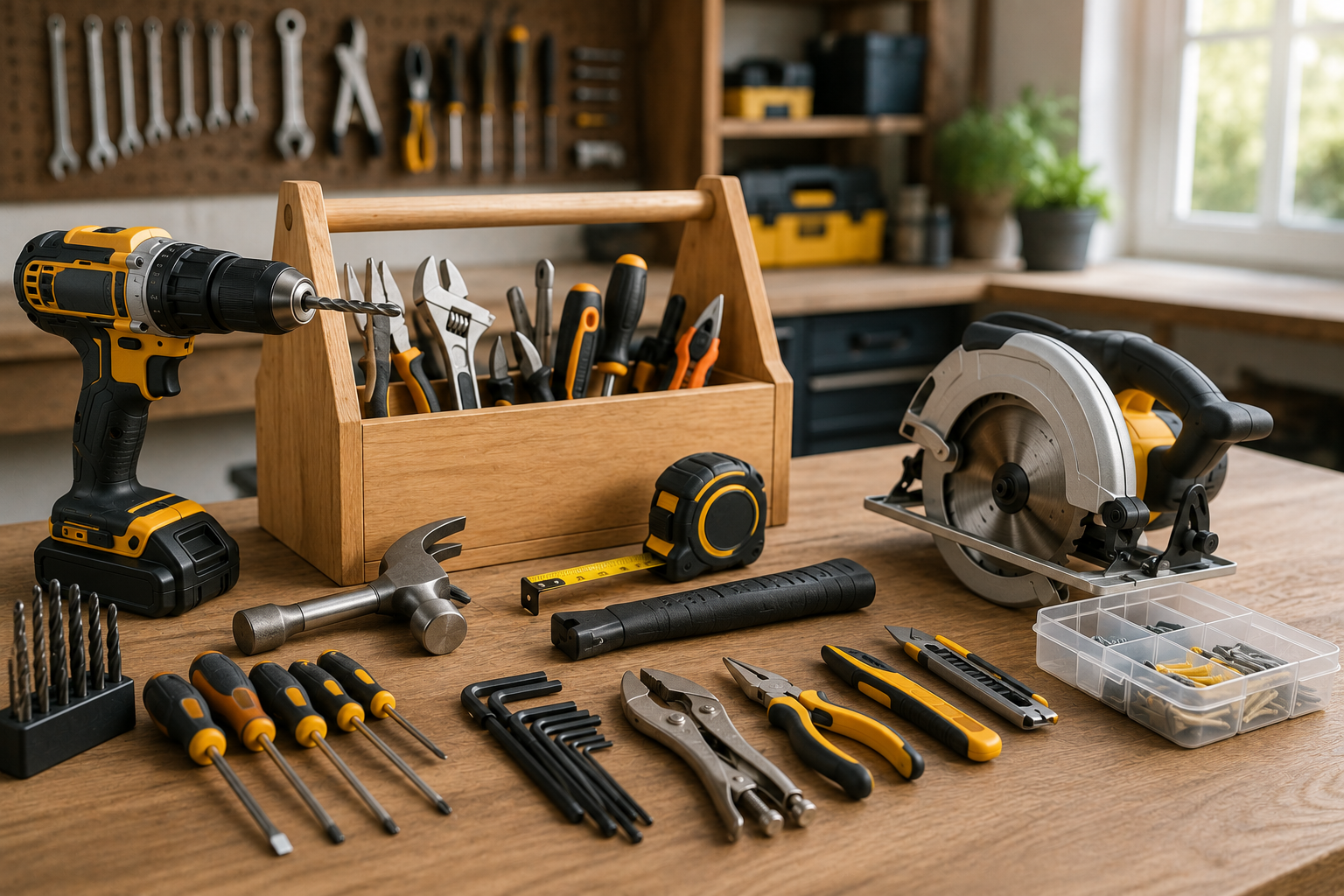
Owning a home comes with a steady stream of small repairs, hanging pictures, tightening loose hinges, assembling furniture, patching drywall, and having the right tools on hand turns these tasks into quick fixes rather than frustrating delays. Building a genuinely useful collection of essential tools for homeowners doesn’t require buying everything at once or investing in an expensive full workshop setup from day one.
This guide walks through the core hand tools, power tools, and safety equipment every homeowner should own, along with practical advice on prioritizing purchases, choosing quality over unnecessary extras, and building your collection gradually as your specific needs become clear.
What You Actually Need First
At minimum, every homeowner benefits from a hammer, a set of screwdrivers, an adjustable wrench, a tape measure, a level, pliers, and a utility knife, covering the vast majority of small everyday repairs and assembly tasks. A cordless drill is the single most valuable power tool addition beyond these basics, handling everything from furniture assembly to hanging shelves considerably faster than manual tools alone. Everything beyond this core group is worth adding gradually, based on the specific projects you actually encounter, rather than purchasing an extensive tool set upfront.
Essential Hand Tools
1- Hammer
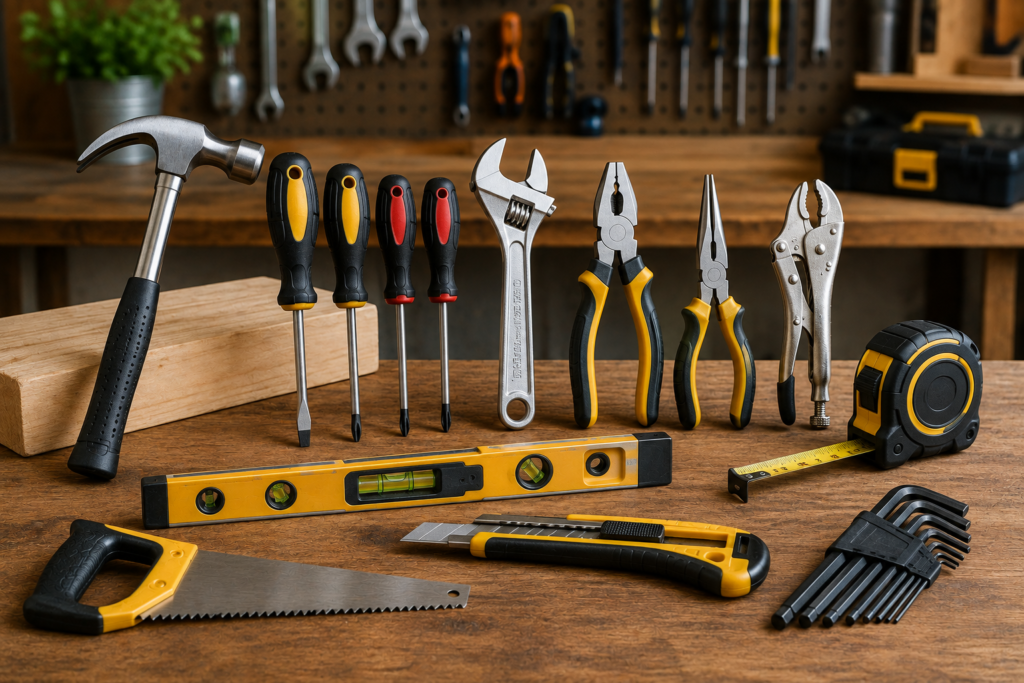
A standard 16-ounce curved-claw hammer handles most household needs, from driving nails to removing them using the claw end. Look for a comfortable, well-balanced grip, since a hammer that feels awkward in hand becomes noticeably harder to use accurately over repeated swings.
2- Screwdriver Set
A set including both flathead and Phillips-head screwdrivers in multiple sizes covers the vast majority of household screws you’ll encounter. Many homeowners find a multi-bit screwdriver with interchangeable tips a practical, space-saving alternative to a full individual set.
3- Adjustable Wrench
An adjustable wrench handles a range of nut and bolt sizes without needing a full set of fixed wrenches, making it a practical, space-efficient choice for general household use. A 10-inch adjustable wrench covers most common household applications.
4- Pliers
Slip-joint pliers handle general gripping and turning tasks. Needle-nose pliers work well for reaching into tight spaces or handling small parts. Locking pliers (often known by the brand name Vise-Grips) clamp firmly onto an object and hold it in place hands-free, useful for tasks requiring sustained pressure.
5- Tape Measure
A 25-foot tape measure covers most household measuring needs, from furniture placement to small renovation projects. Look for a sturdy, wide blade that stays rigid when extended several feet, since a flimsy blade becomes difficult to use accurately for longer measurements.
6- Level
A basic 24-inch level ensures shelves, picture frames, and other installations are genuinely straight rather than visibly crooked. A torpedo level (a smaller, roughly 9-inch version) is a useful secondary addition for tighter spaces where a full-size level won’t fit.
7- Utility Knife
A retractable utility knife handles everything from opening boxes to cutting drywall, carpet, or other materials during small projects. Look for one with replaceable blades, since a dull blade is both less effective and genuinely more dangerous to use than a sharp one.
8- Hand Saw
A basic hand saw handles occasional cutting tasks, trimming wood, cutting pipe, or similar jobs, without needing a power tool for infrequent use.
9- Allen Wrench (Hex Key) Set
Essential for assembling flat-pack furniture and adjusting certain fixtures, a set of Allen wrenches in varying sizes is a small, inexpensive addition that solves a surprisingly common need.
Essential Hand Tools at a Glance
| Tool | Primary Use |
| Hammer | Driving and removing nails |
| Screwdriver set | Tightening/loosening screws |
| Adjustable wrench | Turning nuts and bolts |
| Pliers (slip-joint, needle-nose, locking) | Gripping, turning, holding |
| Tape measure | Measuring for projects and furniture |
| Level | Ensuring straight installations |
| Utility knife | Cutting boxes, drywall, and materials |
| Hand saw | Occasional cutting tasks |
| Allen wrench set | Furniture assembly, fixture adjustment |
Essential Power Tools
- Cordless Drill/Driver
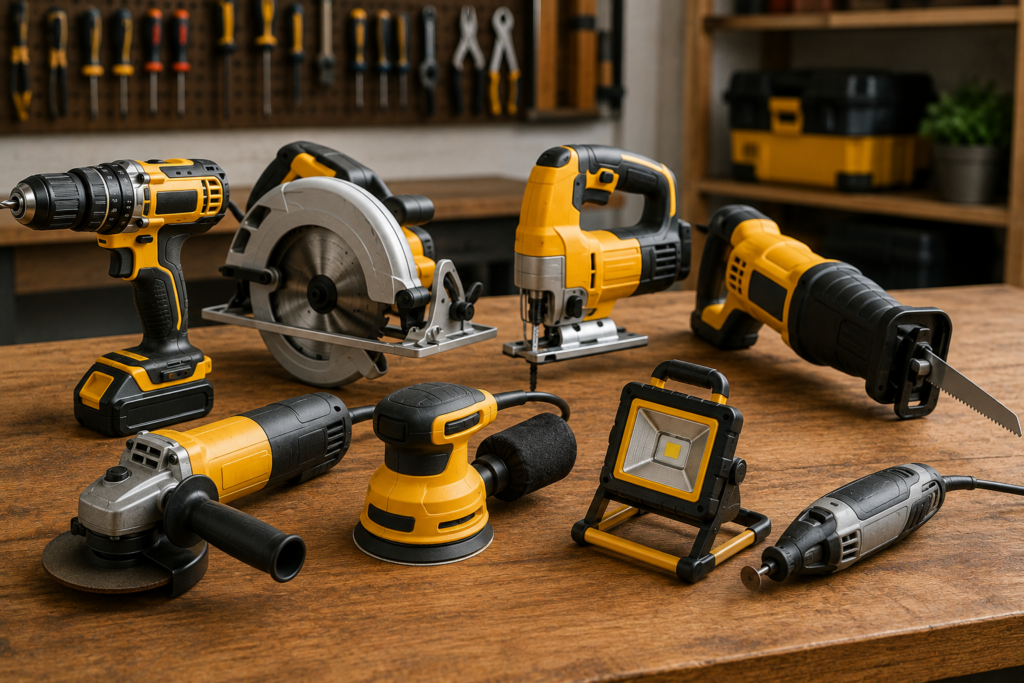
This is widely considered the single most valuable power tool for a homeowner, handling drilling holes and driving screws considerably faster than manual tools alone. Look for one with adjustable clutch settings (preventing over-driving screws), variable speed control, and a battery platform that’s compatible with other tools from the same brand if you anticipate expanding your collection.
- Circular Saw
For homeowners tackling larger DIY projects, cutting lumber for shelving, fencing, or small carpentry projects, a circular saw offers considerably more cutting capacity and speed than a hand saw. This is a reasonable second-tier purchase rather than a first-purchase essential for most households.
- Jigsaw
Useful for cutting curves and intricate shapes that a circular saw can’t handle, a jigsaw is a valuable addition for homeowners doing more detailed woodworking or craft-adjacent projects.
- Power Sander
An orbital sander speeds up sanding tasks considerably compared to manual sanding, useful for furniture refinishing, prepping surfaces before painting, or general woodworking projects.
- Shop Vacuum
A wet/dry shop vacuum handles cleanup after projects, along with occasional water-related messes that a standard household vacuum can’t safely manage.
Power Tool Priority by Homeowner Type
| Homeowner Type | Priority Power Tools |
| First-time buyer, minimal DIY experience | Cordless drill/driver |
| Regular DIY projects, moderate experience | Drill/driver, circular saw, sander |
| Frequent woodworking or renovation | Drill/driver, circular saw, jigsaw, sander, shop vacuum |
Battery Platform Compatibility: A Practical Consideration
If you’re purchasing your first cordless power tool, it’s worth thinking ahead about battery platform compatibility. Most major tool brands design their cordless tools around a shared battery system, meaning a single battery can often power a drill, a circular saw, a sander, and other tools from the same brand’s lineup. Choosing a brand early and sticking with it for future power tool purchases can meaningfully reduce the number of separate battery chargers and battery types you need to keep track of and charge over time.
Essential Safety Equipment
- Safety Glasses
Essential for any task involving cutting, drilling, hammering, or sanding, where debris or particles can pose a genuine eye injury risk.
- Work Gloves
Protect hands during general repair work, gardening, or handling rough materials, with different glove types suited to different tasks, general-purpose leather gloves for most projects, more specialized cut-resistant gloves for handling sharp materials.
- Ear Protection
Worth having on hand for any extended use of louder power tools, particularly circular saws or shop vacuums, where prolonged exposure can contribute to hearing damage over time.
- Dust Mask or Respirator
Important for sanding, cutting certain materials, or working in dusty conditions, protecting your respiratory system from particles that basic breathing alone wouldn’t otherwise filter out.
Tool Storage Solutions
- Toolboxes
A basic toolbox offers straightforward, portable storage for your core hand tools, suited to smaller collections or homeowners who need to transport tools between locations.
- Tool Bags
Softer, more flexible than a hard toolbox, tool bags work well for organizing a moderate tool collection while remaining easy to carry and store in tighter spaces like a closet.
- Wall-Mounted Pegboards
For larger, growing tool collections, a wall-mounted pegboard in a garage or workshop area keeps tools visible and easily accessible, reducing time spent searching through a box or bag for a specific item.
- Rolling Tool Chests
Suited to more extensive collections, particularly for homeowners regularly working on larger projects, a rolling tool chest with multiple drawers offers organized, mobile storage that can be wheeled directly to a project location.
How to Prioritize Your First Tool Purchases
If You’re Starting From Absolute Zero
Begin with the essential hand tool list, hammer, screwdrivers, adjustable wrench, tape measure, level, pliers, and utility knife, since these cover the widest range of everyday household needs before you require anything more specialized.
If You Just Bought Your First Home
Add a cordless drill/driver early, given how frequently it comes up for furniture assembly, hanging shelves and curtains, and general household setup tasks in those first few months.
If You’re Planning Specific Larger Projects
Prioritize the specific power tools your planned project actually requires, a circular saw for a fencing project, a jigsaw for detailed shelving work, rather than buying broadly before you know exactly what a specific project demands.
Quality Considerations: Where to Spend More vs Save
Tools Worth Investing In
Tools used frequently and requiring precision, your primary hammer, screwdriver set, tape measure, and level, are worth choosing from a reputable brand, since poor quality in these basics leads to frustrating inaccuracy and, in some cases, genuine safety concerns.
Tools Where Budget Options Are Reasonable
Occasional-use tools, like a basic hand saw for infrequent cutting tasks, can reasonably be purchased at a more budget-friendly price point without significantly compromising your actual project outcomes.
Power Tools Generally Warrant a Mid-Range Investment
Since power tools involve moving parts, motors, and in the case of cordless options, battery technology, choosing a reputable mid-range option generally offers better long-term reliability than the absolute cheapest available model, even if it means a somewhat higher upfront cost.
Common Mistakes to Avoid
- Buying an oversized tool set with unnecessary specialty items, rather than a focused, genuinely useful core collection
- Skipping safety equipment, particularly safety glasses, when using cutting or drilling tools
- Choosing incompatible battery platforms across different tool brands, resulting in multiple separate chargers and battery types
- Underestimating tape measure and level quality, leading to inaccurate measurements that affect the outcome of larger projects
- Buying specialized power tools before you have a specific project need, rather than purchasing based on your actual, current requirements
Conclusion
Building a genuinely useful home tool collection doesn’t require an overwhelming upfront investment or an exhaustive shopping list. Start with the essential tools for homeowners outlined here- hammer, screwdrivers, adjustable wrench, tape measure, level, pliers, utility knife, and a cordless drill- and you’ll be equipped to handle the vast majority of everyday household repairs and assembly tasks. Add specialized power tools and equipment gradually as specific projects genuinely call for them, prioritizing quality where precision and safety matter most, and you’ll build a practical, well-rounded toolkit that serves your home reliably for years to come.
Frequently Asked Questions
1- What are the most essential tools every homeowner should own?
hammer, screwdriver set, adjustable wrench, tape measure, level, pliers, utility knife, and a cordless drill cover the vast majority of everyday household repair and assembly needs.
2- Do I need a full tool set, or can I buy tools individually?
Both approaches work well. A basic tool set can efficiently cover several essentials at once, while buying individually lets you prioritize quality specifically for the tools you’ll use most often.
3- What is the single most valuable power tool for a homeowner?
A cordless drill/driver is widely considered the most valuable first power tool purchase, handling drilling and screw-driving tasks considerably faster than manual tools alone.
4- How much should I budget for a basic homeowner tool kit?
This varies considerably based on brand and quality level, but a solid core hand tool collection plus a cordless drill represents a reasonable, moderate investment that covers most everyday household needs without requiring a large upfront expense.
5- Should I buy tools from the same brand for battery compatibility?
If you’re purchasing cordless power tools, choosing a single brand’s battery platform is a practical way to reduce the number of separate chargers and batteries you need to manage over time.
6- What safety equipment do I need for basic DIY projects?
Safety glasses and work gloves cover most basic project needs, with ear protection and a dust mask worth adding for tasks involving louder power tools or significant dust and debris.
7- How do I know which tools to buy first as a new homeowner?
Start with the core hand tool essentials that cover the widest range of everyday tasks, then add a cordless drill early, and expand into more specialized power tools only as specific projects make the need clear.