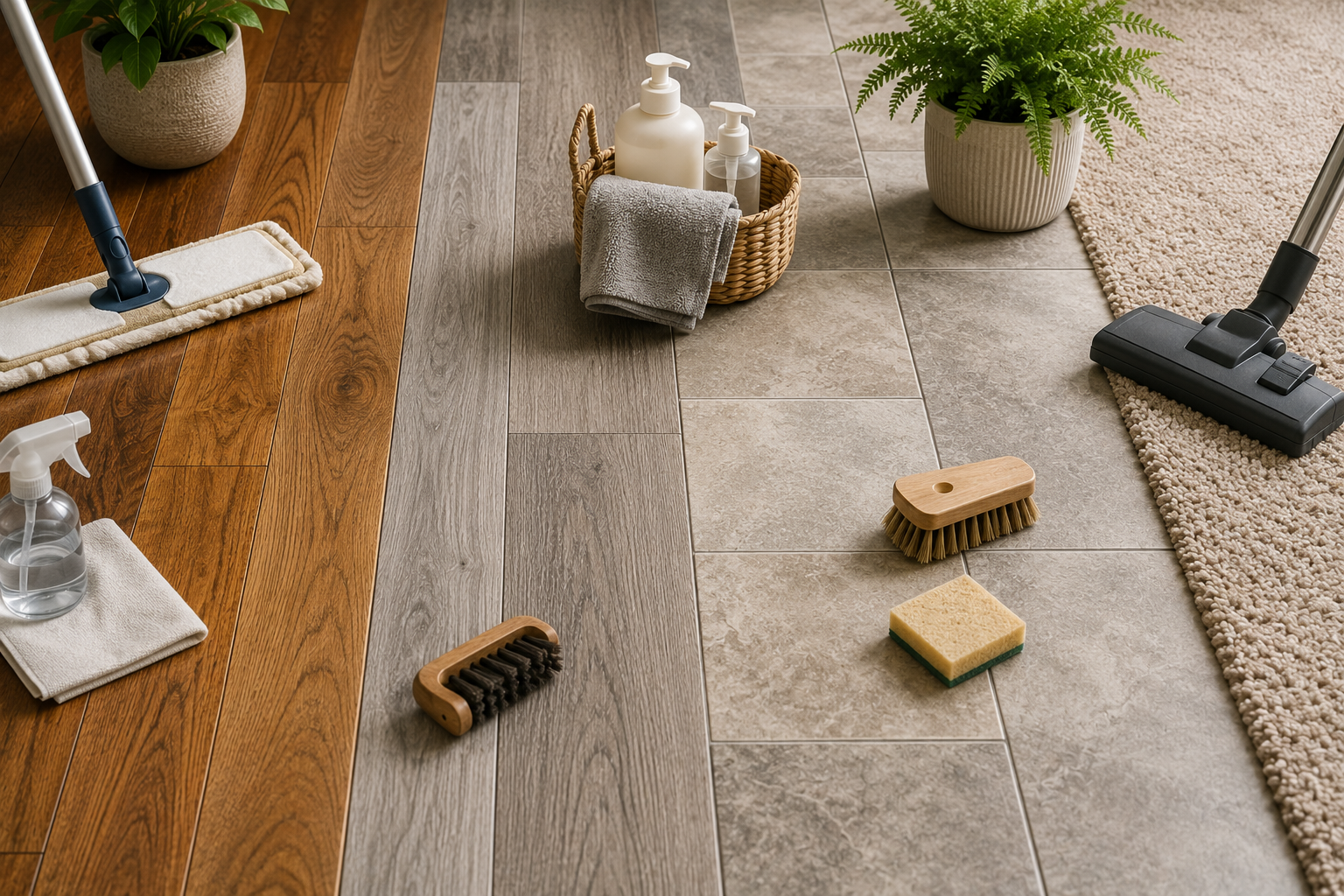
Different flooring materials require genuinely different care routines, and the wrong cleaning method can quietly damage even high-quality floors over time. Understanding your specific flooring type is the first step toward keeping it looking great.
This guide covers how to clean and maintain hardwood, laminate, tile, vinyl, and carpet flooring, along with practical tips for preventing common damage. We’ll also cover floor care, cleaning routines, and material-specific maintenance advice for American homeowners.
By the end, you’ll know exactly how to care for whatever flooring is in your home, helping it stay in great condition for the long haul.
General Flooring Care Principles
While each flooring material has specific needs, a few universal principles apply across almost all floor types. Sweep or vacuum regularly to remove grit that can scratch surfaces, clean up spills promptly, use manufacturer-recommended cleaning products, and use protective pads under furniture to prevent dents and scratches.
Beyond these basics, the right care routine depends heavily on your flooring’s specific material, since hardwood, laminate, tile, vinyl, and carpet each respond very differently to moisture, cleaning products, and daily wear.
Hardwood Flooring Maintenance
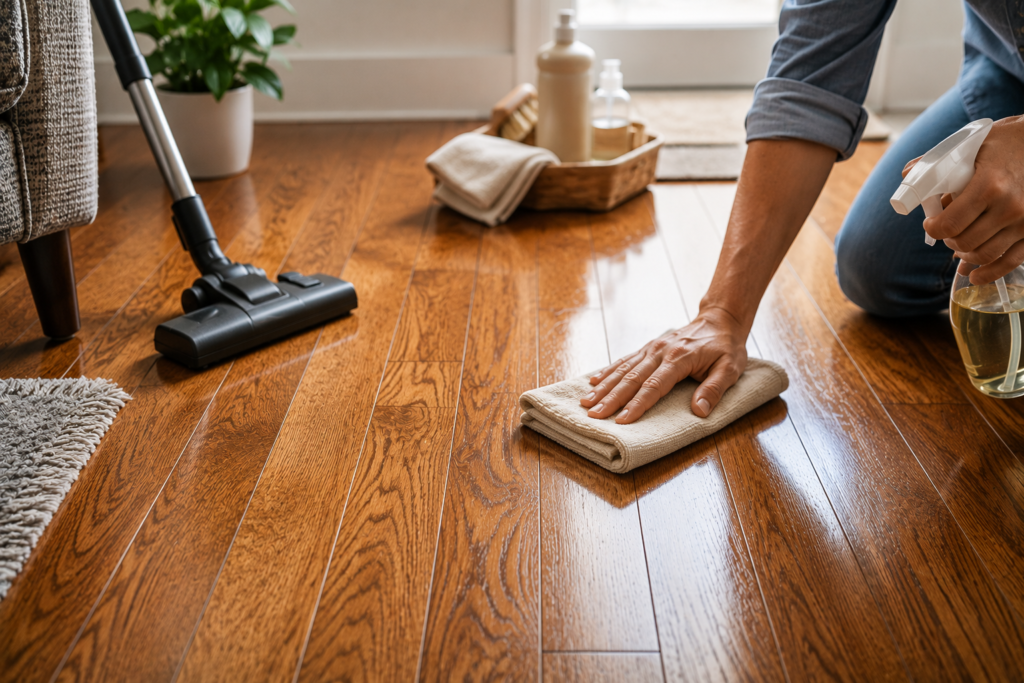
Hardwood floors are a significant investment, and proper care helps protect both their appearance and structural integrity.
- Daily and Weekly Cleaning
Sweep or vacuum hardwood floors regularly using a soft-bristle attachment to remove dust, dirt, and grit that can scratch the finish over time. For vacuum cleaners, confirm the beater bar or brush roll is either turned off or designed specifically for hardwood, since standard beater bars can damage the finish.
- Deep Cleaning Hardwood
Use a manufacturer-recommended hardwood floor cleaner rather than generic all-purpose cleaners, which can dull the finish or leave residue over time. Apply cleaner sparingly with a microfiber mop, avoiding excess water that can seep into seams and cause warping or damage.
- Preventing Water Damage
Hardwood is particularly vulnerable to water damage, since excess moisture can cause boards to warp, cup, or discolor. Wipe up spills immediately, avoid wet mopping, and use entry mats to reduce moisture tracked in from outside during wet weather.
- Preventing Scratches and Dents
Use felt pads under furniture legs to prevent scratches and dents from daily use. Trim pet nails regularly, and consider area rugs in high-traffic zones to reduce wear on the finish.
- Refinishing Considerations
Over time, hardwood floors can be sanded and refinished to address scratches, fading, or wear, extending their usable life considerably compared with replacement. The frequency of refinishing needed depends on foot traffic, finish quality, and how well the floor has been maintained between refinishing cycles.
Laminate Flooring Maintenance
Laminate flooring offers durability and easier maintenance than hardwood, though it has specific care requirements.
- Cleaning Laminate Floors
Sweep or vacuum regularly to remove dirt and grit, then damp mop occasionally using a manufacturer-approved laminate cleaner. Avoid excess water, since laminate’s core layer can swell or warp if moisture seeps into the seams.
- Avoiding Common Laminate Mistakes
Never use wax, polish, or steam cleaners on laminate flooring, since these can damage the surface layer or force moisture into the core material. Stick to products specifically designed for laminate rather than generic hardwood or all-purpose cleaners.
- Preventing Scratches and Wear
Use furniture pads and avoid dragging heavy items across laminate surfaces, since the surface layer can scratch more easily than solid hardwood. Entry mats help reduce grit tracked in from outside, which is one of the most common causes of surface scratching.
Tile Flooring Maintenance
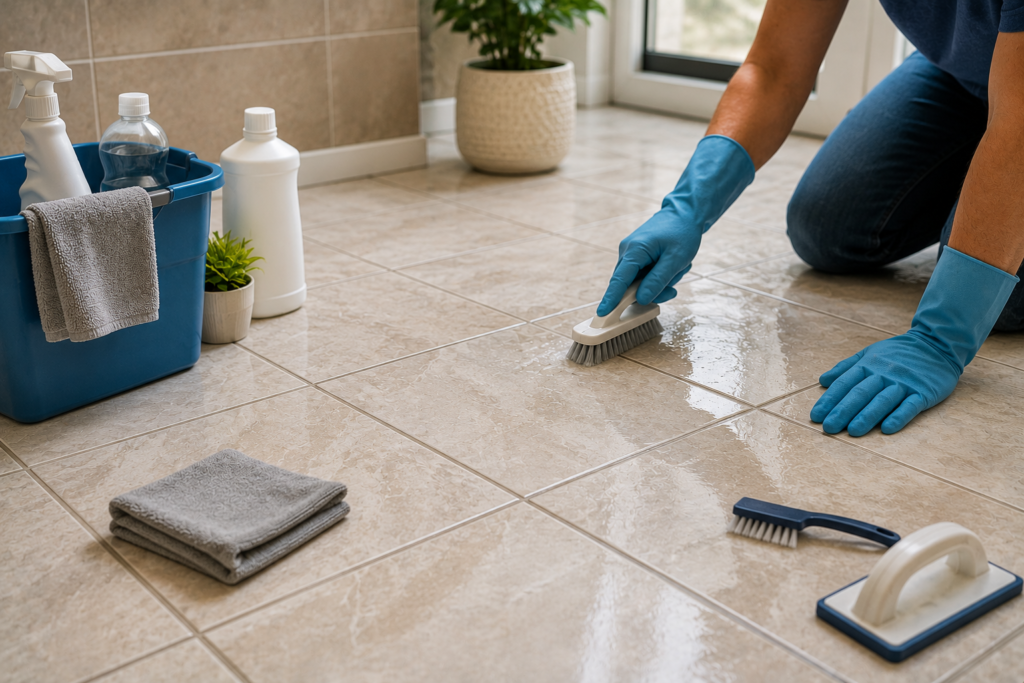
Tile is prized for its durability and water resistance, though grout lines require specific attention that tile surfaces themselves generally don’t need.
- Cleaning Tile Surfaces
Sweep or vacuum regularly, then mop with a pH-neutral cleaner suited to your specific tile type, since acidic or highly alkaline cleaners can damage certain finishes, particularly on natural stone tile. Ceramic and porcelain tile generally tolerate a wider range of cleaning products than natural stone varieties.
- Grout Maintenance
Grout lines are more porous than tile surfaces and can absorb stains and moisture over time. Regularly clean grout with a soft brush and appropriate grout cleaner, and consider periodic resealing to maintain its stain resistance, particularly in high-moisture areas like bathrooms.
- Preventing Cracks and Chips
Avoid dropping heavy objects on tile floors, since impact can crack or chip the surface. Use protective pads under furniture, and address any cracked tiles promptly to prevent further damage to surrounding pieces.
Vinyl Flooring Maintenance
Vinyl flooring, including luxury vinyl plank and sheet vinyl, offers excellent water resistance and relatively simple maintenance requirements.
- Cleaning Vinyl Floors
Sweep or vacuum regularly, then damp mop using a manufacturer-recommended vinyl cleaner. Avoid excessive water and steam cleaners, since prolonged moisture exposure can affect the adhesive backing on certain vinyl products.
- Preventing Scratches and Discoloration
Use furniture pads to prevent indentations and scratches, and avoid direct, prolonged sun exposure in areas without window treatments, since UV exposure can cause discoloration over time in some vinyl products.
- Addressing Common Vinyl Issues
Small scratches on vinyl flooring can sometimes be addressed with a manufacturer-approved repair product, while significant damage typically requires replacing the affected plank or section rather than the entire floor.
Carpet Maintenance
Carpet requires more frequent attention than hard flooring surfaces, since it traps dirt, allergens, and moisture more readily.
- Regular Vacuuming
Vacuum carpet regularly, ideally multiple times per week in high-traffic areas, to remove dirt and debris before it works down into the carpet fibers and causes premature wear.
- Deep Cleaning Carpet
Professional steam cleaning or deep cleaning every twelve to eighteen months helps remove embedded dirt and allergens that regular vacuuming can’t fully address. Between professional cleanings, spot-treating stains promptly prevents them from setting permanently into the fibers.
- Addressing Spills and Stains
Blot spills immediately rather than rubbing, which can push the stain deeper into carpet fibers. Use a cleaning solution appropriate for your specific carpet material and stain type, testing in an inconspicuous area first.
- Preventing Wear Patterns
Rotate furniture periodically to prevent permanent indentations and uneven wear patterns in high-traffic areas. Use rugs or runners in heavily trafficked pathways to protect the carpet underneath.
Comparing Maintenance Needs by Flooring Type
| Flooring Type | Cleaning Frequency | Key Sensitivity | Special Care |
| Hardwood | Sweep/vacuum regularly | Water damage | Periodic refinishing |
| Laminate | Sweep/vacuum regularly | Excess moisture | Avoid wax and steam |
| Tile | Sweep/mop regularly | Grout staining | Periodic resealing |
| Vinyl | Sweep/mop regularly | UV exposure, excess moisture | Furniture pads |
| Carpet | Vacuum frequently | Dirt and allergen buildup | Professional deep cleaning |
General Flooring Protection Tips
A few practices apply broadly across most flooring types and help extend the life of your floors.
- Use entry mats: Placing mats at entry points reduces dirt, grit, and moisture tracked onto floors from outside
- Establish a no-shoes policy: Removing shoes indoors reduces both dirt and the wear caused by shoe soles, particularly high heels
- Use furniture pads: Felt or rubber pads under furniture legs prevent scratches and dents across nearly every flooring material
- Address spills promptly: Quick cleanup prevents staining and, for water-sensitive materials like hardwood and laminate, prevents moisture damage
- Follow manufacturer care instructions: Specific flooring products sometimes have unique requirements that generic advice doesn’t fully cover
- Manage indoor humidity: Extreme humidity swings can affect wood and laminate flooring, making a humidifier or dehumidifier worthwhile in climates with significant seasonal changes
Seasonal Flooring Care Considerations
Flooring maintenance needs can shift somewhat with the seasons, particularly in climates with notable temperature and humidity swings.
- During humid months: Monitor hardwood and laminate floors for signs of excess moisture absorption, and consider a dehumidifier in particularly damp conditions.
- During dry winter months: Low indoor humidity can cause hardwood to contract slightly, sometimes creating small gaps between boards that typically close again once humidity levels normalize.
- After outdoor activities: Wipe down entryway flooring more frequently during rainy or snowy seasons, when moisture and grit are more likely to be tracked indoors.
- Before hosting gatherings: A more thorough cleaning before expected heavy foot traffic helps protect floors during periods of increased use.
Common Flooring Maintenance Mistakes to Avoid
- Using the wrong cleaning products: Generic all-purpose cleaners can damage the specific finish on hardwood, laminate, or natural stone tile, so always confirm product compatibility first.
- Using excess water on water-sensitive floors: Hardwood and laminate are particularly vulnerable to warping and swelling from excess moisture during cleaning.
- Skipping furniture pads: Failing to use protective pads under furniture is one of the most common causes of preventable scratches and dents.
- Ignoring grout maintenance: Neglecting grout cleaning and sealing allows stains and moisture to penetrate over time, affecting both appearance and hygiene.
- Delaying spill cleanup: Prompt attention prevents both staining and, for sensitive materials, more serious moisture-related damage.
Essential Supplies for Flooring Maintenance
Keeping a small set of appropriate cleaning supplies on hand makes it easier to maintain multiple flooring types without reaching for the wrong product out of convenience.
- A soft-bristle broom or vacuum with a hardwood setting: For daily and weekly cleaning of hardwood and laminate surfaces
- Microfiber mops and cloths: Gentle on most flooring finishes while effectively picking up dust and light residue
- Manufacturer-approved cleaners for each flooring type: Keeping the correct cleaner for hardwood, laminate, tile, and vinyl on hand prevents accidental cross-use of incompatible products
- A grout brush and grout-specific cleaner: For maintaining tile grout lines separately from the tile surface itself
- Felt or rubber furniture pads: For protecting floors under chairs, tables, and other furniture across nearly every flooring type
- A carpet spot-cleaning solution: For addressing stains promptly between deeper cleaning sessions
Having these supplies organized and accessible makes it far more likely you’ll use the correct product for each surface, rather than defaulting to a single all-purpose cleaner.
How to Choose Flooring Based on Maintenance Needs
If you’re planning a renovation, maintenance requirements are worth factoring into your decision alongside appearance and budget.
- If you want the lowest daily maintenance: Tile and vinyl generally require the least specialized care, tolerating regular cleaning without the moisture sensitivity of hardwood or laminate.
- If you prioritize a natural, classic look and don’t mind extra care: Hardwood offers timeless appeal but requires more attention to moisture control and periodic refinishing over time.
- If budget and easy upkeep matter most: Laminate and vinyl offer durable, low-maintenance options at generally lower price points than hardwood or natural stone tile.
- If you have pets or young children: Tile and vinyl tend to hold up well to spills, scratches, and heavy use, while carpet requires more frequent deep cleaning to manage allergens and stains in busy households.
Matching flooring choice to your household’s realistic maintenance capacity often leads to better satisfaction than choosing on appearance alone.
Signs Your Flooring Needs Professional Attention
While regular maintenance addresses most everyday flooring concerns, certain signs indicate it’s time to call a flooring professional.
- Persistent moisture damage on hardwood or laminate: Warping, cupping, or discoloration that doesn’t improve with proper drying may indicate deeper subfloor moisture issues requiring professional assessment.
- Cracked or loose tiles: Individual cracked tiles can often be replaced, but widespread cracking may signal subfloor movement or installation issues needing professional evaluation.
- Carpet that retains odors despite cleaning: Persistent odors after proper cleaning and drying can indicate moisture trapped beneath the carpet padding, which may require professional extraction and drying.
- Vinyl lifting or bubbling: This often points to adhesive failure or moisture beneath the flooring, both of which typically require professional repair rather than a DIY fix.
Conclusion
Proper flooring maintenance comes down to understanding your specific material’s needs, whether that’s protecting hardwood from moisture, avoiding wax on laminate, maintaining tile grout, or vacuuming carpet regularly to prevent buildup. Consistent, simple habits like using entry mats, furniture pads, and prompt spill cleanup extend the life of virtually any flooring type. With the right care routine for your specific floors, you can keep them looking great and performing well for many years of everyday use.
Frequently Asked Questions
1- How often should I clean my hardwood floors?
Sweep or vacuum hardwood floors a few times a week, and deep clean with a manufacturer-approved cleaner every one to two weeks depending on foot traffic.
2- Can I use a steam cleaner on laminate flooring?
No, steam cleaners should be avoided on laminate flooring, since the heat and moisture can damage the surface layer and cause the core material to warp.
3- How often should carpet be professionally cleaned?
Most experts recommend professional carpet cleaning every twelve to eighteen months, depending on household size, pets, and foot traffic.
4- What’s the best cleaner for tile grout?
A soft brush combined with a grout-specific cleaner works well for most tile types, and periodic resealing helps maintain stain resistance over time.
5- Does vinyl flooring need special cleaning products?
Yes, manufacturer-recommended vinyl cleaners help avoid damaging the surface or adhesive backing, and generic or overly abrasive products should be avoided.
6- How can I prevent hardwood floors from warping?
Wiping up spills immediately, avoiding wet mopping, and managing indoor humidity levels are the most effective ways to prevent hardwood warping.