Clogged drains rarely happen overnight, they build up gradually, one hair strand, one bit of grease, one coffee ground at a time, until a slow trickle finally turns into a full blockage. Understanding how to prevent clogged drains means recognizing what actually causes buildup in each part of your home and adjusting a few everyday habits, which is considerably easier and cheaper than dealing with a clog once it’s fully formed.
This guide walks through what causes clogs in kitchens, bathrooms, and elsewhere in your home, practical daily habits that prevent buildup, and the tools and maintenance routines worth adding to your regular home care schedule.
How to Prevent Clogged Drains
Most drain clogs come down to a small handful of preventable culprits: grease and food debris in kitchen sinks, hair and soap scum in bathroom drains, and foreign objects or excessive toilet paper in toilets. Preventing clogs mostly comes down to keeping these materials out of your drains in the first place, using drain covers or strainers to catch debris before it enters the pipe, and running periodic maintenance like hot water flushes or enzyme-based cleaners to keep buildup from accumulating over time. A few consistent, low-effort habits prevent the vast majority of clogs before they ever become a genuine problem.
What Causes Clogged Drains Room by Room
Kitchen Sink Clogs
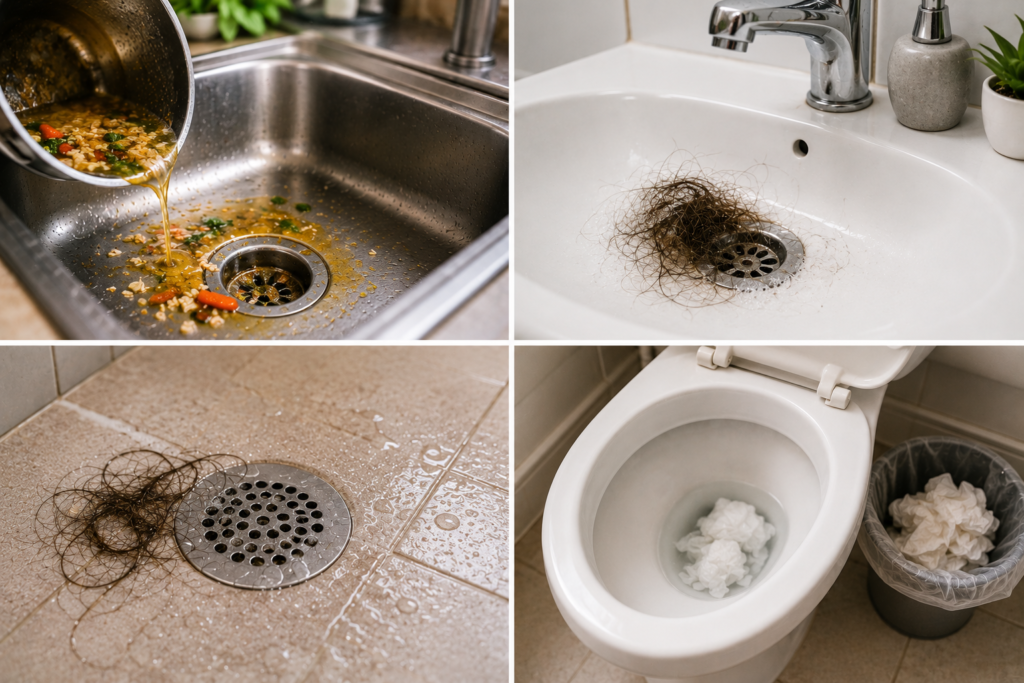
Kitchen drains most commonly clog from grease and cooking oil (which solidify as they cool and coat the inside of pipes), food particles and scraps that don’t fully break down, and, in homes with a garbage disposal, fibrous foods that wrap around the disposal’s blades rather than grinding properly.
Bathroom Sink and Tub Clogs
Bathroom drains overwhelmingly clog from hair combined with soap scum, which together create a sticky, accumulating mass that gradually narrows the drain opening until water flow slows significantly or stops entirely.
Toilet Clogs
Toilets typically clog from excessive toilet paper use, “flushable” wipes (which often don’t break down as readily as their labeling suggests), feminine hygiene products, or other items that were never designed to pass through a toilet’s drain line in the first place.
Shower Drain Clogs
Similar to bathroom sinks, shower drains accumulate hair and soap residue, often compounded by mineral deposits from hard water, which can create a rougher interior surface that debris more easily catches on over time.
Kitchen Sink Clog Prevention
Never Pour Grease Down the Drain
Grease and cooking oil should always go into a separate, sealable container (an old jar or can works well) for disposal in regular trash, rather than down the drain, where it cools and solidifies, gradually coating and narrowing your pipes.
Use a Sink Strainer
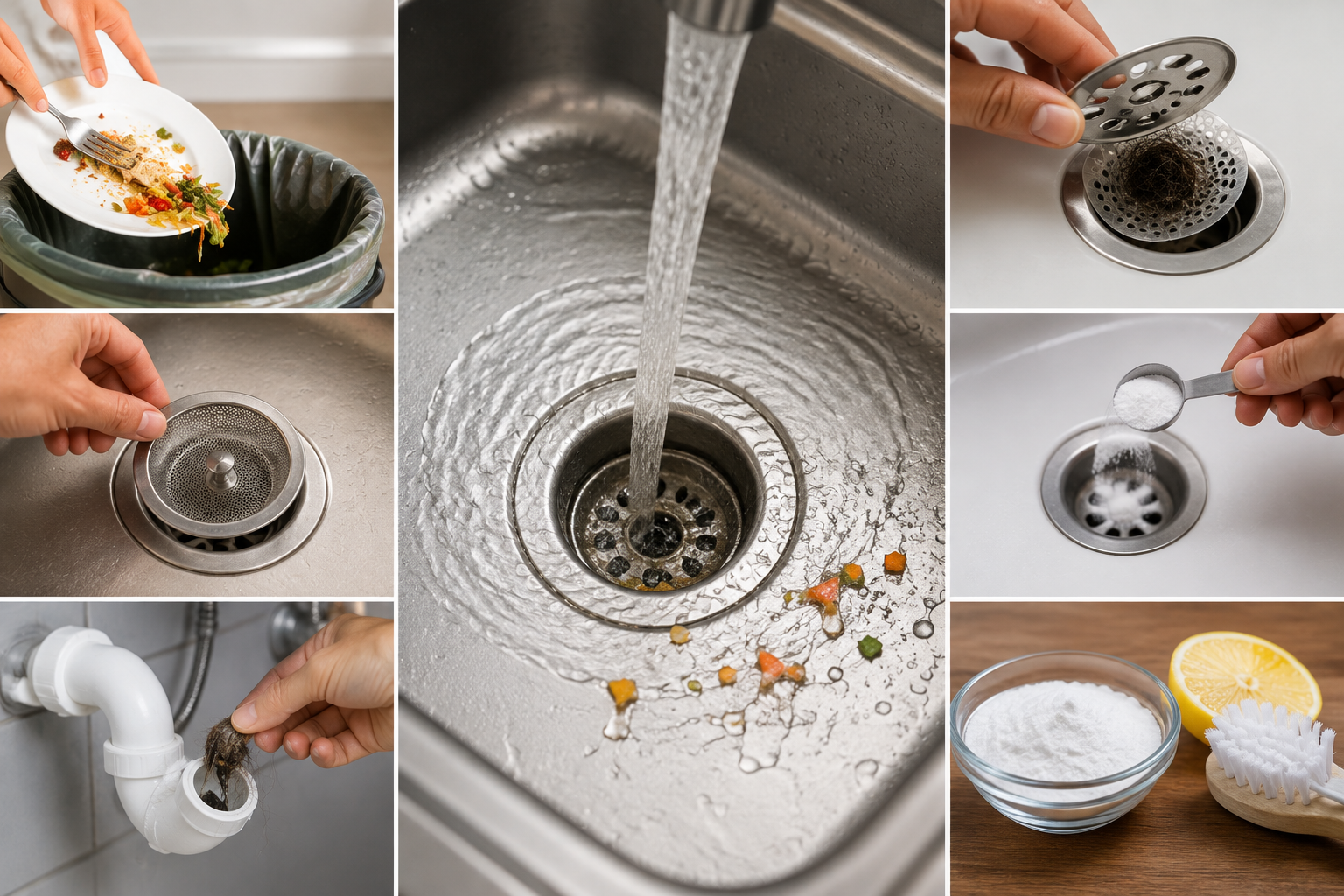
A simple mesh sink strainer, placed over your drain opening, catches food particles and debris before they enter the pipe, and it’s one of the most effective, low-cost prevention tools available for kitchen sinks.
Run Cold Water When Using the Garbage Disposal
Cold water helps solidify any grease particles moving through the disposal, allowing them to be ground up and flushed through more effectively, while hot water can actually cause grease to liquefy and coat pipe walls further downstream.
Avoid Fibrous and Starchy Foods in the Disposal
Fibrous foods (celery, corn husks, onion skins) can wrap around the disposal’s grinding components rather than breaking down properly, and starchy foods (pasta, rice, potato peels) can expand or become gummy, both contributing to clogs beyond the disposal itself.
Run Hot Water After Each Use
A brief flush of hot water after washing dishes or using the disposal helps carry any remaining food particles or residue further down the drain line, reducing the chance of accumulation right at the drain opening.
Bathroom Drain Clog Prevention
Install Hair Catchers
A mesh or silicone hair catcher placed over shower and tub drains catches hair before it enters the pipe, one of the single most effective prevention tools for bathroom drains specifically, given how consistently hair contributes to clogs in these fixtures.
Brush Hair Before Showering
Brushing your hair before getting in the shower reduces the amount of loose hair that ends up going down the drain during washing, a simple habit that meaningfully reduces buildup over time.
Clean Drain Stoppers Regularly
Bathroom sink and tub stoppers accumulate hair and soap scum directly at the stopper mechanism itself, and periodically removing and cleaning this component (often just requiring a simple twist or pull to access) prevents buildup right at the point where clogs most commonly begin.
Rinse Away Soap Residue
Using liquid soap rather than bar soap where practical, or rinsing drains thoroughly after use, reduces the soap scum buildup that combines with hair to create particularly stubborn bathroom clogs.
Toilet Clog Prevention
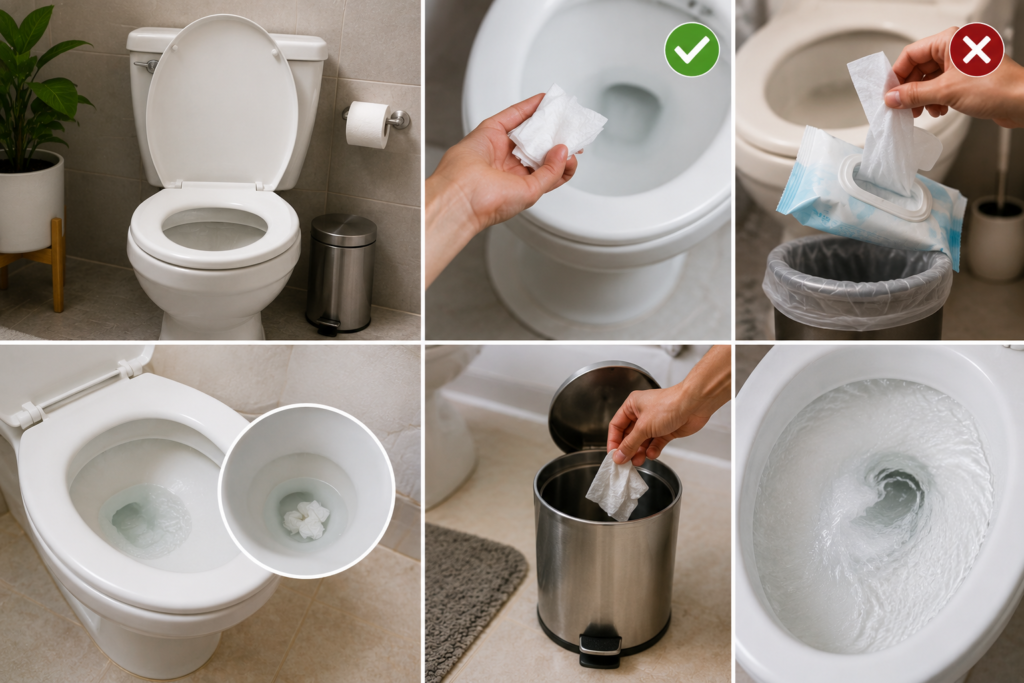
Only Flush Toilet Paper and Human Waste
Nothing else should go down a toilet, not “flushable” wipes, paper towels, cotton balls, dental floss, or feminine hygiene products, all of which can accumulate and block toilet drain lines even in small quantities over time.
Understand That “Flushable” Doesn’t Always Mean Safe for Your Pipes
Products labeled “flushable” are generally designed to pass through municipal treatment systems eventually, but they often don’t break down as quickly as toilet paper within your home’s own pipes, making them a common, if less obvious, contributor to household clogs.
Use Less Toilet Paper Per Flush When Possible
Excessive toilet paper use, particularly in a single flush, is one of the most common causes of toilet clogs, especially in older toilets or homes with lower-flow plumbing systems.
Drain Prevention Tools Comparison
| Tool | Best For | How It Helps |
| Mesh sink strainer | Kitchen sinks | Catches food debris before it enters the drain |
| Hair catcher | Shower/tub drains | Catches hair before it accumulates in pipes |
| Drain stopper cleaning | Bathroom sinks/tubs | Removes buildup at the point clogs often start |
| Grease container | Kitchen | Prevents grease from entering pipes at all |
| Enzyme drain cleaner | All drains | Breaks down organic buildup without harsh chemicals |
Regular Drain Maintenance Habits
Weekly Hot Water Flush
Running hot water through kitchen and bathroom drains weekly helps keep grease, soap scum, and minor debris moving through the system before it has a chance to fully accumulate and harden.
Monthly Baking Soda and Vinegar Treatment
Pouring baking soda followed by vinegar down a drain, letting it fizz for several minutes, then flushing with hot water, is a mild, natural way to help break down minor buildup without the harshness of chemical drain cleaners.
Periodic Enzyme-Based Drain Treatment
Enzyme-based drain cleaners use natural bacteria and enzymes to gradually break down organic buildup (hair, soap, grease, food residue) over time, offering a gentler, more pipe-friendly alternative to harsh chemical drain cleaners for routine maintenance.
Cleaning P-Traps Periodically
The P-trap beneath sinks (the curved section of pipe) is a common spot for debris to accumulate, and periodically removing and cleaning this section directly, particularly under kitchen sinks, addresses buildup before it becomes a full clog.
Why to Avoid Chemical Drain Cleaners for Routine Prevention
The Risk to Your Pipes
Chemical drain cleaners use harsh compounds that can damage certain pipe materials over repeated use, particularly older plumbing, and they generate significant heat during the chemical reaction that can occasionally warp or weaken plastic pipes.
Limited Effectiveness for Prevention
Chemical drain cleaners are formulated to dissolve existing clogs, not to prevent buildup from occurring in the first place, making them a poor choice for routine, ongoing maintenance compared to gentler, more consistent prevention habits.
Safer Alternatives for Regular Use
Enzyme-based cleaners, hot water flushes, and mechanical prevention tools (strainers, hair catchers) offer safer, more sustainable options for ongoing drain maintenance without the pipe-damage risk chemical cleaners can pose over repeated use.
Signs Your Drain Is Starting to Clog
Slow Drainage
Water taking noticeably longer to drain than usual, even if it’s not fully stopped, is often the earliest, most easily addressed sign of developing buildup within a drain line.
Gurgling Sounds
Unusual gurgling noises from a drain, particularly one not currently in use, can indicate a partial blockage affecting normal air flow through your plumbing’s vent system.
Recurring Minor Clogs
If you find yourself plunging the same drain repeatedly, even if each individual clog seems to clear, this pattern often indicates ongoing buildup that basic clearing methods only temporarily address rather than fully resolving.
Unpleasant Odors
Persistent bad smells from a drain, even when it appears to be draining normally, can indicate organic buildup (food, grease, or other debris) decomposing within the pipe.
When Prevention Habits Aren’t Enough
Recurring Clogs Despite Good Habits
If clogs keep recurring in the same drain despite consistent prevention efforts, this may indicate a structural issue, a pipe with an unusual bend, aging plumbing, or even tree root intrusion in an outdoor line, that basic prevention habits alone can’t fully address.
When to Call a Plumber
Persistent, recurring problems, unusual odors that don’t resolve, or slow drainage affecting multiple fixtures simultaneously generally warrant professional inspection, since these patterns often point to an issue beyond what routine household prevention and basic clearing tools can resolve.
Drain Maintenance Schedule at a Glance
| Frequency | Task |
| Daily | Use sink strainers and hair catchers |
| Weekly | Run hot water flush through kitchen and bathroom drains |
| Monthly | Baking soda and vinegar treatment |
| Quarterly | Clean drain stoppers and P-traps |
| As needed | Enzyme-based drain treatment for ongoing prevention |
Practical Buying Tips
- Choose mesh sink strainers sized specifically to fit your drain opening, since a poor fit reduces their effectiveness at actually catching debris
- Look for silicone hair catchers, which tend to be more flexible and easier to clean than rigid plastic alternatives
- Keep a dedicated grease disposal container near your stove, making it a genuinely convenient habit rather than an extra step you’re likely to skip
- Stock enzyme-based drain treatment as your go-to routine maintenance product rather than reaching for harsh chemical cleaners
- Consider a drain snake (auger) as a household staple even if you’re not currently dealing with a clog, since early intervention with a snake often prevents a minor slowdown from becoming a full blockage
Common Mistakes to Avoid
- Pouring grease down the kitchen drain, even in small amounts, allowing it to gradually coat and narrow pipes over time
- Skipping hair catchers on shower and tub drains, missing one of the most effective, low-cost prevention tools available
- Relying on chemical drain cleaners for routine maintenance, risking pipe damage without addressing the actual root cause of buildup
- Flushing “flushable” wipes regularly, despite their labeling, since they often don’t break down as readily as toilet paper within home plumbing
- Ignoring early warning signs like slow drainage, allowing minor buildup to progress into a full, harder-to-clear clog
Conclusion
Learning how to prevent clogged drains comes down to a handful of consistent, low-effort habits, keeping grease and hair out of your pipes in the first place, using simple tools like strainers and hair catchers, and running gentle routine maintenance rather than reaching for harsh chemical cleaners. These small, everyday adjustments cost far less time and money than dealing with a fully clogged drain, and they protect your home’s plumbing system for the long term. Build these habits into your regular household routine, and you’ll spend considerably less time reaching for a plunger and more time simply not thinking about your drains at all.
Frequently Asked Questions
1- What is the most common cause of clogged drains?
This varies by fixture, kitchen sinks most commonly clog from grease and food debris, while bathroom sinks and tubs most commonly clog from hair combined with soap scum.
2- How often should I clean my drains to prevent clogs?
A weekly hot water flush, combined with a monthly baking soda and vinegar treatment, offers a reasonable, low-effort routine maintenance schedule for most households.
3- Are chemical drain cleaners bad for my pipes?
They can be, particularly with repeated use on older plumbing, since the harsh chemical reaction can generate heat and compounds that gradually weaken certain pipe materials over time.
4- Do hair catchers really prevent shower drain clogs?
Yes, they’re one of the most effective prevention tools available specifically for bathroom drains, catching hair before it has a chance to combine with soap scum and accumulate within the pipe.
5- Can I pour grease down the drain if I run hot water afterward?
No, hot water doesn’t prevent grease from eventually cooling and solidifying further down the pipe, it’s best to always dispose of grease separately in a container rather than down any drain.
6- Is it safe to flush “flushable” wipes?
Not generally recommended for regular use, despite their labeling, since they often don’t break down as quickly as toilet paper within your home’s own plumbing, making them a common contributor to toilet clogs.
7- What should I do if my drain clogs despite following prevention habits?
Try a plunger or drain snake first for a straightforward, isolated clog. If clogs recur repeatedly in the same drain despite consistent prevention efforts, this may indicate a larger issue worth having a plumber inspect.