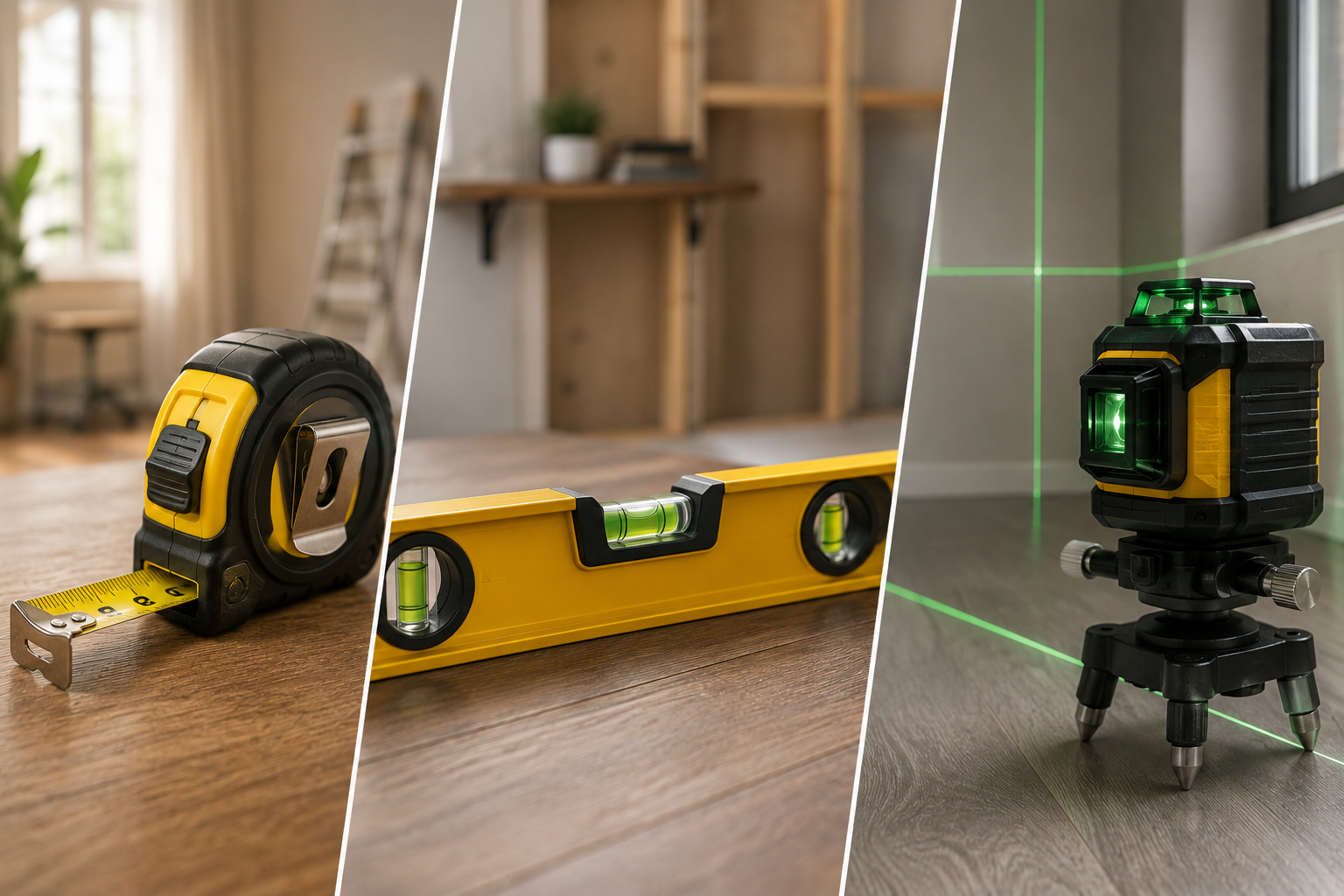
Accurate measurement is the foundation of nearly every home project, hang a shelf a quarter-inch off level, and it’s noticeable; measure a room wrong before buying furniture, and you’re stuck with something that doesn’t fit. Understanding the right measuring tools for homeowners, tape measures, spirit levels, and laser levels, and knowing when each one is actually the right choice, prevents these frustrating, avoidable mistakes.
This guide breaks down how each measuring tool works, what to look for when buying one, and which specific tool suits which type of project, so you can measure with genuine confidence rather than guesswork.
Measuring Tools
Every homeowner should own a quality 25-foot tape measure and a basic 24-inch spirit level, covering the vast majority of everyday measuring and leveling tasks around the home. A laser level becomes a worthwhile addition once you’re tackling larger projects, hanging multiple picture frames in a row, installing shelving across a longer wall, or any task where a traditional level’s shorter reach makes achieving consistent accuracy across a distance genuinely difficult.
Tape Measures Explained
How a Tape Measure Works
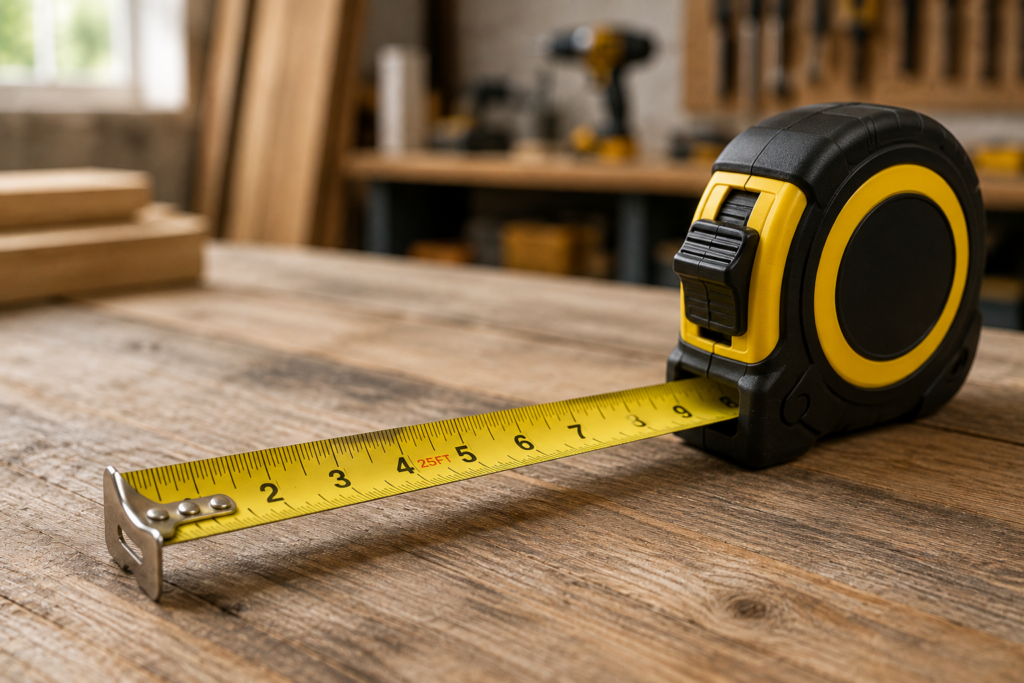
A tape measure consists of a flexible metal blade wound inside a case, marked with measurement increments (inches and feet in the US, though metric versions exist), extended manually and retracted automatically or via a lock mechanism to hold a specific length in place.
Key Features to Look For
Blade length should match your typical project needs, a 25-foot tape measure covers most household tasks, from furniture placement to room measurements, while shorter 16-foot tapes suit lighter, more compact use. Blade width matters for accuracy over longer distances, since a wider blade (typically 1 inch or more) stays rigid and extended further without buckling compared to a narrower, thinner blade. Standout distance, how far the blade extends before bending under its own weight, is directly related to blade width and worth checking if you frequently measure alone across longer spans without someone to hold the tape’s end.
Locking Mechanism
A reliable lock button holds the blade at a specific length, essential for accurate, hands-free measuring, particularly useful when marking a measurement on a wall or board without needing a second person to hold the tape steady.
Blade Markings and Readability
Clear, high-contrast markings (typically black numbers on a yellow background) improve readability in varied lighting conditions, and some tape measures include additional markings, like stud-finding marks at 16-inch and 24-inch intervals, useful for quickly locating standard wall stud spacing.
Spirit Levels (Bubble Levels) Explained
How a Spirit Level Works
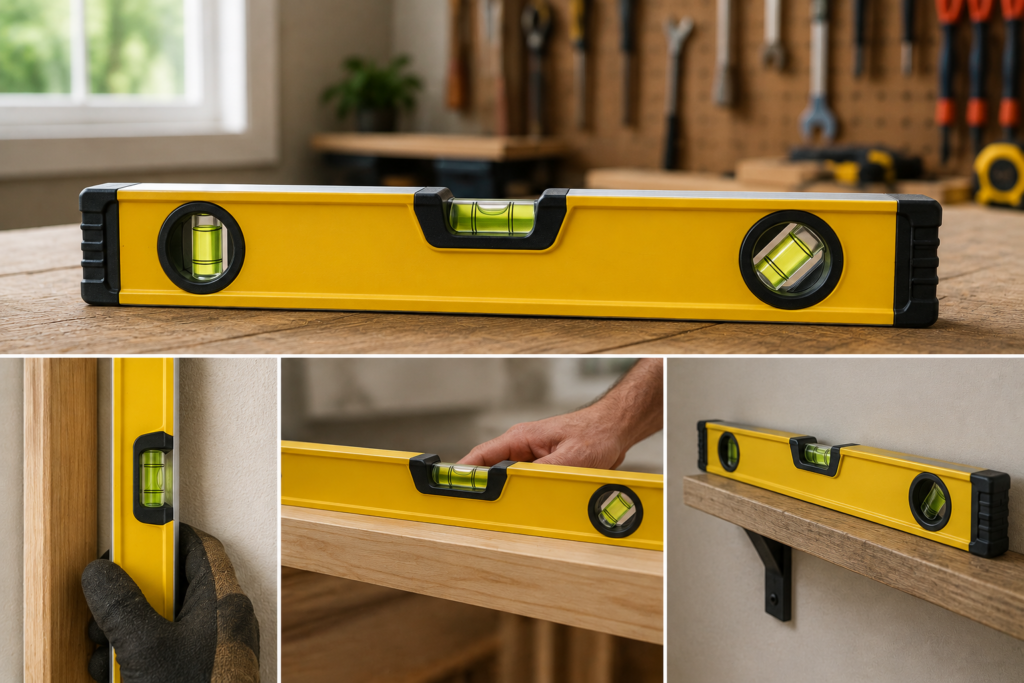
A spirit level uses one or more sealed glass or plastic vials partially filled with liquid, containing an air bubble. When the bubble sits centered between two marked lines, the surface the level is resting on is confirmed level (horizontal) or plumb (vertical), depending on which vial you’re reading.
Common Level Lengths
Levels come in various lengths, from small 9-inch torpedo levels suited to tight spaces, up to 48-inch or longer levels for checking longer surfaces like countertops or larger installations. A 24-inch level is a practical, versatile middle-ground size for most household tasks.
Multiple Vials for Different Orientations
Most standard levels include both a horizontal vial (for checking level surfaces) and a vertical vial (for checking plumb, or true vertical alignment), letting a single tool check both orientations without needing to reposition or use a separate tool.
Torpedo Levels for Tight Spaces
A smaller torpedo level, typically around 9 inches, is a useful secondary tool for spaces too tight for a full-size level, checking small fixtures, tight corners, or pipe alignment where a longer level simply won’t fit.
Laser Levels Explained
How a Laser Level Works
A laser level projects a visible laser line (or in some models, multiple lines or a full 360-degree line) onto a surface, providing a continuous, precise reference for level or plumb across a much greater distance than a traditional spirit level’s physical length allows.
Types of Laser Levels
Line lasers project a single horizontal or vertical laser line, useful for tasks like aligning a row of picture frames or installing a straight run of shelving. Cross-line lasers project both a horizontal and vertical line simultaneously, useful for tasks requiring alignment in multiple directions at once, like tiling or cabinet installation. Rotary lasers project a continuous 360-degree line around an entire room, most commonly used for larger-scale projects like installing crown molding or aligning multiple points across a full room.
Self-Leveling vs Manual Laser Levels
Self-leveling laser levels automatically adjust to true level or plumb once activated (within a certain range of tilt), saving setup time and reducing the risk of user error compared to manual models, which require the user to adjust the level correctly by hand before use.
Tape Measure vs Spirit Level vs Laser Level Comparison
| Tool | Primary Function | Best For | Typical Cost |
| Tape measure | Measuring length/distance | Nearly all projects | Lowest |
| Spirit level | Checking level/plumb over a short span | Hanging shelves, frames, small installations | Low |
| Laser level | Projecting level/plumb reference over a distance | Larger installations, multi-point alignment | Moderate to higher |
When to Use a Tape Measure
Nearly every project starts with a tape measure, determining furniture dimensions, room measurements, spacing for shelving, or confirming an appliance will fit through a doorway. It’s the single most frequently used measuring tool in any home, making a quality tape measure one of the most worthwhile individual tool investments a homeowner can make.
When to Use a Spirit Level
A standard spirit level is the right choice for shorter, single-point leveling tasks: hanging a single picture frame or shelf, checking whether a piece of furniture sits level on the floor, or confirming a single fixture is properly aligned. For tasks confined to a relatively short physical span, a spirit level offers a simple, reliable, and inexpensive solution without needing anything more elaborate.
When to Use a Laser Level
A laser level becomes genuinely valuable once a project extends beyond what a physical spirit level can practically cover in one placement: aligning a series of cabinets across a kitchen wall, hanging multiple picture frames at a consistent height across a room, installing chair rail or crown molding around an entire room, or any task requiring consistent alignment across a longer distance or multiple points simultaneously.
How to Use a Laser Level Correctly
- Setting Up the Tool
Position the laser level on a stable surface or tripod, ensuring it has a clear line of sight to the area you’re working on, since obstructions will block the projected laser line.
- Allowing Self-Leveling to Activate
For self-leveling models, allow the internal mechanism a moment to settle and confirm true level or plumb before beginning work, most models indicate through a light or sound when leveling is complete and accurate.
- Marking Reference Points
Once the laser line is projected and confirmed level, use it as a consistent reference to mark points along your project area, a wall, a row of cabinets, or molding placement, ensuring consistent alignment across the entire span rather than relying on multiple separate, potentially inconsistent measurements.
- Visibility Considerations
Standard laser levels can be difficult to see clearly in bright daylight or well-lit rooms. For outdoor or brightly lit indoor projects, look for a laser level with a stated outdoor visibility range, or consider using laser-enhancing glasses or a detector accessory designed to improve line visibility in challenging lighting conditions.
Choosing the Right Measuring Tools for Your Projects
- For General Household Use
A quality 25-foot tape measure and a 24-inch spirit level cover the overwhelming majority of everyday homeowner tasks without requiring any additional investment.
- For Furniture Assembly and Small Repairs
A tape measure and a compact torpedo level are often sufficient, given the smaller scale and shorter spans typically involved in these tasks.
- For Larger Home Improvement Projects
A laser level becomes a worthwhile addition once you’re tackling projects spanning a longer wall or multiple alignment points, cabinet installation, extensive shelving, or molding work, where achieving consistent accuracy with a standard level alone becomes genuinely difficult and time-consuming.
Accuracy Considerations
- Checking a Spirit Level’s Accuracy
Over time or after being dropped, a spirit level’s accuracy can shift. A simple way to check: place the level on a flat surface and note the bubble’s position, then flip the level end-to-end on the same spot, if the bubble reads identically in both positions, the level is accurate; if it differs, the level may need replacement or recalibration.
- Laser Level Accuracy Ratings
Laser levels typically list an accuracy rating (often expressed as a small margin of error over a specific distance, such as plus or minus 1/8 inch at 30 feet). For most household projects, standard consumer-grade accuracy is more than sufficient, with higher-precision ratings mattering more for professional or larger-scale construction applications.
Practical Buying Tips
- Prioritize a wider blade tape measure (1 inch or more) if you frequently measure alone across longer distances, since standout distance improves considerably with blade width
- Choose a spirit level with both horizontal and vertical vials for maximum everyday versatility in a single tool
- For laser levels, self-leveling models offer more convenience and reduced setup error than manual models, worth the modest price difference for most homeowners
- Consider a laser level’s stated outdoor or bright-light visibility range if you’ll be using it in well-lit rooms or outdoors
- Test a level’s accuracy periodically, particularly after any drops or significant impacts, using the flip test method
Common Mistakes to Avoid
- Relying on a short level for a long span, resulting in inconsistent alignment across a larger project
- Using a laser level in bright conditions without checking its visibility rating, struggling to see a faint projected line
- Ignoring tape measure blade width, leading to a blade that buckles and becomes difficult to use accurately at longer distances alone
- Not checking level accuracy periodically, continuing to rely on a level that’s been dropped or otherwise compromised
- Buying a laser level before it’s genuinely needed, when a standard spirit level would have handled a smaller, single-point project just as effectively
Conclusion
Accurate measuring tools are the foundation of nearly every successful home project, and understanding when to reach for a tape measure, a spirit level, or a laser level prevents the frustrating mistakes that come from guessing or using the wrong tool for the job. Start with a quality tape measure and a basic spirit level to cover everyday needs, and add a laser level once your projects genuinely call for consistent alignment across a longer distance. With the right measuring tools for homeowners on hand, you’ll approach every project with the confidence that comes from measuring correctly the first time.
Frequently Asked Questions
1- What size tape measure do I need for home use?
A 25-foot tape measure covers most household needs, from furniture placement to room measurements, offering a practical balance of length and manageable size.
2- Do I need a laser level, or is a regular level good enough?
For most everyday tasks, hanging a single shelf or picture frame, a standard spirit level is entirely sufficient. A laser level becomes valuable for larger projects requiring consistent alignment across a longer distance or multiple points.
3- How do I check if my spirit level is still accurate?
Place the level on a flat surface, note the bubble’s position, then flip the level end-to-end on the same spot. If the bubble reads identically both times, the level remains accurate.
4- What’s the difference between a line laser and a cross-line laser?
A line laser projects a single horizontal or vertical line, while a cross-line laser projects both simultaneously, useful for tasks requiring alignment in multiple directions at once, like tiling or cabinet installation.
5- Are self-leveling laser levels worth the extra cost?
For most homeowners, yes, self-leveling models save setup time and reduce the risk of user error compared to manually adjusted laser levels.
6- Why is my tape measure blade bending or buckling when extended?
This typically happens with narrower, thinner blades extended over longer distances without support. A wider blade (1 inch or more) generally offers better standout distance and rigidity.
7- Can I use a laser level outdoors?
Yes, though standard laser levels can be difficult to see in bright daylight. Look for a model with a stated outdoor visibility range, or use a detector accessory designed to improve line visibility in bright conditions.