
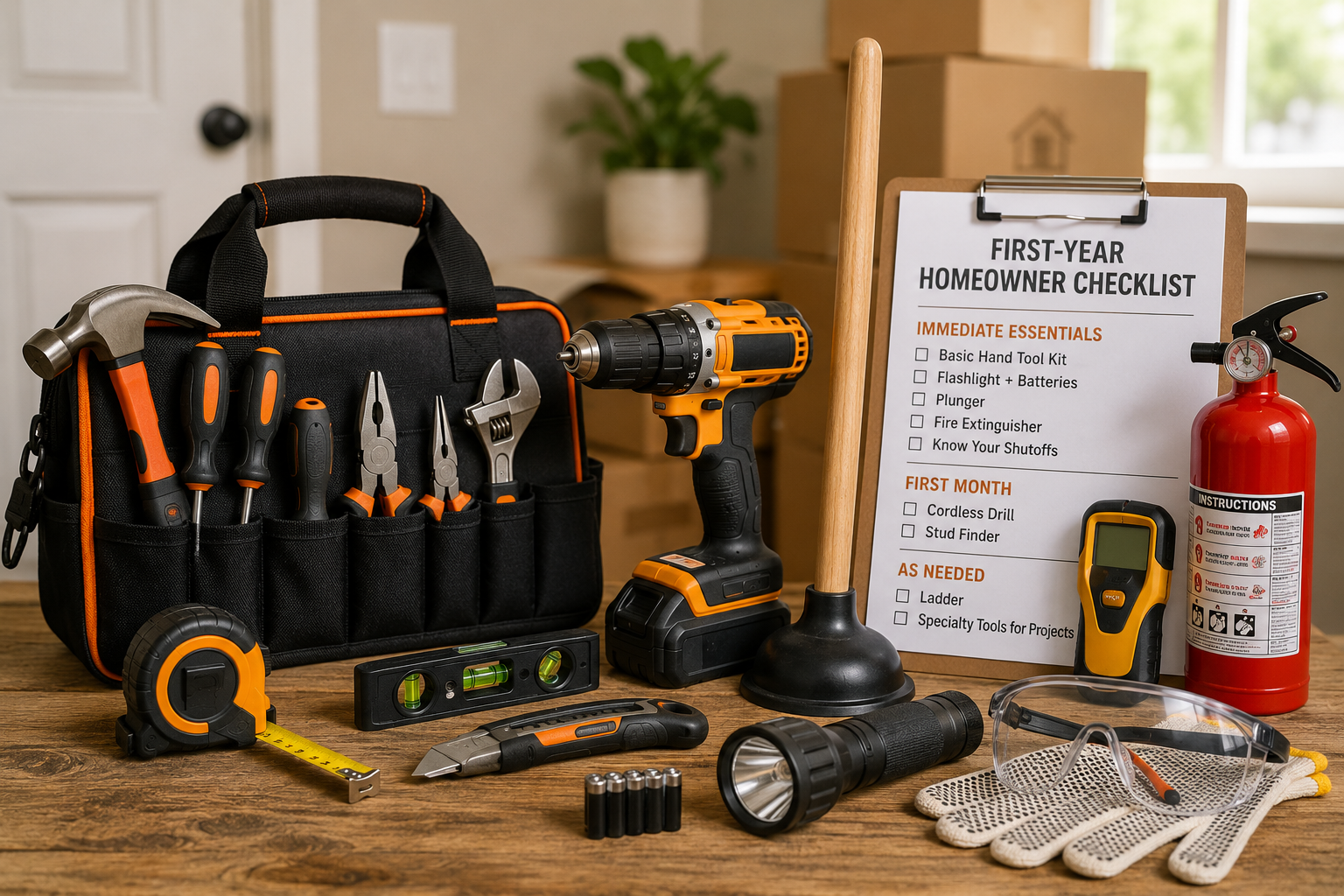
Closing on your first home comes with an immediate, practical question most new owners don’t fully anticipate: what tools do you actually need on day one versus what can reasonably wait? Unlike renting, where a maintenance call handles most issues, homeownership means you’re now responsible for everything from a dripping faucet to a tripped breaker, often with your moving budget already stretched thin.
This guide prioritizes tools for first-time homeowners specifically by timeline: what to have ready before you move in, what to add in your first few months, and what can genuinely wait, so you can build your collection sensibly rather than buying everything at once.
Must-Have Tools for First-Time Homeowners
Before you move in, prioritize a basic hand tool kit (hammer, screwdrivers, adjustable wrench, tape measure, pliers, utility knife) plus a few home-specific safety items: a flashlight, batteries, and knowledge of where your main water shutoff and breaker box are located. In your first few months, add a cordless drill, a plunger, and a stud finder as you settle in and start tackling small projects. Everything beyond this can reasonably wait until specific needs arise, rather than being purchased upfront alongside an already expensive move.
Before You Move In: The Absolute Essentials
1- Locate Your Home’s Key Shutoffs First
Before you even unpack tools, find and confirm the location of your main water shutoff valve, your electrical panel (breaker box), and, if applicable, your gas shutoff. This isn’t a purchase; it’s a five-minute walkthrough that can prevent a small problem from becoming a major one during an actual emergency.
2- A Basic Hand Tool Kit
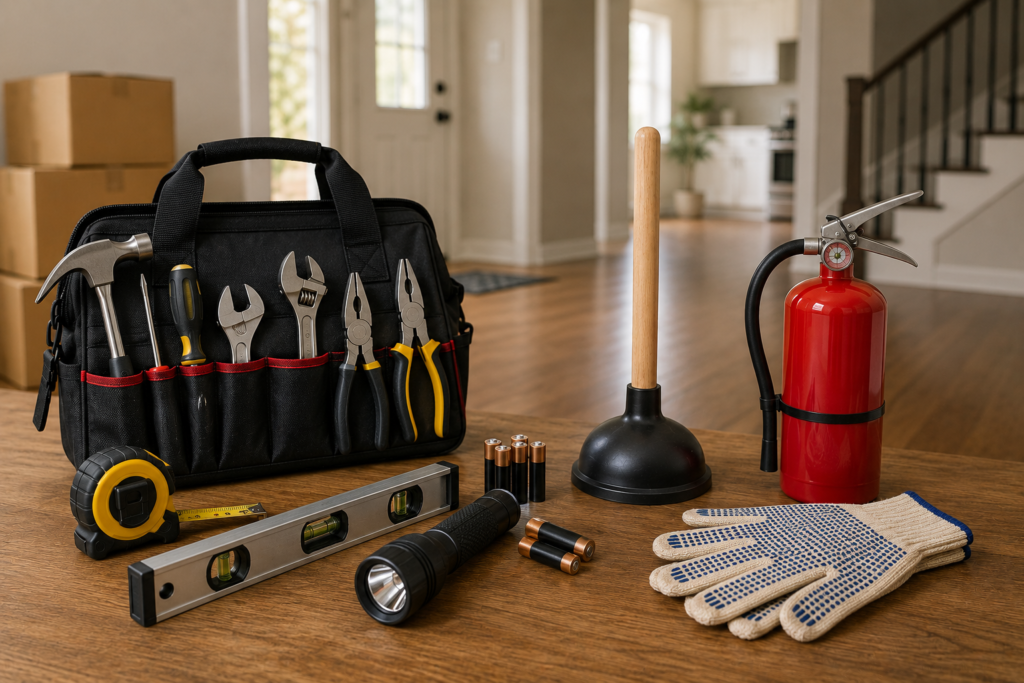
Have these ready on move-in day, since furniture assembly, hanging curtain rods, and small fixes tend to come up immediately:
- Hammer
- Screwdriver set (flathead and Phillips, multiple sizes)
- Adjustable wrench
- Tape measure
- Pliers (slip-joint and needle-nose)
- Utility knife
- Level
3- A Working Flashlight and Batteries
Power outages, dark closets, or checking behind appliances all come up faster than expected in a new home. Keep at least one reliable flashlight, ideally two, with fresh batteries stored nearby.
4- A Plunger
One of the most commonly needed emergency tools in any home, a plunger for at least one bathroom (and ideally a separate one for the kitchen sink) should be on hand before you actually need it at an inconvenient hour.
5- Fire Extinguisher
A basic multi-purpose (Class ABC) fire extinguisher, kept in or near the kitchen, is a genuine safety essential worth having in place from day one rather than added later.
Your First-Year Move-In Checklist
| Priority | Item | Why It Matters Early |
| Immediate | Basic hand tool kit | Furniture assembly, hanging items |
| Immediate | Flashlight + batteries | Power outages, dark spaces |
| Immediate | Plunger | Common emergency, needed without warning |
| Immediate | Fire extinguisher | Basic kitchen safety |
| Immediate | Knowledge of water/gas shutoffs, breaker box | Prevents small issues from escalating |
| First month | Cordless drill | Shelving, curtain rods, general assembly |
| First month | Stud finder | Safely hanging heavier items on walls |
| First few months | Adjustable pliers/wrench set | Minor plumbing fixture tightening |
| As needed | Ladder | Gutter checks, light fixture changes, high shelving |
| As needed | Specialty tools for specific projects | Only once a specific project requires them |
Tools Worth Adding in Your First Few Months
- Cordless Drill/Driver
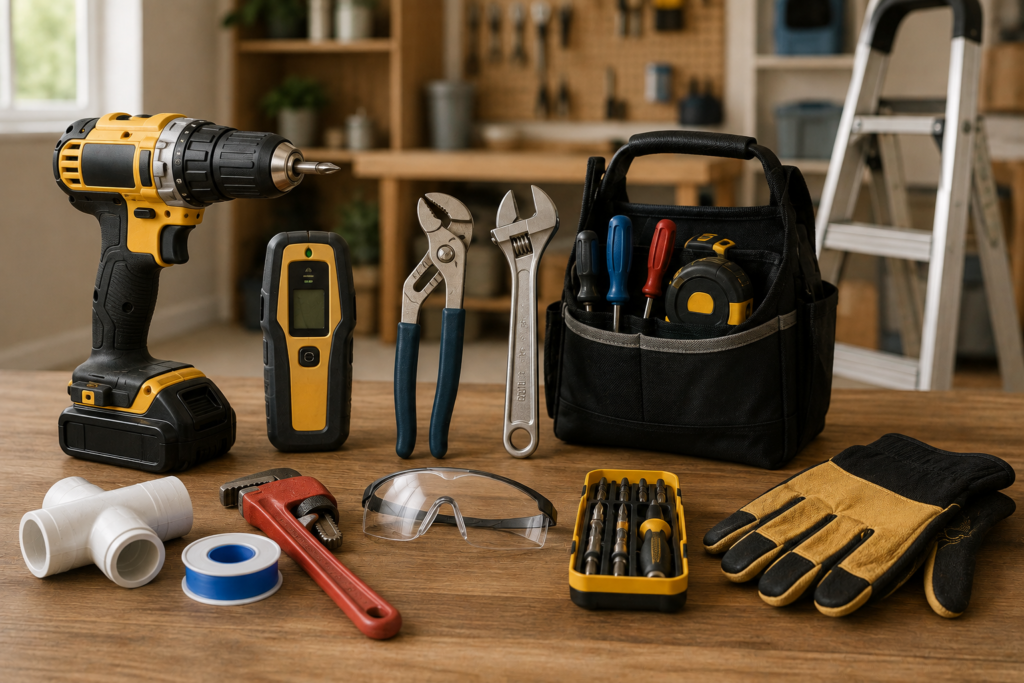
Once the initial move-in rush settles, a cordless drill becomes genuinely valuable for mounting shelves, curtain rods, and any furniture requiring more than a handful of screws. This is generally the first power tool worth investing in as a new homeowner.
- Stud Finder
Before hanging anything heavier than a lightweight picture frame, a stud finder helps you locate wall studs for secure mounting, preventing damage to both your wall and whatever you’re hanging.
- Basic Plumbing Tools
A pipe wrench or adjustable pliers designed for plumbing use helps with minor tasks like tightening a loose faucet connection or replacing a showerhead, common early homeowner tasks that don’t require calling a professional.
- Step Ladder
A sturdy step ladder becomes necessary sooner than most new homeowners expect, changing light bulbs in taller fixtures, checking smoke detectors, cleaning gutters, or simply reaching higher storage. A basic 4-to-6-foot step ladder covers most household needs.
- Extension Cord
A quality outdoor-rated extension cord is useful for both indoor projects requiring extra reach and any early outdoor work, holiday lighting, yard tools, or seasonal cleanup.
Home-Specific Emergency Tools
- Water Shutoff Wrench
Some main water shutoff valves, particularly older gate valves, can be stiff or difficult to turn by hand. A dedicated shutoff wrench (sometimes called a curb key or water meter key) makes this considerably easier during an actual emergency.
- Adjustable Wrench for Appliance Shutoffs
Many appliances, dishwashers, washing machines, water heaters, have individual shutoff valves. Keeping an adjustable wrench specifically accessible for this purpose (separate from your general toolkit if needed) can save valuable time during a leak.
- Duct Tape and Plastic Sheeting
While not glamorous, these two items solve an enormous range of temporary emergency fixes, a burst pipe drip, a cracked window, or a leaking hose, buying you time until a proper repair or professional visit.
Tools That Can Reasonably Wait
Not everything needs to be purchased in your first weeks as a homeowner. A few categories are genuinely fine to postpone:
- Circular saw or jigsaw: Wait until a specific carpentry or renovation project actually requires one
- Power sander: Useful for furniture refinishing or larger painting prep, but rarely an immediate need
- Full socket wrench set: Valuable for more involved mechanical projects, but not typically needed in the first months
- Specialty tile or flooring tools: Only worth purchasing once you’re actually planning that specific project
- Wet/dry shop vacuum: Genuinely useful over time, but rarely an urgent first-month purchase
Building Your Tool Collection on a Budget
- Prioritize Function Over Brand Name Initially
For your first hand tool kit, focus on covering the core functions rather than premium branding, since basic tasks like driving a screw or measuring a wall don’t require top-tier tools to perform reliably.
- Consider a Starter Kit for Hand Tools
A basic all-in-one hand tool kit can efficiently cover several essentials at once, often at better combined value than purchasing each hand tool individually, particularly useful for outfitting a first home’s tool collection quickly.
- Invest More in Your First Power Tool
Since a cordless drill will likely see frequent, ongoing use, it’s reasonable to spend a bit more here than on rarely used specialty items, prioritizing a reputable mid-range option over the absolute cheapest available model.
- Ask Before You Buy
If friends or family have tools they rarely use, particularly larger or specialty items like a ladder or circular saw, borrowing before buying is a genuinely practical way to confirm you’ll actually need a specific tool before committing to the purchase.
Where to Store Your Tools in a New Home
- Starting Small
A basic toolbox or tool bag is entirely sufficient for a first-year hand tool collection, requiring minimal dedicated storage space in a closet or under-stair area.
- Planning Ahead for Growth
If your garage or a dedicated storage area allows, consider your long-term storage needs early, a wall-mounted pegboard or small shelving unit, even if your current collection doesn’t yet require the extra space, since tool collections tend to grow steadily over the years of homeownership.
Common Mistakes New Homeowners Make
- Buying an extensive, expensive tool set upfront, rather than prioritizing genuinely immediate needs first
- Not locating water and electrical shutoffs before an emergency occurs, losing valuable time during an actual incident
- Skipping a plunger and fire extinguisher, two of the most commonly needed emergency items in any home
- Purchasing specialty power tools before a specific project requires them, leading to unused equipment and unnecessary early expense
- Underestimating ladder needs, discovering only when a light bulb needs changing or gutters need checking that this basic tool is missing
Conclusion
Building a practical tool collection as a first-time homeowner comes down to prioritizing genuine, immediate needs over an overwhelming upfront purchase. Start with a basic hand tool kit, a flashlight, a plunger, and knowledge of your home’s key shutoffs, then add a cordless drill and a few other practical items within your first few months as real needs become clear. Everything beyond this can reasonably wait, letting you spread out your tool investment over your first year rather than straining an already tight moving budget on day one.
Frequently Asked Questions
1- What tools should I have ready on move-in day?
A basic hand tool kit (hammer, screwdrivers, adjustable wrench, tape measure, pliers, utility knife), a flashlight with batteries, a plunger, and a fire extinguisher cover the most immediate needs.
2- Do I need a cordless drill as a first-time homeowner?
It’s not strictly essential for move-in day itself, but it becomes genuinely valuable within your first few months for shelving, curtain rods, and general furniture assembly, making it a reasonable early priority purchase.
3- Should I know where my water shutoff is before buying tools?
Yes, this is arguably more important than any specific tool purchase, since knowing this location before an emergency occurs can prevent significant water damage during an actual leak or burst pipe.
4- What is the most commonly needed emergency tool in a home?
A plunger is one of the most frequently needed emergency items, since clogged toilets and drains tend to happen without warning and at inconvenient times.
5- Can I wait to buy power tools like a circular saw?
Yes, tools like a circular saw, jigsaw, or power sander can reasonably wait until a specific project actually requires them, rather than being purchased as part of an initial move-in tool collection.
6- How much should I budget for tools as a first-time homeowner?
This varies based on brand and quality choices, but a solid core hand tool kit plus a cordless drill represents a moderate, reasonable investment that covers the vast majority of early homeowner needs without requiring a large upfront expense.
7- What should I do if I don’t have a specific tool during a home emergency?
For genuine emergencies, particularly involving water, electrical, or gas issues, knowing your shutoff locations matters more than having every specialty tool, and calling a professional remains the safest option for anything beyond basic, familiar repairs.