Plumbing systems rarely fail without warning. A slow drain, a small drip, a slight pressure change, these early signals show up well before a pipe actually bursts or a water heater fails outright, but most homeowners never build a routine for actually catching them. A proper plumbing maintenance checklist organized by how often each task actually needs attention, rather than a vague “check your plumbing sometimes” reminder, is what separates households that catch a $50 fix from those facing a $5,000 repair.
This guide breaks maintenance down into monthly, seasonal, and annual tasks, explains exactly what to look and listen for, and clarifies which tasks are genuinely safe to handle yourself versus when a slow drain or odd noise means it’s time to call a professional.
Plumbing Maintenance Checklist
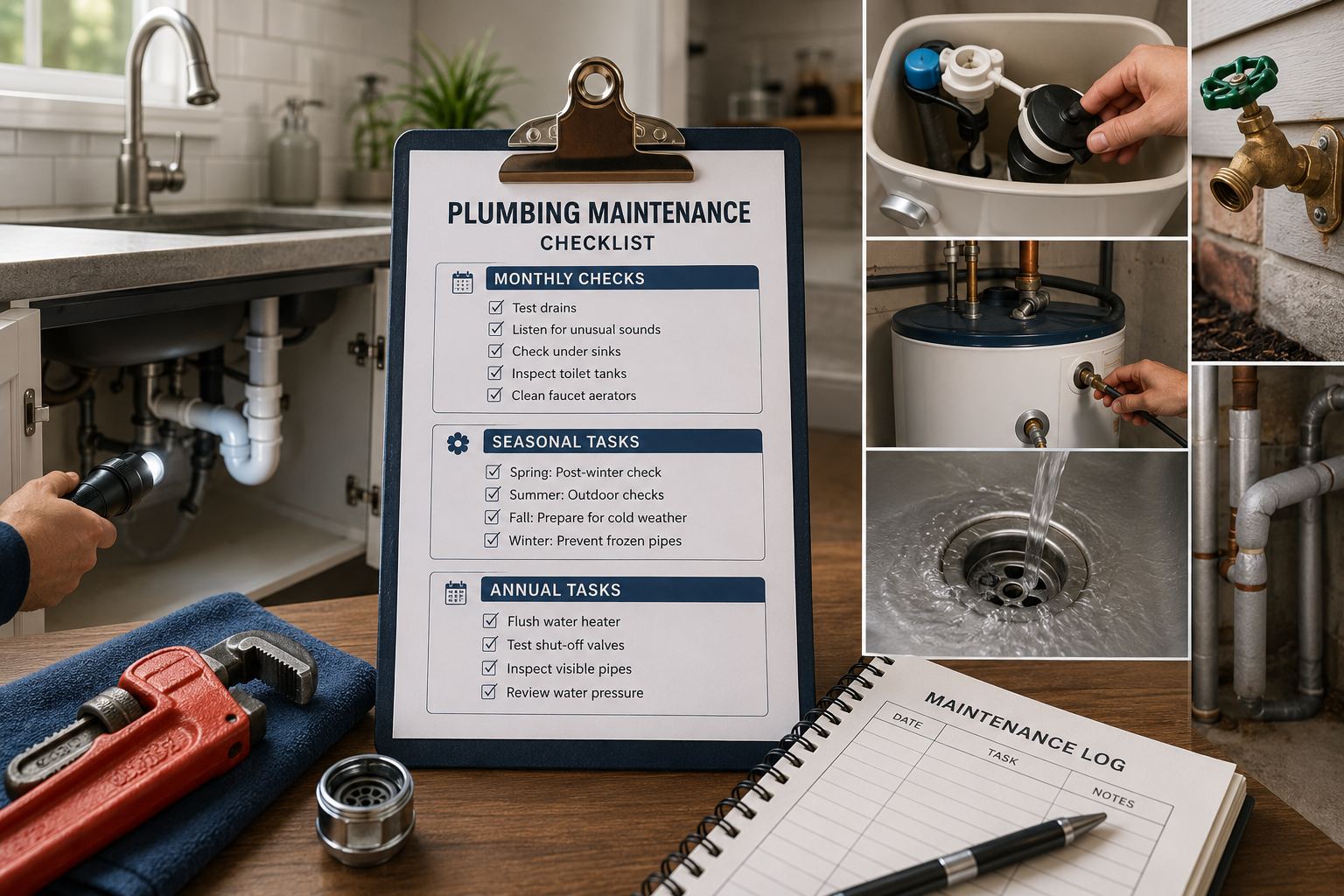
Effective plumbing maintenance isn’t a single big yearly project, it’s a layered routine: quick monthly checks for drips and slow drainage, seasonal tasks tied to temperature changes (particularly freeze protection in fall and winter, and post-freeze inspection in spring), and a handful of annual tasks like flushing your water heater and testing your main shutoff valve. Keeping a simple written log of what you checked and when, similar to how you’d track car maintenance, makes it far easier to notice when a problem is actually new versus something that’s been slowly developing for months.
Why Frequency-Based Maintenance Beats a Generic Yearly Checklist
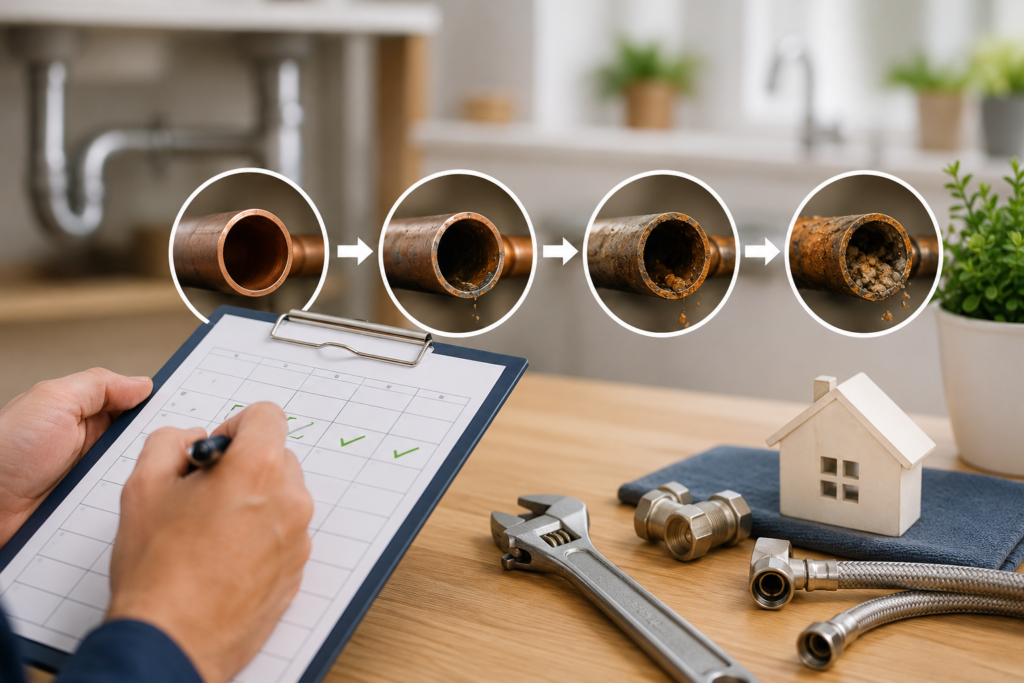
Most plumbing advice treats maintenance as either “seasonal” or “annual,” but that misses an important distinction: some problems (drips, slow drains, minor odors) develop and worsen over weeks, and catching them monthly prevents a small fix from becoming a bigger one. Other issues (freeze risk, water heater sediment buildup, shutoff valve seizing) are genuinely tied to either the calendar or a full year of wear. Organizing your routine by actual frequency, rather than lumping everything into one seasonal sweep, is what actually catches problems while they’re still cheap and easy to fix.
Monthly Plumbing Checks (5–10 Minutes)
Test Drainage Speed in Every Sink, Tub, and Shower
Run water briefly in each fixture and watch how quickly it drains. A drain that’s noticeably slower than it was last month, even if it’s not fully clogged, indicates accumulating buildup worth addressing now with a plunger or drain snake, before it becomes a full blockage.
Listen for Unusual Sounds
Since you can’t see most of your plumbing, your ears are one of your best diagnostic tools. Gurgling from a drain not currently in use, banging pipes (water hammer), or a faucet that hisses after being shut off can all indicate a developing issue worth investigating before it worsens.
Check Under Sinks for Moisture
A quick look under kitchen and bathroom sinks for dampness, staining, or a musty smell catches slow supply line or P-trap leaks long before they cause visible damage to cabinetry or flooring.
Inspect Toilet Tanks for Running Water
Lift the tank lid briefly and listen or watch for water continuing to trickle after a flush cycle completes, an early sign of a flapper or fill valve starting to fail, both inexpensive, straightforward fixes if caught early.
Clean Faucet Aerators and Showerheads
A quick monthly wipe-down, or an occasional vinegar soak in hard water areas, prevents the gradual mineral buildup that causes noticeably reduced water pressure at individual fixtures over time.
Seasonal Plumbing Tasks
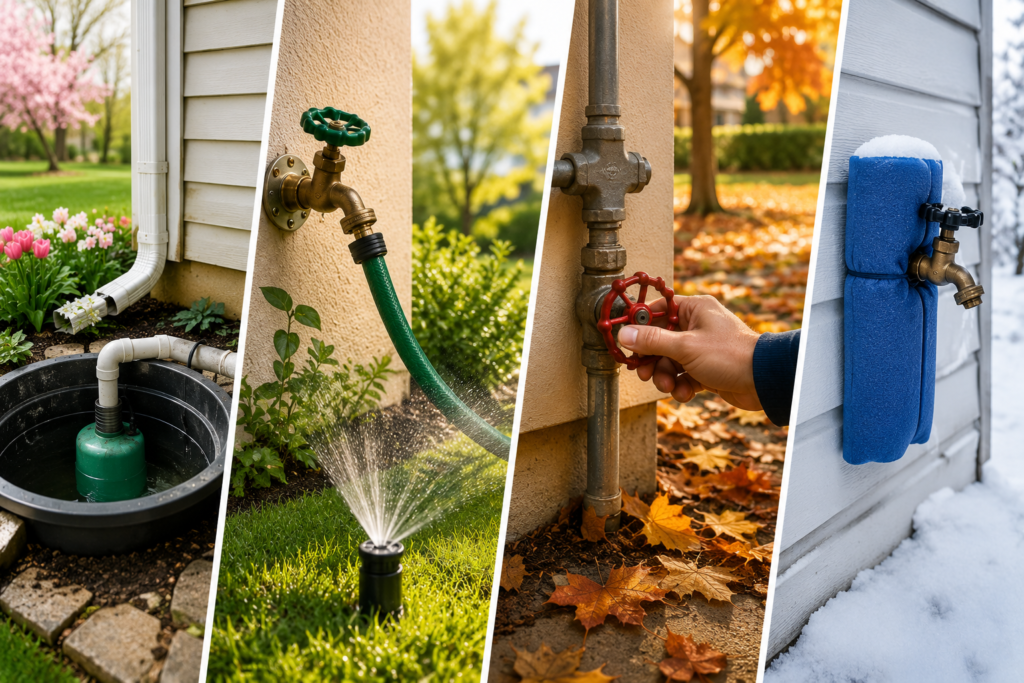
Spring: Post-Winter Recovery Check
Winter is genuinely hard on plumbing, pipes contract in cold weather and can develop small leaks or weak spots that only become apparent once temperatures rise and full water pressure returns. Spring is the right time to walk your home specifically looking for this kind of damage.
- Inspect all exposed pipes (basement, crawl space, garage) for visible cracks, drips, or corrosion that may have developed over winter
- Check outdoor faucets and hose bibs for leaks or damage before reconnecting hoses
- Clear gutters and downspouts, since poor drainage around your foundation can eventually affect basement plumbing and contribute to moisture problems
- Test your sump pump if you have one, since spring rain is when you’ll need it most and want to confirm it’s actually working before that first heavy storm
Summer: Outdoor System Checks
Summer brings heavier outdoor water use, irrigation, hoses, outdoor showers, making this the season to focus attention on exterior plumbing components that see the most seasonal wear.
- Check outdoor faucets, sprinkler heads, and irrigation lines for leaks, since these often go unnoticed under grass or landscaping until water bills spike
- If you have mature trees near your sewer line, watch for slow drainage, gurgling, or sewer odors, early signs of possible root intrusion that’s worth a camera inspection before it becomes a full blockage
- Remind household members and guests (summer often means more visitors) what should and shouldn’t go down drains or toilets, since usage patterns shift with more people in the house
Fall: Freeze Preparation
This is arguably the single most consequential season for plumbing maintenance in most of the country, since the prep work you do now directly determines whether your pipes survive the first hard freeze.
- Disconnect and drain all garden hoses, then store them indoors; a hose left connected can trap water that freezes and backs up into the connected spigot
- Insulate exposed pipes in unheated areas, garages, crawl spaces, and exterior walls, using foam pipe sleeves or heat tape in genuinely vulnerable spots
- Install insulated covers on outdoor faucets and, where available, shut off and drain any dedicated exterior shutoff valve before temperatures drop
- Schedule water heater servicing before winter demand increases, since a failing unit is far more disruptive to discover in December than in October
Winter: Active Freeze Protection
Once cold weather actually arrives, your job shifts from preparation to active monitoring, particularly during genuinely extreme cold snaps.
- Keep a consistent indoor temperature, even in rooms you don’t use often, since a cold, closed-off room is where hidden pipe freezes most commonly happen
- During extreme cold, let faucets connected to vulnerable exterior walls drip slightly, moving water is considerably more resistant to freezing than stagnant water sitting in a pipe
- Open cabinet doors under sinks located on exterior walls during severe cold snaps, allowing warmer household air to reach the pipes underneath
- Watch for any sign of reduced or no water flow at a specific fixture, an early indicator of a freeze starting to form before a pipe actually bursts
Annual Plumbing Tasks
- Flush Your Water Heater
Sediment naturally settles at the bottom of a tank water heater over time, reducing efficiency and shortening the unit’s overall lifespan. Draining and flushing the tank once a year (following your specific manufacturer’s instructions) clears this buildup and helps the unit run more efficiently.
- Test Your Main Water Shutoff Valve
Turn your main shutoff fully closed and then reopen it once a year, confirming it hasn’t seized or become difficult to operate. Discovering a stuck valve during an actual emergency, rather than during a routine test, is a genuinely preventable problem.
- Inspect and Test Your Sump Pump Thoroughly
Beyond the quick spring check, give your sump pump a more thorough annual test, pour water into the pit to confirm the float switch triggers properly and the pump removes water effectively, since a failed pump during a major storm can mean serious basement flooding.
- Check Water Pressure
Excessively high water pressure (generally above 80 psi) puts ongoing stress on pipes, fittings, and appliance connections, gradually shortening their lifespan. A simple pressure gauge, attached to an outdoor spigot, gives you a quick annual reading worth checking against normal residential ranges.
- Review and Update Your Maintenance Log
If you’re keeping a written record of what you’ve checked, fixed, or replaced throughout the year, an annual review helps you spot patterns, a drain that’s clogged three times this year, a valve that’s been sticking, that point to a deeper issue worth addressing directly rather than continuing to treat as isolated incidents.
Plumbing Maintenance Checklist at a Glance
| Frequency | Key Tasks |
| Monthly | Check drainage speed, listen for odd sounds, inspect under sinks, check toilet tanks, clean aerators |
| Spring | Inspect winter pipe damage, check outdoor faucets, clear gutters, test sump pump |
| Summer | Check irrigation/outdoor faucets, watch for sewer line root intrusion, remind household on drain use |
| Fall | Disconnect hoses, insulate exposed pipes, cover outdoor faucets, service water heater |
| Winter | Maintain indoor temperature, drip faucets during extreme cold, open cabinet doors on exterior walls |
| Annual | Flush water heater, test main shutoff valve, thoroughly test sump pump, check water pressure |
Keeping a Maintenance Log: Why It’s Worth the Effort
- What to Record
A simple log, even a basic notebook or spreadsheet, noting the date, what you checked, what you found, and any repairs made, turns scattered observations into a genuinely useful record over time.
- Why This Catches Problems Faster
A single slow drain might seem minor in isolation, but a log showing that same drain has been noted as “a bit slow” three months running reveals a developing trend you’d otherwise miss, letting you address it proactively rather than waiting for a full clog.
- Particularly Valuable for Older or Newly Purchased Homes
If you’ve recently moved into a home and don’t know its plumbing history, or you’re managing an older home where components are naturally aging, a maintenance log becomes especially valuable for tracking condition over time and informing decisions about eventual repairs or replacements.
DIY-Appropriate Tasks vs When to Call a Plumber
Safe to Handle Yourself
Clearing surface debris from sink stoppers, running hot water flushes through drains, cleaning faucet aerators, testing and operating shutoff valves, and visually inspecting exposed pipes are all genuinely manageable for most homeowners without specialized tools or training.
When to Call a Professional
Active leaks inside walls, recurring sewer odors, corroded supply lines, frequent drain backups despite regular maintenance, and any sign of foundation-related plumbing movement require professional diagnosis. Attempting complex repairs without proper tools or experience risks turning a manageable issue into significant water damage.
Signs You’ve Recently Moved Into a Home With Unknown Plumbing History
If you’ve just purchased an older home, or simply don’t know how well the previous owners maintained the plumbing, it’s worth scheduling a general inspection early rather than waiting for your first checklist cycle. Existing minor blockages, aging valves, or borderline water pressure issues often surface quickly once your household’s actual usage patterns settle in, and catching these early prevents them from compounding with your own routine wear.
Common Mistakes to Avoid
- Treating maintenance as a single annual event, missing the monthly early-warning signs that prevent small issues from becoming expensive ones
- Skipping fall freeze prep, then discovering vulnerable exposed pipes only after a hard freeze has already caused damage
- Ignoring recurring minor clogs, treating each one as an isolated incident rather than a pattern pointing to a deeper issue
- Never testing the main shutoff valve, only discovering it’s seized during an actual emergency
- Attempting complex repairs beyond DIY scope, risking a manageable problem turning into a costly emergency call
Conclusion
A genuinely effective plumbing maintenance checklist isn’t a once-a-year chore, it’s a layered habit built around how often different problems actually develop: quick monthly checks that catch drips and slow drains early, seasonal tasks tied to real weather risk, and annual deep checks like flushing your water heater and testing your main shutoff. Keeping even a simple written log of what you find along the way turns scattered observations into genuinely useful early warnings. Build this routine into your regular home care, and you’ll spend far less time dealing with plumbing emergencies and considerably more time simply not thinking about your pipes at all.
Frequently Asked Questions
1- How often should I check my home’s plumbing?
A quick monthly check for drips, slow drains, and unusual sounds, combined with seasonal tasks tied to temperature changes and a handful of annual tasks like flushing your water heater, covers the majority of what genuinely needs regular attention.
2- What’s the most important seasonal plumbing task?
Fall freeze preparation, disconnecting hoses, insulating exposed pipes, and covering outdoor faucets, is arguably the single most consequential seasonal task in most of the country, since it directly determines whether pipes survive the first hard freeze.
3- How do I know if a slow drain needs professional attention?
If a drain clogs repeatedly despite regular plunging or snaking, or if slow drainage affects multiple fixtures simultaneously, this pattern often indicates a deeper issue, like root intrusion or a larger blockage, worth a professional camera inspection.
4- Why should I keep a plumbing maintenance log?
A written record helps you spot patterns over time, a drain that’s been “a bit slow” for three months running is a trend worth addressing, something easy to miss if each observation exists only in memory rather than written down.
5- How often should I flush my water heater?
Once a year is a reasonable standard for most households, helping clear sediment buildup that reduces efficiency and shortens the unit’s overall lifespan.
6- Is it normal for water pressure to change slightly with the seasons?
Some fluctuation can occur, but a persistent, noticeable pressure drop, particularly if it develops gradually, is worth investigating rather than assuming it’s simply seasonal, since it could indicate mineral buildup or a developing leak.
7- What plumbing tasks should I never attempt myself?
Anything involving your main sewer line, active leaks inside walls, gas line connections, or significant repiping should go to a licensed plumber, both for safety reasons and because these issues often require professional diagnostic tools to properly resolve.