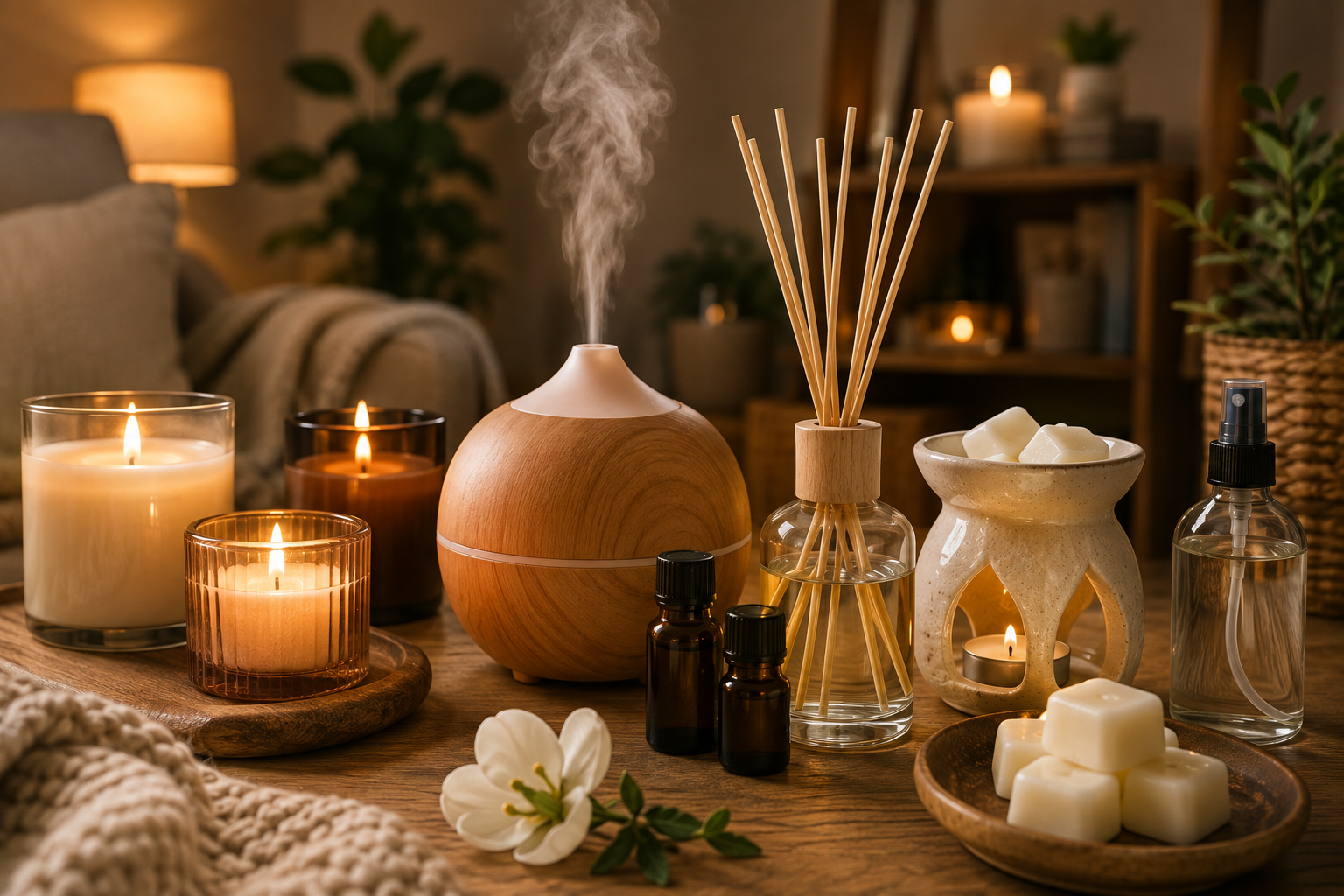
Walk into any home goods store and you’ll find an overwhelming wall of candles, diffusers, wax melts, and reed sticks, all promising to make your home smell better. But candles vs diffusers isn’t really a simple either-or choice, each fragrance method has genuine strengths depending on the room, your safety priorities, and how strong or subtle you want the scent to be.
This home fragrance guide breaks down exactly how candles, diffusers, and other scent methods actually work, what soy versus paraffin wax really means for your air quality, and how to choose the right option room by room, so you can shop with genuine confidence instead of guessing based on packaging alone.
Candles vs Diffusers
For strong, immediate fragrance and cozy ambiance, a well-made candle is hard to beat, though it comes with real fire safety considerations and shouldn’t run unattended. For consistent, low-maintenance scent without an open flame, particularly in high-traffic areas, offices, hallways, kids’ rooms, an essential oil diffuser is the safer, longer-lasting choice, though the scent throw is generally milder. If you want the strongest possible fragrance with zero flame risk, a plug-in warmer or wax melt system splits the difference, delivering candle-strength scent through gentle heat rather than combustion.
How Each Home Fragrance Method Actually Works
Scented Candles
A candle releases fragrance through combustion; the flame heats the wax, which melts and vaporizes the fragrance oil blended within it, carrying scent molecules into the air. This heat-driven process is precisely why candles tend to deliver the strongest, most immediate fragrance throw of any home scent method.
Essential Oil and Aroma Diffusers
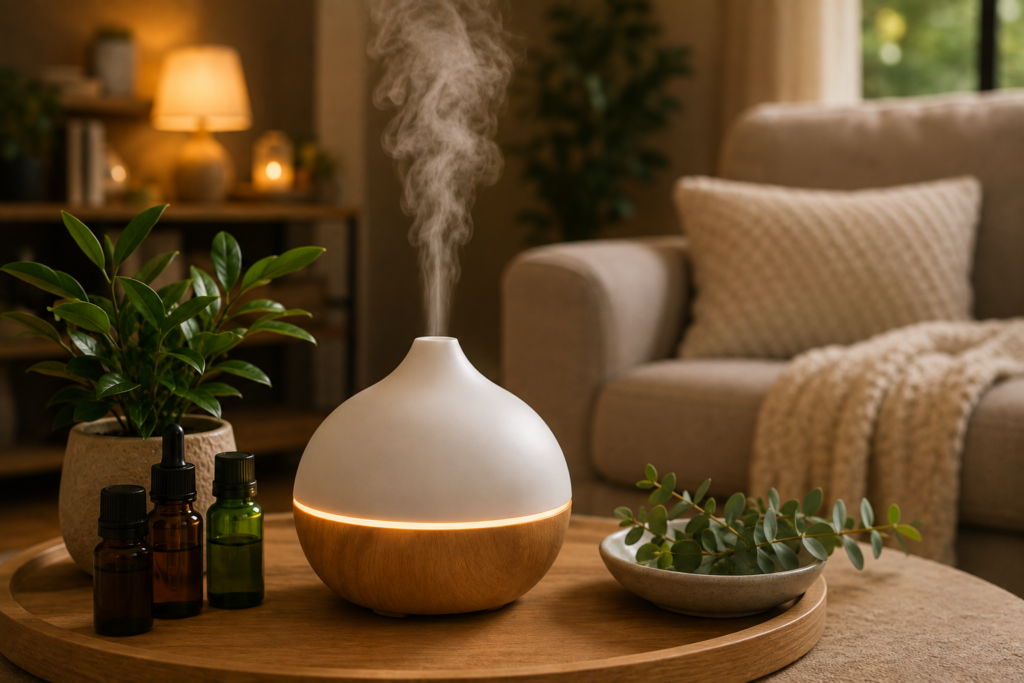
Diffusers disperse scent without any flame or heat-based combustion. Ultrasonic diffusers use water and high-frequency vibrations to break oil into a fine mist, while nebulizing diffusers atomize pure oil directly without water. Both methods release fragrance gradually and consistently over hours, without the fire risk a candle carries.
Reed Diffusers
A passive, flame-free option, reed diffusers use porous reed sticks standing in a container of scented oil, drawing the fragrance up through capillary action and releasing it slowly into the air. They require zero electricity or ongoing attention beyond occasionally flipping the reeds.
Wax Melts and Plug-In Warmers
Wax melts use the same fragranced wax as candles, but a small electric or tea-light warmer melts the wax gently from below, releasing fragrance through heat without an open flame. This gives you candle-strength scent throw with meaningfully lower fire risk than a traditional lit candle.
Room Sprays
The simplest option, room sprays deliver an immediate but short-lived burst of fragrance, useful for quick refreshes rather than sustained, all-day scent.
Home Fragrance Method Comparison
| Method | Scent Strength | Fire Risk | Maintenance | Best For |
| Candles | Strong | Yes (open flame) | Moderate (trimming, monitoring) | Cozy ambiance, attended rooms |
| Ultrasonic diffuser | Moderate | None | Low (refill water/oil) | Bedrooms, offices, all-day use |
| Nebulizing diffuser | Moderate to strong | None | Low | Concentrated, undiluted scent |
| Reed diffuser | Mild to moderate | None | Very low | Bathrooms, entryways, unattended spaces |
| Wax melt warmer | Strong | Low (heat, not flame) | Low | Strong scent without flame risk |
| Room spray | Strong, brief | None | None | Quick refresh before guests arrive |
Soy vs Paraffin Candles: What the Wax Actually Means
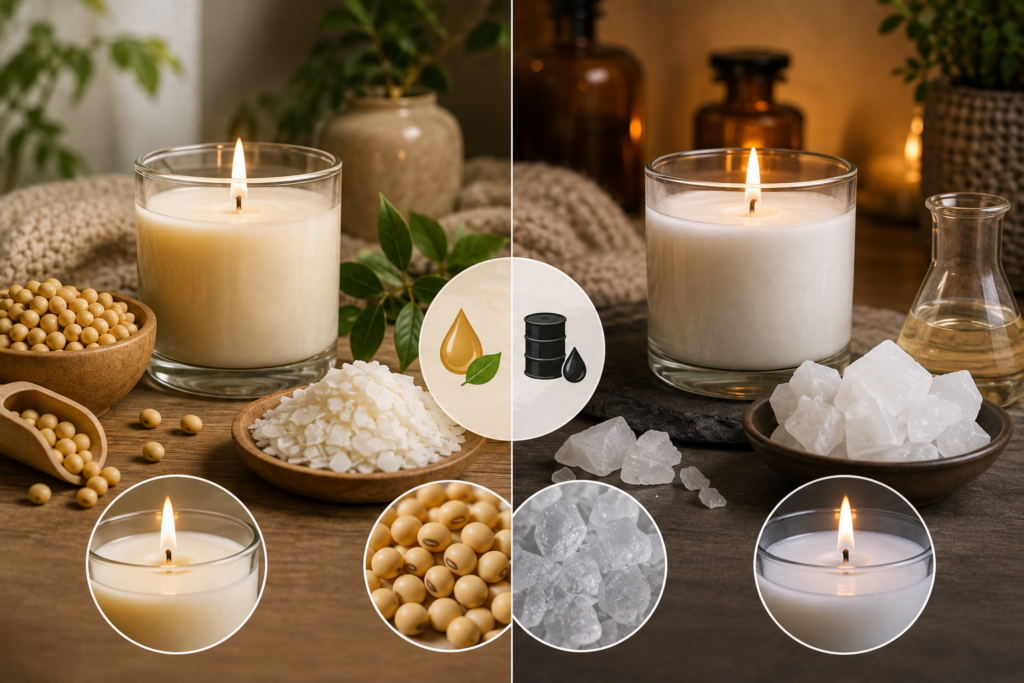
Paraffin Wax: The Traditional Standard
Paraffin is a petroleum byproduct that’s been the candle industry standard for well over a century, and it’s genuinely good at its job, its molecular structure holds a higher percentage of fragrance oil (often 9 to 12 percent by weight) and releases that fragrance more efficiently when heated, which is why paraffin candles typically deliver a noticeably stronger “hot throw,” the scent you smell while the candle is actually burning.
Soy Wax: The Popular Natural Alternative
Soy wax, made from hydrogenated soybean oil, became popular as a renewable, plant-based alternative to paraffin. It generally burns cleaner with less visible soot than paraffin, but its denser molecular structure holds fragrance oil less efficiently, typically 6 to 10 percent by weight, which means soy candles often produce a noticeably milder scent throw than a comparable paraffin candle.
Beeswax: The Naturally Clean-Burning Option
Beeswax candles are often considered among the cleanest-burning natural options, since pure beeswax has a simple composition that burns with minimal soot. Unscented or lightly scented beeswax candles are a common recommendation for anyone specifically prioritizing air quality over strong fragrance.
The Real Trade-Off
There’s a genuine trade-off here, not a clear winner: paraffin generally throws stronger scent but comes from a petroleum source and can produce more soot, while soy and beeswax burn cleaner but with a milder fragrance. Neither is universally “better,” it depends on whether scent strength or clean-burning properties matter more to you.
Understanding VOCs and What Actually Affects Air Quality
What VOCs Are
Volatile organic compounds (VOCs) are chemicals that evaporate easily at room temperature, and burning any material indoors, candles, incense, even natural options, releases some level of fine particulates and combustion byproducts into the air.
Why the Fragrance Oil Matters as Much as the Wax
Air quality concerns around candles come from three separate factors: the wax itself, the fragrance ingredients used, and whether the candle is burned via flame or gentle heat. A candle made with a cleaner wax but a low-quality, heavily synthetic fragrance oil can still release more VOCs than a well-formulated paraffin candle using higher-quality fragrance, so wax type alone doesn’t tell the whole story.
Essential Oils vs Synthetic Fragrance Oils
Essential oils are natural plant extracts, while fragrance oils are synthetically formulated to achieve consistent, often more complex scent profiles that essential oils alone can’t replicate. Diffusers using pure essential oils generally involve fewer synthetic additives than a candle using a fragrance oil blend, though quality and purity vary considerably by brand in both categories.
Look for IFRA Compliance
The International Fragrance Association (IFRA) sets safety usage guidelines for fragrance ingredients across different product categories. Reputable candle and fragrance oil brands typically disclose IFRA compliance, worth checking if ingredient safety is a top priority for your household.
Choosing the Right Fragrance for Each Room
Living Rooms
Candles work particularly well here, given how often the room is occupied and actively enjoyed, letting you take full advantage of both the fragrance and the ambiance a flame provides.
Bedrooms
An ultrasonic diffuser is often the safer, more practical choice for bedrooms, since it can run overnight without the fire risk a candle poses in a room where you’re asleep and unable to monitor it.
Bathrooms
Reed diffusers suit bathrooms particularly well, offering consistent, low-maintenance fragrance in a smaller, often humid space without needing electricity or an open flame near water sources.
Kitchens
Given cooking odors and grease exposure, a wax melt warmer or a diffuser positioned away from the stove works well, avoiding the added fire risk of an open flame near cooking activity.
Kids’ Rooms and Nurseries
Flame-free options, diffusers or reed diffusers, are strongly preferable here, both for fire safety and because a diluted, milder scent is generally more appropriate for a child’s sensitive space than a strongly fragranced candle.
Entryways and Hallways
These transitional, often unattended spaces benefit from reed diffusers or plug-in wax warmers, delivering a “welcome” scent without needing supervision the way a lit candle requires.
Candle Safety Essentials
- Never Leave a Candle Unattended
This is the single most important candle safety rule, and it’s worth repeating specifically because it’s the most commonly ignored one. Candles are a genuine, ongoing contributor to residential fires, and leaving one burning while you leave the room, or fall asleep, is where the real risk lies.
- Trim the Wick Before Each Burn
A wick trimmed to about a quarter inch burns more evenly, produces less soot, and reduces the risk of an overly large, unstable flame.
- Keep Candles Away From Flammable Materials
Curtains, bedding, paper, and anything else flammable should stay well clear of a burning candle’s flame radius, and candles should always sit on a stable, heat-resistant surface.
- Watch for Signs a Candle Is Burning Poorly
Excessive black soot, a flickering or unusually tall flame, or a strong smoky smell are all signs something’s off, uneven wick trimming, drafts, or a low-quality wax or fragrance blend, worth addressing rather than continuing to burn as-is.
Diffuser Safety and Maintenance
Clean Ultrasonic Diffusers Regularly
Mineral and oil residue can build up inside an ultrasonic diffuser’s water reservoir over time, worth cleaning periodically according to the manufacturer’s instructions to maintain performance and prevent buildup from affecting the mist output.
Dilute Essential Oils Appropriately
Pure essential oils are highly concentrated, and using undiluted oil in a diffuser not specifically designed for neat oil use (most ultrasonic models require some water dilution) can affect both the device and the intensity of the scent released.
Keep Diffusers Away From Pets and Curious Children
Essential oils, while natural, can still cause irritation or adverse reactions in pets and young children if concentrated exposure occurs, worth keeping diffusers in supervised or appropriately ventilated spaces rather than small, enclosed rooms with limited airflow.
Matching Fragrance Strength to Room Size
| Room Size | Recommended Method |
| Small (bathroom, closet) | Reed diffuser, small candle |
| Medium (bedroom, office) | Ultrasonic diffuser, medium candle |
| Large (living room, open-plan) | Multiple candles, wax warmer, or nebulizing diffuser |
Practical Buying Tips
- Match your fragrance method to how the room is actually used, flame-free options for bedrooms and unattended spaces, candles for rooms you’re actively enjoying
- Check for IFRA compliance and disclosed ingredient lists if fragrance safety is a top priority for your household
- Don’t assume “natural” wax automatically means stronger scent, soy and beeswax generally throw milder fragrance than paraffin
- Trim candle wicks before every burn and never leave a lit candle unattended, regardless of wax type
- Clean ultrasonic diffusers regularly to maintain performance and prevent mineral buildup
Common Mistakes to Avoid
- Leaving a candle burning unattended, the single most preventable cause of candle-related fires
- Assuming soy or beeswax candles will smell as strong as paraffin, then being disappointed by a milder scent throw
- Using undiluted essential oil in a diffuser not designed for neat oil, potentially affecting the device’s performance
- Placing a diffuser or wax warmer near curious pets or small children, without considering concentrated exposure risk
- Ignoring signs of poor candle burning, like excessive soot or a flickering flame, rather than trimming the wick or checking for drafts
Conclusion
There’s no single best answer in the candles vs diffusers debate, each home fragrance method genuinely suits different rooms, safety priorities, and scent preferences. Candles deliver the strongest ambiance and fragrance for actively occupied spaces, diffusers offer safer, longer-lasting scent for bedrooms and unattended rooms, and wax melts split the difference with candle-strength fragrance minus the open flame. Match your method to how each room in your home is actually used, pay attention to wax and fragrance quality rather than marketing claims alone, and you’ll fill your home with scent you can genuinely enjoy, safely.
Frequently Asked Questions
1- Are candles or diffusers better for air quality?
Diffusers generally involve less combustion-related particulate output than candles, since they don’t rely on an open flame, though overall air quality impact also depends heavily on the specific fragrance ingredients used in either product.
2- Is soy wax actually better than paraffin?
It depends on your priority. Soy generally burns cleaner with less soot, while paraffin typically delivers a stronger, more noticeable fragrance throw. Neither is universally superior, it’s a genuine trade-off.
3- Are essential oil diffusers safe to run all night?
Ultrasonic diffusers are generally considered safe for extended or overnight use, since they don’t involve an open flame, making them a common choice for bedrooms specifically for this reason.
4- What is scent throw?
Scent throw refers to how strongly and how far a fragrance spreads through a room, “hot throw” describes the scent while a candle burns, while “cold throw” refers to the scent an unlit candle emits sitting in a room.
5- How often should I clean my diffuser?
Regular cleaning, following the manufacturer’s specific instructions, helps prevent mineral and oil residue buildup that can affect an ultrasonic diffuser’s mist output over time.
6- What’s the safest home fragrance option for a nursery?
Flame-free options like a reed diffuser or a diluted ultrasonic diffuser are generally the safer choice for a nursery, avoiding both fire risk and the stronger fragrance concentration a candle can produce in a small space.
7- Do candles or wax melts smell stronger?
Both use similar fragranced wax, so scent strength is largely comparable, though wax melts release fragrance through gentle heat rather than an open flame, offering similar throw with meaningfully lower fire risk.