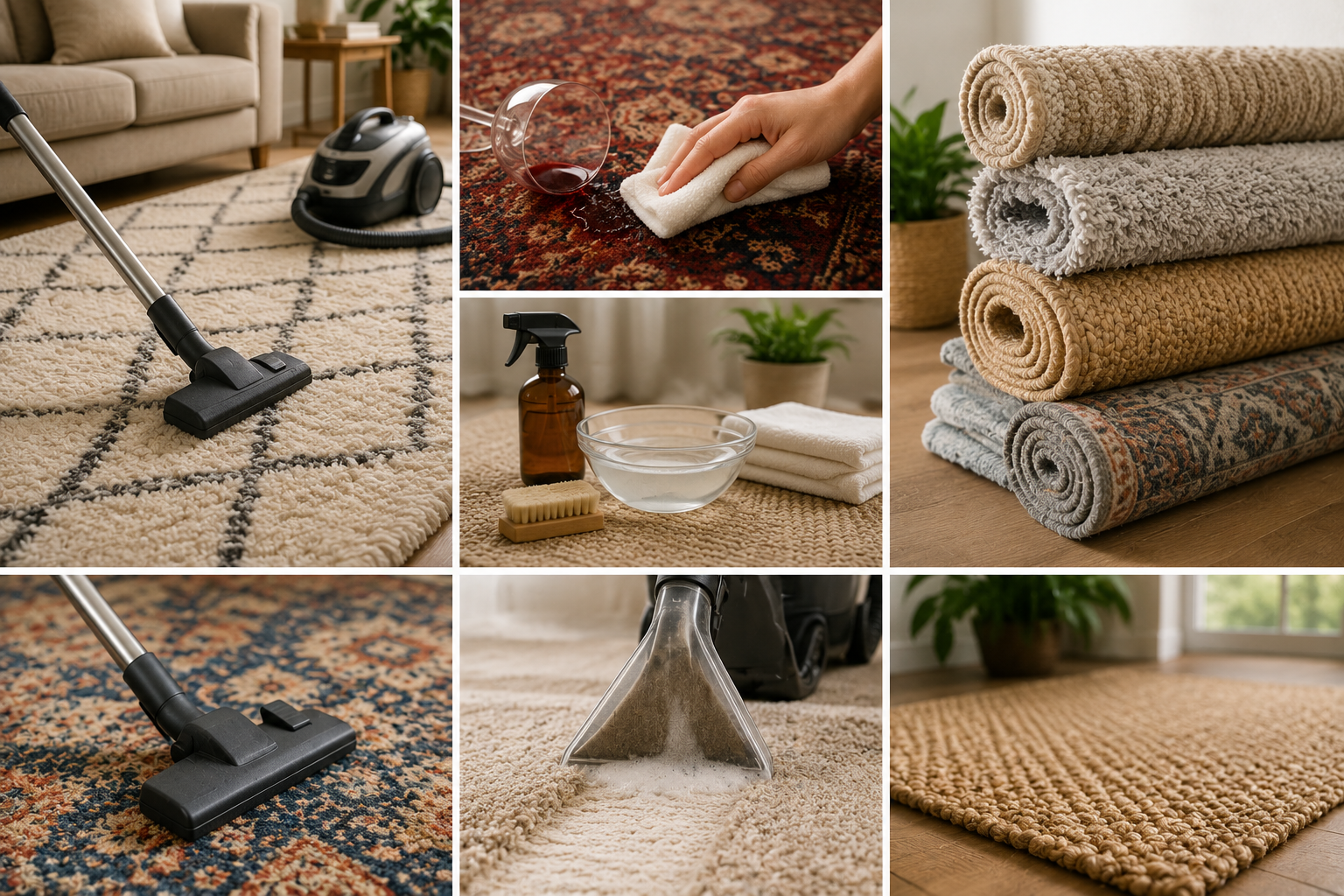
Not all rugs and carpets respond to the same cleaning method, and using the wrong approach can permanently damage even an expensive, well-made piece. A cleaning routine that works beautifully on a synthetic entryway rug can ruin a hand-knotted wool one in a single afternoon.
This guide covers how to clean and maintain rugs and carpets by material, the right cleaning frequency for each type, and practical tips for handling spills before they become permanent stains. We’ll also cover wool rug care, synthetic rug cleaning, and natural fiber maintenance for American homeowners wanting their floors to look great for years, not just weeks.
By the end, you’ll know exactly how to care for whatever’s on your floor, whether that’s a plush wool area rug, a budget-friendly synthetic runner, or a natural jute piece in your entryway.
Why Your Rug’s Material Should Decide Your Cleaning Method
Different rug materials react very differently to water, heat, friction, and cleaning products, which is why a one-size-fits-all cleaning approach often backfires. Wool, silk, cotton, viscose, jute, sisal, and synthetic fibers each have their own tolerances, and even two rugs that look similar can require completely different care if one is hand-knotted wool and the other is machine-made polyester.
Before reaching for any cleaning product, identifying your rug’s material is the single most important step, since the wrong method can permanently affect color, texture, and shape.
Caring for Wool Rugs the Right Way
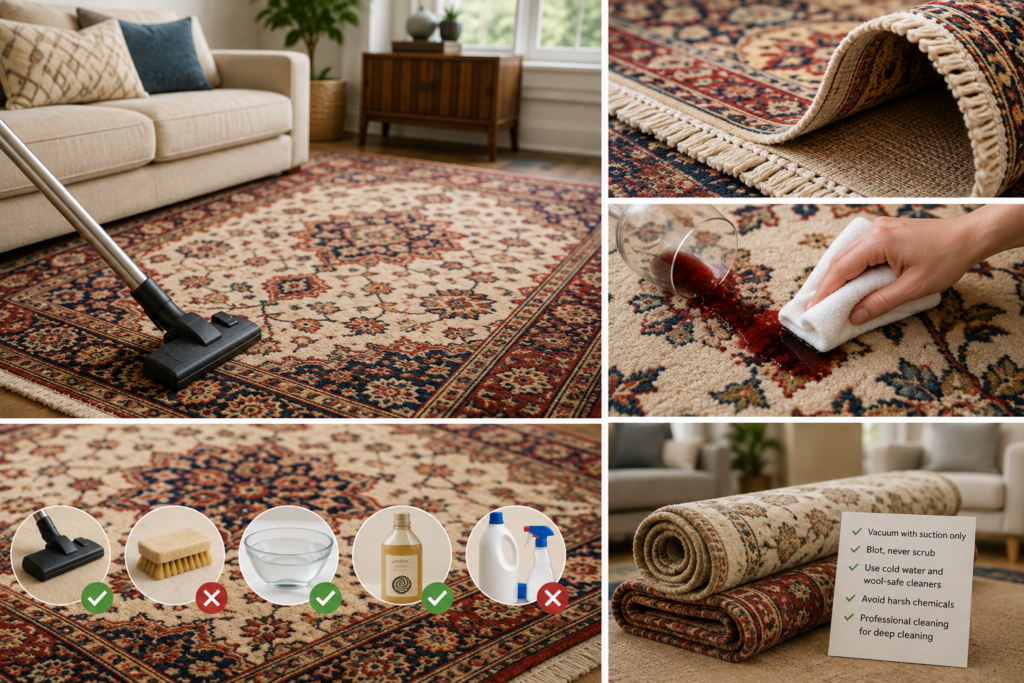
Wool remains one of the most popular rug materials thanks to its durability, natural stain resistance, and timeless appearance, but it does require gentler handling than synthetic alternatives.
Everyday Wool Rug Cleaning
Vacuum wool rugs regularly with the beater bar or brush roll turned off, since an aggressive brush can tangle and pull long fibers loose over time. Vacuuming in the direction of the pile, rather than against it, helps maintain the rug’s texture and appearance.
Handling Spills on Wool
Blot spills immediately with a clean, dry cloth rather than rubbing, which can push the stain deeper into the fibers. If a cleaning solution is needed, use cold water with a mild, wool-safe soap, since hot water can shrink and felt wool fibers permanently.
When to Call a Wool Rug Specialist
For anything beyond light surface dirt, a specialist is worth the investment, particularly for handmade or valuable wool rugs. Many handmade rugs use dyes that aren’t fully colorfast, and an improper wet cleaning attempt can cause colors to bleed permanently, turning a manageable stain into irreversible damage.
Wool rug care checklist:
- Vacuum with suction only, no beater bar
- Blot, never scrub, when addressing spills
- Use cold water and pH-neutral, wool-safe cleaners only
- Avoid bleach, ammonia, and hot water entirely
- Schedule professional cleaning for anything beyond light dirt
Cleaning Synthetic Rugs Without the Guesswork
Synthetic rugs, made from materials like nylon, polyester, polypropylene, and acrylic, are generally the most forgiving and budget-friendly option to maintain.
Routine Synthetic Rug Maintenance
Synthetic rugs handle regular vacuuming and spot-cleaning well without the fiber damage that natural materials risk, making weekly vacuuming a reasonable standard, especially in high-traffic areas. Attending to spills as soon as they happen keeps synthetic fibers looking their best over time.
Deeper Cleaning for Synthetic Rugs
Because synthetic fibers are more moisture-tolerant, many can be rinsed or gently steam-cleaned when needed, though it’s still worth checking the manufacturer’s care label first. If you’re renting a cleaning machine to handle this yourself, work in an area where excess moisture won’t damage your flooring, and use fans afterward, since rental machines don’t extract as much water as professional equipment, leaving rugs at risk of mildew if they don’t dry fully.
A Word of Caution on Artificial Silk
Rugs made from viscose, bamboo silk, or banana silk, often marketed as artificial silk, are considerably more delicate than typical synthetics. Even a plain water spill can permanently damage these wood-pulp-based fibers, so treat them more like a natural fiber rug than a standard synthetic when it comes to cleaning caution.
Why Jute and Sisal Rugs Need a Completely Different Approach
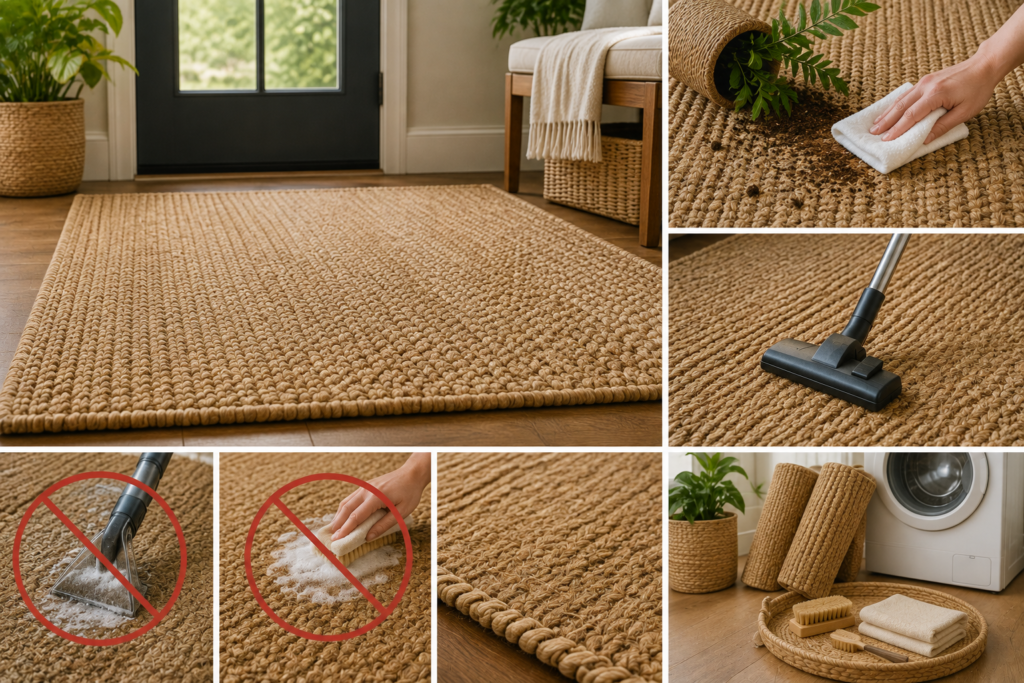
Natural plant-fiber rugs like jute and sisal bring warmth and texture to a room, but they’re also the most sensitive to moisture of any common rug material.
Never Soak a Jute or Sisal Rug
These fibers absorb moisture easily and can develop water stains, browning, mildew, or lingering odor if soaked. Steam cleaning, wet shampooing, or full washing should never be used on jute or sisal, since heavy wet cleaning can permanently change both color and texture.
The Right Way to Clean Jute and Sisal
Take the rug outdoors and shake it thoroughly, since jute’s open weave traps most dirt underneath rather than on the surface. A rug beater or broom helps loosen embedded dirt further, and letting the rug air out in sunlight for a short time acts as a natural deodorizer.
For regular maintenance, vacuum on the lowest suction setting with the beater bar disengaged, working in the direction the fibers are woven. For deeper cleaning, a dry rug shampoo or baking soda sprinkled on the surface, left to sit, then vacuumed away, handles embedded dirt without introducing moisture.
Spot Cleaning Jute and Sisal Spills
Blot spills immediately with a white microfiber cloth, and for solid spills, gently scrape away excess with a dull edge like a spoon before blotting the remaining residue. Never rub a stain on jute or sisal, since this pushes dirt deeper into the fibers rather than lifting it out.
Comparing Rug Materials and Their Care Needs
| Material | Water Tolerance | Vacuum Setting | Best Cleaning Method |
| Wool | Low, cold water only | Suction only, no beater bar | Blot spills, professional deep clean |
| Synthetic | High, moisture-tolerant | Standard, weekly vacuuming fine | Rinse or gentle steam clean as needed |
| Jute/Sisal | Very low, avoid moisture | Lowest suction, no beater bar | Dry shampoo, shake, sun exposure |
| Viscose/Artificial Silk | Very low, water-sensitive | Suction only | Professional cleaning strongly recommended |
How Often Should You Really Vacuum and Deep Clean?
Cleaning frequency isn’t one-size-fits-all either, and matching your routine to both material and household traffic makes a genuine difference in how long a rug lasts.
- Weekly vacuuming is a reasonable baseline for most rugs, with more frequent attention needed in high-traffic areas like entryways and hallways.
- Rotating your rug every six to twelve months helps distribute foot traffic and sunlight exposure evenly, preventing one section from fading or flattening faster than the rest.
- Professional deep cleaning every one to two years resets the pile and lifts embedded grit that regular vacuuming simply can’t reach, particularly important for larger rugs and wool pieces.
- Shaking out smaller rugs occasionally outdoors knocks loose the deep grit that accumulates even with regular vacuuming.
The Spill Response That Actually Saves Your Rug
How you respond in the first few minutes after a spill matters more than almost any other cleaning step.
- Blot immediately: Press a clean, white cloth or paper towel straight down onto the spill to absorb liquid, rather than rubbing, which spreads the stain and pushes it deeper into the fibers.
- Scrape solids first: For solid spills, use a dull edge like a spoon or spatula to lift away excess material before blotting any remaining residue.
- Test any cleaning solution first: Apply a small amount in a hidden area of the rug before treating the visible stain, since some fibers and dyes react unpredictably to cleaning products.
- Match the solution to the material: A cleaning approach that works well for synthetic rugs can damage silk, viscose, jute, or hand-knotted wool, so always confirm compatibility before applying anything.
The Single Best Upgrade for Rug Longevity
Beyond cleaning technique, one simple addition meaningfully extends any rug’s lifespan regardless of material.
A quality rug pad keeps the rug from sliding, which is both a safety benefit and a practical one, while also cushioning the pile and reducing crushing from foot traffic. It also allows airflow underneath the rug and prevents it from grinding directly against your flooring, both of which contribute to a longer usable life.
With gentle vacuuming, prompt spill response, regular rotation, and a good pad underneath, a quality rug can realistically last ten to twenty years or more in good condition.
When Machine Washing Is (and Isn’t) an Option
It’s worth clarifying upfront which rugs can safely go into a washing machine, since getting this wrong can cause irreversible damage.
Only rugs specifically labeled as machine washable, typically small synthetic or cotton pieces, should go into a washing machine, and even then only on a cold, gentle cycle, laid flat to dry afterward. Wool rugs, natural fiber rugs, and any handmade piece should never be machine washed under any circumstances, since the agitation and heat involved can shrink, felt, or otherwise permanently damage these more delicate materials.
Common Rug Cleaning Mistakes to Avoid
- Using the wrong water temperature: Hot water can shrink and felt wool permanently, so cold water is the safer default across most natural fibers.
- Rubbing instead of blotting: This is one of the most common mistakes, and it consistently makes stains worse by working them deeper into the fibers.
- Soaking natural fiber rugs: Jute, sisal, and similar materials rarely recover fully once genuinely soaked, making prevention far more effective than any after-the-fact fix.
- Skipping the patch test: Applying a new cleaning product directly to a visible stain without testing it first risks discoloration or fiber damage in a spot you’ll see every day.
- Using a beater bar on delicate rugs: This aggressive vacuum setting tangles and pulls fibers on wool, shag, and natural fiber rugs, causing damage that accumulates gradually over time.
Choosing a Rug Cleaner or Product for Your Home
If you’re shopping for cleaning products to keep on hand, a few practical considerations help you choose wisely rather than grabbing whatever’s on the nearest shelf.
- Look for wool-safe or pH-neutral labeling: Products specifically tested and approved for wool are the safer choice for any natural fiber rug, since standard carpet cleaners can be too harsh.
- Avoid silicone-based stain-repellent treatments: These can actually accelerate soiling over time rather than protecting the rug, making them worth skipping regardless of material.
- Keep a dedicated dry shampoo on hand for natural fibers: A baking-soda-based or dry rug shampoo product handles jute and sisal cleaning without introducing the moisture these materials can’t tolerate.
- Choose a mild dish detergent as a safe general option: For synthetic rugs specifically, a small amount of mild dish detergent mixed with warm water is often sufficient for routine spot cleaning without needing a specialized product.
- Save receipts and care labels: Keeping track of your rug’s specific care instructions, particularly for handmade or higher-value pieces, makes it much easier to communicate accurately with a professional cleaner later if needed.
Match Your Cleaning Method to Your Material
Caring for rugs and carpets well comes down to one core principle: your cleaning method should always match your specific material, not the other way around. Wool needs gentle, cold-water care and professional attention for anything beyond light dirt, synthetic rugs tolerate more frequent and vigorous cleaning, and jute or sisal rugs need to stay away from moisture entirely. Add a quality rug pad, prompt spill response, and periodic professional deep cleaning to the mix, and whatever’s on your floor, wool, synthetic, or natural fiber, has a genuinely good chance of looking great for many years to come.
Frequently Asked Questions
1- How often should I professionally clean my rug?
Most rugs benefit from professional deep cleaning every one to two years, though larger, high-traffic, or wool rugs may need this more frequently.
2- Can I steam clean a wool rug myself?
It’s generally not recommended for loose wool rugs, since improper steam cleaning can damage the fibers. Truck-mounted steam extraction is sometimes appropriate for wall-to-wall wool carpet installations specifically, but this should be handled by a professional experienced with wool.
3- Is it safe to get my jute rug wet?
No, jute and sisal rugs should never be soaked or steam cleaned, since these fibers absorb moisture easily and can develop permanent water stains, mildew, or odor.
4- What’s the safest way to remove a stain from any rug?
Blot immediately with a clean cloth, test any cleaning solution in a hidden area first, and match your cleaning method to your rug’s specific material before proceeding.
5- Do synthetic rugs really need less care than natural fiber rugs?
Generally yes, synthetic rugs are more moisture-tolerant and can handle more frequent vacuuming and spot-cleaning without the same risk of damage that natural fibers face.
6- How can I make my rug last longer overall?
Using a quality rug pad, rotating the rug periodically, vacuuming appropriately for its material, and responding quickly to spills are the most effective ways to extend a rug’s usable life.