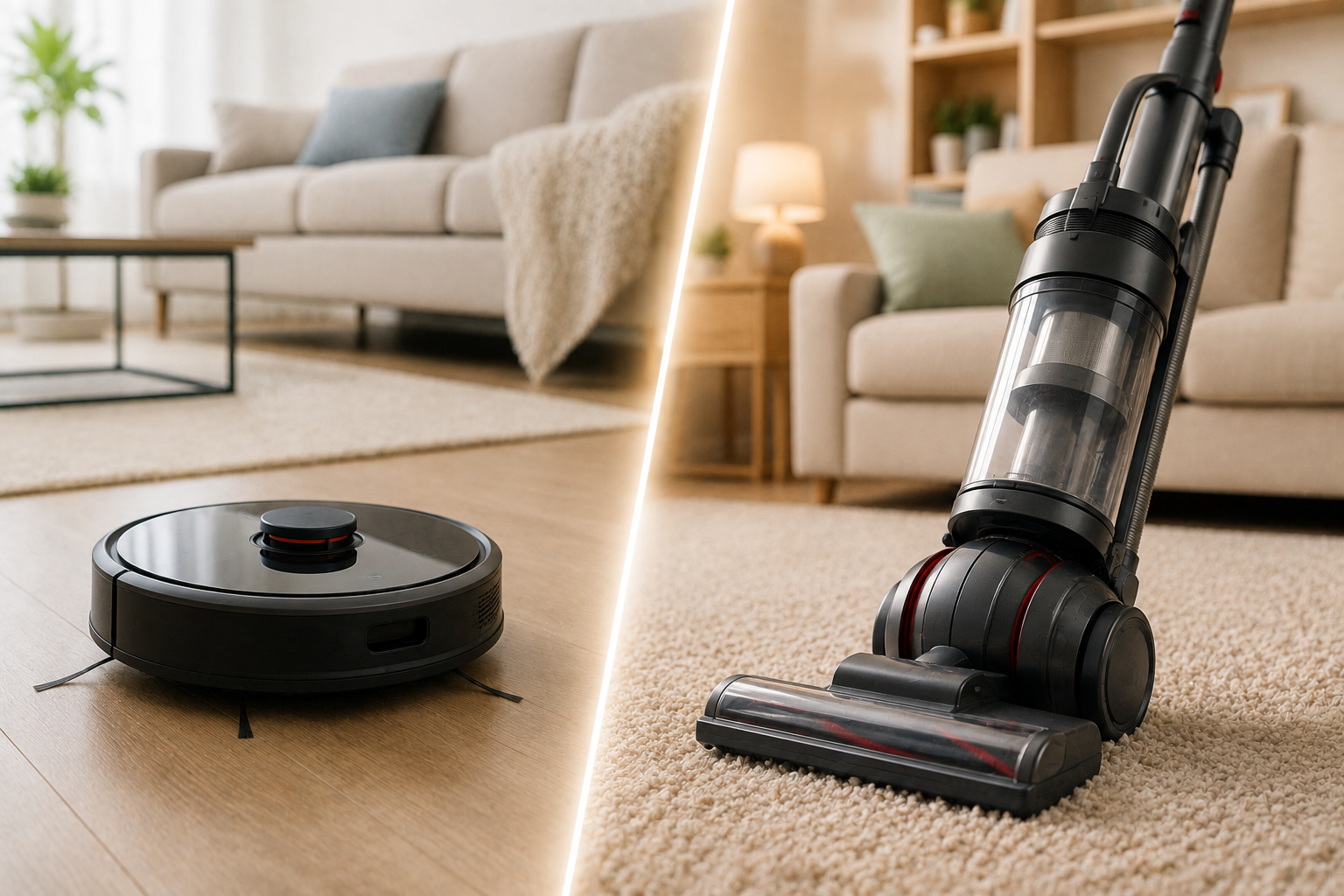
The promise of a robot vacuum is genuinely appealing, floors that clean themselves while you’re at work, asleep, or simply doing something better with your time. But robot vacuum vs traditional vacuum isn’t really a competition with one clear winner, it’s a question of what job you actually need done, since these two tools solve fundamentally different cleaning problems, one built for daily, hands-off maintenance, the other built for genuine, deep, on-demand cleaning power.
This guide breaks down exactly where each vacuum type genuinely excels, how suction power actually compares, which one handles pet hair better, and why most homeowners who own both eventually find they need each one for a different reason, rather than replacing one with the other entirely.
Robot Vacuum vs Traditional Vacuum
Robot vacuums win on consistency and convenience, running daily on a schedule to prevent dirt, dust, and pet hair from ever accumulating to a noticeable level, without you lifting a finger. Traditional vacuums win on raw cleaning power, deeper carpet extraction, larger debris capacity, and the ability to genuinely tackle heavy messes, thick carpet piles, or major shedding events that would overwhelm a robot. For most households, particularly those with pets or carpeted floors, the honest answer isn’t choosing one over the other, it’s using a robot vacuum for daily maintenance and a traditional vacuum for periodic deep cleaning, since Consumer Reports and cleaning experts consistently note that a robot handling daily upkeep, paired with weekly or biweekly deep cleaning from a traditional vacuum, delivers meaningfully better results than either tool working alone.
Suction Power: The Number That Actually Matters
Understanding Pascals (Pa)
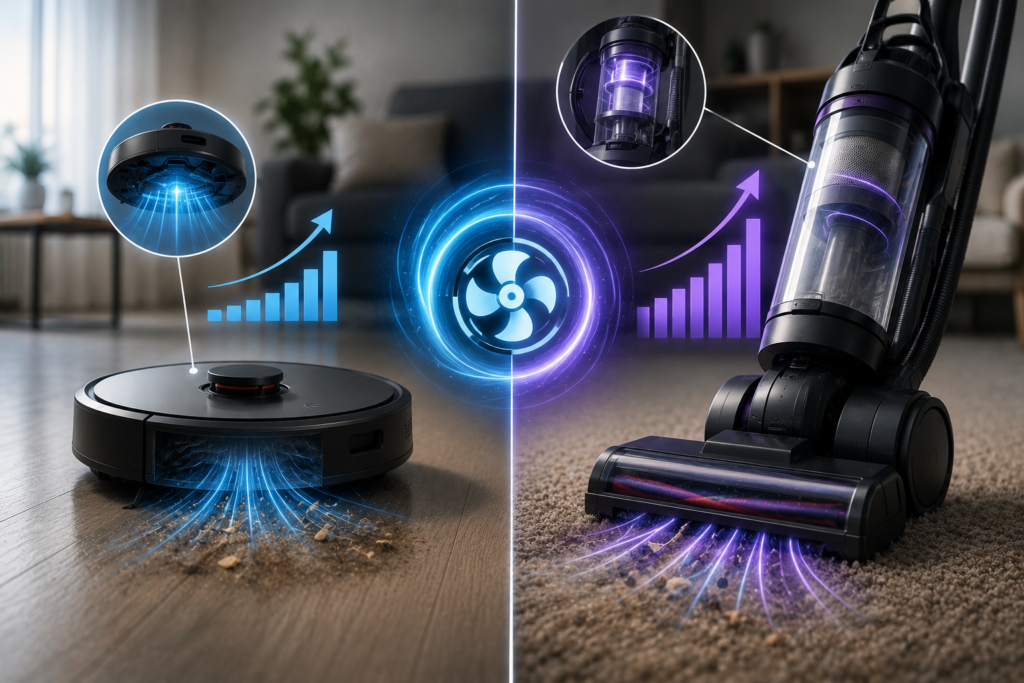
Robot vacuum suction is measured in Pascals (Pa), and this number varies enormously across the market. The average robot vacuum delivers somewhere between 2,000 and 3,000 Pa, while premium models have pushed considerably higher, some flagship units now reach 12,000 Pa, with a handful of top-tier options claiming as much as 22,000 Pa.
Why This Range Matters So Much
For hard floors, even a modest 1,500 Pa is generally sufficient to pick up dust, crumbs, and loose debris effectively. Carpets are a genuinely different challenge, since lifting embedded dirt and pet hair out of dense fibers requires considerably more force, most experts recommend at least 2,500 Pa for carpets with any real amount of embedded debris, and heavy shedders or thick pile carpets benefit from suction well above that baseline.
How Traditional Vacuums Compare
Traditional upright and canister vacuums generally deliver considerably more consistent, sustained suction across an entire cleaning session than even the most powerful robot vacuums, since they’re not constrained by the same battery, size, and weight limitations that shape robot vacuum design. This is precisely why a traditional vacuum still handles deep, embedded dirt and thick carpet piles more effectively overall.
Robot vs Traditional: Suction and Cleaning Power Compared
| Factor | Robot Vacuum | Traditional Vacuum |
| Typical suction | 2,000–12,000+ Pa (varies widely by model) | Generally higher and more sustained throughout use |
| Best surface | Hard floors, low-to-mid pile carpet | All surfaces, including thick pile and deep-set dirt |
| Deep carpet cleaning | Limited, even at high Pa ratings | Strong, purpose-built for embedded debris |
| Consistency | Runs daily, prevents buildup | Reactive, used as needed |
| Bin/bag capacity | Small (unless self-emptying dock included) | Larger, holds more debris per session |
Where Robot Vacuums Genuinely Win
Consistency Beats Raw Power for Everyday Maintenance
One of the most consistently repeated findings from cleaning experts and testing organizations is that cleaning frequency matters more than raw cleaning power for keeping floors genuinely tidy day to day. Traditional vacuuming is fundamentally reactive, you clean up after mess accumulates, while a robot vacuum is proactive, running daily and never letting dirt or hair build up to a noticeable level in the first place.
Edge and Under-Furniture Coverage
Robot vacuums, with their low-profile design, genuinely excel at reaching under sofas, beds, and other furniture where dust and pet hair tend to drift and accumulate, spaces a bulkier traditional vacuum often can’t access at all without moving furniture first.
Reducing Airborne Allergens Over Time
Because robot vacuums remove hair and dust before it has a chance to accumulate, running them daily can meaningfully reduce airborne allergen levels in a home over time, a genuine advantage for allergy-sensitive households compared to periodic deep cleaning alone.
Genuine Time Savings
For busy households, the core appeal remains simple: a robot vacuum handles a real chore automatically, freeing up time that would otherwise go toward regular vacuuming, letting you reserve your own effort for less frequent, deeper cleaning sessions instead.
Where Traditional Vacuums Still Win
Thick Carpets and Deeply Embedded Dirt
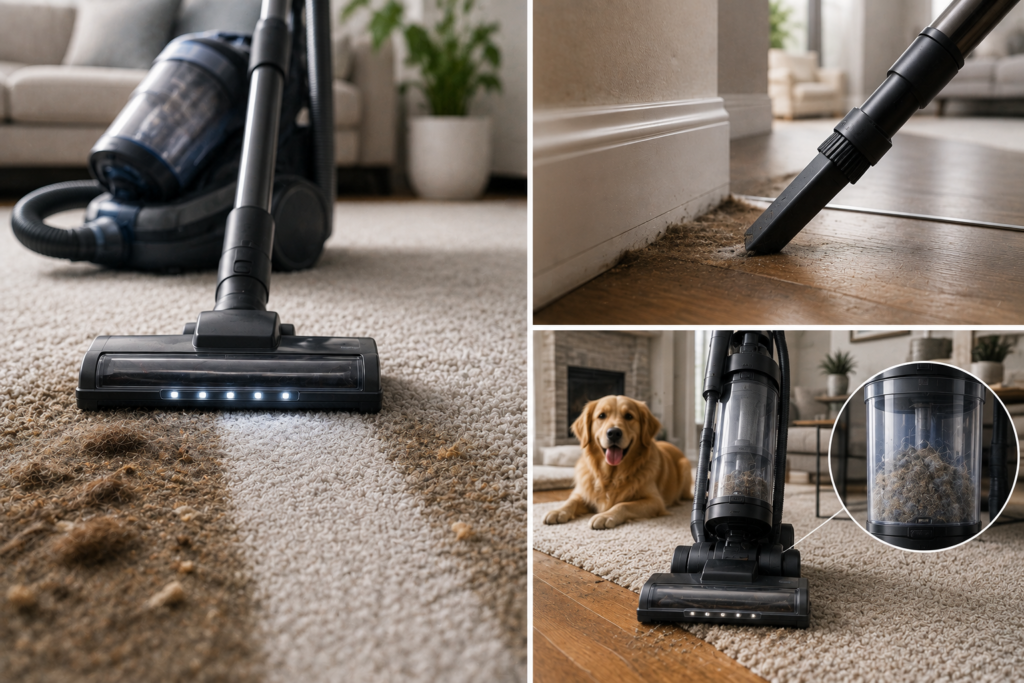
Despite genuine improvements in robot vacuum suction technology, embedded dirt and pet hair in dense, thick pile carpets remains a real challenge for robots, manual vacuuming or periodic deep cleaning is still generally necessary to fully address this, even in homes running a high-end robot daily.
Stairs Remain a Robot Vacuum Blind Spot
Robot vacuums genuinely cannot clean stairs, this remains a fundamental limitation of the entire category regardless of price point, meaning any home with stairs needs a traditional vacuum (or at minimum a handheld unit) for that specific task no matter how capable the robot vacuum otherwise is.
Heavy Shedding and High-Volume Messes
During heavy seasonal shedding periods for pet owners, or after a genuinely messy event, the sheer volume of debris can overwhelm a robot vacuum’s small onboard capacity and suction limits, situations where a traditional vacuum’s larger bin and stronger, sustained suction handle the job considerably more effectively.
Furniture and Upholstery Cleaning
Traditional vacuums, particularly with the right attachments, handle upholstery, curtains, and other non-floor surfaces that robot vacuums simply aren’t designed to reach at all.
The Pet Hair Question: What Actually Works
Why Pet Hair Is a Uniquely Difficult Challenge
Pet hair behaves differently from ordinary dust and dirt, it clings to surfaces, carries a static charge that makes it harder to lift, and embeds itself deep within carpet fibers in a way that regular vacuuming can genuinely struggle to fully remove.
What Makes a Robot Vacuum Genuinely Good at Pet Hair
The strongest pet-hair-capable robot vacuums combine strong suction (generally 2,500 Pa or higher for carpet use), rubber roller brushes rather than traditional bristle brush rolls (bristle brushes tend to tangle badly with long pet hair, while rubber rollers resist this considerably better), and either a large onboard bin or a self-emptying charging dock, since loose pet hair fills a small robot bin surprisingly fast.
The Honest Limitation Even Good Robots Have
Even genuinely capable pet-hair robot vacuums aren’t a full substitute for manual vacuuming, they significantly reduce visible pet hair through daily consistency, but thick, dense carpet fibers and heavy seasonal shedding periods still generally require periodic deep cleaning with a traditional vacuum to fully address.
Pet Hair Vacuum Feature Checklist
| Feature | Why It Matters |
| 2,500+ Pa suction (for carpet) | Lifts embedded hair from dense fibers |
| Rubber roller brushes | Resists hair tangling far better than bristle brushes |
| Large bin or self-empty dock | Prevents constant manual emptying with heavy shedding |
| Multi-surface adaptability | Transitions cleanly between hardwood and carpet |
| HEPA-grade filtration | Traps fine allergens rather than recirculating them |
Cost Comparison: What You’re Actually Paying For
Robot Vacuums Involve More Upfront Investment for Convenience
Quality robot vacuums, particularly those with strong suction, smart mapping, and self-emptying docks, generally represent a higher upfront cost than a comparable traditional vacuum, since you’re paying for automation, navigation technology, and genuine hands-off convenience on top of raw cleaning capability.
Traditional Vacuums Offer More Cleaning Power Per Dollar
For pure cleaning performance, particularly on carpets, a traditional vacuum at a comparable price point generally delivers stronger, more consistent suction than a robot vacuum in the same price range, since the robot’s price also covers navigation sensors, batteries, and automation hardware that don’t directly contribute to raw suction power.
Factor In Maintenance Costs for Both
Both vacuum types have ongoing costs worth considering, robot vacuums need periodic brush roll cleaning, filter replacement, and eventually battery replacement, while traditional vacuums need bag replacement (for bagged models), filter changes, and occasional belt replacement.
Which Type Fits Your Household?
Choose a Robot Vacuum If:
- You want consistent, hands-off daily maintenance without thinking about it
- Your home is primarily hard flooring or low-to-mid pile carpet
- You have significant under-furniture space where dust and pet hair tend to accumulate
- You’re managing allergies and want daily hair and dust removal rather than periodic cleaning
Choose a Traditional Vacuum If:
- Your home has thick, dense carpet requiring genuine deep-cleaning power
- You have stairs that need regular vacuuming
- You’re dealing with heavy shedding, large messes, or upholstery cleaning needs
- Budget matters more than convenience, and you want maximum cleaning power per dollar
Choose Both If:
Most households with pets, carpet, or genuinely busy schedules find the strongest results come from combining both: a robot vacuum running daily to prevent buildup, paired with a traditional vacuum used weekly or biweekly for a genuine deep clean, particularly on carpets, stairs, and upholstery the robot simply can’t fully address.
Practical Buying Tips
- Prioritize at least 2,500 Pa suction if you have carpet, and look specifically for rubber roller brushes if pet hair is a concern
- Don’t assume the highest advertised Pa number automatically means the best real-world performance, brush design and navigation matter just as much
- Consider a self-emptying dock if you have pets or a larger home, since small onboard bins fill quickly with heavy shedding
- Keep a traditional vacuum on hand regardless of robot vacuum ownership, specifically for stairs, upholstery, and periodic deep cleaning
- Factor in ongoing maintenance costs (filters, brush cleaning, eventual battery replacement) for robot vacuums when comparing total cost against a traditional model
Common Mistakes to Avoid
- Assuming a robot vacuum fully replaces the need for a traditional vacuum, when stairs, thick carpets, and upholstery still genuinely need traditional cleaning power
- Choosing a robot vacuum based on suction number alone, without considering brush design, navigation quality, and bin capacity
- Skipping a self-emptying dock for pet-heavy households, leading to constant manual bin emptying and frustration
- Using a traditional vacuum with a bristle brush roll on long pet hair, resulting in frequent tangling and maintenance headaches
- Underestimating maintenance needs for either type, from filter replacement to brush roll cleaning, both require ongoing upkeep to perform well long-term
Conclusion
There’s no single winner in the robot vacuum vs traditional vacuum debate, each genuinely excels at a different job. Robot vacuums deliver consistent, hands-off daily maintenance that prevents dirt and pet hair from ever building up, while traditional vacuums remain essential for genuine deep cleaning, thick carpets, stairs, and upholstery a robot simply can’t fully address. For most households, particularly those with pets or carpeted floors, the smartest approach isn’t choosing one over the other, it’s letting a robot vacuum handle the daily grind while your traditional vacuum steps in for the deeper clean it was actually built to deliver.
Frequently Asked Questions
1- Do robot vacuums really work as well as traditional vacuums?
For daily maintenance and preventing buildup, genuinely yes. For deep, embedded dirt in thick carpets, traditional vacuums still generally outperform robot vacuums, even high-end models with strong suction ratings.
2- What suction power do I need in a robot vacuum for pet hair?
Aim for at least 1,500 Pa for hard floors and 2,500 Pa or higher for carpets with embedded pet hair, along with rubber roller brushes that resist tangling better than traditional bristle designs.
3- Can a robot vacuum replace my traditional vacuum entirely?
Generally not entirely. Robot vacuums can’t clean stairs, struggle with very thick carpet piles, and have limited capacity for heavy shedding events, most experts recommend keeping a traditional vacuum for periodic deep cleaning even with a robot handling daily maintenance.
4- Why does my robot vacuum’s brush roll keep getting tangled with pet hair?
This is a common issue with traditional bristle brush rolls, which tangle in long pet hair considerably more than rubber roller brush designs, worth prioritizing specifically if pet hair is a recurring frustration.
5- Is a higher Pa rating always better for a robot vacuum?
Not necessarily on its own, brush design, navigation quality, and bin capacity all meaningfully affect real-world cleaning performance alongside raw suction power, so Pa rating alone doesn’t guarantee the best overall result.
6- How often should I use a traditional vacuum if I already own a robot vacuum?
Weekly or biweekly deep cleaning with a traditional vacuum, focused on carpets, stairs, and upholstery, generally complements daily robot vacuum maintenance well, according to cleaning experts and testing organizations.
7- Do robot vacuums help with allergies?
Yes, meaningfully. Running a robot vacuum daily removes dust and pet hair before it accumulates, which can genuinely reduce airborne allergen levels over time compared to relying on periodic traditional vacuuming alone.