
If you or your family seem to catch more headaches, sniffles, or general fatigue while at home than you’d expect, it’s easy to blame allergies or “just being tired.” But often, the real culprit is something less obvious: the actual air inside your house.
Common signs of poor indoor air quality include persistent sneezing, coughing, or congestion that improves when you leave the house; musty or stale odors; visible mold or mildew; excessive dust buildup; condensation on windows; frequent headaches or fatigue; and humidity levels outside the recommended 30 to 50% range. Because indoor air problems are often invisible, recognizing these patterns is usually the first real clue something needs attention.
This guide walks through the specific signs to watch for, what’s typically causing them, and practical next steps including when a simple fix is enough and when it’s worth bringing in a professional. For the full picture of what indoor air quality actually measures, see our complete guide to indoor air quality.
Why Indoor Air Quality Deserves Attention
Most people spend a significant portion of their day indoors, which means the air inside your home has an outsized impact on daily comfort and long-term health compared to outdoor air alone. Indoor air can contain a mix of dust, allergens, mold spores, pet dander, humidity-related issues, and volatile organic compounds (VOCs) released from everyday household productsand unlike outdoor pollution, these problems rarely announce themselves clearly.
That’s exactly what makes indoor air quality tricky: the signs are often subtle enough that people mistake them for seasonal allergies, tiredness, or “just how the house is.”
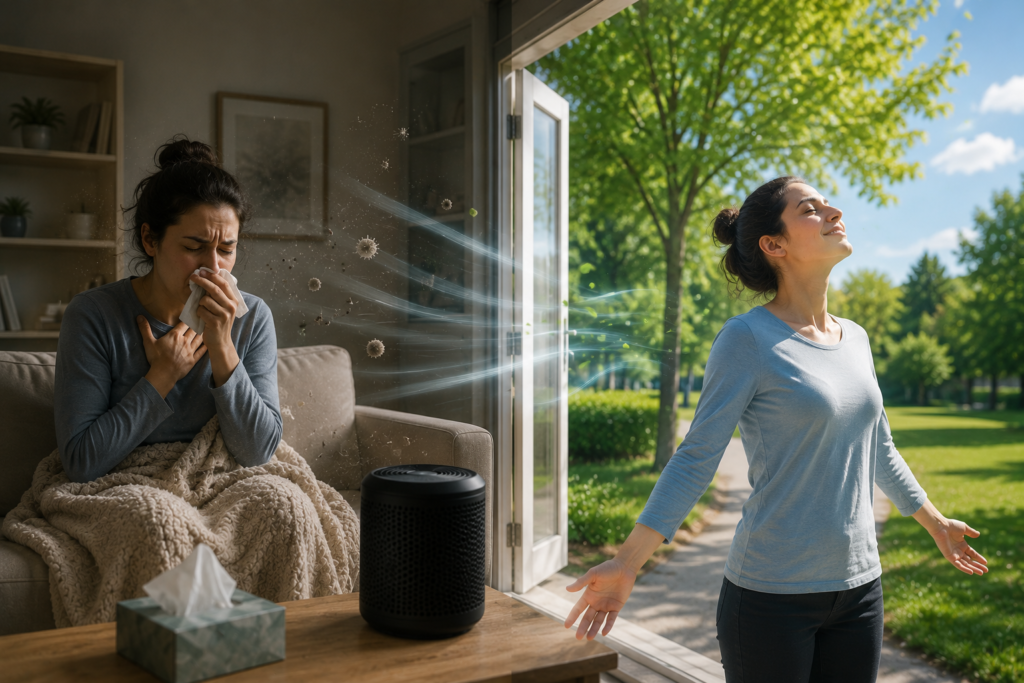
Sign #1: Symptoms That Improve When You Leave the House
This is one of the most reliable indicators of an indoor air problem, precisely because it’s a pattern you can actually track.
Watch for:
- Sneezing, congestion, or a scratchy throat that shows up specifically indoors
- Headaches or fatigue that ease once you’re outside or away from home
- Symptoms that worsen in certain rooms or when the HVAC system is running
If these symptoms consistently improve after you leave and return once you’re back, that’s a strong signal your home’s air not the season or a passing illness is the common thread.
Sign #2: Persistent, Unpleasant Odors
Lingering smells that don’t go away, even after cleaning, are a common and noticeable sign of an underlying air quality issue.
Common odor sources:
- Musty smells — often linked to mold, mildew, or excess moisture
- Chemical odors — can come from cleaning products, new furniture, paint, or other VOC-emitting materials
- Stale, heavy air — usually points to inadequate ventilation and air circulation
If an odor keeps returning despite regular cleaning, it’s worth investigating the source rather than repeatedly masking it with air fresheners.
Sign #3: Visible Mold or Mildew
Mold and mildew growth is one of the clearest, most visible signs of an indoor air quality problem, and it’s almost always tied to excess moisture.
Where to look:
- Around sinks, tubs, and shower areas
- Near windows, especially where condensation collects
- Basements, crawl spaces, and other areas prone to dampness
- Behind furniture placed against exterior walls
What it looks like: Green or black spotting on surfaces, often accompanied by a distinct musty smell even before mold is visibly noticeable.
Why it matters: Mold spores become airborne and can trigger allergic reactions and respiratory irritation, particularly for household members with asthma or existing sensitivities. According to the EPA’s guide to mold and moisture, moisture control is the single most important factor in preventing mold growth if a leak or damp source isn’t fixed, cleaning alone won’t solve the problem.
Sign #4: Excessive Dust Buildup
Some household dust is unavoidable, but noticeably rapid or heavy dust accumulation especially on surfaces you clean regularly can indicate an air quality issue.
What excessive dust often signals:
- Dust carries allergens like pollen, mold spores, and pet dander, so heavier buildup means more of these particles circulating in your air
- Dusty vents or HVAC returns specifically can indicate the system itself is contributing to the problem rather than filtering it out
A simple check: If you notice a layer of dust returning within just a day or two of cleaning, or dust concentrated heavily around your vents, it’s worth looking into your filtration and ventilation setup.
Sign #5: Humidity That’s Too High or Too Low
Humidity plays a bigger role in indoor air quality than most people realize, and both extremes cause different problems.
Ideal Indoor Humidity Range
Most guidance points to 30 to 50% relative humidity as the healthy target range for a home.
| Humidity Level | Common Problems |
| Below 30% | Dry or itchy skin, eyes, and sinuses; increased risk of upper respiratory irritation; furniture and wood warping |
| 30–50% | Generally healthy, balanced range |
| Above 60% | Mold and mildew growth; musty odors; condensation; general stuffiness |
How to check: A simple hygrometer (widely available and inexpensive) can measure your home’s humidity level directly, rather than relying on guesswork.
Signs of Excess Humidity Specifically
- Condensation forming on windows, walls, or pipes
- A persistent musty smell
- Visible mold growth in damp-prone areas
Excess moisture over time can also affect your home’s structure, since prolonged dampness can lead to warping or deterioration in wood and drywall — not just an air quality concern, but a maintenance one too.
Sign #6: Frequent Headaches, Fatigue, or Dizziness
Indoor pollutants like VOCs, elevated CO2 levels, or airborne particulates can contribute to headaches, fatigue, and general low-level discomfort that’s easy to attribute to other causes.
What to pay attention to:
- Headaches that consistently show up at home, especially in less-ventilated rooms
- A pattern of feeling more tired or foggy indoors than expected
- Symptoms that ease noticeably after spending time outside or in a well-ventilated space
Because these symptoms are so general, they’re often the hardest to connect to indoor air quality — but the pattern (indoor vs. outdoor, specific rooms vs. others) is usually the clue worth tracking.
Sign #7: Stuffy or Stagnant Air
If a room feels heavy, stale, or stuffy even with the air conditioning running, that’s often a sign of inadequate fresh air exchange rather than a temperature issue.
Common causes:
- Poor overall ventilation
- Blocked or restricted air vents
- A home that’s tightly sealed for energy efficiency without enough mechanical ventilation to compensate
Proper ventilation is meant to exchange stale indoor air for fresh air regularly; when that exchange isn’t happening effectively, pollutants and odors have nowhere to go.
A Note on Radon and Carbon Monoxide
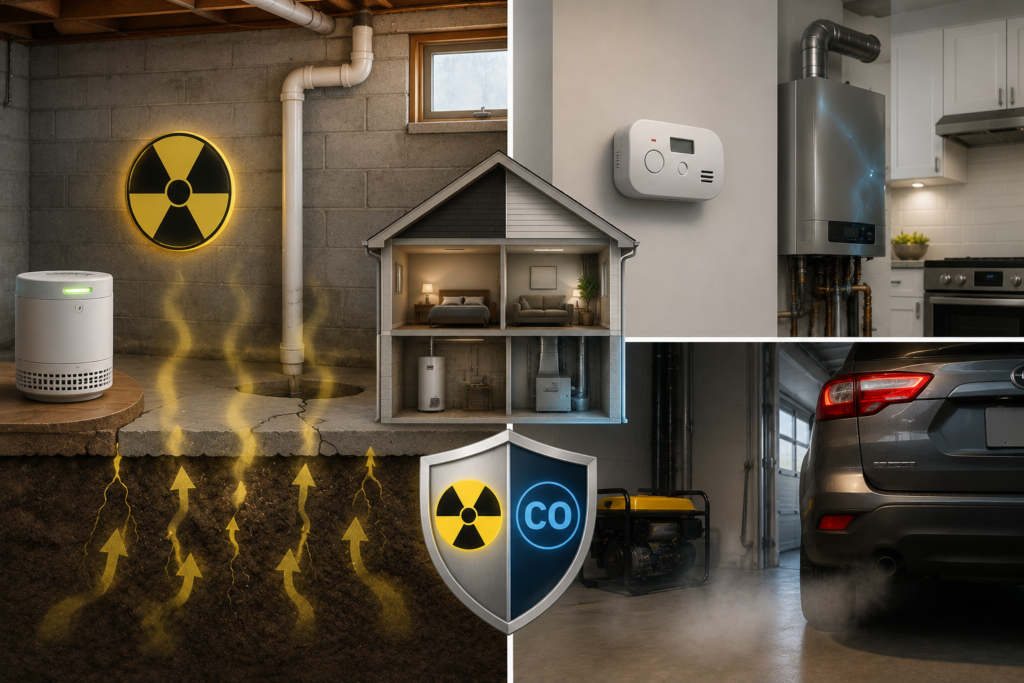
Some indoor air issues are invisible, odorless, and more serious than general discomfort which is exactly why they deserve their own mention.
Radon
Radon is a colorless, odorless gas that can seep into homes from the ground, particularly affecting basements and lower levels. It’s classified as a known carcinogen and a leading cause of lung cancer among non-smokers. Because it can’t be detected by sight or smell, testing is the only reliable way to know your home’s radon level.
- Recommended action: Use a short-term radon test kit, particularly for basements and the lowest lived-in level of your home.
- When to take action: The EPA’s action level for radon is 4 picocuries per liter (pCi/L) or higher though the agency notes no level of radon exposure is considered fully risk-free, and mitigation is worth considering even between 2 and 4 pCi/L.
Carbon Monoxide
Carbon monoxide (CO) is another colorless, odorless gas, produced by fuel-burning appliances like furnaces, water heaters, and stoves when they’re not functioning or venting properly. Unlike the other signs in this guide, CO exposure can become dangerous quickly.
- Always have working carbon monoxide detectors installed on every level of your home, particularly near sleeping areas.
- If your detector alarms, leave the home immediately, get everyone to fresh air, and contact emergency services don’t attempt to investigate the source yourself first.
How to Confirm an Indoor Air Quality Problem
If you’re noticing several of the signs above, here are practical ways to get more clarity before deciding on next steps.
- Use a hygrometer to check your actual humidity levels rather than guessing.
- Do a visual inspection in moisture-prone areas under sinks, around windows, in crawl spaces — for mold or water damage.
- Track symptoms by room and time of day. Note whether headaches, sneezing, or fatigue correlate with specific spaces or times, like right after the HVAC runs or right after cooking.
- Consider an indoor air quality monitor, which can track particulates, VOCs, humidity, and CO2 levels over time, helping identify patterns a one-time check might miss.
- Test for radon, especially if you haven’t already and live in an area known for elevated radon levels.
When to Call a Professional
While some signs point to simple fixes you can handle yourself, others are worth bringing in a professional for.
Consider professional help if:
- Mold growth is extensive or keeps returning despite cleanup attempts
- Humidity issues persist even after addressing obvious sources
- Symptoms are severe, persistent, or affecting multiple household members consistently
- You want more precise testing than a basic DIY check can offer
- Ductwork hasn’t been inspected in years and may be circulating dust, debris, or mold
Professional indoor air quality testing can measure specific pollutants more precisely than most at-home methods, giving you a clearer picture of exactly what’s affecting your air and how to address it.
Practical Steps to Improve Indoor Air Quality
- Address moisture sources first. Fixing leaks, improving ventilation in bathrooms and kitchens, and using a dehumidifier in consistently damp areas addresses one of the most common root causes of poor air quality.
- Improve ventilation. Open windows when outdoor air quality is good, and make sure exhaust fans in bathrooms and kitchens are actually venting outside, not just recirculating air.
- Replace HVAC filters regularly and consider having ductwork inspected if it hasn’t been checked in several years.
- Reduce VOC sources where possible, such as choosing low-VOC paints and cleaning products, and ventilating well when using stronger chemical products.
- Test for radon and maintain working CO detectors, since these two pollutants carry more serious health risks and can’t be identified through smell or symptoms alone.
- Clean and vacuum regularly, particularly in areas prone to dust and allergen buildup, to reduce the overall particulate load in your air.
Trust the Pattern, Not Just the Symptom
Poor indoor air quality rarely announces itself with one obvious sign it usually shows up as a pattern: symptoms that ease when you leave the house, a musty smell that keeps returning, humidity that never seems balanced, or dust that builds up faster than it should. Paying attention to these patterns, rather than dismissing them individually, is often what leads to catching a real problem early.
If several of these signs sound familiar, start with the basics check your humidity, look for visible moisture or mold, and confirm your radon and carbon monoxide detectors are in place and working. From there, decide whether a DIY fix is enough or whether it’s worth bringing in a professional for more precise testing. Either way, this is one home health issue worth paying attention to, since it’s tied directly to how comfortable and how healthy your everyday life at home actually feels.
This article is intended for general informational purposes. If you or a family member are experiencing persistent or severe symptoms, it’s worth speaking with a healthcare provider to rule out other causes alongside any home air quality investigation.
FAQ
1- How do I know if it’s allergies or actual indoor air quality problems?
The clearest distinction is timing and pattern — if symptoms consistently appear indoors and improve once you leave the house, or if they’re tied to specific rooms or HVAC use, indoor air quality is a more likely cause than general seasonal allergies.
2- What’s the ideal humidity level for a home?
Most guidance recommends keeping indoor humidity between 30 and 50%. Levels below that can cause dry skin and irritation, while levels above 60% create favorable conditions for mold and mildew growth.
3- Is a musty smell always a sign of mold?
A persistent musty odor is commonly associated with mold or mildew, especially when it’s concentrated in damp-prone areas like bathrooms or basements, but it can also indicate general excess moisture even without visible mold present yet.
4- Do I need to test for radon if I don’t smell or notice anything unusual?
Yes. Radon is colorless and odorless, meaning there are no noticeable symptoms or smells to alert you testing is the only reliable way to know your home’s radon level.
5- Can poor indoor air quality really cause headaches and fatigue?
Yes, in some cases. Indoor pollutants like VOCs, elevated CO2, or fine particulates have been associated with headaches, fatigue, and general discomfort, particularly in poorly ventilated spaces.
6- How often should I check my home’s air quality?
There’s no strict schedule, but testing humidity, checking for mold in moisture-prone areas, and monitoring for symptom patterns periodically — especially after any water damage, renovation, or changes to your HVAC system — is a reasonable, proactive approach.