
The answer isn’t about picking a side, it’s about testing your home’s actual humidity level and letting that number decide. Most health and HVAC authorities, including the EPA and ASHRAE, agree the ideal indoor relative humidity range sits between 30 and 50 percent, and a cheap digital hygrometer is the single fastest way to find out whether your home is running too dry, too damp, or genuinely fine as is.
This guide breaks down exactly how to tell whether you need a humidifier or a dehumidifier, the specific symptoms each humidity extreme causes, and how to choose between the different types available for each. We’ll also cover relative humidity targets, dust mite and mold thresholds, and practical buying advice for American homeowners trying to get their indoor air genuinely comfortable.
By the end, you’ll know exactly which device your home needs, based on real symptoms and numbers rather than guesswork.
How Do You Know Which One You Need?
Test your home’s relative humidity with a hygrometer first: if it consistently reads below 30 percent, you likely need a humidifier; if it consistently reads above 50 percent, you likely need a dehumidifier. Most homes actually need one or the other seasonally rather than both simultaneously, since winter heating typically drives humidity down while summer heat and humidity push it back up.
The ideal target for most homes and most rooms is a steady 30 to 50 percent relative humidity, with roughly 45 percent commonly cited as the single best target if your device only offers one setting rather than a full adjustable range.
Reading Your Own Body’s Signals First
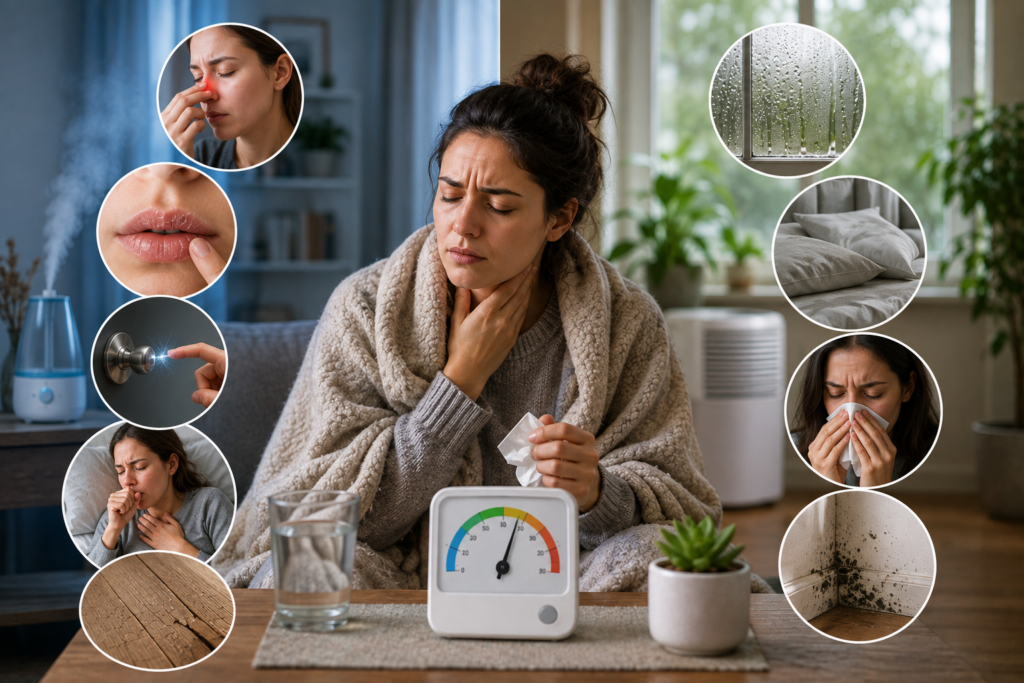
Before you even buy a hygrometer, your own physical symptoms often provide the first genuine clue about which direction your home’s humidity has drifted.
Signs Your Air Is Too Dry (Below 30%)
- Waking with a dry mouth, scratchy throat, or nosebleeds
- Chapped lips and noticeably dry skin
- Frequent static electricity shocks
- Worsened nighttime cough or snoring from nasal congestion
- Wood furniture, trim, or musical instruments shrinking or cracking
Signs Your Air Is Too Humid (Above 50%)
- Condensation forming on windows, especially in the morning
- A persistent musty smell, particularly in bedrooms or basements
- Sheets or bedding feeling noticeably damp
- Allergy symptoms that seem worse immediately upon waking, often a dust mite signal
- Visible mold or mildew developing on surfaces
If you’re noticing a consistent pattern of symptoms from either list, that’s a strong indication of which device your home genuinely needs before you even consult a hygrometer reading.
Why 30 to 50 Percent Is the Universal Target
Nearly every major health and engineering authority converges on the same range for good reason, and understanding why helps clarify why both extremes cause genuine problems.
Below 30 percent relative humidity, dry air pulls moisture directly out of your skin, lips, and eyes, and this same dryness makes it easier for viruses to spread and survive in the air. Above 50 percent, dust mites begin multiplying rapidly, and mold spores can begin colonizing surfaces within as little as 48 hours of sustained excess moisture. This is exactly why the 30 to 50 percent band isn’t an arbitrary comfort preference, it’s the range where both biological problems, viral spread on the dry end and mold and dust mite growth on the humid end, are simultaneously minimized.
When You Need a Humidifier
A humidifier adds moisture back into dry indoor air, and it’s typically the more commonly needed device during colder months across most of the United States.
Why Winter Air Gets So Dry Indoors
Cold outdoor air holds very little moisture to begin with, and once that air is heated indoors by your furnace or heat pump, relative humidity can plummet to as low as 15 to 25 percent in a typical northern home without any humidification in place. Furnaces themselves don’t add moisture to the air they’re heating, which is exactly why winter dryness is such a widespread, predictable seasonal issue rather than an occasional problem.
Setting Your Humidifier Correctly
Aim for a winter target of roughly 30 to 40 percent relative humidity. If outdoor temperatures drop below about 10°F, you may need to lower your indoor target slightly, since excess indoor humidity meeting genuinely cold window glass or exterior walls can cause condensation, which itself risks mold growth in window frames and surrounding drywall over time.
Types of Humidifiers
- Portable humidifiers: Cover a single room and come in cool-mist or warm-mist (steam) varieties, with cool-mist generally considered safer around children due to the absence of a heating element.
- Whole-house humidifiers: Integrate directly with your HVAC system, distributing moisture evenly throughout your entire home rather than just one room, though this option typically requires professional installation.
When You Need a Dehumidifier
A dehumidifier removes excess moisture from indoor air, and it’s typically the more relevant device during summer months or in naturally humid regions and rooms.
Why Summer and Certain Rooms Run Too Humid
In a properly sized air conditioning system, the evaporator coil may only remove 30 to 40 percent of the moisture your home actually needs pulled out on the most humid days, meaning your AC alone often isn’t sufficient. If your indoor relative humidity stays consistently above 55 percent even with your air conditioning running, that’s a clear signal a dedicated dehumidifier is worth adding.
Setting Your Dehumidifier Correctly
When first addressing a genuinely humid space, set your dehumidifier to a lower target, around 30 to 40 percent, to dry the air more quickly. Once you’ve reached a comfortable level, shift to a maintenance setting between 40 and 50 percent, since setting the target too low makes the air uncomfortably dry, while setting it too high won’t effectively combat the excess moisture you’re trying to eliminate.
Types of Dehumidifiers
- Portable/compressor dehumidifiers: The most common residential type, working similarly to a small air conditioner by pulling moisture out of the air and collecting it in a removable tank.
- Whole-house dehumidifiers: Integrate with your central HVAC system, similar to whole-house humidifiers, managing humidity throughout the entire home rather than a single room.
- Basement or crawl space dehumidifiers: Higher-capacity units specifically designed for consistently damp below-grade spaces, which often run more humid than the rest of the home year-round.
Comparing Humidifiers and Dehumidifiers at a Glance
| Factor | Humidifier | Dehumidifier |
| Purpose | Adds moisture to dry air | Removes excess moisture |
| Most needed season | Winter | Summer |
| Target reading below | N/A, adds moisture up to target | Below 30% initially, then 40–50% maintenance |
| Target reading above | 30–40% winter target | Above 55% signals dehumidifier needed |
| Common symptoms addressed | Dry skin, static shock, nosebleeds | Musty smell, condensation, mold |
| Portable options | Cool-mist, warm-mist | Compressor-based, tank collection |
| Whole-home option | Integrated with HVAC | Integrated with HVAC |
Seasonal Humidity Targets Throughout the Year
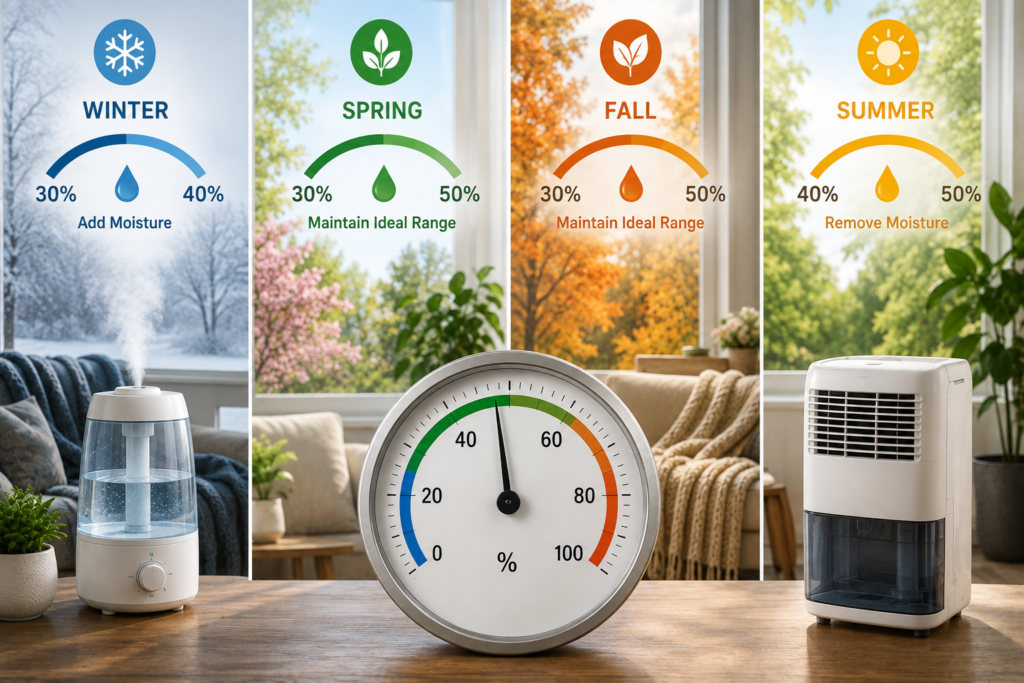
Humidity needs genuinely shift with the seasons, and adjusting your target rather than using one fixed setting year-round produces better results.
- Winter: Target 30 to 40 percent, lowering slightly if outdoor temperatures drop below 10°F to avoid window condensation.
- Summer: Target 40 to 50 percent, since mold and dust-mite suppression matters more during warmer months, and keeping humidity below 45 percent also helps your air conditioning system run more efficiently.
- Spring and fall: These transitional seasons are typically the easiest to manage, often not requiring either device for weeks at a time, with a general target around 40 to 45 percent when needed. Watch for sudden swings though, since a warm, rainy spring week can push humidity above 60 percent quickly, especially with windows open, while a dry fall cold snap can drop it below 25 percent once heating season begins.
Room-by-Room Humidity Considerations
Not every room in your home has identical humidity needs, and a few spaces deserve specific attention.
- Bedrooms: Target 30 to 50 percent, with around 45 percent commonly cited as the ideal single setting for sleep quality, since properly humidified air helps prevent the morning dry mouth and sinus congestion that can disrupt rest.
- Nurseries and children’s rooms: Babies and young children often benefit from slightly higher humidity, closer to 50 percent, since their smaller nasal passages are more susceptible to drying out than an adult’s.
- Basements and crawl spaces: These areas often run more humid than the rest of the home due to their below-grade location, frequently requiring a dedicated, higher-capacity dehumidifier separate from your main living space’s needs.
- Rooms with hardwood floors or furniture: Target a slightly wider 35 to 55 percent range, since wood expands as humidity rises and contracts as it falls, making stable humidity important for preventing warping or cracking over time.
Can You Ever Need Both in the Same Home?
Yes, and this is more common than many homeowners expect, particularly in climates with genuinely distinct seasons or homes with rooms that behave differently from the rest of the house.
A household might reasonably run a whole-house humidifier through winter to counteract dry heated air, then switch to a dedicated dehumidifier each summer as humidity climbs back up. Similarly, a home’s main living areas might sit comfortably within range year-round, while a persistently damp basement requires its own dedicated dehumidifier regardless of season. Monitoring different rooms individually with a hygrometer, rather than assuming your whole home behaves uniformly, is the most reliable way to catch these room-specific humidity mismatches.
Practical Buying Advice
A few specific considerations help you choose the right device and size once you’ve confirmed which direction your humidity needs correcting.
- Buy a hygrometer before buying either device: This inexpensive tool removes the guesswork entirely, letting you confirm your actual humidity reading rather than relying on symptoms or guesswork alone.
- Match capacity to room size or whole-home needs: An undersized unit in either category will struggle to keep pace, particularly in larger rooms or persistently problematic spaces like basements.
- Consider a built-in humidistat: Many modern humidifiers and dehumidifiers include an automatic humidistat that turns the unit on and off to maintain your target level without requiring constant manual adjustment.
- Factor in maintenance requirements: Humidifiers need regular cleaning to prevent mineral buildup and bacterial growth, while dehumidifiers require regular tank emptying unless connected to a continuous drain option.
- Consider whole-house options for consistent, year-round needs: If your entire home consistently runs too dry or too humid across most rooms, a whole-house solution integrated with your HVAC system may offer better, more consistent results than multiple portable units.
Let the Number Decide, Not the Season Alone
Choosing between a humidifier and a dehumidifier comes down to testing your home’s actual relative humidity rather than assuming based on season alone, though winter typically calls for humidification and summer typically calls for dehumidification across most of the country. Keep your target in that well-established 30 to 50 percent range, watch for the specific physical symptoms each extreme causes, and don’t rule out needing both devices seasonally or in different rooms of the same home. With a simple hygrometer and the right device matched to your actual reading, achieving genuinely comfortable, healthy indoor air becomes a matter of straightforward monitoring rather than ongoing guesswork.
Frequently Asked Questions
1- What is the ideal indoor humidity level for a home?
Most health and HVAC authorities recommend 30 to 50 percent relative humidity, with around 45 percent commonly cited as the best single target if your device only offers one setting.
2- How do I know if I need a humidifier or a dehumidifier?
Check your home’s actual relative humidity with a hygrometer; readings consistently below 30 percent suggest a humidifier is needed, while readings above 50 percent suggest a dehumidifier.
3- Why does my house feel so dry in the winter?
Cold outdoor air holds very little moisture, and heating it indoors can drop relative humidity to as low as 15 to 25 percent in a typical home without a humidifier in place.
4- Is it normal to need both a humidifier and a dehumidifier in the same home?
Yes, many households use a humidifier in winter and switch to a dehumidifier in summer, or use a dehumidifier year-round in a specific damp area like a basement while the rest of the home stays balanced.
5- What humidity level causes mold growth?
Mold spores can begin colonizing surfaces within about 48 hours once humidity stays above roughly 50 to 60 percent, making that threshold a key reason to address consistently high indoor humidity promptly.
6- Can too much humidity from a humidifier cause problems?
Yes, over-humidifying, particularly in winter, can cause condensation on cold windows and walls, which can lead to mold growth in window frames and surrounding drywall if left unaddressed.