Energy bills don’t stay the same all year, and neither should your energy-saving habits. What works to cut costs in the middle of summer isn’t the same as what helps during a cold winter night and a lot of homeowners miss out on savings simply because they’re using one generic approach year-round instead of adjusting with the seasons.
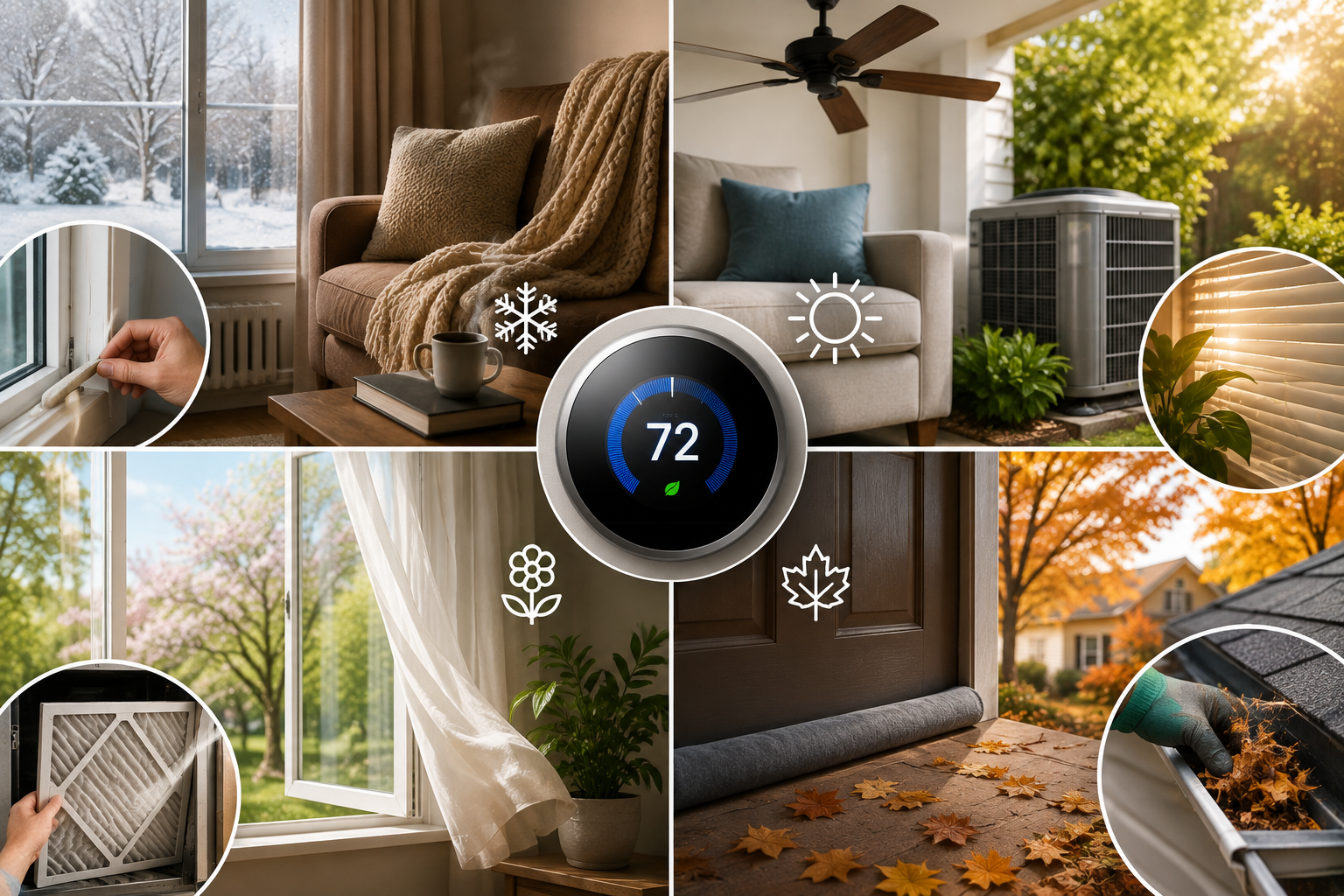
The most effective year-round energy strategy starts with your thermostat the U.S. Department of Energy generally recommends around 68°F in winter when you’re home and awake, and around 78°F in summer when you’re home, with further adjustments while you’re asleep or away. Beyond thermostat settings, each season has its own set of practical habits sealing drafts before winter, using fans strategically in summer, taking advantage of natural airflow in spring and fall that can meaningfully lower your energy use without sacrificing comfort.
This guide breaks down exactly what to focus on each season, plus a few habits worth keeping year-round.
Why a Seasonal Approach Works Better Than a Year-Round Default
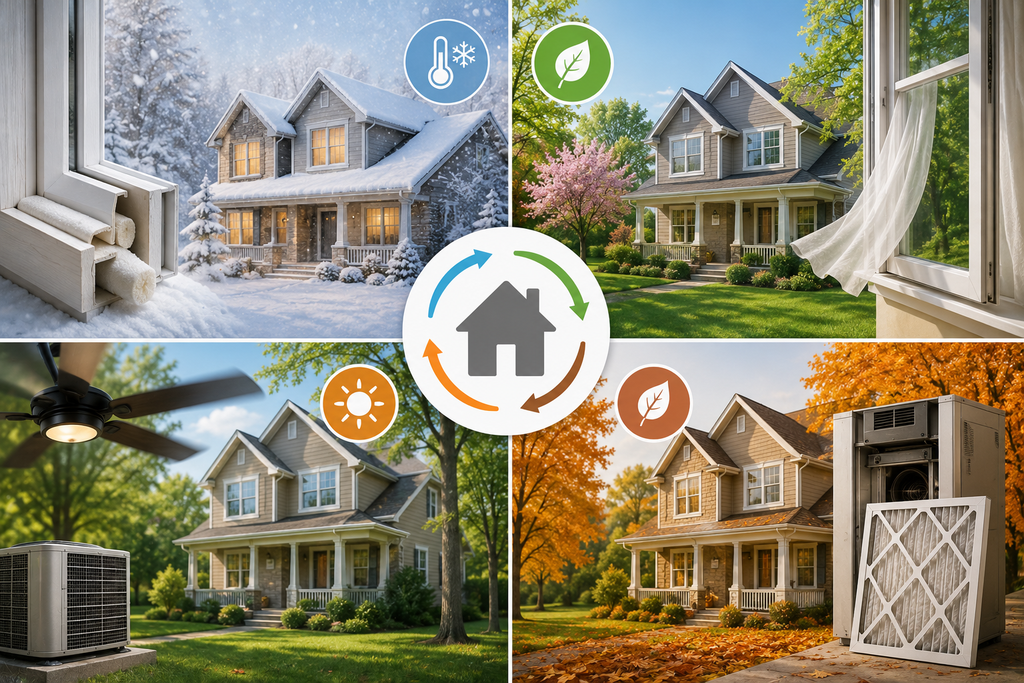
Your home’s energy needs shift dramatically between seasons what causes energy waste in January (drafty windows, an overworked furnace) is completely different from what causes it in July (sun-heated rooms, an overworked AC unit). Treating every season the same means missing opportunities that are specific to that time of year.
The good news: most of these adjustments are simple, low-cost habits not major renovations and they add up meaningfully over a full year.
Winter Energy-Saving Tips
Winter heating is often one of the biggest contributors to a home’s annual energy use, which makes it a high-priority season for savings.
Set Your Thermostat Strategically
- When home and awake: Around 68°F is the generally recommended baseline for balancing comfort and efficiency.
- When asleep or away: Lowering the temperature by roughly 7 to 10 degrees for extended periods (such as overnight or during the workday) can meaningfully reduce heating costs over the course of a year.
- Use a programmable or smart thermostat to automate these adjustments so you don’t have to remember to change the setting manually every day.
Let Natural Sunlight Help
- Open blinds and curtains during the day, especially on south-facing windows, to let natural warmth in.
- Close them at night to reduce heat loss through the glass once the sun goes down.
Seal Drafts Before They Cost You
- Check windows and doors for drafts, and add weatherstripping or caulk where needed.
- Use draft stoppers along the bottom of exterior doors.
- Check for air leaks around outlets, pipes, and other wall penetrations, which are common but often overlooked sources of heat loss.
Maintain Your Heating System
- Replace furnace filters regularly, since a clogged filter forces the system to work harder than necessary.
- Schedule seasonal HVAC maintenance before the coldest months hit, ensuring the system runs as efficiently as possible.
Dress and Layer for the Season
Wearing warmer clothing indoors sweaters, thicker socks allows for a slightly lower thermostat setting without sacrificing comfort, particularly useful during the coldest stretches of the season.
Summer Energy-Saving Tips
Cooling costs can climb quickly in summer, but small adjustments make a real difference without leaving you uncomfortable.
Set Your Thermostat Strategically
- When home: Around 78°F is the generally recommended setting for balancing comfort with efficiency.
- When away for extended periods: Raising the temperature further often suggested around 85°F or higher helps avoid unnecessary cooling of an empty home.
- Every degree matters. Each degree above your default cooling setting can meaningfully reduce cooling costs, so even small adjustments add up.
Use Fans to Supplement Your AC
- Ceiling fans, set to spin counterclockwise in summer, help circulate cool air and can make a room feel noticeably cooler.
- Running a fan alongside your AC allows you to raise the thermostat setting by a few degrees while maintaining the same level of comfort.
- Remember that fans cool people, not rooms — turn them off in unoccupied spaces to avoid wasting energy.
Block Out Heat During Peak Hours
- Close curtains and blinds during the hottest part of the day, especially on windows that receive direct afternoon sun.
- Consider reflective or blackout window coverings for rooms that consistently run warm.
Maintain Airflow and Equipment
- Replace or clean AC filters regularly, since a clogged filter reduces efficiency and forces the system to run longer.
- Keep outdoor AC units clear of debris, plants, or obstructions that can restrict airflow.
- Schedule seasonal maintenance ahead of peak summer heat to catch issues before they become costly.
Avoid Adding Extra Heat Indoors
- Cook outdoors or use smaller appliances (microwave, toaster oven) instead of the oven on hot days.
- Run dishwashers and laundry machines during cooler parts of the day, like early morning or evening.
Spring Energy-Saving Tips
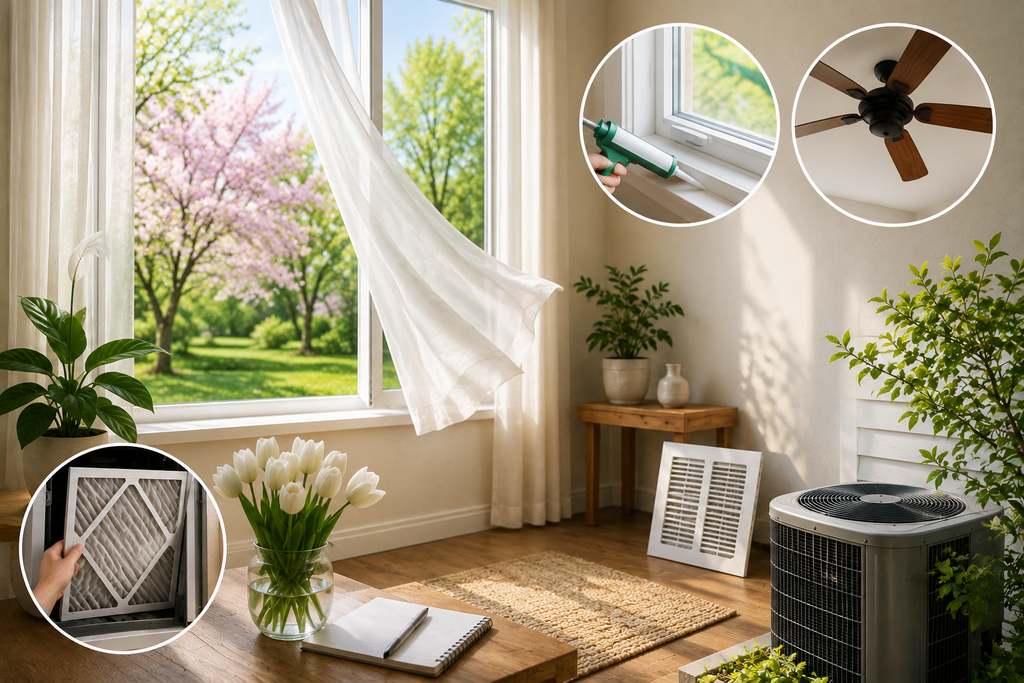
Spring is a transition season, which makes it a great opportunity to rely less on your HVAC system altogether and prepare your home for the summer ahead.
Take Advantage of Mild Weather
- Open windows on comfortable days instead of running the AC, letting natural airflow cool the home.
- Use cross-ventilation opening windows on opposite sides of the house to maximize natural airflow.
Prep for Summer Early
- Schedule AC maintenance before the season’s first real heat wave, when service demand (and wait times) tend to spike.
- Clean or replace air filters as part of your seasonal changeover.
- Check window screens for damage before you start relying on open windows for ventilation.
Reassess Insulation and Sealing
Spring is a practical time to check your attic and walls for insulation gaps or air leaks that may have gone unnoticed during winter, since it’s a comfortable season to do the inspection work.
Adjust for Increasing Daylight
As daylight hours increase, take advantage of natural light instead of relying on indoor lighting during the day a small but consistent energy saver.
Fall Energy-Saving Tips
Fall is your best opportunity to prepare your home for winter, when heating costs will be at their highest.
Prepare Your Heating System Early
- Schedule furnace maintenance and filter replacement before the first cold snap, rather than waiting until you actually need the heat.
- Check for any leftover summer AC settings still active in your programmable thermostat and switch to your winter schedule.
Seal the Home Before Winter Hits
- Inspect windows and doors for drafts and address any gaps with weatherstripping or caulk.
- Check attic insulation levels, since fall is a comfortable time to address any gaps before winter arrives.
Take Advantage of Mild Temperatures
- Like spring, fall often has comfortable stretches where natural ventilation can reduce or eliminate the need for heating or cooling altogether.
- Use this transitional period to minimize HVAC use while temperatures remain moderate.
Reverse Ceiling Fan Direction
Switch ceiling fans to spin clockwise in the cooler months. This pushes warm air (which naturally rises) back down into the room, helping distribute heat more evenly without extra heating costs.
Seasonal Thermostat Quick Reference
| Season | When Home | When Away/Asleep |
| Winter | ~68°F | Lower by 7–10°F |
| Summer | ~78°F | Raise to ~85°F |
| Spring/Fall | Use natural ventilation where possible | Minimal HVAC use during mild weather |
Keep in mind: These are general guidelines, not strict rules. Your ideal setting depends on personal comfort, your home’s insulation and layout, local climate, and whether pets or specific health needs require a narrower comfortable range.
Year-Round Habits Worth Keeping
Some energy-saving habits apply no matter the season and are worth building into your routine permanently.
Upgrade to a Programmable or Smart Thermostat
A programmable or smart thermostat automatically applies seasonal adjustments on a schedule, removing the need to manually change settings every day — and many models offer usage reports that help you track savings over time.
Maintain Your HVAC System Consistently
Regular filter changes and scheduled maintenance keep your system running efficiently in every season, reducing strain on the equipment and helping avoid larger repair costs down the line.
Address Drafts and Insulation Gaps
Since drafts and poor insulation affect both heating and cooling efficiency, sealing these gaps benefits your energy use across the entire year, not just one season.
Be Strategic With Appliance Use
Running dishwashers, washing machines, and dryers during off-peak hours (when applicable to your utility’s rate structure) and avoiding unnecessary heat-generating appliance use during extreme temperature months both contribute to steady savings.
Use Natural Light When Possible
Relying on daylight during appropriate hours, rather than defaulting to indoor lighting, is a simple habit that adds up meaningfully over a full year.
Practical Buying Advice for Long-Term Energy Savings
- Invest in a programmable or smart thermostat first. It’s one of the most cost-effective upgrades for automating seasonal savings without ongoing manual effort.
- Prioritize weatherstripping and caulk for drafts before considering bigger investments these are inexpensive fixes with a real impact on both heating and cooling efficiency.
- Schedule HVAC maintenance seasonally, not reactively. Addressing your system before peak summer or winter demand avoids both higher repair costs and longer wait times for service.
- Check your attic insulation levels if you haven’t recently, since inadequate insulation undermines savings from every other seasonal adjustment.
- Use ceiling fans strategically year-round, adjusting the spin direction seasonally rather than treating them as a summer-only tool.
Small Seasonal Adjustments Add Up All Year
Energy savings aren’t about one big change they’re about matching your habits to what each season actually demands. Thoughtful thermostat settings, seasonal HVAC maintenance, smart use of natural light and airflow, and a few consistent year-round habits all work together to keep your energy bills more predictable and lower overall.
Start with the season you’re in right now: check your thermostat settings, look for drafts, and schedule any overdue HVAC maintenance. Small, well-timed adjustments repeated consistently across the year are what actually translate into meaningful long-term savings, without asking you to sacrifice comfort in the process.
FAQ
1- What’s the best thermostat setting to actually save money?
The Department of Energy generally recommends around 68°F in winter and 78°F in summer when you’re home, with further adjustments lowering in winter, raising in summer while you’re asleep or away for extended periods.
2- How much can I really save by adjusting my thermostat?
Adjusting your thermostat by roughly 7 to 10 degrees for about 8 hours a day (such as overnight or while at work) can meaningfully reduce your annual heating and cooling costs, according to Department of Energy guidance.
3- Do ceiling fans actually help save energy?
Yes, when used correctly. Running fans alongside your AC allows you to raise your thermostat setting while maintaining the same comfort level, and reversing fan direction in winter helps redistribute warm air more evenly but remember, fans cool people, not empty rooms, so turn them off when you leave.
4- Is it better to leave the AC running all day or adjust it when I’m away?
Raising your thermostat setting while you’re away for extended periods, rather than maintaining a constant cool temperature, generally reduces cooling costs without meaningfully affecting comfort once you return and the system catches back up.
5- What’s the single most impactful season to focus on for energy savings?
It depends on your climate, but for most U.S. homeowners, winter heating and summer cooling represent the largest shares of annual energy use, making thermostat management and HVAC maintenance in those seasons particularly high-impact.
6- Should I change my HVAC filter every season?
At minimum, checking and replacing filters at each seasonal changeover is a good baseline, though households with pets or allergy concerns may need to replace filters more frequently regardless of season.