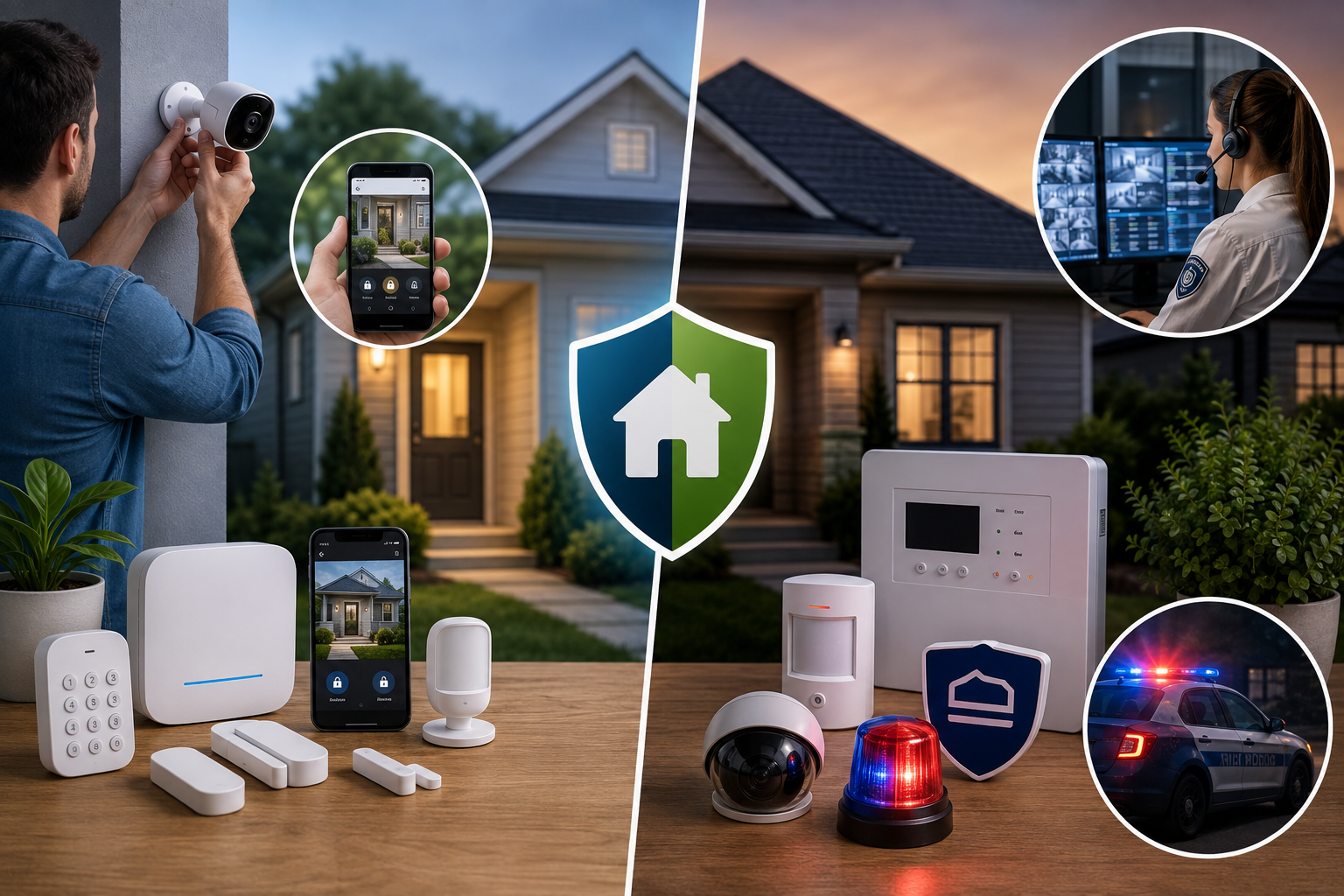
The DIY-versus-professional security debate isn’t really about which system catches more intruders; it’s about who responds when something actually happens. A DIY system alerts you directly and leaves the response entirely in your hands, while professional monitoring puts a trained team on the case the moment an alarm triggers, whether you notice your phone buzz or not.
This guide compares DIY and professionally monitored home security systems across cost, response time, contracts, and long-term value, helping you decide which genuinely fits your household. We’ll also cover self-monitoring, 24/7 monitoring centers, and practical buying advice for American homeowners weighing this decision.
By the end, you’ll understand exactly what you’re trading off in each direction, and why the “right” answer often comes down to your lifestyle more than your budget alone.
Which Should You Choose?
DIY security systems generally cost less over time, require no long-term contract, and give you full control over installation and monitoring, making them well suited to renters, budget-conscious homeowners, and anyone comfortable managing alerts themselves. Professionally monitored systems cost more monthly but deliver guaranteed 24/7 response from trained staff who dispatch emergency services immediately, a genuine advantage for anyone who wants security handled without needing to personally catch and act on every alert.
The most important question to ask yourself isn’t which system is objectively “better,” it’s whether you’re realistically able to notice and respond to an alert the moment it happens, day or night.
What DIY Home Security Actually Means
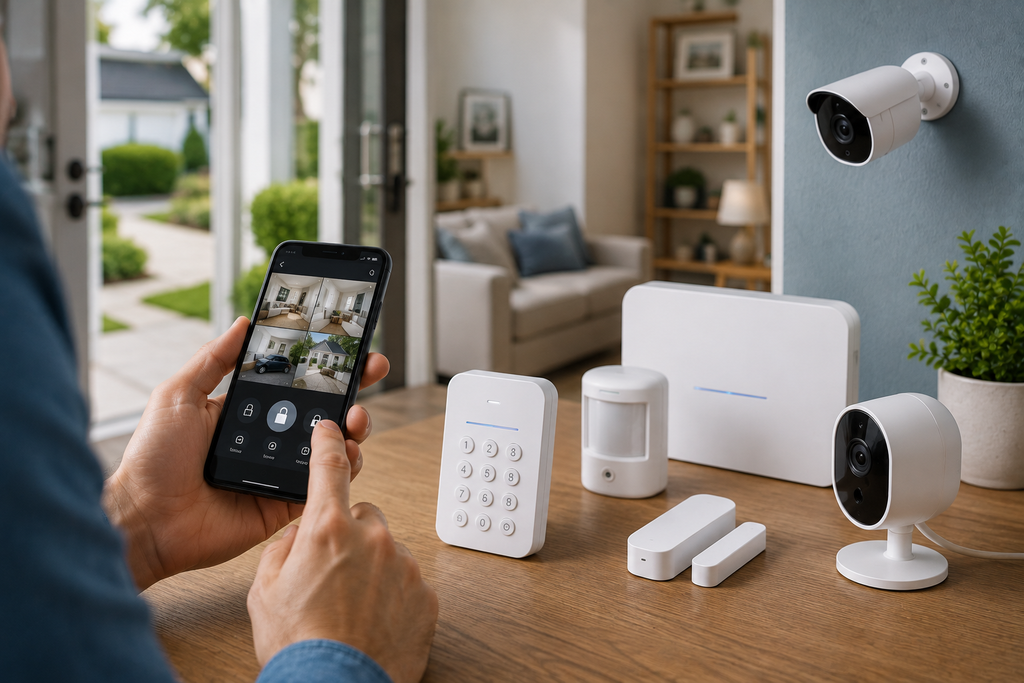
DIY security systems are off-the-shelf kits that you purchase, install, and typically monitor yourself, using smartphone notifications rather than a dedicated monitoring center.
How DIY Systems Work
Most DIY kits install in under an hour using adhesive mounts or simple plug-in connections, with no professional technician required. When a sensor triggers, either from a door opening, motion detected, or a camera picking up activity, the system sends a push notification directly to your phone, and it’s up to you to review the alert and decide whether to call emergency services yourself.
DIY System Costs
Starter kits typically range from $150 to $600, with additional cameras or sensors costing $20 to $200 each depending on features. Ongoing monitoring costs vary considerably: many DIY systems offer free, alerts-only self-monitoring, while opting into more robust monitoring plans typically runs $10 to $30 per month.
DIY System Strengths
- No long-term contract, with the freedom to cancel monitoring anytime
- Lower overall cost, especially over several years of ownership
- Full flexibility to add cameras, sensors, and smart home devices as needed
- Quick, straightforward setup without waiting for a technician appointment
- Well suited to renters who can’t make permanent installation changes
DIY System Limitations
- Response time depends entirely on you noticing and acting on the alert
- Self-installation carries some risk of sensor placement errors
- Monitoring reliability depends on your home internet or cellular backup staying online
- No automatic emergency dispatch, since contacting police or fire services is your responsibility
What Professional Monitoring Actually Means
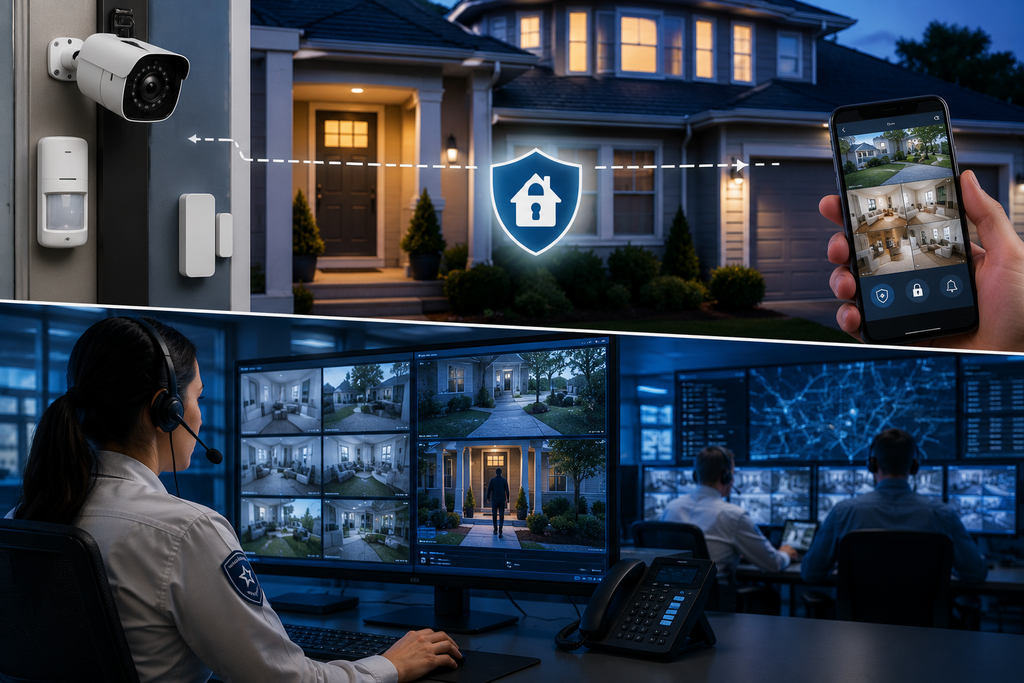
Professionally monitored systems connect your home’s sensors and cameras to a staffed monitoring center that responds to alerts around the clock, regardless of whether you personally see the notification.
How Professional Monitoring Works
When an alarm triggers, the signal routes directly to a monitoring center staffed by trained professionals, who then attempt to verify the alert and dispatch police, fire, or medical services as needed, all without requiring you to personally notice or respond. Most professional systems also include professional installation, ensuring sensors and cameras are placed correctly from the start.
Professional Monitoring Costs
Professional installation and equipment typically cost $500 to $2,500 depending on features and property size, though many providers roll equipment costs into a financed monthly contract instead of a large upfront payment. Monitoring fees generally range from $25 to $80 per month, on top of any equipment financing, with contract lengths commonly running one to five years.
Professional Monitoring Strengths
- Guaranteed 24/7 response from trained staff, independent of whether you personally notice an alert
- Professional installation reduces the risk of improperly placed sensors
- Maintenance and equipment inspections are often included in the contract
- Potential homeowner’s insurance discounts, since monitored systems are viewed favorably by many insurers
- Cellular backup and redundant systems reduce the risk of an outage disabling monitoring entirely
Professional Monitoring Limitations
- Higher ongoing monthly cost compared with DIY self-monitoring
- Contracts often run one to five years, sometimes with early-termination fees
- Less flexibility, since custom changes may require scheduling a technician visit
- Smart home integration varies by provider and isn’t always as flexible as DIY ecosystems
Comparing DIY and Professional Monitoring at a Glance
| Factor | DIY Security | Professional Monitoring |
| Upfront equipment cost | $150–$600 | $500–$2,500 |
| Monthly monitoring cost | Free–$30 | $25–$80 |
| Contract required | No | Often, 1–5 years |
| Installation | Self-installed | Professional |
| Response time | Depends on you noticing | Guaranteed 24/7 response |
| Emergency dispatch | Your responsibility | Handled by monitoring center |
| Flexibility to modify | High | Lower, may need technician |
| Insurance discount potential | Sometimes | Often more significant |
Why It Matters More Than Cost
Beyond price, the single most meaningful practical difference between these two approaches comes down to what happens in the moment an alarm actually triggers.
With a DIY system, response time is entirely up to you. If you miss a notification because you’re in a meeting, asleep, on a flight, or simply don’t have your phone nearby, your home’s alert goes unanswered until you happen to check it. Professional monitoring removes this dependency entirely, since a trained team is actively watching for alerts around the clock and doesn’t need you to personally notice anything before taking action.
This distinction matters most for households that travel frequently, have unpredictable schedules, or simply want genuine peace of mind that doesn’t depend on their own attentiveness in a stressful moment.
Understanding the Real Cost Picture Over Time
Sticker price alone doesn’t capture the full financial comparison, and it’s worth looking beyond the first month’s bill.
DIY systems with low or optional monitoring generally win on total cost over time, since you avoid installation fees and long-term contracts, and can often self-monitor for free or pay a low month-to-month rate if you do want additional monitoring. Professional monitoring costs more each month, but that premium buys installation, guaranteed 24/7 response, and often bundled equipment and maintenance.
Hidden costs worth watching for: A “free” professionally installed system can still carry a multi-year commitment, and canceling early sometimes means paying a significant share of the remaining contract balance. On the DIY side, watch for add-on costs like cellular backup surcharges or camera cloud storage subscriptions that can quietly increase your effective monthly cost beyond the advertised base price.
Contracts: What You’re Actually Signing Up For
Contract terms differ significantly between these two approaches, and understanding what you’re committing to matters just as much as the monthly price.
Most long-term professional contracts run between one and five years, during which you pay a set monthly price for monitoring, sometimes alongside financed equipment costs. Not every professional provider requires a lengthy contract, though; some now offer month-to-month monitoring options for homeowners who want professional response without a multi-year commitment.
DIY brands, by contrast, typically offer no-contract, cancel-anytime monitoring, giving you meaningfully more flexibility if your needs or living situation change. This lower-risk structure is a significant part of why DIY systems appeal particularly to renters and anyone uncertain about their long-term housing plans.
Does Monitoring Type Affect Insurance Discounts?
Homeowner’s insurance discounts are a real, practical factor worth considering when comparing total cost between the two approaches.
Many insurance companies offer discounts for homes protected by a security system, though these discounts can vary meaningfully by state and provider. Discounts tend to be larger for professionally monitored systems specifically, since insurers generally view faster, guaranteed response times as reducing their own risk exposure compared with a self-monitored setup that depends on the homeowner noticing an alert.
If insurance savings are a meaningful factor in your decision, it’s worth contacting your specific provider to ask exactly how much of a discount a monitored system would unlock, since this can sometimes offset a meaningful portion of the added monthly monitoring cost.
Who Should Choose DIY vs Professional Monitoring
Matching the right approach to your actual lifestyle and living situation matters more than following a general trend toward either option.
- Choose DIY if: You’re renting and want a system you can take with you, prefer full control over installation and monitoring, want to avoid a long-term contract, or are comfortable reliably checking and responding to phone alerts.
- Choose professional monitoring if: You travel frequently or have an unpredictable schedule that makes consistently noticing alerts unrealistic, want the peace of mind of guaranteed emergency dispatch, prefer professional installation over DIY setup, or are specifically pursuing a larger homeowner’s insurance discount.
- Consider a hybrid approach if: Some providers now offer professional-grade equipment and installation with flexible, no-long-term-contract monitoring plans, letting you get professional response quality without locking into a multi-year agreement.
Match the System to Your Real Life, Not Your Budget Alone
Choosing between DIY and professionally monitored home security ultimately comes down to how reliably you can personally respond to an alert versus how much you value guaranteed, hands-off emergency response. DIY systems win on cost, flexibility, and contract freedom, making them a smart choice for budget-conscious homeowners and renters who are comfortable managing their own monitoring. Professional monitoring costs more but removes response time entirely from your own attentiveness, offering genuine peace of mind for households with unpredictable schedules or anyone who simply wants security fully handled. Whichever direction you choose, compare total cost over several years rather than the first month’s price, and read contract terms carefully before committing to either path.
Frequently Asked Questions
1- Is DIY home security actually reliable?
Yes, DIY systems can be genuinely effective, though their reliability depends on your home’s internet or cellular connection staying online and on you consistently noticing and responding to alerts.
2- How much more expensive is professional monitoring than DIY?
Professional monitoring typically costs $25 to $80 monthly compared with free to $30 monthly for DIY self-monitoring, plus professional systems often involve higher upfront installation costs.
3- Do I have to sign a long contract for professional monitoring?
Not always. While traditional providers often require one-to-five-year contracts, some now offer month-to-month professional monitoring without a long-term commitment.
4- Can I switch from DIY to professional monitoring later?
Yes, many DIY brands offer optional paid monitoring plans you can add at any time, and some professional providers also offer DIY installation with professional monitoring as a middle-ground option.
5- Does professional monitoring really get me a better insurance discount?
Often yes, since insurers frequently view the guaranteed, faster response time of professional monitoring as reducing their risk, though exact discount amounts vary by insurer and state.
6- What happens if my internet goes down with a DIY system?
This can disable monitoring entirely unless your system includes cellular backup, which is worth checking for specifically if you’re relying on a DIY setup for genuine security coverage.