Opening an energy bill that’s noticeably higher than usual is frustrating, especially when your habits haven’t changed. The good news is that high energy bills almost always trace back to a specific, identifiable cause not just bad luck or rising rates. The most common causes of high energy bills are an inefficient HVAC system (typically 40 to 60% of total energy use), inefficient or aging appliances, phantom loads from electronics left plugged in (5 to 10% of usage), poor insulation and air leaks, water heater inefficiency, and simply rising utility rates. Most of these causes have straightforward, affordable fixes once you know where to look.
This guide breaks down exactly what’s likely driving your bill up, how to identify which cause applies to your home, and what to do about each one.
Why Bills Spike Even When Your Habits Haven’t Changed
It’s easy to assume a high bill means you did something differently, but in most cases, the real cause is a system quietly running less efficiently than it should — a dirty air filter, an aging appliance, or a small air leak that’s been there for a while. These issues don’t announce themselves; they just gradually push your usage (and your bill) higher over time.
Causes of High Energy Bills
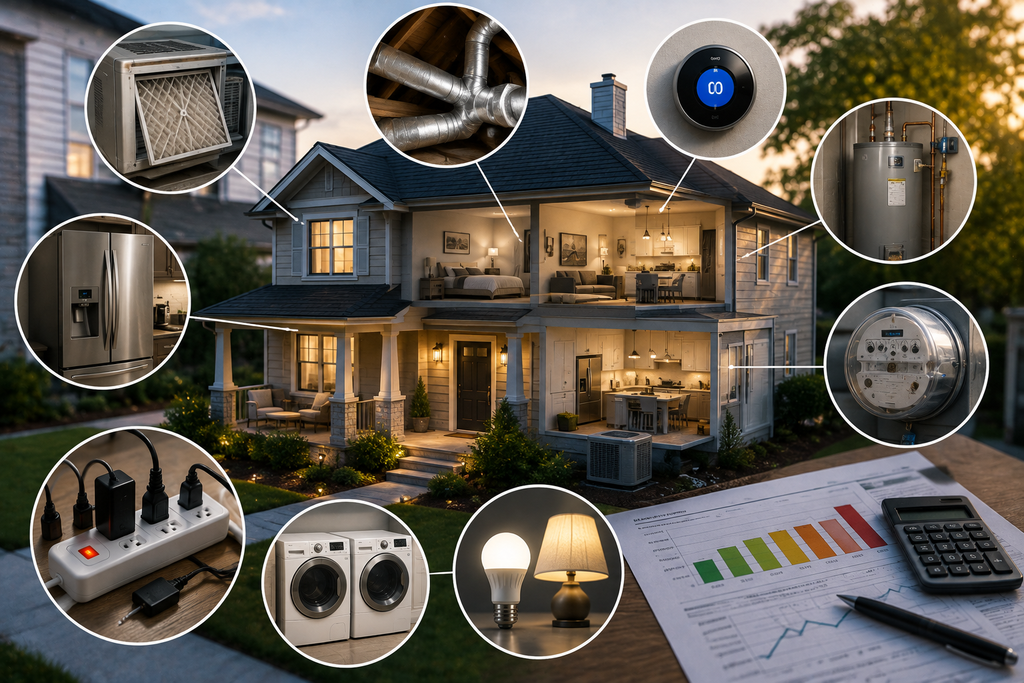
Cause #1: HVAC System Inefficiency
Heating and cooling is typically the single largest driver of home energy use, often accounting for 40 to 60% of a total energy bill, especially during extreme weather months.
What Causes HVAC Inefficiency
- Dirty or clogged air filters, which force the system to work harder to maintain airflow
- Leaky ductwork, especially common in homes built before the 2000s, which lets conditioned air escape into attics, crawlspaces, or walls before it ever reaches your rooms
- Low refrigerant levels, which reduce the system’s ability to cool efficiently
- A dirty or obstructed outdoor unit, where debris or bent fins reduce the system’s heat exchange capability
- An aging or failing thermostat, which can cause the system to run longer than necessary
What to Do About It
- Replace air filters regularly monthly in many households, though this varies by filter type and household factors like pets
- Have ductwork inspected for leaks, particularly in older homes
- Schedule annual HVAC maintenance to catch refrigerant and component issues early
- Keep the outdoor unit clear of debris and gently clean it periodically
- Consider upgrading to a programmable or smart thermostat if yours is outdated
Cause #2: Inefficient or Aging Appliances
Older appliances particularly refrigerators, water heaters, and HVAC systems often use significantly more energy than newer, efficiency-rated models.
Typical Energy Use by Major Appliance
| Appliance | Approximate Share of Energy Bill |
| Heating/cooling | 40–60% |
| Water heating | 12–18% |
| Washer/dryer | ~13% |
| Lighting | ~12% |
| Refrigerator | 4–8% |
| Oven/stove | 3–5% |
Why older appliances cost more to run: Appliances over 10 to 15 years old can use meaningfully more electricity than modern energy-efficient equivalents sometimes 20 to 50% more, depending on the appliance and how far behind current efficiency standards it falls.
What to Do About It
- Prioritize replacing your oldest, most energy-intensive appliances first typically refrigerators, water heaters, and HVAC equipment
- Look for ENERGY STAR-certified models when replacing appliances, since they’re built to meet specific efficiency standards
- Check whether your refrigerator’s exterior feels unusually warm to the touch this can be a sign the compressor or seals aren’t working efficiently
Cause #3: Phantom Loads (Vampire Power)
This is one of the most overlooked contributors to a high bill, since it happens silently in the background.
What Phantom Loads Are
Many electronics continue drawing small amounts of power even when they appear to be off — TVs, game consoles, computer monitors, phone chargers, and kitchen appliances with digital clocks or displays. Individually, each device uses very little power, but collectively, phantom loads can account for roughly 5 to 10% of total household electricity use.
What to Do About It
- Unplug electronics and chargers when they’re not actively in use
- Use smart power strips that automatically cut power to devices in standby mode
- Identify your biggest phantom-load contributors — entertainment systems and computer setups are common culprits — and target those first
Cause #4: Poor Insulation and Air Leaks
If your home isn’t properly sealed and insulated, your heating and cooling system has to work harder to maintain a comfortable temperature — which directly increases your energy bill.
Signs of Poor Insulation or Air Leaks
- Noticeable drafts near windows, doors, or electrical outlets
- Rooms that feel unevenly warm or cool compared to others
- Higher-than-expected heating or cooling costs relative to your home’s size
A Simple At-Home Check
Hold a lit incense stick (or a similar smoke source) near windows, doors, and other potential leak points. If the smoke visibly moves or wavers, that indicates air is leaking through that area.
What to Do About It
- Seal gaps around windows and doors with weatherstripping or caulk
- Check attic insulation levels, since inadequate attic insulation is a common source of significant heat loss or gain
- Consider a professional energy audit if you suspect widespread air leaks but can’t pinpoint the source yourself
Cause #5: Water Heater Inefficiency
Water heaters run almost continuously to maintain the temperature of the water in the tank, making them one of the larger ongoing contributors to your energy bill.
Common Water Heater Issues
- Setting the temperature too high. The higher the temperature setting, the more energy the unit uses to maintain it.
- Sediment buildup at the bottom of the tank over time, which reduces efficiency.
- An aging unit. Water heaters typically last around 10 to 15 years, and efficiency often declines as they approach the end of that range.
What to Do About It
- Lower your water heater’s temperature setting to around 120°F, which is generally sufficient for household use while reducing energy consumption
- Flush the tank periodically to clear sediment buildup, following manufacturer guidance
- Consider a tankless or heat pump water heater if your current unit is nearing the end of its typical lifespan, since these options can offer meaningfully better efficiency
Cause #6: Rising Utility Rates (Not Usage)
Sometimes a higher bill isn’t about your household’s behavior at all it’s simply that your utility’s rate per kilowatt-hour has increased.
How to Tell If Rates Are the Cause
Compare the cost per kWh listed on your current bill to a bill from the same period last year.
- If the rate per kWh has increased but your total usage is similar, rising rates are likely the main driver.
- If the rate is roughly the same but your total kWh usage has increased, the cause is more likely tied to your actual consumption appliances, HVAC, or added devices in the home.
What to Do About It
- If you’re in a deregulated energy market, compare available rate plans to see if switching providers or plans could lower your costs
- Check whether a fixed-rate contract has expired and rolled over into a higher default rate, which can happen without an obvious notification
Other Contributors Worth Checking
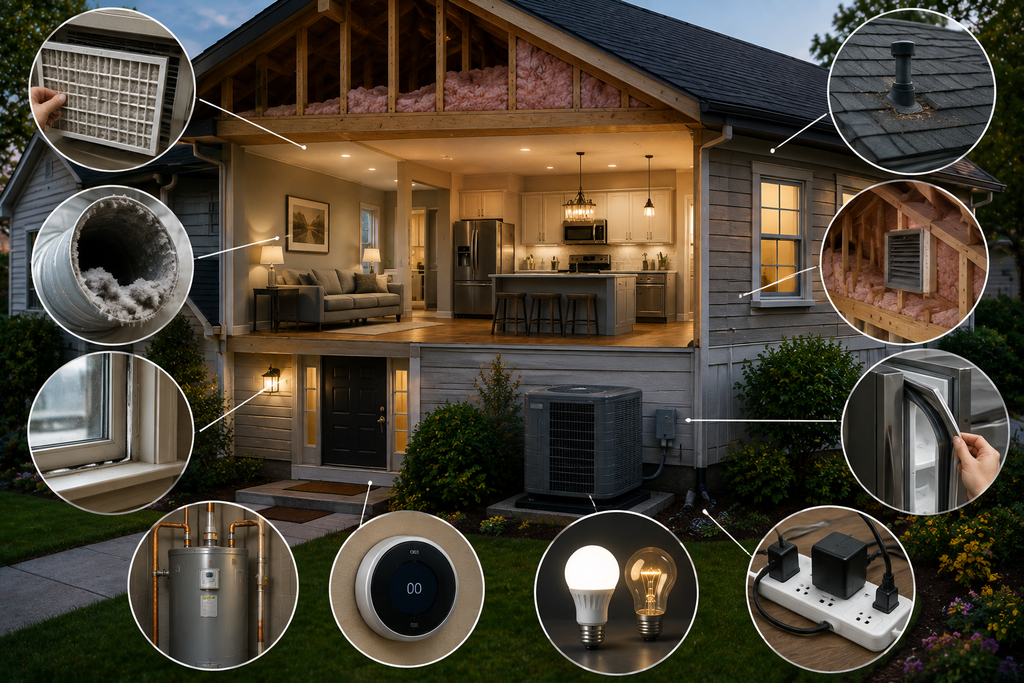
An Empty Home Still Uses Energy
Even when no one is home, your refrigerator and water heater continue running, and any devices on standby continue drawing phantom loads. It’s normal for an unoccupied home to still use a meaningful portion often around 20 to 30% of its typical daily energy consumption.
New Additions to the Household
A new major appliance, an added device like an EV charger, a pool pump, or even a space heater running regularly can meaningfully shift your total energy use compared to previous months.
A Simple Meter Check
If you suspect something is drawing power unexpectedly, turn off all breakers except the one for your meter, and watch the meter for 15 to 30 minutes it shouldn’t move if everything is truly off. Then turn on a single known load (like one light bulb) and time how long it takes the meter to register that specific usage, which can help confirm the meter itself is functioning correctly.
Quick Diagnostic: What’s Likely Driving Your Bill Up?
| Symptom | Likely Cause |
| Bill spikes during extreme hot/cold months | HVAC system working overtime |
| High bill even when away from home | Phantom loads, water heater, refrigerator running continuously |
| Some rooms feel drafty or uneven in temperature | Poor insulation or air leaks |
| Bill has crept up gradually over years | Aging appliances losing efficiency |
| Rate per kWh increased on your bill | Utility rate hike, not usage |
| Sudden, sharp increase in one billing cycle | New device, faulty appliance, or a specific system failure |
Practical Buying and Fix-It Advice
- Start with the biggest cost centers first. HVAC and water heating together often represent well over half of a typical bill, so addressing those areas usually delivers the most noticeable savings.
- Replace your oldest appliances first, prioritizing refrigerators, water heaters, and HVAC equipment, since these tend to lose efficiency most significantly with age.
- Address phantom loads with smart power strips rather than relying on remembering to unplug devices manually.
- Get a professional energy audit if you suspect insulation or air leak issues but can’t identify the source it’s often more cost-effective than guesswork.
- Compare your kWh rate year-over-year before assuming usage is the sole cause of a bill increase.
High Bills Usually Have a Fixable Cause
A high energy bill can feel like an unsolvable mystery, but in most cases, it comes down to one or more identifiable issues an inefficient HVAC system, an aging appliance, phantom loads, poor insulation, or a water heater working harder than it needs to. None of these require guesswork to address; they just require knowing what to check.
Start with the biggest contributors HVAC and water heating since they typically offer the most noticeable savings, then work through the smaller factors like phantom loads and air leaks. A little targeted attention now can turn a confusing, frustrating bill into one that actually reflects how you expect your home to run.
FAQ
1- What typically causes the biggest jump in an energy bill?
Heating and cooling extremes are the most common cause of a sudden, significant spike, since HVAC systems generally represent the largest share of a home’s total energy use often 40 to 60%.
2- How much do phantom loads really add to a bill?
Phantom loads from devices left plugged in and drawing standby power can collectively account for roughly 5 to 10% of a household’s total electricity use, even when those devices appear to be off.
3- Is it worth replacing an appliance just because it’s old?
If an appliance is over 10 to 15 years old, it may be using significantly more energy than a modern, efficiency-rated equivalent sometimes 20 to 50% more making replacement a reasonable consideration, especially for major appliances like refrigerators and water heaters.
4- How can I tell if my high bill is due to my usage or a rate increase?
Compare the cost per kWh on your current bill to a bill from the same period the previous year. If the rate has increased but usage is similar, rate hikes are likely the cause; if the rate is stable but usage has increased, your household’s consumption is the more likely driver.
5- What temperature should my water heater be set to?
Around 120°F is generally considered sufficient for most household needs while helping to reduce unnecessary energy use compared to higher settings.
6- Can poor insulation really make that big of a difference?
Yes — homes with significant drafts or inadequate insulation can spend a meaningfully higher amount on energy costs compared to a properly sealed and insulated home, since the HVAC system has to work harder and longer to compensate for the lost conditioned air.