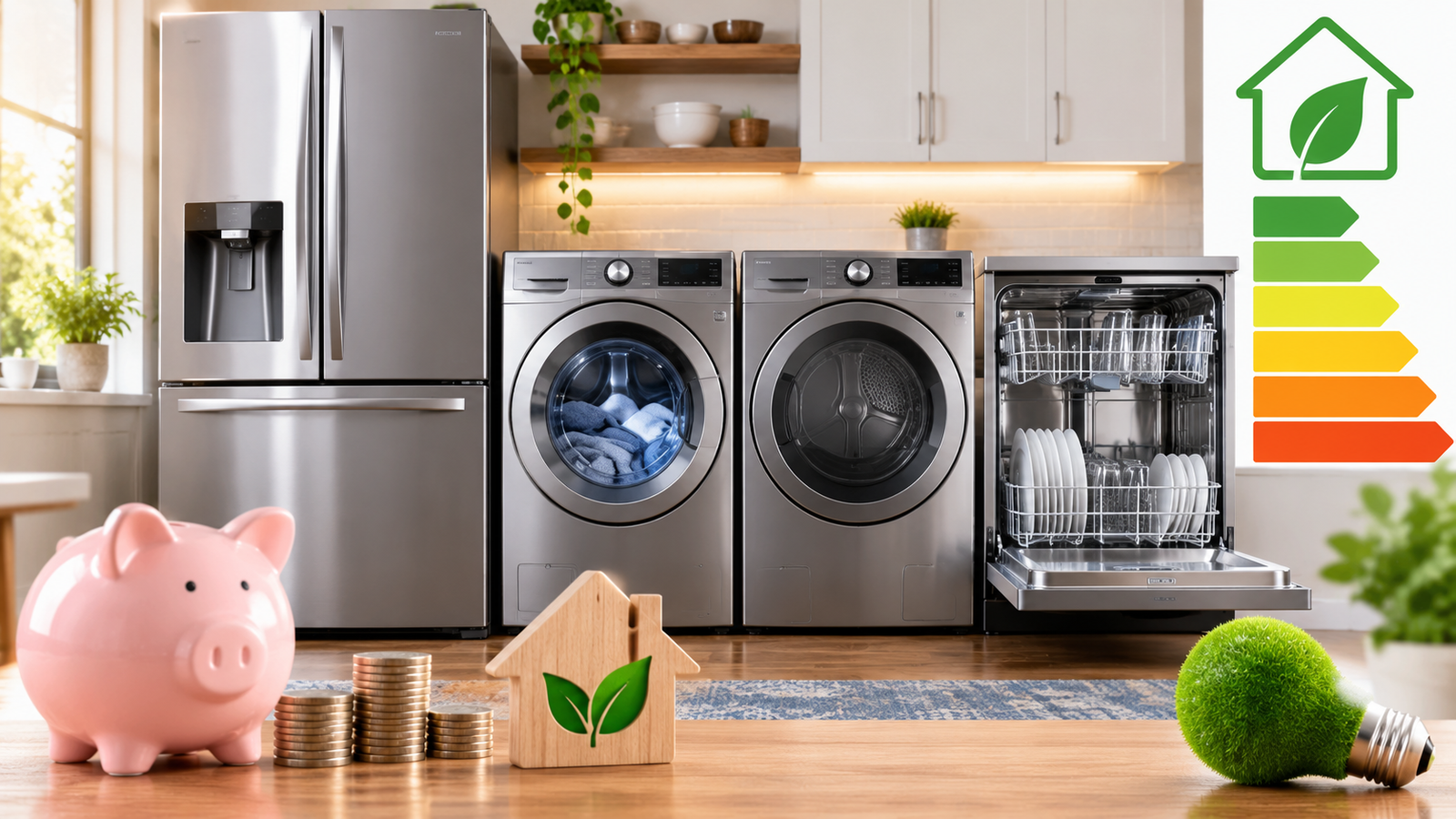
Not every ENERGY STAR label delivers the same real-world value, and understanding which appliances offer the biggest genuine savings helps you prioritize your budget when it’s time to upgrade. The EPA reports that since the ENERGY STAR program began, certified appliances have collectively helped Americans avoid roughly $500 billion in energy costs, but the actual savings percentage varies significantly depending on which specific appliance you’re replacing.
This guide breaks down exactly how much energy-efficient refrigerators, washers, dryers, and dishwashers actually save, based on verified ENERGY STAR and Department of Energy data, so you can prioritize your next appliance purchase around real numbers rather than marketing claims. We’ll also cover EnergyGuide labels, appliance lifetime savings, and practical buying advice for American homeowners planning an upgrade.
By the end, you’ll know exactly which appliances deliver the strongest return on investment, and how to read the fine print that actually determines your real savings.
Which Appliances Save the Most?
Refrigerators and clothes washers generally deliver the strongest combined energy and water savings among common household appliances, with ENERGY STAR-certified washers using about 20 to 33 percent less energy and 30 to 50 percent less water than standard models, and certified refrigerators using at least 15 percent less energy than non-certified equivalents. Purchasing a full ENERGY STAR appliance package, a certified washer, dryer, dishwasher, and refrigerator together, can save approximately $750 over the products’ combined lifetimes.
That said, the certification threshold varies considerably by appliance category, meaning some product types offer far more meaningful real-world savings than others, worth understanding before you assume every ENERGY STAR label delivers equal value.
Why Refrigerators Deserve Priority Attention
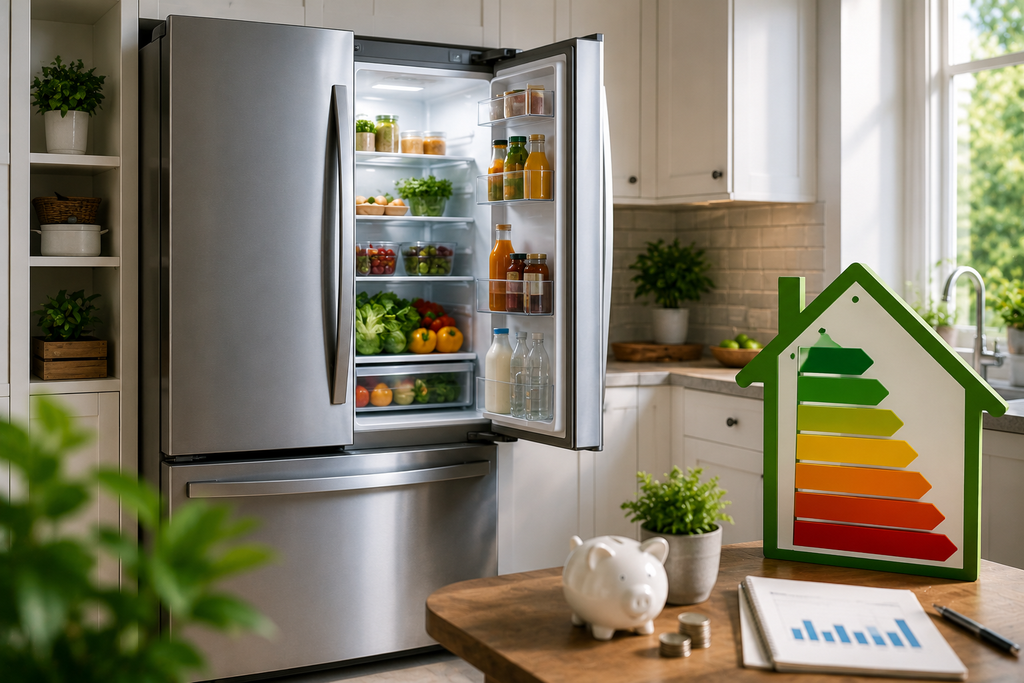
Refrigerators run continuously, 24 hours a day, every day of the year, making them one of the highest-impact appliances to upgrade for genuine energy savings.
According to the Department of Energy, refrigerators typically account for a little over 13 percent of a home’s total energy use, more than almost any other single appliance given their constant operation. ENERGY STAR-certified refrigerators use a minimum of 15 percent less energy than non-certified models, and current certification standards require refrigerators to be at least 15 percent more efficient than the federal minimum efficiency standard, a meaningfully higher bar than in previous certification cycles.
Refrigerator Configuration Matters Too
Beyond ENERGY STAR certification alone, the refrigerator’s basic configuration affects efficiency: models with a top-mount freezer use 10 to 25 percent less energy than comparable side-by-side or bottom-freezer configurations. If efficiency is your top priority and you’re flexible on style, this configuration difference is worth factoring into your decision alongside certification status.
Why Clothes Washers Offer Some of the Best Combined Savings
Clothes washers stand out for delivering strong savings across both energy and water simultaneously, a combination that adds up meaningfully given how often the average household runs this appliance.
The average American family washes roughly 300 loads of laundry annually, and ENERGY STAR-certified washers use approximately 20 to 33 percent less energy and 30 to 50 percent less water than standard, non-certified models. Over its full lifetime, a certified washer can save as much as $550 in combined avoided energy and water costs, one of the more substantial per-appliance savings figures among common household equipment.
Why Dryers Deliver Meaningful but More Modest Gains
Dryers use considerable energy per cycle, but the efficiency gap between certified and standard models, while still meaningful, tends to be somewhat more modest than what washers or refrigerators offer.
ENERGY STAR-certified electric clothes dryers use approximately 20 percent less energy than standard models, without sacrificing performance or available features. Since more than 80 percent of U.S. homes have a clothes dryer, this efficiency gap adds up considerably at a national scale, with estimates suggesting that if every dryer sold in the U.S. were ENERGY STAR certified, Americans could collectively save around $1.5 billion annually in energy costs.
Why Dishwashers Offer the Smallest Percentage Gains (But Still Add Up)
Dishwashers show the most modest efficiency improvement among the major kitchen and laundry appliances, though the savings are still genuinely worth capturing.
ENERGY STAR-certified dishwashers are approximately 10 percent more energy efficient and about 20 percent more water efficient than standard models, translating to annual energy costs of less than $35 for many certified units and average lifetime water savings in the range of 1,900 to 5,800 gallons, depending on the specific study and model compared. Current standards require certified dishwashers to use less than 240 kWh of electricity annually and less than 3.2 gallons of water per cycle under normal use.
Comparing Real-World Appliance Savings
| Appliance | Energy Savings vs Standard | Water Savings vs Standard | Estimated Lifetime Savings |
| Refrigerator | At least 15% | N/A | Varies by model and usage |
| Clothes Washer | 20%–33% | 30%–50% | Up to $550 |
| Clothes Dryer | ~20% | N/A | Contributes to overall laundry savings |
| Dishwasher | ~10% | ~20% | ~$50/year, thousands of gallons over lifetime |
| Freezer | At least 10% more than federal standard | N/A | Around $175 over five years |
Understanding Why Certification Thresholds Vary So Much
It’s worth understanding that ENERGY STAR isn’t a single, uniform efficiency bar applied equally across every product category.
Certification thresholds vary dramatically by appliance type: a certified dishwasher might only need to be around 12 percent more efficient than the federal minimum standard, while a certified heat pump could be 40 to 50 percent more efficient than baseline equipment. This gap in certification criteria directly creates a gap in real-world savings potential, which is exactly why refrigerators, washers, and heating equipment tend to offer more dramatic savings than dishwashers or smaller appliances relative to their certification threshold.
Reading the EnergyGuide Label Correctly
Beyond the ENERGY STAR logo itself, the EnergyGuide label provides more specific, comparable information worth understanding before you buy.
The EnergyGuide label displays an appliance’s estimated annual operating cost based on typical usage patterns and average national energy prices, appearing on refrigerators, dishwashers, clothes washers, freezers, water heaters, central air conditioners, and several other major appliance categories. Since this estimate uses average national energy costs rather than your specific local utility rates, running the numbers with your own actual electricity or gas rate gives you a more accurate picture of your real expected savings before making a purchase decision.
Which Appliance Should You Replace First?
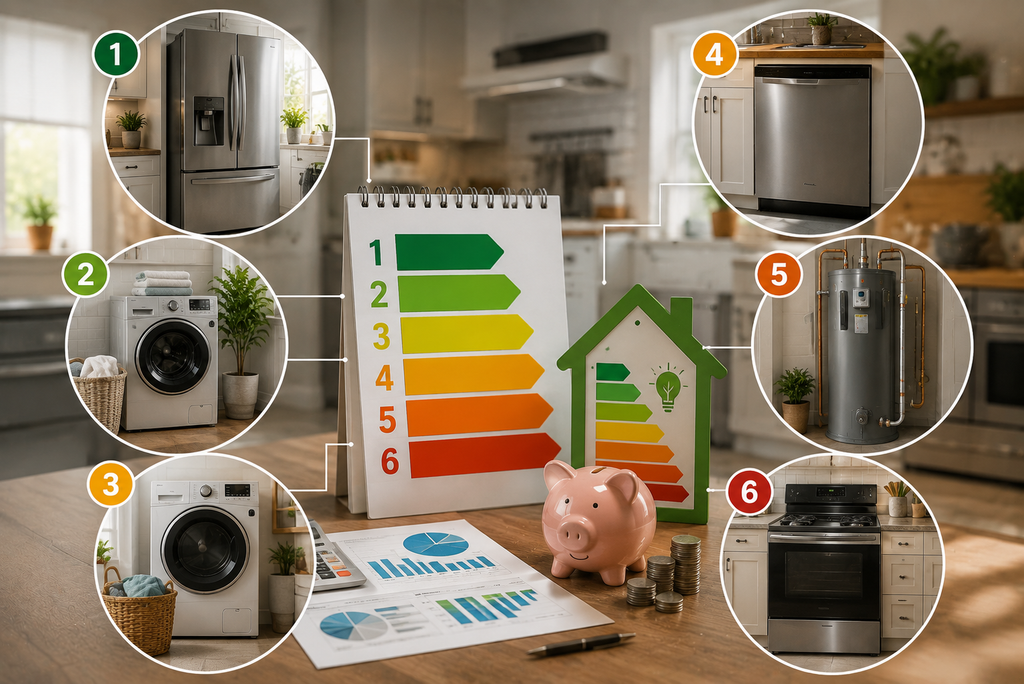
If you’re upgrading gradually rather than replacing every appliance at once, prioritizing based on both energy consumption and current appliance age produces the best return on your investment.
Refrigerators typically use around 205 kWh per month, considerably more than a clothes dryer’s roughly 75 kWh, an electric range’s 58 kWh, a dishwasher’s 30 kWh, or a washing machine’s 9 kWh. This consumption gap suggests that, all else being equal, an aging, inefficient refrigerator often represents your single highest-impact replacement opportunity among common kitchen and laundry appliances.
A practical prioritization approach:
- Audit your current appliances, noting age, model number, and annual energy use from each unit’s EnergyGuide label
- Identify your highest-consumption, oldest equipment first, particularly water heaters over roughly 8 years old or central air systems more than a decade old
- Use available savings calculators with your specific home’s usage and local rates to estimate real expected savings before committing to a purchase
- Research available utility rebates and tax incentives before finalizing your budget, since these can meaningfully improve the economics of a specific upgrade
Beyond Kitchen and Laundry: Heating Equipment Matters Too
While refrigerators, washers, dryers, and dishwashers get the most everyday attention, heating equipment often represents the single biggest efficiency opportunity in a home.
An ENERGY STAR certified air source heat pump can provide heating for roughly one-third the cost of traditional electric baseboard heating, and about half the cost of oil heat, depending on your specific region and local energy prices. Because heat pumps transfer heat rather than generate it directly, they can achieve significantly higher overall efficiency than traditional combustion-based heating systems, making this one of the highest-value replacements available if your existing heating equipment is aging or already due for replacement.
Practical Buying Advice
A few specific strategies help you get genuine value from your next appliance purchase rather than paying a premium for marginal efficiency gains.
- Prioritize refrigerators and washers for the biggest percentage savings: These two categories consistently show the largest efficiency gap between certified and standard models among common household appliances.
- Don’t assume every ENERGY STAR label delivers equal savings: Since certification thresholds vary considerably by product category, research the specific efficiency requirement for whatever appliance you’re actually shopping for.
- Calculate savings using your own utility rates: The EnergyGuide label’s estimate uses national averages, so recalculating with your specific local energy rate gives you a more accurate, personalized savings projection.
- Replace based on both age and consumption: An aging, inefficient appliance that also happens to consume significant energy, like an older refrigerator or water heater, generally offers the best replacement priority over a newer, lower-consumption appliance.
- Check for available rebates before buying: Many utility providers offer rebates specifically for ENERGY STAR certified appliance purchases, meaningfully improving your effective payback period beyond the energy savings alone.
Common Mistakes When Shopping for Efficient Appliances
- Assuming all ENERGY STAR appliances offer similar savings: Given how much certification thresholds vary by category, a certified dishwasher and a certified heat pump represent very different levels of efficiency improvement over baseline equipment.
- Ignoring configuration details on refrigerators: Freezer placement alone can account for a meaningful efficiency difference, separate from ENERGY STAR certification status entirely.
- Replacing appliances before checking actual usage data: Without reviewing your specific appliance’s age and consumption first, you might prioritize replacing a lower-impact appliance while a genuinely inefficient, high-consumption unit continues running unnecessarily.
- Overlooking water savings alongside energy savings: Washers and dishwashers in particular deliver meaningful water savings that add real value beyond the electricity or gas savings alone.
- Not researching rebates before budgeting: Skipping this step can mean missing out on incentives that meaningfully shift the math in favor of upgrading sooner rather than later.
Prioritize by Real Consumption, Not Just the Logo
Choosing the most energy-efficient appliances for your home comes down to understanding that not every ENERGY STAR label delivers equal savings, refrigerators and clothes washers consistently offer the strongest combined energy and water savings, while dishwashers show more modest but still worthwhile gains. Prioritizing your highest-consumption, oldest equipment first, checking the EnergyGuide label against your actual local utility rates, and researching available rebates before you buy all help ensure your next appliance upgrade delivers genuine, measurable value rather than just a satisfying logo on the door.
Frequently Asked Questions
1- Which appliance offers the biggest energy savings when upgrading to ENERGY STAR?
Clothes washers and refrigerators generally offer the largest percentage energy savings among common household appliances, with washers also delivering substantial water savings on top of energy efficiency gains.
2- Do ENERGY STAR dishwashers really save meaningful money?
Yes, though the percentage improvement is more modest than other categories, roughly 10 percent more energy efficient, typically translating to under $35 in annual energy costs alongside significant lifetime water savings.
3- Is it worth replacing a working appliance just for energy efficiency?
It depends on the appliance’s age and consumption level; older, high-consumption units like refrigerators or water heaters generally offer a stronger case for early replacement than newer, lower-consumption appliances.
4- How much can I save by buying a full set of ENERGY STAR appliances?
Purchasing a certified washer, dryer, dishwasher, and refrigerator together can save approximately $750 over the products’ combined lifetimes, according to ENERGY STAR program data.
5- Does refrigerator freezer placement really affect energy use?
Yes, top-mount freezer configurations use 10 to 25 percent less energy than comparable side-by-side or bottom-freezer models, a meaningful difference separate from certification status.
6- Should I check the EnergyGuide label or just look for the ENERGY STAR logo?
Both matter; the ENERGY STAR logo confirms certification, while the EnergyGuide label gives you a more specific estimated annual operating cost you can compare directly against other models.