
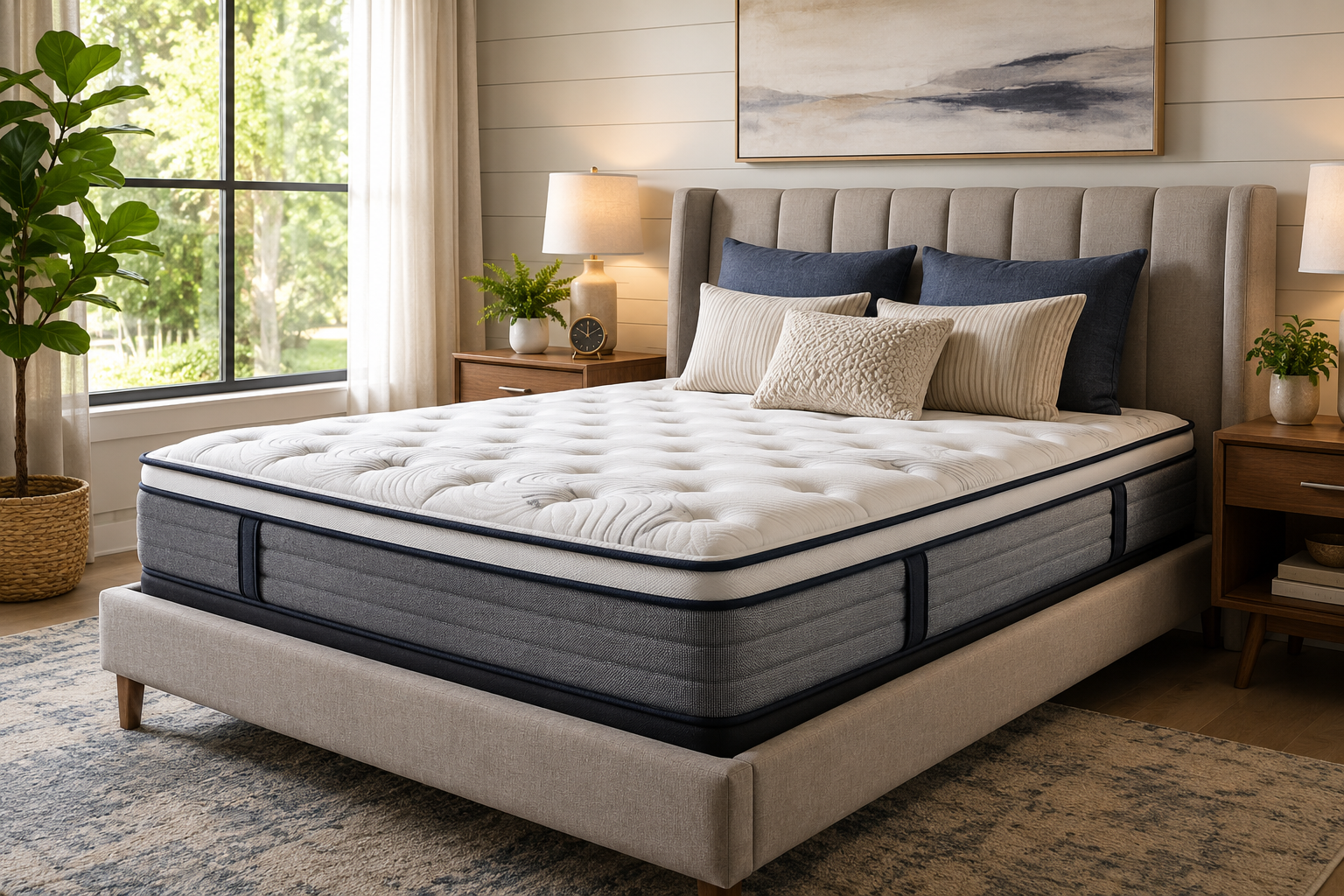
A mattress is one of the most important purchases for any home. Since most people spend nearly one-third of their lives sleeping, choosing the right mattress can improve comfort, support, and overall sleep quality. However, with so many mattress types, materials, firmness levels, and sizes available, finding the best option can feel overwhelming.
The good news is that buying a mattress doesn’t have to be complicated. By understanding your sleeping position, body type, comfort preferences, and available space, you can narrow your options and select a mattress that meets your needs. The right mattress should support your body, help maintain proper spinal alignment, reduce pressure points, and provide lasting comfort for years.
Whether you’re replacing an old mattress, furnishing a new home, or upgrading your bedroom, this guide explains everything homeowners need to know before making a purchase. From memory foam and hybrid mattresses to firmness levels and mattress sizes, you’ll learn how to compare options and make an informed decision with confidence.
Why Choosing the Right Mattress Matters
A mattress affects much more than your bedroom. It plays an important role in your daily comfort and overall well-being.
Choosing the right mattress can help:
- Improve sleep quality
- Support proper spinal alignment
- Reduce pressure on joints
- Improve nighttime comfort
- Minimize motion transfer between partners
- Extend the life of your bedroom furniture
- Create a more relaxing sleep environment
A mattress that doesn’t suit your needs may feel uncomfortable over time and make it harder to get consistent, restful sleep.
Start by Identifying Your Sleep Needs

Before comparing mattress models, think about what matters most to you.
Ask yourself:
- What sleeping position do I use most?
- Do I sleep alone or with a partner?
- Do I tend to sleep hot?
- Do I prefer a softer or firmer feel?
- Do I need more edge support?
- What mattress size fits my bedroom?
Answering these questions helps narrow your choices before shopping.
Understand the Main Types of Mattresses
Modern mattresses generally fall into several categories. Each has unique features that suit different sleeping preferences.
| Mattress Type | Best For | Key Features |
| Memory Foam Mattress | Pressure relief | Contours to the body |
| Hybrid Mattress | Balanced comfort | Foam combined with coils |
| Innerspring Mattress | Traditional feel | Responsive coil support |
| Latex Mattress | Durability | Naturally responsive surface |
| Pillow Top Mattress | Extra softness | Added cushioning layer |
No single mattress is best for everyone. The right choice depends on your personal comfort preferences.
1- Memory Foam Mattresses
Memory foam mattresses are popular because they conform closely to the body’s shape.
Benefits include:
- Excellent pressure relief
- Reduced motion transfer
- Comfortable contouring
- Quiet performance
They are often preferred by side sleepers and couples because movement on one side of the bed is less noticeable.
Some memory foam mattresses may retain more heat than other materials, although many modern models include cooling features.
2- Hybrid Mattresses
Hybrid mattresses combine foam comfort layers with individually wrapped coils.
They typically offer:
- Balanced support
- Improved airflow
- Better edge support
- Responsive comfort
Hybrid mattresses appeal to many homeowners because they blend the pressure relief of foam with the stability of an innerspring system.
3- Innerspring Mattresses
Traditional innerspring mattresses rely primarily on steel coils for support.
Advantages include:
- Good airflow
- Responsive feel
- Easy movement
- Wide availability
Many people who prefer a more traditional sleeping surface continue to choose innerspring mattresses.
4- Latex Mattresses
Latex mattresses provide a naturally responsive sleeping surface.
Common advantages include:
- Consistent support
- Long lifespan
- Responsive feel
- Natural resilience
Latex mattresses usually feel more buoyant than memory foam while still offering pressure relief.
5- Pillow Top Mattresses
A pillow top mattress includes an additional cushioning layer sewn onto the surface.
Many homeowners enjoy:
- Softer comfort
- Plush sleeping surface
- Extra cushioning for shoulders and hips
Pillow tops are available on both innerspring and hybrid mattresses.
Understanding Mattress Firmness
Firmness refers to how soft or firm the mattress feels when you lie down.
Choosing the correct firmness is just as important as choosing the mattress type.
| Firmness Level | Best For |
| Soft | Side sleepers seeking pressure relief |
| Medium Soft | Combination sleepers |
| Medium | Most homeowners |
| Medium Firm | Back sleepers |
| Firm | Stomach sleepers and those preferring extra support |
Comfort preferences vary, so firmness is ultimately a personal choice.
Choosing Based on Sleeping Position
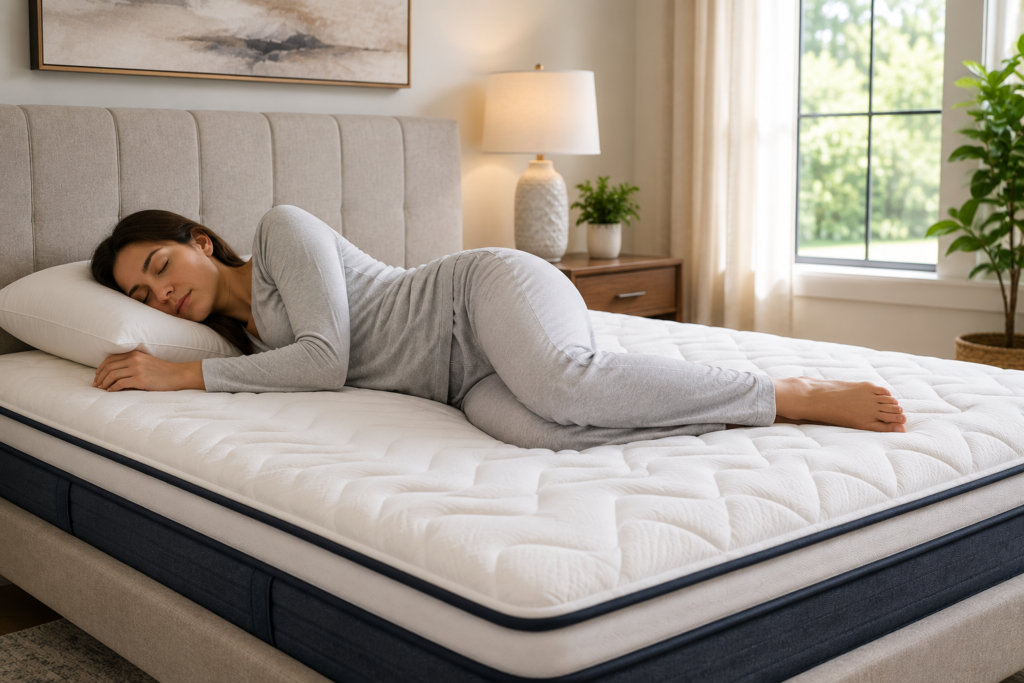
Your preferred sleeping position influences the type of support your body needs.
● Side Sleepers
Side sleepers often benefit from mattresses that cushion the shoulders and hips.
Popular choices include:
- Memory foam mattresses
- Medium-soft hybrid mattresses
These options help reduce pressure points while supporting spinal alignment.
● Back Sleepers
Back sleepers generally need balanced support.
Suitable options include:
- Medium mattresses
- Medium-firm hybrid mattresses
- Latex mattresses
Proper support helps maintain the natural curve of the spine.
● Stomach Sleepers
Stomach sleepers often prefer firmer mattresses that help prevent excessive sinking around the hips.
Medium-firm to firm mattresses usually provide better support for this sleeping position.
● Combination Sleepers
People who change positions during the night benefit from responsive mattresses that allow easy movement.
Hybrid and latex mattresses are commonly recommended for combination sleepers because they balance support with responsiveness.
Mattress Size Guide
Choosing the correct mattress size depends on your room dimensions and sleeping arrangements.
| Mattress Size | Best For |
| Twin | Children and small bedrooms |
| Twin XL | Taller individuals |
| Full | Single adults |
| Queen | Couples and guest rooms |
| King | Couples wanting extra space |
| California King | Taller sleepers |
Measure your bedroom before buying to ensure enough space remains for walking and furniture placement.
➢ Consider Bedroom Space
A larger mattress isn’t always the best choice.
Before purchasing:
- Measure the room carefully.
- Leave walking space around the bed.
- Consider door clearance.
- Think about additional furniture.
A well-proportioned bedroom feels more comfortable and functional.
➢ Think About Motion Transfer
If you share your bed, motion transfer can affect sleep quality.
Mattresses that reduce motion transfer help minimize disturbances when one person changes position during the night.
Memory foam and many hybrid mattresses are designed to reduce movement across the sleeping surface.
➢ Evaluate Edge Support
Strong edge support makes it easier to sit or sleep near the edge of the mattress.
Good edge support may be helpful for:
- Couples
- Older adults
- Smaller bedrooms where the bed is frequently used as seating
Hybrid and innerspring mattresses often provide stronger edge support than all-foam models.
➢ Cooling Features
Some homeowners naturally sleep warmer than others.
Mattresses with cooling features may include:
- Breathable covers
- Ventilated foam
- Gel-infused foam
- Coil support systems that encourage airflow
Choosing breathable materials can improve comfort throughout the night.
Mattress Materials Explained
The materials inside a mattress affect comfort, durability, temperature regulation, and overall performance. Understanding these materials makes it easier to compare different models.
● Memory Foam
Memory foam molds to the body’s shape and provides excellent pressure relief. It is often chosen by people who want a cushioning sleeping surface and reduced motion transfer.
● Latex Foam
Latex offers a responsive feel that allows sleepers to move more easily while still providing consistent support. Many homeowners appreciate its durability and resilience.
● Pocketed Coils
Pocketed coils are individually wrapped springs that move independently. They help improve support, reduce motion transfer compared to traditional connected coils, and promote airflow.
● High-Density Support Foam
Many mattresses include high-density foam as the base layer. This material provides structural support and helps maintain the mattress’s shape over time.
● Cooling Materials
Some mattresses include cooling technologies designed to improve airflow and reduce heat buildup.
Examples include:
- Gel-infused foam
- Breathable fabric covers
- Open-cell foam
- Ventilated coil systems
While cooling features may improve comfort for some sleepers, individual experiences can vary depending on room temperature, bedding, and personal preferences.
Consider Mattress Thickness
Mattresses come in a variety of thicknesses, typically ranging from 8 to 14 inches or more.
| Thickness | Best For |
| 8–10 inches | Guest rooms, children, lighter individuals |
| 10–12 inches | Most homeowners |
| 12–14 inches | Additional comfort layers and premium designs |
| 14+ inches | Luxury models with multiple support layers |
A thicker mattress does not automatically mean better comfort. Focus on the overall design and support rather than height alone.
Durability and Expected Lifespan
A mattress is a long-term investment, so durability should be part of your decision.
The lifespan depends on factors such as:
- Material quality
- Construction
- Frequency of use
- Body weight
- Proper support from the bed frame
Higher-quality materials generally maintain their comfort and support longer than lower-quality alternatives.
Choosing a Mattress for Couples
If two people share a bed, consider features that improve comfort for both sleepers.
Look for:
- Motion isolation
- Strong edge support
- Balanced firmness
- Good airflow
- Adequate sleeping space
A queen mattress works well for many couples, while a king mattress provides additional personal space if the bedroom allows.
Choosing a Mattress for Guest Rooms
Guest room mattresses should accommodate a variety of sleeping styles.
A medium-firm mattress is often a practical choice because it offers balanced comfort for many different guests.
Queen mattresses are popular for guest bedrooms because they provide flexibility without requiring excessive floor space.
Setting a Realistic Budget
Mattresses are available across a wide range of prices.
Instead of focusing only on cost, evaluate the overall value by considering:
- Material quality
- Construction
- Warranty
- Customer support
- Durability
- Features that match your needs
Purchasing a mattress that meets your comfort and support requirements is often more beneficial than selecting the lowest-priced option.
Accessories That Improve Mattress Performance
The right accessories can help protect your investment and improve comfort.
Consider adding:
- Mattress protector
- Supportive bed frame
- Breathable sheets
- Mattress topper if additional cushioning is desired
- Quality pillows suited to your sleeping position
A waterproof mattress protector can help guard against spills, dust, and everyday wear while extending the life of the mattress.
Common Mattress Buying Mistakes
Avoid these common mistakes when shopping for a new mattress.
➔ Buying Based Only on Price
A lower price doesn’t always represent better value. Comfort, durability, and support should remain the primary considerations.
➔ Ignoring Your Sleeping Position
Different sleeping positions require different levels of support.
Choosing a mattress that matches your sleeping style often improves long-term comfort.
➔ Choosing the Wrong Mattress Size
Always measure your bedroom before purchasing.
A mattress that is too large can make the room feel crowded and limit movement around the bed.
➔ Overlooking Edge Support
If you frequently sit on the edge of the bed or share the mattress with a partner, edge support may improve overall comfort and usability.
➔ Forgetting About Bedroom Temperature
If you tend to sleep warm, consider mattresses with breathable materials or cooling features to promote better airflow.
Mattress Buying Checklist
Before making your purchase, review this checklist.
- ✓ Identified your primary sleeping position
- ✓ Chosen the correct mattress size
- ✓ Selected an appropriate firmness level
- ✓ Compared mattress materials
- ✓ Considered motion isolation
- ✓ Evaluated edge support
- ✓ Reviewed cooling features
- ✓ Measured your bedroom
- ✓ Considered long-term durability
- ✓ Selected accessories such as a mattress protector
Using this checklist helps simplify the buying process and ensures you consider the features that matter most.
Conclusion
Choosing the right mattress is about finding the balance between comfort, support, durability, and practicality. By understanding the different mattress types, firmness levels, materials, and sizes, homeowners can make an informed decision that suits their sleeping habits and bedroom space. Taking the time to evaluate features such as motion isolation, edge support, cooling materials, and overall construction helps narrow the options and reduces the chances of buyer’s regret.
Rather than focusing on trends or marketing claims, prioritize the features that matter most to your daily comfort. A mattress that supports your preferred sleeping position, fits your room, and aligns with your budget is more likely to provide lasting satisfaction. Pairing your mattress with a supportive bed frame, quality pillows, and a mattress protector can further enhance its performance and longevity. With careful planning and the right information, you can confidently choose a mattress that helps create a comfortable, relaxing bedroom for years to come.
Frequently Asked Questions
1- What type of mattress is best for most homeowners?
There is no single mattress that works best for everyone. Hybrid mattresses are a popular choice because they combine supportive coils with comfortable foam layers, making them suitable for many sleeping styles.
2- Is memory foam or hybrid better?
Both have advantages. Memory foam provides excellent pressure relief and motion isolation, while hybrid mattresses offer balanced support, improved airflow, and a more responsive feel.
3- How firm should a mattress be?
The ideal firmness depends on your sleeping position, body type, and personal comfort preferences. Medium to medium-firm mattresses are comfortable for many people, but individual needs vary.
4- Should couples buy a king mattress?
If the bedroom has enough space, a king mattress provides more personal sleeping area, which may improve comfort for couples.
5- Do expensive mattresses always perform better?
Not necessarily. Higher-priced mattresses may include premium materials or additional features, but the best choice is one that matches your comfort preferences, support needs, and budget.