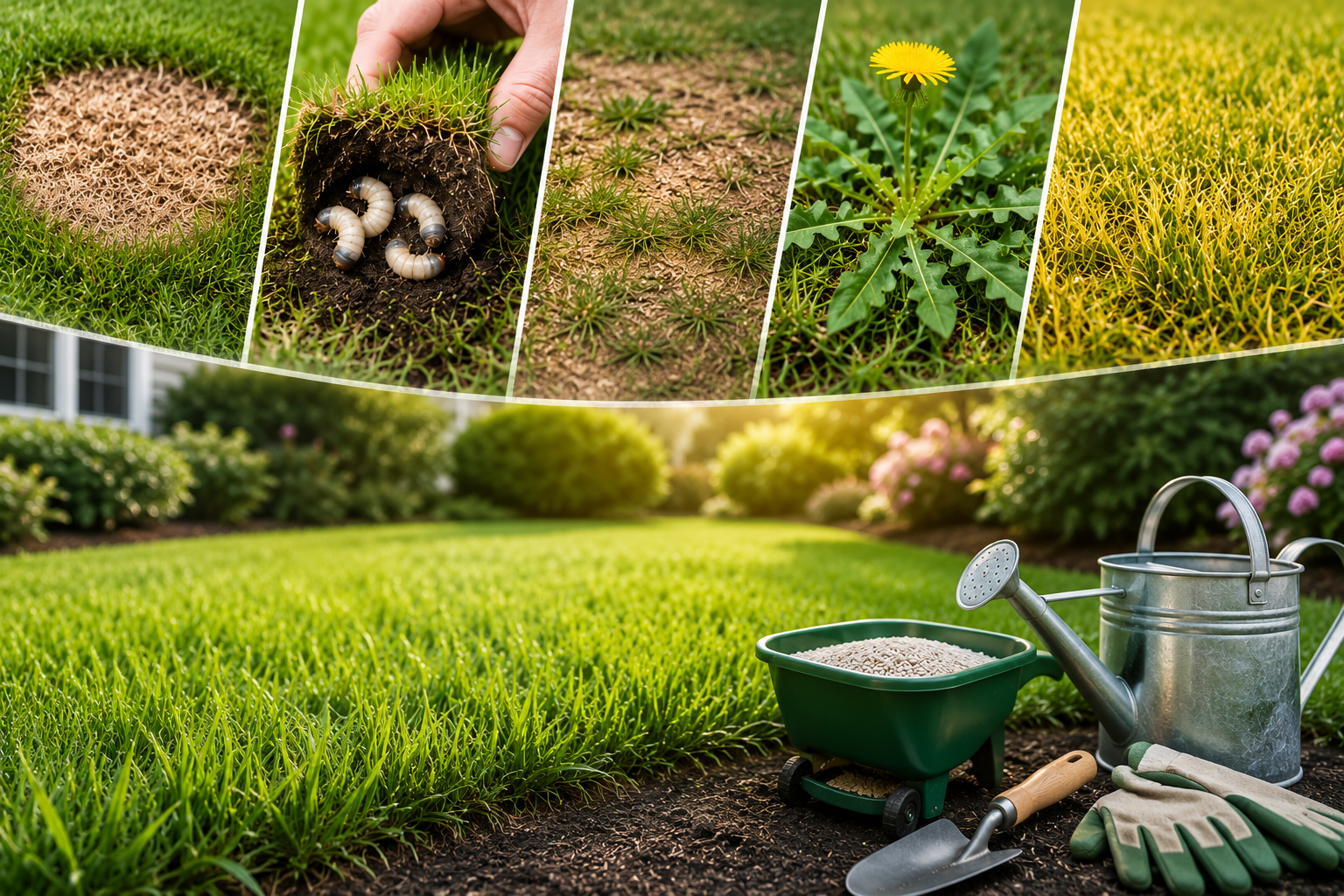
Almost every lawn develops a problem at some point: brown patches, thinning grass, sudden weed invasions, or areas that just never seem to look as good as the rest of the yard. The good news is that most common lawn problems trace back to a fairly small set of underlying causes, and once you correctly identify what’s actually happening, the fix is usually more straightforward than it initially seems.
This guide walks through the most frequent lawn problems American homeowners encounter, how to accurately diagnose what’s causing them, and practical, proven fixes for each one.
Common Lawn Problems
Most lawn problems fall into one of four categories: improper watering (too much, too little, or at the wrong time), incorrect mowing practices, nutrient or soil issues, and pest or disease pressure. Before treating any specific symptom, take a moment to rule out these underlying causes first, since treating a symptom (like applying fungicide to a brown patch) without addressing the actual cause (like poor watering timing) often means the problem simply returns.
How to Diagnose a Lawn Problem Correctly
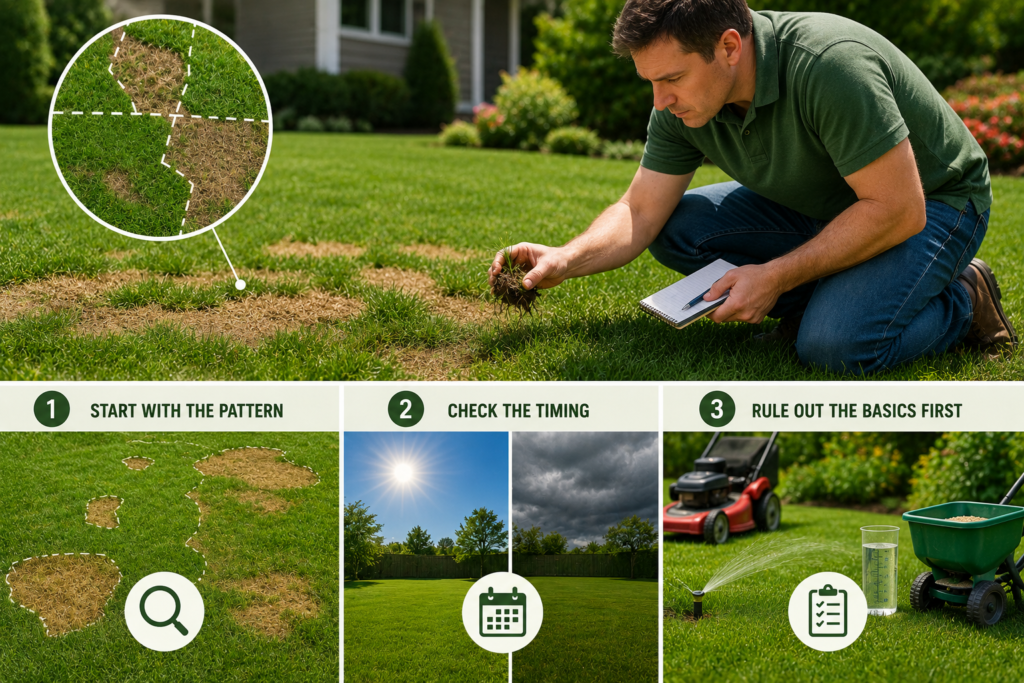
Step 01: Start With the Pattern
Irregular, scattered brown patches often suggest pest damage or disease, while large, uniform yellowing across the entire lawn more often points to a nutrient deficiency or watering issue. Patches that follow a clear geometric or linear pattern (like a straight line or circular shape) often indicate an equipment or application issue, like uneven sprinkler coverage or a fertilizer spreader malfunction.
Step 02:Check the Timing
When a problem appears matters considerably. Sudden damage during a hot, dry stretch suggests heat or drought stress, while gradual thinning over multiple seasons suggests a longer-term soil or maintenance issue.
Step 03:Rule Out the Basics First
Before assuming a complex pest or disease problem, confirm your basic maintenance, mowing height, watering schedule, and recent fertilizer application are actually correct, since these fundamentals cause the majority of lawn problems homeowners encounter.
Common Lawn Problems and How to Fix Them
1- Problem: Brown Patches or Dead Spots
Possible Causes
Brown patches can result from several distinct issues: dog urine spots (typically circular with a darker green ring around a dead center), fungal disease (often irregular, spreading patches), grub damage (patches that lift easily like loose carpet, revealing chewed roots underneath), or simply uneven watering coverage leaving certain areas consistently dry.
How to Fix It
For urine spots, thoroughly water the affected area to dilute concentrated nitrogen, then reseed once the dead grass has been raked away. For suspected fungal disease, adjust watering to early morning only and consider a targeted fungicide if the problem is spreading rather than isolated. For grub damage, confirm the presence of grubs by lifting a section of the affected turf, then treat with an appropriate grub control product timed to the grub’s specific life cycle stage. For uneven watering, check and adjust sprinkler coverage to eliminate dry zones.
2- Problem: Thinning or Sparse Grass
Possible Causes
Thinning grass often results from compacted soil restricting root development, insufficient sunlight for the specific grass type planted, mowing too short and stressing the grass, or simply an aging lawn that hasn’t been overseeded in several years.
How to Fix It
Core aeration relieves soil compaction, allowing water, air, and nutrients to reach roots more effectively. For shade-related thinning, consider overseeding with a more shade-tolerant grass variety suited to that specific area, or address the shade source itself if pruning nearby trees is a realistic option. Adjust mowing height to the correct range for your grass type, and follow up with overseeding in thin areas, ideally timed to your grass type’s optimal planting window.
3- Problem: Yellowing Grass
Possible Causes
Yellowing across large areas typically points to a nitrogen deficiency, though it can also result from overwatering (which leaches nutrients and can suffocate roots), certain lawn diseases, or naturally occurring iron deficiency in some soil types.
How to Fix It
A soil test is the most reliable way to confirm the specific cause before treating, since applying nitrogen fertilizer to a lawn actually suffering from overwatering will worsen rather than solve the problem. If a nutrient deficiency is confirmed, apply an appropriately balanced fertilizer following label directions carefully, since over-application can cause its own set of problems.
4- Problem: Weeds Taking Over
Possible Causes
Weed pressure typically increases when the lawn itself is thin or stressed, leaving bare soil and reduced competition for weed seeds to establish. Common categories include broadleaf weeds (dandelions, clover), grassy weeds (crabgrass), and sedges (nutsedge), each requiring somewhat different treatment approaches.
How to Fix It
Pre-emergent herbicide, applied before weed seeds germinate (typically early spring for summer annual weeds like crabgrass), prevents new weeds from establishing in the first place. For existing weeds, post-emergent herbicides targeted to the specific weed type (broadleaf-specific products won’t effectively treat grassy weeds, and vice versa) address current growth. Beyond chemical treatment, improving overall lawn density through proper mowing, watering, and fertilizing reduces the bare soil and light exposure weeds need to establish in the first place.
5- Problem: Fungal Disease
Common Types and Their Appearance
Brown patch typically appears as circular patches with a darker, smoky-colored border, particularly in hot, humid conditions. Dollar spot creates small, silver-dollar-sized brown patches scattered across the lawn. Rust gives grass blades an orange-red, powdery appearance, often more of an aesthetic concern than a serious health threat.
How to Fix It
Adjust watering to early morning only, allowing grass blades to dry fully before evening, since prolonged leaf wetness is the primary condition most fungal diseases need to develop. Improve air circulation in the affected area if dense shrubs or structures are trapping humidity. For persistent or spreading disease, a targeted fungicide, applied according to label directions and matched to the specific disease identified, can help control an active outbreak, though addressing the underlying moisture conditions matters more for long-term prevention.
6- Problem: Moss Growth
Possible Causes
Moss typically establishes in areas with poor drainage, compacted soil, excessive shade, or low soil pH, conditions where grass struggles to compete effectively.
How to Fix It
Address the underlying cause rather than just removing visible moss, since it will simply return otherwise. Improve drainage and relieve compaction through aeration; consider a soil pH test and apply lime if the soil is too acidic for healthy grass growth, and evaluate whether pruning nearby trees or shrubs could improve sunlight reaching the affected area. Once underlying conditions are corrected, rake out existing moss and overseed the area.
7- Problem: Excessive Thatch Buildup
What Thatch Actually Is
Thatch is a layer of dead grass stems, roots, and debris that accumulates between the soil surface and actively growing grass. A thin layer (under half an inch) is normal and even beneficial, but excessive buildup restricts water and nutrients from reaching the soil and roots effectively.
How to Fix It
Core aeration helps break up and redistribute moderate thatch buildup naturally. For more severe thatch problems, dethatching with a specialized rake or machine physically removes the excess layer. Preventing future buildup involves avoiding over-fertilizing (which accelerates growth and thatch accumulation) and mowing regularly rather than allowing clippings to accumulate excessively.
8- Problem: Bare or Compacted Areas from Foot Traffic
Possible Causes
High-traffic areas, along fence lines, near play equipment, or common walking paths, experience soil compaction and grass wear that regular lawn maintenance can’t fully offset.
How to Fix It
Core aeration in these specific high-traffic zones helps relieve compaction more effectively than treating the whole lawn identically. Consider overseeding with a more traffic-tolerant grass variety in these specific areas, or, for particularly persistent problem spots, installing a stepping stone path or other hardscape solution to redirect consistent foot traffic away from struggling turf.
Quick Diagnosis Table
| Symptom | Likely Cause(s) | First Step to Fix |
| Circular dead spot with green ring | Dog urine | Water thoroughly, reseed |
| Irregular spreading brown patches | Fungal disease | Adjust to morning watering |
| Patches that lift like carpet | Grub damage | Confirm grubs, apply targeted treatment |
| Uniform yellowing | Nutrient deficiency or overwatering | Soil test before fertilizing |
| Thin, sparse grass | Compaction, shade, or short mowing | Aerate, adjust mowing height |
| Increasing weeds | Thin lawn, bare soil | Pre-emergent herbicide, improve density |
| Green, spongy patches | Moss (poor drainage/shade/pH) | Address underlying cause, then reseed |
| Spongy layer under grass | Excessive thatch | Aerate or dethatch |
When to Treat Yourself vs Call a Professional
DIY-Appropriate Problems
Most common issues, isolated urine spots, minor thatch buildup, early-stage weed pressure, and straightforward watering or mowing adjustments, are well within reach of a motivated homeowner using widely available products and basic tools.
When Professional Help Makes Sense
Persistent or rapidly spreading disease that doesn’t respond to basic corrective care, widespread grub or pest infestations, or situations where you genuinely can’t identify the underlying cause despite trying are all reasonable times to bring in a lawn care professional or consult your local agricultural extension office, since accurate identification significantly affects whether a treatment will actually work.
Preventing Problems Before They Start
The Foundational Habits That Prevent Most Issues
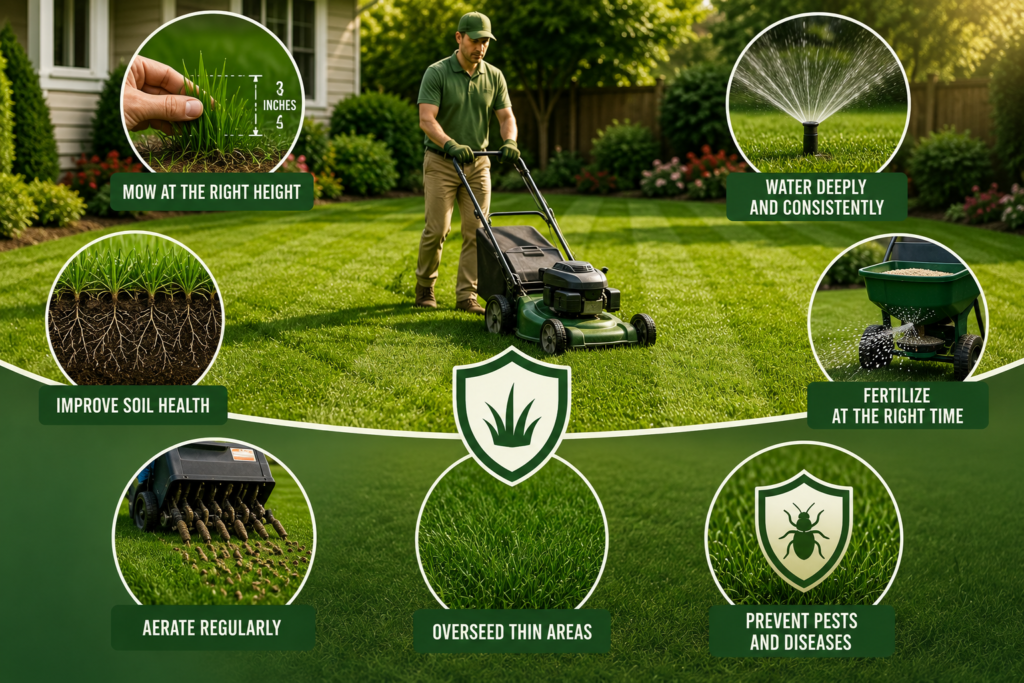
A consistent routine- mowing at the correct height using the one-third rule, watering deeply and infrequently in the early morning, fertilizing at the appropriate time for your grass type, and annual or biannual aeration- prevents the large majority of common lawn problems before they ever develop, making prevention considerably less effort than treatment after the fact.
Regular Monitoring
Walking your lawn periodically during the growing season, rather than only noticing problems once they’ve become visually obvious, lets you catch and address developing issues while they’re still small and considerably easier to correct.
Practical Buying Tips
- Keep a basic soil test kit or your local extension office’s testing service on hand before assuming any yellowing or thinning issue is nutrient-related
- Choose fungicides, herbicides, and pest treatments specifically labeled for your identified problem and grass type, rather than a generic all-purpose product
- Consider a core aerator (or renting one seasonally) if compaction and thatch are recurring issues in your lawn
- Keep grass seed matched to your specific grass type on hand for quick overseeding once underlying problems are corrected
Common Mistakes to Avoid
- Treating symptoms without diagnosing the cause, applying fungicide or fertilizer without confirming what’s actually wrong
- Over-fertilizing in response to yellowing, when overwatering or disease may be the actual underlying cause
- Ignoring the pattern and timing of damage, which often provides the clearest clues to accurate diagnosis
- Skipping soil testing, guessing at fertilizer needs rather than addressing your lawn’s actual, specific deficiencies
- Waiting too long to address thin areas, allowing weeds to establish in bare soil that could have been overseeded proactively
Conclusion
Nearly every common lawn problem traces back to a specific, identifiable cause, and correctly diagnosing that cause before treating is what separates a lasting fix from a symptom that keeps returning. Whether you’re dealing with brown patches, thinning grass, weeds, or fungal disease, taking the time to check the pattern, timing, and underlying maintenance conditions first will point you toward the right solution far more reliably than guessing. With this troubleshooting approach and a consistent preventive routine going forward, most common lawn problems become considerably easier to catch early and resolve for good.
Frequently Asked Questions
1- Why is my grass dying in random patches?
This can result from several causes, including fungal disease, grub damage, dog urine, or uneven watering coverage. Checking the pattern (circular vs irregular) and whether the patch lifts easily from the soil helps narrow down the likely cause.
2- How do I know if my lawn has grubs?
Lift a section of the affected turf; if it peels back easily like loose carpet and you see white, C-shaped larvae in the soil underneath, grubs are likely the cause of the damage.
3- What causes yellow grass even with regular watering?
Yellowing despite regular watering often points to overwatering itself (which can leach nutrients and stress roots) rather than insufficient watering, along with possible nutrient deficiencies confirmed through soil testing.
4- How do I get rid of moss in my lawn permanently?
Address the underlying cause, poor drainage, excessive shade, or low soil pH, since simply removing visible moss without correcting these conditions typically results in moss returning.
5- Is thatch buildup bad for my lawn?
A thin layer is normal and even beneficial, but excessive thatch (more than half an inch) restricts water and nutrients from reaching the soil, requiring aeration or dethatching to correct.
6- How can I prevent weeds from taking over my lawn?
Apply pre-emergent herbicide before weed seeds germinate, and improve overall lawn density through proper mowing, watering, and fertilizing, since a thick, healthy lawn naturally leaves less room for weeds to establish.
7- When should I call a lawn care professional instead of treating a problem myself?
Persistent or rapidly spreading problems that don’t respond to basic corrective care, or situations where you can’t confidently identify the underlying cause, are reasonable times to seek professional assessment.