
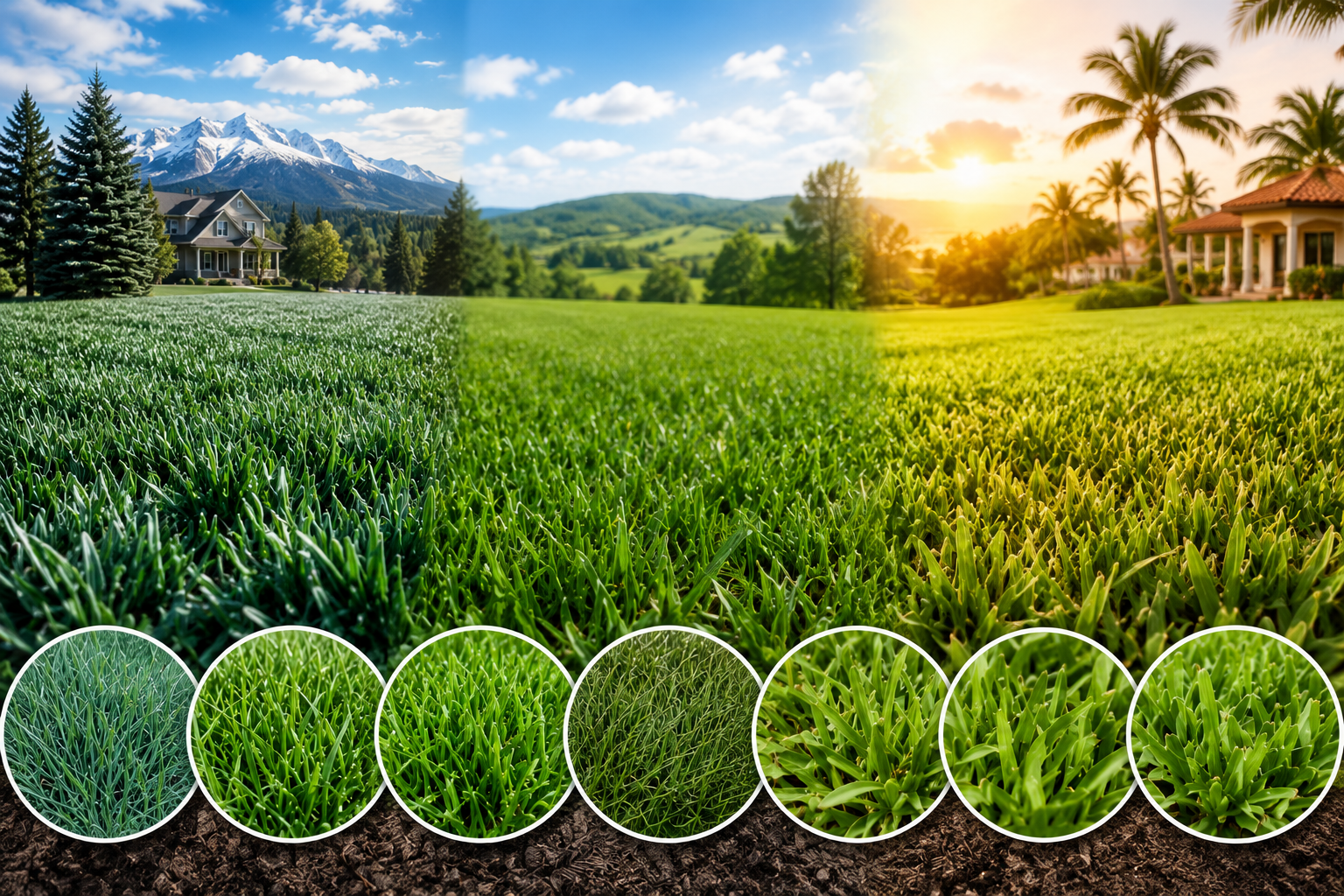
Choosing the right grass type for your specific climate is arguably the single most important lawn care decision you’ll make, more consequential than mowing technique, fertilizer choice, or watering schedule. Plant the wrong grass for your region, and you’ll spend years fighting an uphill battle against a lawn that’s simply not suited to your local conditions, no matter how much time and money you invest in care.
This guide breaks down the best grass types for climate zones across the United States, covering cool-season, warm-season, and transition zone options, so you can choose a grass that will genuinely thrive where you live rather than constantly struggle against it.
Best Grass Types for Different Climates
Grass types fall into two broad categories based on their ideal growing temperatures: cool-season grasses (like Kentucky bluegrass, tall fescue, and perennial ryegrass) thrive in the northern United States, growing most actively during spring and fall. Warm-season grasses (like Bermuda, zoysia, and St. Augustine) thrive throughout the southern United States, growing most actively during the heat of late spring through summer. If you live in the transition zone, a band across the middle of the country where neither cool-season nor warm-season grasses perform ideally year-round, you’ll need to weigh trade-offs specific to that zone rather than a clear-cut regional match.
Understanding the Three US Climate Zones for Grass
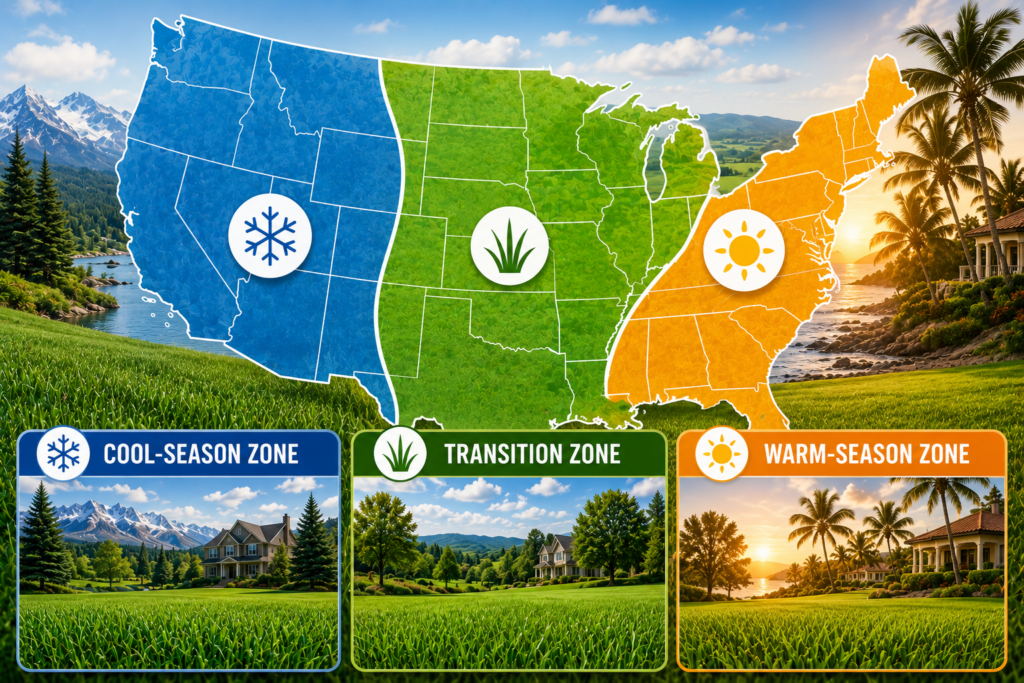
The Cool-Season Zone
Covering the northern United States, including the Northeast, Upper Midwest, and Pacific Northwest, this zone experiences cold winters and moderate summers, favoring grasses that grow actively in cooler temperatures and go semi-dormant during peak summer heat.
The Warm-Season Zone
Covering the southern United States, including the Deep South, Gulf Coast, and much of the Southwest, this zone experiences hot summers and mild winters, favoring grasses that grow actively in heat and go dormant (typically turning brown) during cooler winter months.
The Transition Zone
A band stretching roughly across the middle of the country, including parts of the Mid-Atlantic, Central Plains, and parts of the Southwest and California, this zone experiences both hot summers and cold winters severe enough that neither cool-season nor warm-season grasses perform optimally year-round, requiring more careful, climate-specific grass selection and often some degree of compromise.
This zone system isn’t arbitrary it’s based on research from university agricultural extension offices across the country (Penn State, Clemson, Texas A&M AgriLife, and others), which maintain detailed, region-specific grass recommendations based on decades of turfgrass trials in local soil and climate conditions.
Cool-Season Grass Types
Kentucky Bluegrass
Known for its rich, dense color and self-repairing growth habit through underground rhizomes, Kentucky bluegrass is a popular choice throughout the cool-season zone, particularly for lawns prioritizing appearance. It requires more consistent watering and fertilizing than some alternatives, and it’s slower to establish from seed than several other cool-season options.
Tall Fescue
Valued for its deep root system and strong drought tolerance relative to other cool-season grasses, tall fescue handles heat and reduced watering considerably better than Kentucky bluegrass while maintaining reasonable year-round appearance. It’s often chosen for lawns in the cooler end of the transition zone specifically because of this improved heat tolerance.
Perennial Ryegrass
Fast-germinating and quick to establish, perennial ryegrass is often used for overseeding existing lawns or filling in bare patches quickly. It has moderate drought tolerance and is frequently blended with Kentucky bluegrass to combine ryegrass’s fast establishment with bluegrass’s long-term density and self-repair.
Fine Fescue
A shade-tolerant option well suited to lawns with significant tree cover, fine fescue generally requires less fertilizer and water than other cool-season grasses, though it typically handles heavy foot traffic less well than tougher options like tall fescue.
Cool-Season Grass Comparison
| Grass Type | Shade Tolerance | Drought Tolerance | Traffic Tolerance | Maintenance Level |
| Kentucky bluegrass | Low to moderate | Low to moderate | Good (self-repairing) | Higher |
| Tall fescue | Moderate | Good | Very good | Moderate |
| Perennial ryegrass | Low | Moderate | Good | Moderate |
| Fine fescue | High | Moderate | Lower | Lower |
Warm-Season Grass Types
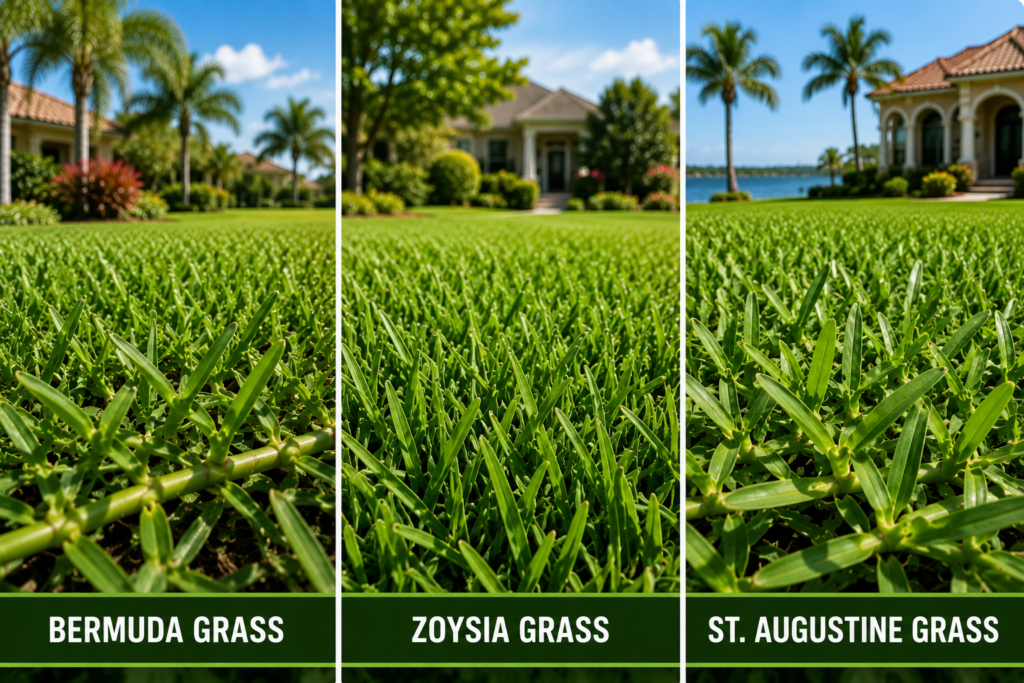
Bermuda Grass
One of the most heat- and drought-tolerant grass types available, Bermuda grass spreads aggressively through both above-ground runners and underground rhizomes, making it excellent for high-traffic lawns and quick recovery from damage. It requires full sun and doesn’t tolerate shade well, and its aggressive growth habit means it can spread into garden beds if not properly edged.
Zoysia Grass
Known for a dense, carpet-like texture and good overall traffic tolerance, zoysia grass handles moderate shade better than Bermuda while still offering solid heat and drought tolerance. It establishes more slowly than Bermuda, which can mean a longer wait before a new lawn reaches full density.
St. Augustine Grass
Featuring broad, coarse blades and excellent shade tolerance relative to other warm-season options, St. Augustine grass is a popular choice in humid, coastal climates like the Gulf Coast and Florida. It has lower cold tolerance than Bermuda or zoysia and lower traffic tolerance, making it better suited to lawns without heavy foot traffic.
Centipede Grass
Often called a “lazy man’s grass” for its low fertilizer and maintenance needs, centipede grass grows slowly and requires less frequent mowing than most alternatives. It has lower cold and traffic tolerance than Bermuda or zoysia, and it’s sensitive to over-fertilizing, which can actually harm rather than help this particular grass type.
Warm-Season Grass Comparison
| Grass Type | Shade Tolerance | Drought Tolerance | Traffic Tolerance | Maintenance Level |
| Bermuda grass | Low | Excellent | Excellent | Higher (frequent mowing) |
| Zoysia grass | Moderate | Good | Very good | Moderate |
| St. Augustine grass | High | Moderate | Lower | Moderate |
| Centipede grass | Low to moderate | Moderate | Lower | Low |
Grass Options for the Transition Zone
Why the Transition Zone Is Tricky
Homeowners in the transition zone face a genuine trade-off: warm-season grasses can suffer winter damage or die back in colder snaps, while cool-season grasses can struggle and thin out during the region’s hot, humid summers. There’s no single grass type that performs flawlessly year-round in this zone, which is why grass selection here often comes down to prioritizing which season’s performance matters more to you.
Tall Fescue: Often the Best Cool-Season Compromise
Among cool-season options, tall fescue’s above-average heat and drought tolerance makes it one of the more commonly recommended choices for the cooler end of the transition zone, offering reasonable summer performance without fully sacrificing cool-season appearance and growth patterns.
Zoysia Grass: Often the Best Warm-Season Compromise
Among warm-season options, zoysia’s better cold tolerance relative to Bermuda or St. Augustine makes it a common choice for the warmer end of the transition zone, though it will still typically go dormant and brown during winter.
Grass Blends
Some transition zone homeowners choose seed blends combining multiple cool-season grass types (such as tall fescue with a smaller percentage of Kentucky bluegrass or perennial ryegrass) to balance different strengths, drought tolerance, self-repair, and quick establishment, within a single lawn.
How to Choose the Right Grass for Your Specific Yard
Step 1: Identify Your Climate Zone
Determine whether you’re in the cool-season, warm-season, or transition zone based on your general geographic region, since this narrows your options considerably before considering any other factor.
Step 2: Assess Your Sun Exposure
Even within the right climate zone, individual lawns vary significantly in shade coverage. A yard with substantial tree cover will do better with a shade-tolerant option (like fine fescue in cool-season zones or St. Augustine in warm-season zones) regardless of what’s generally recommended for the broader region.
Step 3: Consider Foot Traffic
Lawns with kids, pets, or frequent outdoor activity benefit from more traffic-tolerant, self-repairing grass types (like Kentucky bluegrass or tall fescue in cool-season zones, or Bermuda or zoysia in warm-season zones), while lower-traffic ornamental lawns have more flexibility to prioritize appearance or lower maintenance instead.
Step 4: Evaluate Water Availability and Restrictions
In regions with water restrictions or a general priority on conservation, drought-tolerant options like tall fescue (cool-season) or Bermuda and zoysia (warm-season) reduce ongoing watering needs considerably compared to thirstier alternatives like Kentucky bluegrass or St. Augustine.
Step 5: Match Maintenance Tolerance
Some grass types genuinely require more frequent mowing, fertilizing, and general attention than others. If low maintenance is a priority, centipede grass (warm-season) or fine fescue (cool-season, in shaded areas) generally demand less ongoing effort than higher-maintenance options like Kentucky bluegrass or Bermuda.
Drought-Tolerant Grass Options by Zone
Water conservation has become an increasingly common priority for many American homeowners, and grass choice plays a meaningful role here.
| Climate Zone | Most Drought-Tolerant Option |
| Cool-season | Tall fescue |
| Warm-season | Bermuda grass |
| Transition zone | Tall fescue or zoysia, depending on regional emphasis |
Establishing a New Lawn: Seed vs Sod
Growing From Seed
Seeding is generally more affordable and offers a wider selection of specific grass varieties and blends, though it takes considerably longer to establish a fully mature, dense lawn, often a full growing season or more.
Installing Sod
Sod provides an essentially instant lawn, with pre-grown grass installed directly onto prepared soil. It costs meaningfully more than seeding and offers a more limited selection of available grass varieties compared to what’s available in seed form.
Which to Choose
Seeding suits homeowners with time flexibility and a specific grass type or blend preference, while sod suits those wanting immediate results or dealing with erosion-prone slopes where seed might wash away before establishing.
Common Mistakes to Avoid
- Choosing a grass type based on appearance alone, without considering whether it’s genuinely suited to your climate zone
- Ignoring shade conditions, planting a sun-loving grass type in a heavily shaded yard and wondering why it thins out
- Underestimating transition zone challenges, expecting either cool-season or warm-season grass to perform flawlessly year-round in this genuinely difficult middle zone
- Overlooking foot traffic needs, choosing a delicate, low-traffic-tolerant grass for a yard with active kids or pets
- Over-fertilizing sensitive grass types like centipede grass, which can actually harm rather than help certain warm-season varieties
Conclusion
Choosing the best grass types for climate conditions in your specific region is the foundation that determines how much ongoing effort your lawn will require, and how well it will genuinely thrive rather than just survive. Identify your climate zone first, then narrow your choice based on your yard’s specific shade, traffic, and water considerations, rather than choosing based on appearance or what a neighbor happens to have. Get this foundational decision right, and every other aspect of lawn care- mowing, watering, fertilizing- becomes considerably easier and more successful going forward.
Frequently Asked Questions
1- How do I know if I have cool-season or warm-season grass?
Check whether your grass stays green through winter (likely cool-season) or goes dormant and brown during cold months (likely warm-season), or consult your local agricultural extension office for region-specific guidance.
2- What is the best grass type for a shaded yard?
Fine fescue is generally the top choice for shaded cool-season lawns, while St. Augustine grass offers the best shade tolerance among common warm-season options.
3- What grass type is best for high-traffic lawns with kids or pets?
Tall fescue and Kentucky bluegrass perform well in cool-season zones, while Bermuda and zoysia grass offer strong traffic tolerance in warm-season zones.
4- What is the most drought-tolerant grass type?
Bermuda grass is among the most drought-tolerant warm-season options, while tall fescue offers the best drought tolerance among common cool-season grasses.
5- Can I grow a warm-season grass in a cool-season climate?
Generally, no, warm-season grasses won’t survive cold winters typical of the cool-season zone and will die back rather than simply going dormant, unlike in their native warm-season regions.
6- What grass should I choose if I live in the transition zone?
Tall fescue is one of the more commonly recommended cool-season options for its improved heat tolerance, while zoysia is a common warm-season choice for its relatively better cold tolerance, with the right choice depending on which seasonal performance matters more to your priorities.
7- Is it better to seed or sod a new lawn?
Seeding is more affordable and offers wider variety selection but takes considerably longer to establish, while sod provides an essentially instant lawn at a higher cost and with more limited variety options.