A quality BBQ grill is an investment that can provide years of outdoor cooking enjoyment when properly maintained. Whether you own a gas grill, charcoal grill, or pellet grill, regular cleaning helps improve cooking performance, extends the grill’s lifespan, and keeps food tasting its best. Unfortunately, many homeowners only clean their grill when it becomes heavily coated with grease and burnt food, making maintenance much more difficult than it needs to be.
Cleaning your grill doesn’t have to be a time-consuming chore. A few minutes of routine maintenance after each cookout can prevent grease buildup, reduce flare-ups, improve heat distribution, and help protect important components from rust and corrosion.
Different grill types require slightly different maintenance routines, but the basic principles remain the same. Cleaning cooking grates, removing grease, inspecting burners or fire pots, and protecting the grill from weather all contribute to better long-term performance.
This guide explains how to clean and maintain every major type of BBQ grill safely and effectively, helping you keep your outdoor cooking equipment in excellent condition throughout the year.
Why Regular Grill Maintenance Matters
Cleaning your grill isn’t only about appearance.
Routine maintenance helps:
- Improve cooking performance
- Prevent grease fires
- Extend grill lifespan
- Reduce rust and corrosion
- Maintain even heating
- Improve food flavor
- Protect your investment
Neglecting maintenance allows grease, food residue, and moisture to build up, which can eventually affect both safety and performance.
How Often Should You Clean Your Grill?
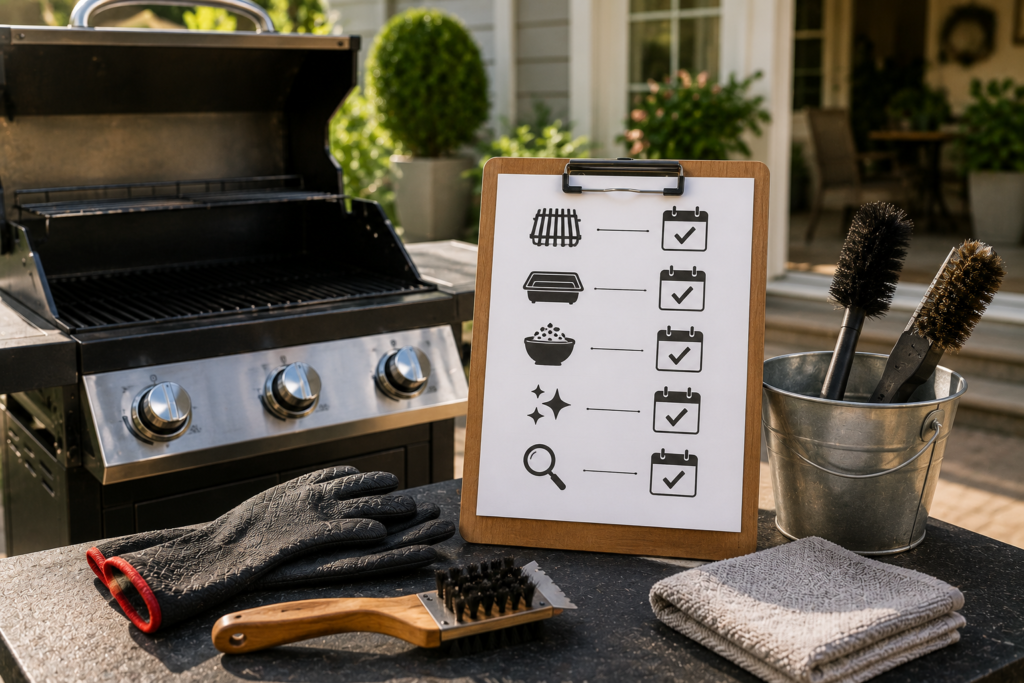
Different cleaning tasks should be performed at different intervals.
| Maintenance Task | Recommended Frequency |
| Brush cooking grates | After every use |
| Empty grease tray | Every few uses |
| Remove ash (charcoal) | After every cook |
| Clean grill exterior | Monthly |
| Deep clean interior | Every 2–3 months |
| Inspect burners and components | Every season |
Following a regular schedule makes each cleaning session quicker and easier.
Essential Grill Cleaning Supplies
Before getting started, gather a few basic cleaning tools.
Recommended supplies include:
- Grill brush
- Plastic scraper
- Microfiber cloth
- Warm water
- Mild dish soap
- Bucket
- Soft sponge
- Non-abrasive scrub pad
- Paper towels
- Heat-resistant gloves
Avoid harsh chemicals unless the manufacturer specifically recommends them the same rule applies across most everyday cleaning tools around the house.
Step 1: Let the Grill Cool Safely
Never begin cleaning immediately after cooking.
Allow the grill to cool enough that surfaces are safe to touch while still slightly warm.
Slight warmth helps loosen grease, making cleaning easier.
For gas grills:
- Turn off burners.
- Close the propane tank or gas supply.
For charcoal grills:
- Allow charcoal to cool completely.
- Dispose of ashes safely in a metal container.
For pellet grills:
- Complete the manufacturer’s shutdown cycle.
- Allow the grill to cool before unplugging it.
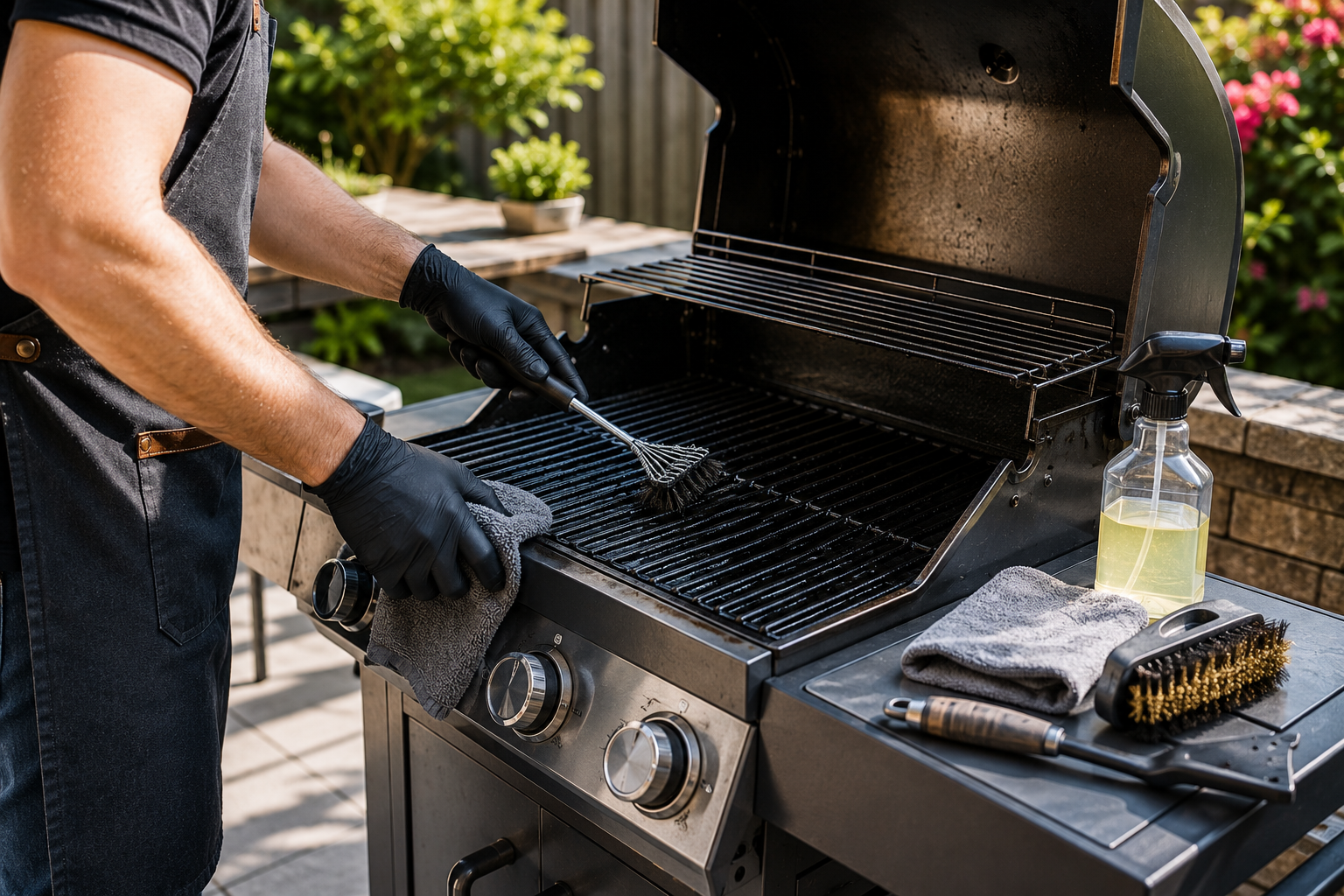
Step 2: Clean the Cooking Grates
Cooking grates should be cleaned after every grilling session.
Removing food residue immediately prevents stubborn buildup.
For Stainless Steel Grates
Use:
- Grill brush
- Warm soapy water
- Soft sponge
Rinse thoroughly and dry before the next use.
For Cast Iron Grates
Cast iron requires extra care.
After brushing:
- Wipe clean.
- Dry completely.
- Apply a light coat of cooking oil.
This helps prevent rust while maintaining the seasoning.
For Porcelain-Coated Grates
Use only soft brushes or non-abrasive cleaning tools.
Avoid metal scrapers that may chip the porcelain coating.
Step 3: Empty the Grease Tray
Grease trays collect cooking oils and food drippings.
If left uncleaned, grease can:
- Cause unpleasant odors
- Attract insects
- Increase flare-up risk
Remove the tray carefully and dispose of grease according to local waste guidelines.
Wash the tray using warm water and mild soap before reinstalling it.
This risk is more than theoretical. According to the National Fire Protection Association’s home grill fires report, grease and fat buildup is one of the leading contributing factors in home grilling fires, which peak every year during the summer cooking season. Regularly emptying the grease tray is one of the simplest ways to reduce that risk.
Step 4: Clean the Inside of the Grill
Over time, grease and carbon accumulate inside the cooking chamber.
Use a plastic scraper to loosen debris.
Then wipe interior surfaces using:
- Warm water
- Mild detergent
- Soft cloth
Avoid using pressure washers or excessive water that could damage components.
Cleaning Different Types of BBQ Grills
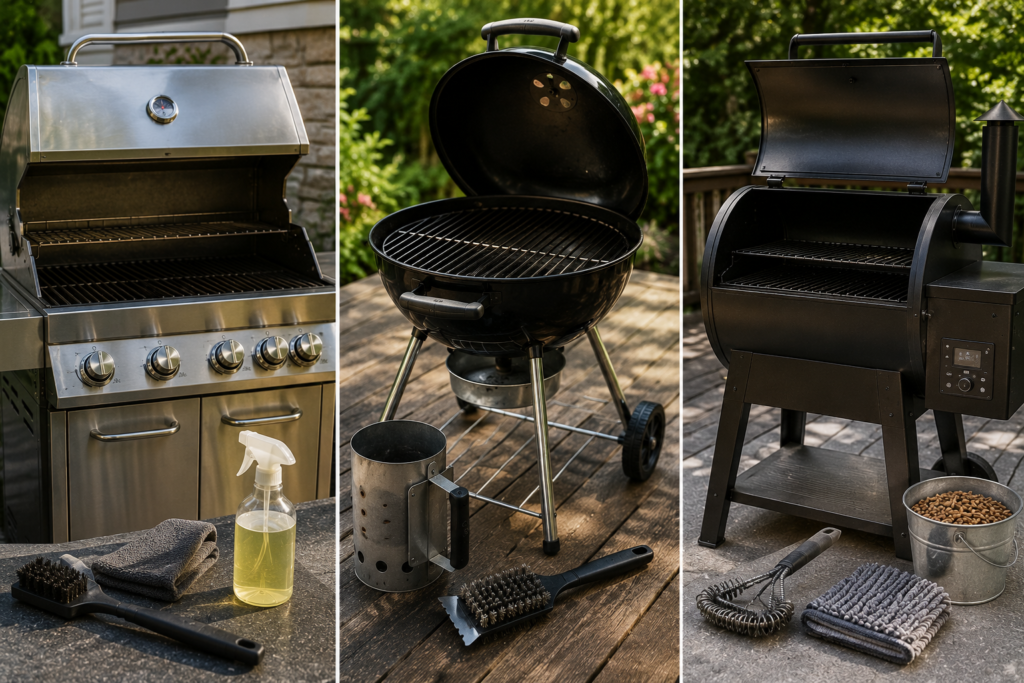
Each grill type has unique maintenance requirements.
Cleaning a Gas Grill
Gas grills require periodic inspection of burners and ignition components.
Cleaning steps include:
- Brush cooking grates.
- Empty grease tray.
- Wipe interior surfaces.
- Inspect burner ports.
- Check ignition system.
- Clean exterior.
If burner holes appear blocked, follow the manufacturer’s cleaning recommendations rather than forcing objects through them.
Cleaning a Charcoal Grill
Charcoal grilling produces ash after every cook.
Ash absorbs moisture, which may accelerate corrosion if left inside the grill.
After each use:
- Remove cooled ash.
- Brush cooking grates.
- Clean air vents.
- Empty ash catcher.
- Wipe interior surfaces.
Keeping air vents clean also improves airflow during future cooking sessions.
Cleaning a Pellet Grill
Pellet grills require additional attention because they contain electronic components.
Regular maintenance includes:
- Vacuuming ash from the fire pot (when cool)
- Cleaning grease channels
- Emptying grease bucket
- Brushing cooking grates
- Wiping temperature probes
Always follow the manufacturer’s maintenance recommendations for electronic components.
Cleaning the Outside of Your Grill
The exterior deserves attention too.
Wash exterior surfaces using:
- Mild soap
- Soft cloth
- Warm water
For stainless steel finishes, wipe in the direction of the grain to help preserve appearance.
Avoid abrasive cleaners that may scratch painted or coated surfaces.
Protecting Your Grill from Rust
Rust is one of the most common causes of premature grill replacement.
To reduce rust:
- Keep the grill dry.
- Cover it when not in use.
- Remove standing water.
- Clean regularly.
- Touch up damaged coatings if recommended by the manufacturer.
Proper storage can significantly extend the life of your grill.
Inspect Your Grill Regularly
Cleaning provides a good opportunity to inspect the grill for wear.
Look for:
- Loose bolts
- Rust spots
- Cracked handles
- Damaged cooking grates
- Worn ignition components
- Blocked burner ports
- Broken wheels
Addressing small issues early often prevents more expensive repairs later.
Seasonal Grill Maintenance
Routine cleaning after every cookout is important, but your grill also benefits from seasonal maintenance. Performing a more detailed inspection at the beginning and end of the grilling season helps prevent unexpected problems and keeps your equipment operating efficiently.
Spring Maintenance
As grilling season begins, inspect your grill before the first cookout.
Check the following:
- Cooking grates
- Burners or fire pot
- Grease management system
- Wheels and casters
- Side shelves
- Lid hinges
- Temperature gauge
- Gas hose (for gas grills)
Remove any dust, cobwebs, or debris that may have collected during storage.
If your grill has been covered all winter, wipe the exterior thoroughly before using it.
Summer Maintenance
During peak grilling season, continue routine care.
Monthly tasks include:
- Deep cleaning the cooking chamber
- Washing the exterior
- Emptying grease trays completely
- Inspecting burners
- Tightening loose hardware
Regular maintenance keeps your grill ready for spontaneous backyard cookouts.
Fall Maintenance
As temperatures begin to cool, prepare your grill for less frequent use.
Perform a thorough cleaning that includes:
- Cooking grates
- Interior surfaces
- Grease tray
- Ash catcher (charcoal grills)
- Fire pot (pellet grills)
Removing grease before winter helps prevent stubborn buildup and unpleasant odors.
Winter Maintenance
If you continue grilling during winter, inspect your grill more frequently because snow, rain, and freezing temperatures can increase wear.
If you won’t be using the grill:
- Clean it thoroughly.
- Cover it properly.
- Store removable accessories indoors if possible.
Proper Off-Season Storage
Even weather-resistant grills benefit from proper storage during long periods of inactivity.
Use a Quality Grill Cover
A fitted grill cover protects against:
- Rain
- Snow
- UV rays
- Dirt
- Leaves
- Bird droppings
Choose a breathable cover designed specifically for your grill model to reduce trapped moisture.
Store Accessories Indoors
Whenever possible, move accessories such as:
- Thermometers
- Grill tools
- Gloves
- Grill baskets
- Cleaning supplies
indoors during extended periods of non-use.
Indoor storage helps extend the lifespan of these items.
Protect Fuel Supplies
Fuel should also be stored correctly.
For propane:
- Store tanks outdoors in a well-ventilated area.
- Never keep propane tanks inside garages or enclosed buildings.
For charcoal:
- Keep charcoal in sealed containers.
- Store it in a dry location.
For wood pellets:
- Store pellets in airtight containers.
- Keep them away from moisture.
Dry fuel performs better and lasts longer.
Signs Your Grill Needs Maintenance
Sometimes your grill tells you it needs attention.
Watch for these warning signs:
- Uneven cooking temperatures
- Excessive flare-ups
- Difficulty igniting
- Rust spots
- Heavy grease buildup
- Strange odors
- Smoke from unexpected areas
- Loose handles or shelves
Addressing these issues early can help prevent more serious repairs later.
When Should You Replace Grill Parts?
Many grill components are replaceable.
You may need new parts if you notice:
Cooking Grates
Replace if they are:
- Severely rusted
- Warped
- Cracked
- Peeling (porcelain-coated grates)
Burners
Replace burners if:
- Flames burn unevenly
- Corrosion is severe
- Burner ports are damaged
Ignition System
If ignition becomes unreliable after cleaning and inspection, replacement parts may be necessary.
Always use components designed for your specific grill model.
Common Grill Maintenance Mistakes
Many homeowners unintentionally shorten the life of their grills by making simple maintenance mistakes a pattern that shows up just as often in everyday household cleaning.
Waiting Too Long to Clean
Grease and food residue become much harder to remove over time.
Cleaning after every use is much easier than performing an intensive deep clean later.
Using Harsh Chemicals
Strong chemical cleaners may damage:
- Protective coatings
- Stainless steel finishes
- Porcelain surfaces
Mild soap and warm water are sufficient for most routine cleaning.
Forgetting the Grease Tray
Many people focus only on the cooking grates.
However, grease trays require regular cleaning to reduce fire risk and unpleasant odors.
Skipping Seasonal Inspections
Small problems often become expensive repairs if ignored.
A quick seasonal inspection can identify:
- Loose hardware
- Rust
- Worn components
- Damaged hoses
- Ignition issues
before they affect cooking performance.
Leaving the Grill Uncovered
Continuous exposure to rain and sunlight accelerates wear.
A weather-resistant cover is one of the simplest ways to protect your investment.
Recommended Grill Maintenance Schedule
| Task | Frequency |
| Brush cooking grates | After every use |
| Empty grease tray | Every few cooks |
| Remove charcoal ash | After every use |
| Vacuum pellet fire pot | Every few cooks |
| Wash exterior | Monthly |
| Deep clean interior | Every 2–3 months |
| Inspect burners and components | Every season |
| Replace worn accessories | As needed |
Following a simple schedule keeps maintenance manageable throughout the year.
Grill Maintenance Checklist
Before putting your grill away after each cookout, ask yourself:
- ✓ Did I brush the cooking grates?
- ✓ Did I empty excess grease?
- ✓ Did I remove charcoal ash if needed?
- ✓ Did I wipe food spills from the exterior?
- ✓ Is the grill completely cool before covering it?
- ✓ Is the cover clean and secure?
- ✓ Are accessories stored properly?
- ✓ Did I notice any loose or damaged parts?
- ✓ Does anything need repair before the next cookout?
- ✓ Is my grill ready for the next use?
Making this checklist part of your routine helps prevent maintenance from becoming overwhelming.
Conclusion
Regular grill cleaning and maintenance are essential for keeping your BBQ performing safely and efficiently. Simple habits such as brushing cooking grates after every use, emptying grease trays, removing ash, and protecting the grill with a weather-resistant cover can significantly extend its lifespan. Seasonal inspections also help identify worn components before they become larger problems, ensuring consistent cooking performance throughout the year.
Whether you own a gas, charcoal, or pellet grill, following a regular maintenance routine protects your investment while improving food quality and reducing the risk of flare-ups or equipment failure. By spending a few minutes caring for your grill after each cookout and performing occasional deep cleaning, you’ll enjoy more reliable performance, easier cooking, and many years of backyard barbecues with family and friends.
Frequently Asked Questions
1- How often should I deep clean my BBQ grill?
For most homeowners, a deep cleaning every two to three months during the grilling season is sufficient. If you grill several times each week, you may need to clean it more frequently.
2- Is it safe to clean a hot grill?
Allow the grill to cool until it is warm but safe to touch. Cleaning an extremely hot grill increases the risk of burns, while cleaning a completely cold grill may make grease harder to remove.
3- Should I oil my grill grates?
Lightly oiling clean cast iron grates helps maintain seasoning and reduce rust. Follow your grill manufacturer’s recommendations for other grate materials.
4- Can I leave my grill outside all year?
Many grills are designed for outdoor use, but using a weather-resistant cover and performing regular maintenance helps protect them from rain, snow, and prolonged sunlight.
5- What’s the best way to prevent rust?
Regular cleaning, thorough drying, proper storage, and using a quality grill cover are among the most effective ways to reduce rust and extend the life of your grill.