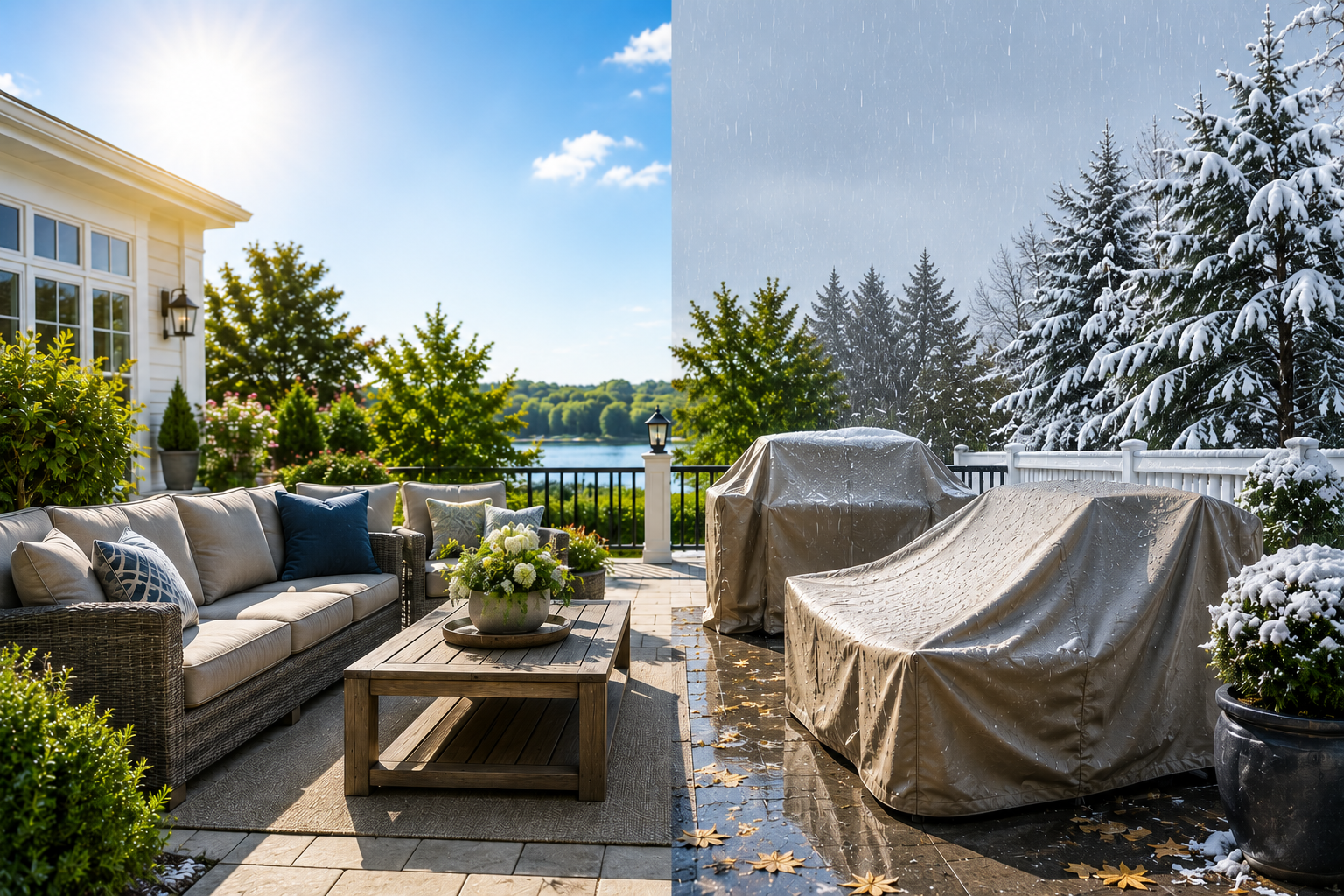
Outdoor furniture helps turn a patio, deck, or backyard into a comfortable place to relax, entertain guests, or enjoy family meals. However, unlike indoor furniture, it faces constant exposure to sunlight, rain, snow, humidity, wind, and changing temperatures. Without proper care, even high-quality furniture can fade, rust, crack, warp, or develop mold over time.
The good news is that protecting outdoor furniture doesn’t have to be difficult or expensive. A few simple maintenance habits can significantly extend the lifespan of your investment while keeping it looking attractive throughout every season.
Whether your furniture is made from aluminum, teak, wicker, steel, or plastic resin, each material benefits from specific care techniques. Understanding how weather affects different materials allows you to prevent damage before it becomes a costly problem.
This guide explains how to protect outdoor furniture from every type of weather, choose the right furniture covers, perform seasonal maintenance, and keep your patio looking its best all year long.
Why Weather Protection Matters
Outdoor furniture is designed to withstand the elements, but continuous exposure eventually causes wear and tear.
Common weather-related problems include:
- Fading caused by UV rays
- Rust on metal furniture
- Mold and mildew from moisture
- Wood cracking or warping
- Wicker becoming brittle
- Fabric discoloration
- Cushion deterioration
- Loose hardware due to temperature changes
Regular maintenance helps prevent these issues and reduces the need for early replacement.
Protecting your furniture also helps preserve its appearance, comfort, and value.
Understand the Biggest Weather Threats
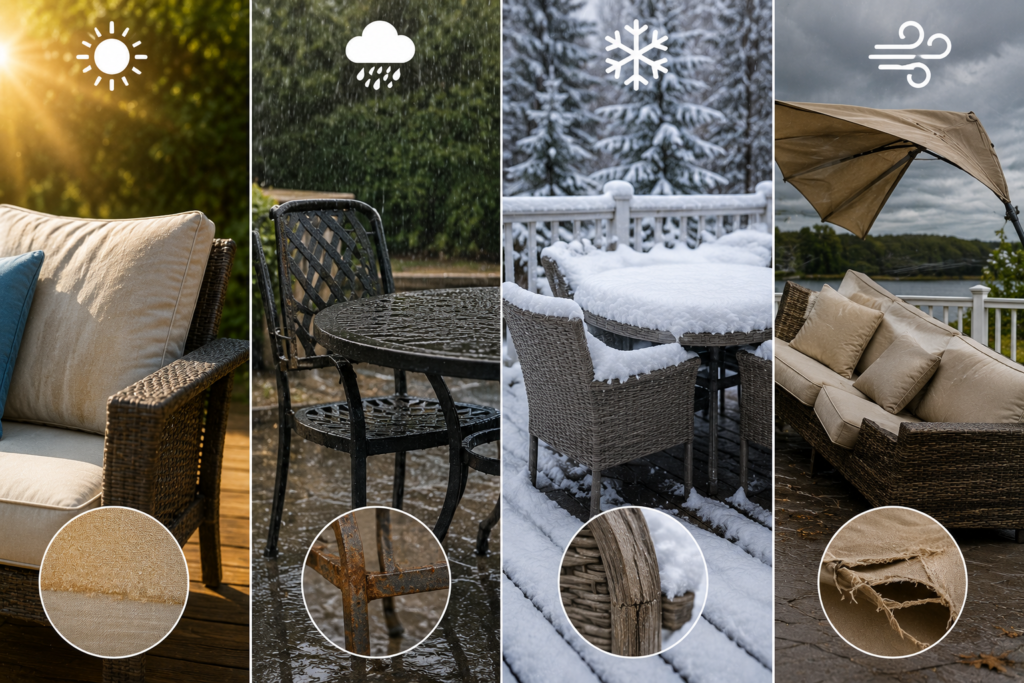
Different climates present different challenges.
Knowing what your furniture faces allows you to choose the right protection strategy.
Sun Exposure
Direct sunlight is one of the biggest causes of outdoor furniture damage.
Over time, UV rays can:
- Fade fabric colors
- Dry out wood
- Cause plastic to become brittle
- Weaken wicker fibers
- Reduce the lifespan of cushions
Patios that receive full afternoon sun generally require more frequent maintenance than shaded areas.
Rain and Moisture
Water can damage furniture in several ways.
Common problems include:
- Rust
- Mold
- Mildew
- Rot
- Swelling wood
- Water stains
Furniture that remains wet for long periods is especially vulnerable.
Snow and Ice
Winter weather creates additional stress.
Heavy snow adds weight while freezing temperatures may cause certain materials to expand and contract repeatedly.
Without protection, these cycles may shorten the lifespan of outdoor furniture.
Wind
Strong winds can:
- Blow lightweight furniture across the yard
- Damage umbrellas
- Tear furniture covers
- Knock over chairs
- Scratch painted surfaces
Securing lightweight furniture is an important part of seasonal care.
Choose Weather-Resistant Furniture Materials
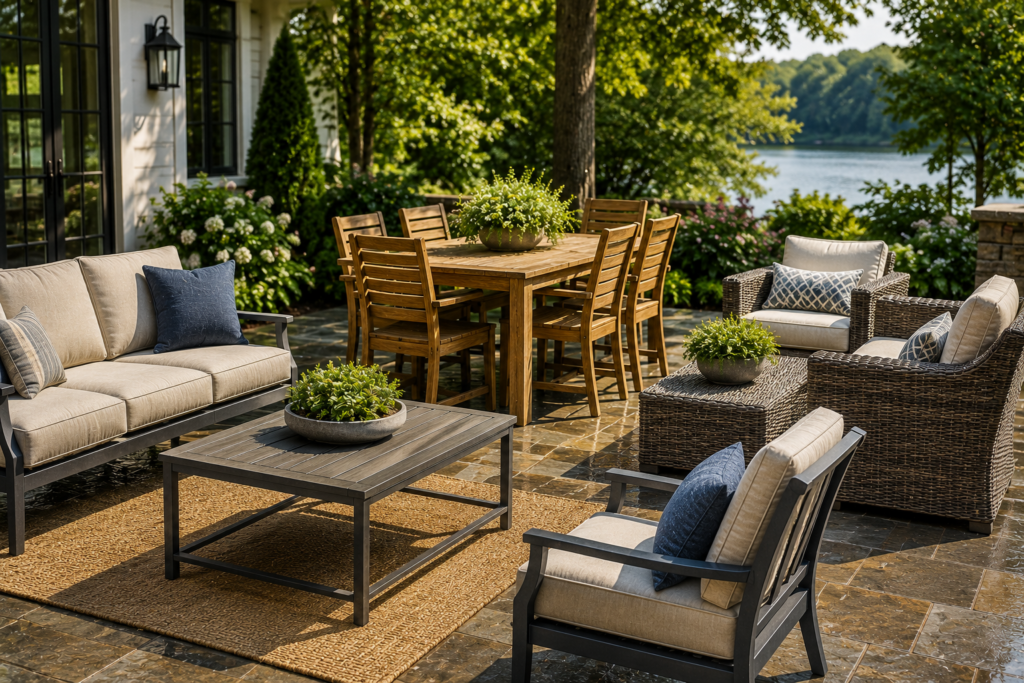
Some materials naturally perform better outdoors than others.
Aluminum
Aluminum is one of the easiest materials to maintain.
Advantages include:
- Rust resistant
- Lightweight
- Durable
- Easy to clean
Although aluminum resists corrosion, regular washing removes dirt and airborne pollutants that can dull the finish.
Teak
Teak naturally contains oils that resist moisture and insects.
Benefits include:
- Long lifespan
- Excellent weather resistance
- Attractive natural appearance
Over time, untreated teak develops a silver-gray patina. Homeowners who prefer the original golden color can apply teak protector according to the manufacturer’s instructions.
Resin Wicker
Modern resin wicker is specifically designed for outdoor use.
Advantages include:
- UV resistance
- Moisture resistance
- Low maintenance
- Easy cleaning
Unlike natural wicker, resin wicker won’t easily crack when exposed to changing weather conditions.
Steel
Steel furniture offers outstanding strength but benefits from additional protection against moisture.
Inspect steel furniture regularly for scratches that expose bare metal, as these areas are more likely to develop rust.
Plastic Resin
Plastic resin furniture is affordable, lightweight, and resistant to moisture.
Routine cleaning helps prevent dirt buildup and keeps surfaces looking fresh.
Invest in High-Quality Outdoor Furniture Covers
One of the easiest ways to protect patio furniture is by using properly fitted covers.
Furniture covers shield against:
- Rain
- Dust
- Bird droppings
- Tree sap
- UV rays
- Snow
- Falling leaves
Choose covers made from breathable, waterproof materials.
Breathability is important because trapped moisture can encourage mold growth beneath the cover.
Look for features such as:
- Adjustable straps
- Reinforced seams
- Air vents
- UV-resistant fabric
- Waterproof backing
A well-fitting cover protects furniture while allowing enough airflow to reduce condensation.
Store Cushions During Severe Weather
Outdoor cushions are often the first part of patio furniture to show signs of wear.
Even weather-resistant fabrics benefit from additional protection.
During heavy rain or extended periods of non-use:
- Store cushions indoors
- Use a waterproof deck box
- Place them inside a storage bench
- Keep them in a garage or shed
Dry cushions before storing them to help prevent mildew and unpleasant odors.
Clean Outdoor Furniture Regularly
Routine cleaning removes dirt, pollen, leaves, and pollutants that gradually damage finishes.
General cleaning usually requires only:
- Mild soap
- Warm water
- Soft cloth
- Soft brush
- Garden hose
Avoid harsh chemicals unless recommended by the furniture manufacturer.
Different materials may require slightly different cleaning methods, so always follow any care instructions provided.
Protect Wooden Furniture
Wooden outdoor furniture needs periodic maintenance to remain in good condition.
Helpful practices include:
- Clean regularly
- Remove standing water
- Apply protective finishes when needed
- Inspect for cracks
- Tighten loose hardware
Avoid placing wooden furniture directly on constantly damp surfaces whenever possible.
Prevent Rust on Metal Furniture
Although many outdoor furniture frames include protective coatings, scratches may expose bare metal.
Inspect metal furniture several times each year.
If you notice chipped paint:
- Clean the area
- Remove loose rust
- Apply touch-up paint designed for outdoor metal
Addressing small areas early helps prevent larger corrosion problems.
Keep Furniture Dry
Even weather-resistant furniture benefits from staying as dry as possible.
After rainfall:
- Wipe away standing water
- Allow cushions to dry completely
- Lift furniture slightly if water pools underneath
- Improve airflow around seating areas
Good drainage is one of the simplest ways to reduce long-term moisture damage.
Seasonal Maintenance Tips
Outdoor furniture experiences different challenges throughout the year. Adjusting your maintenance routine with the seasons helps prevent unnecessary wear and extends the life of your investment.
Spring
Spring is the perfect time to prepare your outdoor space after winter.
Start by:
- Washing all furniture with mild soap and water
- Inspecting frames for damage
- Tightening loose screws and bolts
- Cleaning cushions and fabrics
- Checking furniture covers for wear
- Replacing damaged protective pads
Removing dirt and pollen early helps furniture stay cleaner throughout the warmer months.
Summer
Summer often brings intense sunlight, heat, and frequent outdoor use.
Protect your furniture by:
- Using patio umbrellas for shade
- Covering furniture when not in use
- Cleaning bird droppings immediately
- Rotating cushions to reduce uneven fading
- Wiping away sunscreen or food spills
If possible, move lightweight furniture into shaded areas during extreme heat.
Fall
Falling leaves, moisture, and cooler temperatures require additional attention.
During autumn:
- Remove leaves regularly
- Clean furniture before storing it
- Wash furniture covers
- Inspect wooden furniture for cracks
- Prepare cushions for winter storage
Leaves that remain trapped under cushions or furniture can hold moisture and encourage mold growth.
Winter
Winter can be especially hard on outdoor furniture.
If you live in an area with snow or freezing temperatures:
- Store cushions indoors
- Cover furniture securely
- Remove snow accumulation carefully
- Avoid placing heavy objects on furniture
- Store lightweight furniture inside a garage or shed if possible
Even weather-resistant furniture benefits from additional protection during harsh winter conditions.
Should You Store Outdoor Furniture Indoors?
Whenever possible, indoor storage provides the best protection.
Ideal storage locations include:
- Garage
- Basement
- Garden shed
- Storage building
Indoor storage reduces exposure to:
- UV rays
- Rain
- Snow
- Ice
- Wind
- Dust
If indoor storage isn’t available, invest in durable weatherproof covers and place furniture on a well-drained surface.
How to Protect Different Types of Outdoor Furniture
Different materials require different care routines.
| Material | Main Weather Risk | Best Protection Method |
| Aluminum | Dirt buildup | Regular washing and furniture cover |
| Steel | Rust | Touch-up paint and waterproof cover |
| Teak | Color fading | Teak protector (optional) and regular cleaning |
| Resin Wicker | UV damage | Shade and breathable furniture cover |
| Plastic Resin | Surface discoloration | Mild cleaning and seasonal cover |
Matching the maintenance routine to the material helps maximize durability.
Don’t Forget Outdoor Fabrics
Outdoor fabrics are designed to resist moisture and sunlight, but they still benefit from routine care.
To keep fabrics looking their best:
- Brush away dirt regularly
- Clean spills immediately
- Allow cushions to dry completely
- Avoid storing damp cushions
- Use fabric protectors approved by the manufacturer if appropriate
Keeping fabrics clean also helps reduce mold, mildew, and unpleasant odors.
Secure Furniture During Strong Winds
High winds can damage even heavy outdoor furniture.
Before storms:
- Close patio umbrellas
- Secure lightweight chairs
- Remove decorative pillows
- Store loose accessories
- Tighten furniture covers
If severe weather is expected, moving lightweight furniture indoors is often the safest option.
Common Mistakes That Shorten Furniture Life
Many homeowners unknowingly reduce the lifespan of their patio furniture.
Avoid these common mistakes.
Leaving Cushions Outside All Year
Even weather-resistant cushions absorb some moisture over time.
Bringing them indoors during extended bad weather helps prevent mildew and fading.
Using Plastic Tarps
Standard plastic tarps trap moisture underneath.
This can encourage mold and mildew.
Instead, choose breathable outdoor furniture covers specifically designed for patio furniture.
Ignoring Small Repairs
A loose bolt or small rust spot may seem minor.
However, repairing small issues early helps prevent larger structural problems later.
Cleaning with Harsh Chemicals
Strong cleaners, bleach, or abrasive brushes may damage protective finishes.
Always use cleaning products appropriate for your furniture material.
Skipping Seasonal Maintenance
Cleaning furniture only once a year allows dirt and moisture to build up.
Simple routine care throughout the year requires less effort than major repairs.
Helpful Accessories for Furniture Protection
Several accessories can make outdoor furniture easier to maintain.
Consider adding:
- Waterproof furniture covers
- Outdoor storage boxes
- Cushion storage bags
- Patio umbrellas
- Furniture glides
- Weatherproof deck boxes
- Furniture tie-down straps
- Outdoor storage sheds
These accessories provide additional protection while helping keep your patio organized.
Outdoor Furniture Protection Checklist
Before each season, check the following:
- ✓ Clean all furniture thoroughly
- ✓ Inspect frames for damage
- ✓ Tighten loose hardware
- ✓ Wash cushions and fabrics
- ✓ Apply protective treatments if needed
- ✓ Check furniture covers for wear
- ✓ Store cushions during severe weather
- ✓ Remove standing water after rainfall
- ✓ Protect furniture from prolonged sun exposure
- ✓ Prepare furniture for seasonal storage
Completing this simple checklist each season helps keep your outdoor furniture looking its best.
Conclusion
Outdoor furniture is an investment that can provide years of comfort, entertainment, and enjoyment when properly cared for. While weather is unavoidable, simple maintenance habits can greatly reduce the effects of sunlight, rain, snow, humidity, and wind. Choosing weather-resistant materials, using breathable furniture covers, cleaning regularly, storing cushions during severe weather, and performing seasonal inspections all contribute to longer-lasting furniture.
Rather than waiting for visible damage to appear, taking preventive steps throughout the year helps preserve both the appearance and functionality of your outdoor space. Whether your patio features aluminum dining furniture, teak benches, resin wicker conversation sets, or steel chairs, a consistent maintenance routine will help protect your investment and keep your backyard welcoming in every season.
Frequently Asked Questions
1- Should outdoor furniture always be covered?
Furniture covers are highly recommended whenever furniture is not being used for extended periods. Covers help reduce exposure to rain, sunlight, dust, and debris while extending the life of outdoor furniture.
2- Can outdoor cushions stay outside in the rain?
Many outdoor cushions are designed to resist moisture, but prolonged exposure to rain can still shorten their lifespan. Allow cushions to dry completely after getting wet and store them during heavy storms whenever possible.
3- What’s the easiest outdoor furniture material to maintain?
Aluminum and high-quality resin furniture generally require the least maintenance. Regular cleaning and occasional inspections are usually enough to keep them in excellent condition.
4- How often should I clean outdoor furniture?
Light cleaning every few weeks during the outdoor season helps prevent dirt buildup. A more thorough cleaning at the beginning and end of each season is also recommended.
5- Is it necessary to store furniture during winter?
Not always. Many outdoor furniture materials are designed to remain outside year-round. However, storing furniture or using quality weatherproof covers during harsh winters helps extend its lifespan.