
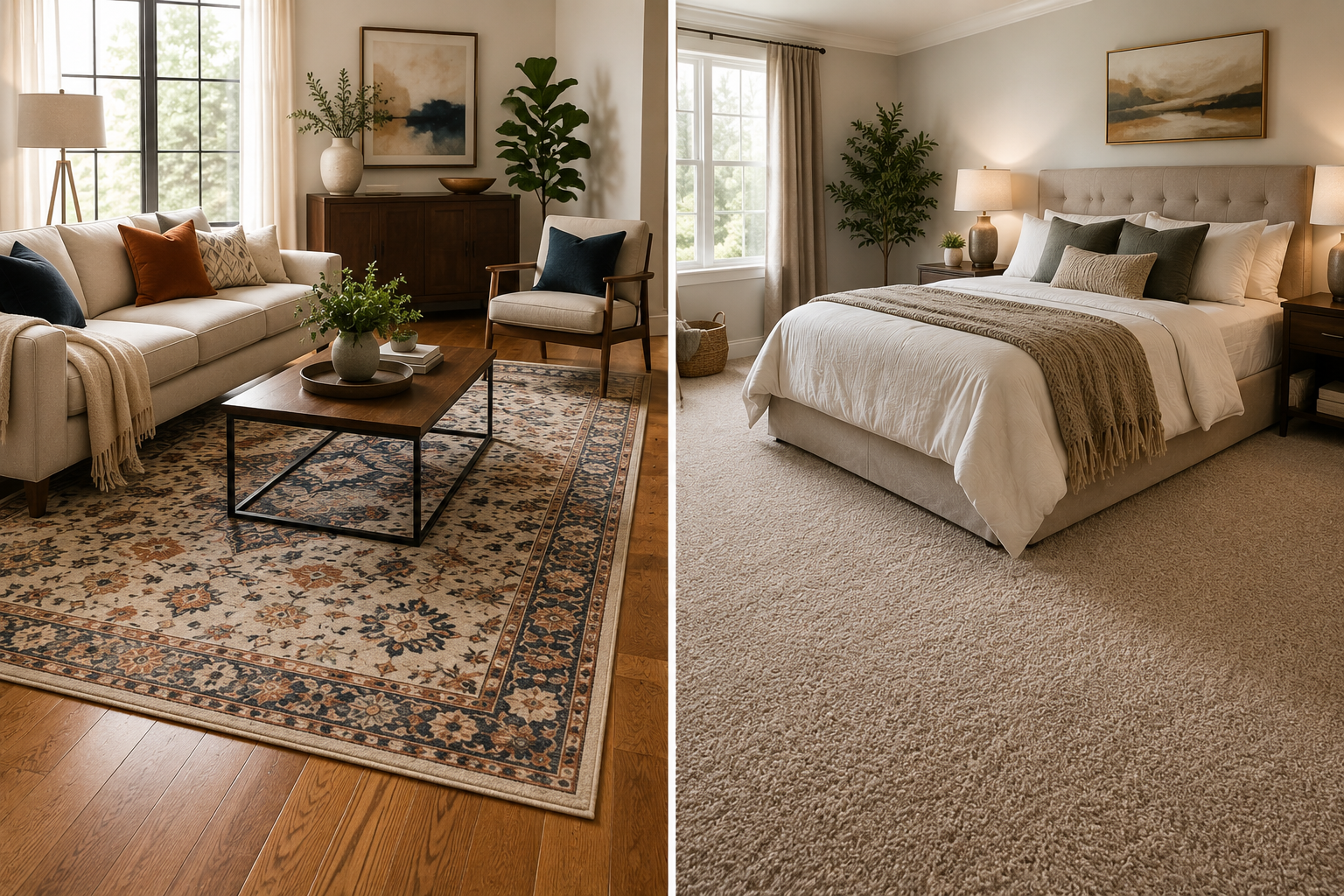
Soft flooring doesn’t have to mean an all-or-nothing decision. The real area rug vs wall-to-wall carpet question isn’t which one wins outright, it’s which one wins in which room, since these two options genuinely solve different problems and, increasingly, many homeowners get the best results by using both in different parts of the same house.
This guide breaks down cost, maintenance, resale value, comfort, and design flexibility for both options, plus the hybrid approach flooring professionals increasingly recommend, so you can decide room by room rather than committing your whole home to one or the other.
Area Rug vs Wall-to-Wall Carpet
Wall-to-wall carpet remains the stronger choice for full-room comfort, sound insulation, and slip resistance, particularly in bedrooms, where buyer preference still runs in carpet’s favor and the softness underfoot genuinely matters. Area rugs win on flexibility, cost control, and easier cleaning, and they’ve become the clear preference of most home buyers in main living areas, kitchens, and hallways, where hard flooring paired with a rug now consistently outperforms wall-to-wall carpet in resale appeal. If you’re renovating with resale in mind, hard surface flooring with area rugs in living spaces, paired with carpet reserved for bedrooms, is the combination most flooring and real estate professionals point to as the smartest overall strategy.
What Actually Separates These Two Options
Wall-to-Wall Carpet: Permanent, Full-Room Coverage
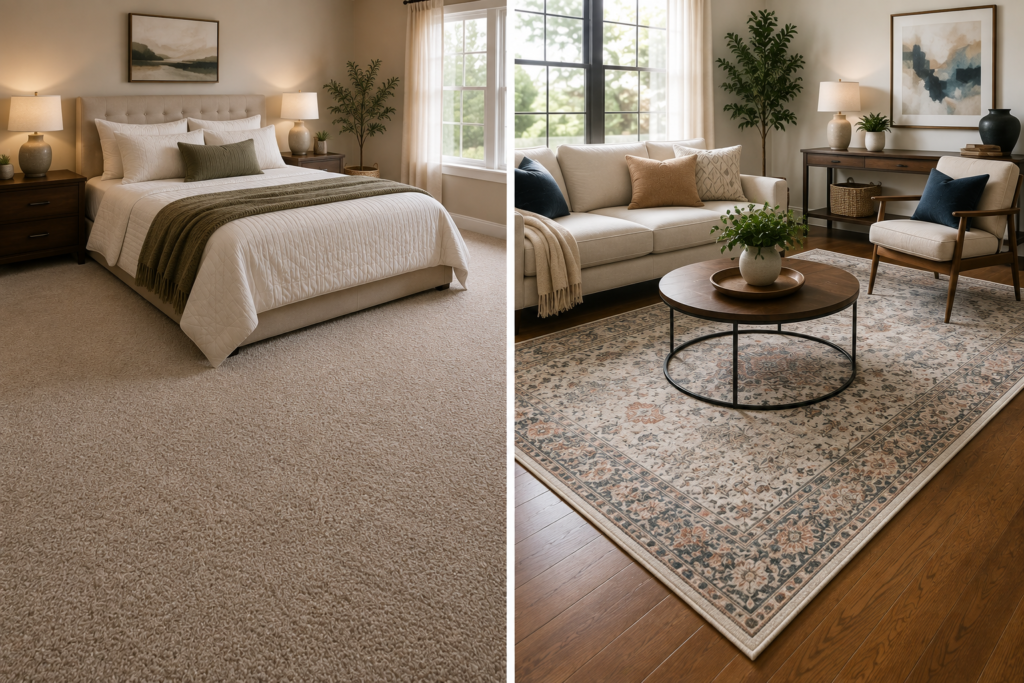
Carpet is installed directly onto the subfloor and stretches from wall to wall, covering the entire room in one continuous piece. Once installed, it’s essentially a fixed part of the room, not something you move, swap out seasonally, or take with you if you relocate.
Area Rugs: Flexible, Removable, and Layered
An area rug sits loose on top of an existing floor, hardwood, tile, laminate, or even carpet itself, rather than being permanently attached. It’s fully movable, easy to reposition, and simple to replace or update without touching the flooring underneath it.
Area Rug vs Wall-to-Wall Carpet: Side-by-Side Comparison
| Factor | Area Rug | Wall-to-Wall Carpet |
| Installation | None required, lay and go | Professional installation required |
| Upfront cost | Lower for a single room | Higher, but often more economical per square foot in large rooms |
| Portability | Fully movable, takes it with you | Stays with the house permanently |
| Cleaning | Easier, can shake out or wash smaller sizes | Requires vacuuming plus periodic professional deep cleaning |
| Wear pattern | Reposition to avoid uneven wear | Wears unevenly in high-traffic zones; whole carpet must be replaced |
| Sound insulation | Partial | Full-room, more effective |
| Slip resistance | Good, but edges can be a trip hazard | Excellent, no seams or edges to trip on |
| Design flexibility | High, easy to swap styles and colors | Lower, fewer style changes without full replacement |
| Resale perception | Generally favored in living areas | Generally favored only in bedrooms |
Cost: It’s Not as Simple as “Carpet Is Cheaper”
Why Carpet Often Wins for Large Spaces
Installing wall-to-wall carpet involves a higher upfront investment, the material, padding, and professional installation all add up, but for genuinely large rooms, that per-square-foot cost can actually come out more economical than trying to cover the same footprint with multiple high-quality area rugs.
Why Rugs Win for Budget Flexibility
A single area rug typically costs less than installing carpet in that same room, and rugs let you spread spending out over time, adding pieces gradually rather than committing to a full-room investment all at once. That said, high-end handwoven wool or silk rugs can rival or exceed carpet pricing, so “rugs are always cheaper” isn’t universally true once you move upmarket in materials.
The Replacement Cost Gap
This is where the real long-term cost difference shows up. If a section of wall-to-wall carpet wears out or gets seriously stained, the entire carpet typically needs replacing, since carpet can’t be repaired or replaced in just one spot the way flooring tiles can. An area rug, by contrast, can simply be swapped out for a fraction of that cost, making it a considerably lower-risk investment over time.
Cleaning and Maintenance: A Genuine Practical Difference
Carpet Requires More Ongoing Effort
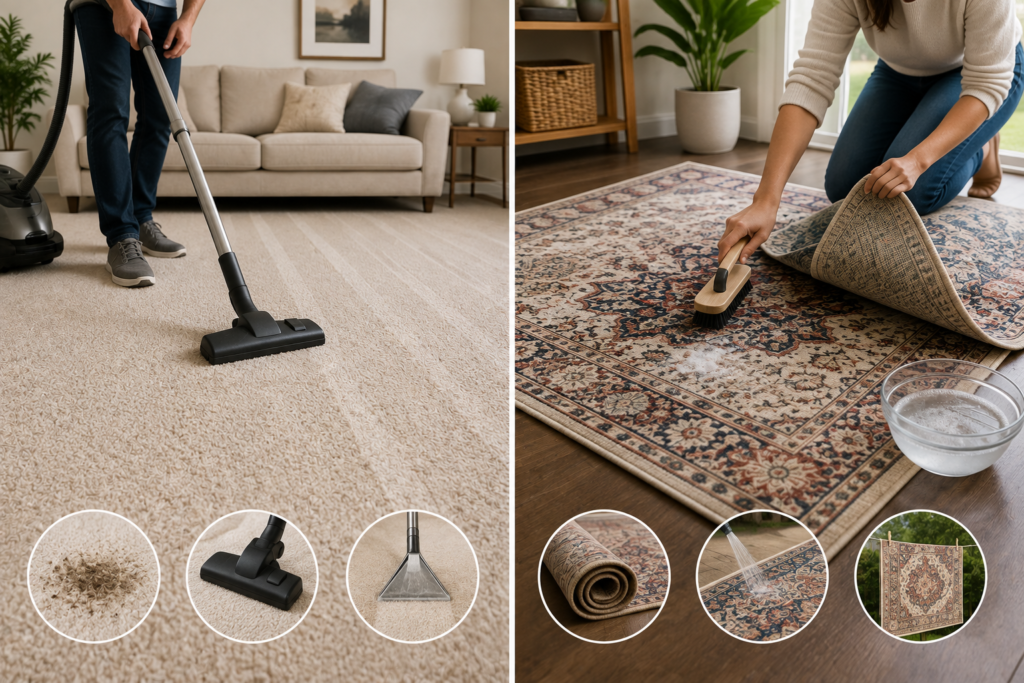
Wall-to-wall carpet needs regular vacuuming plus periodic professional deep cleaning to stay in good condition, and because it can’t be removed, thorough cleaning always means scheduling and paying for a cleaning service or renting equipment.
Rugs Are Simpler to Keep Fresh
Area rugs can be taken outside for shaking, spot-cleaned as needed, and many smaller sizes are genuinely machine-washable, a real advantage for households with kids or pets prone to regular spills and accidents. Larger area rugs, though, may still require professional cleaning just like carpet does, so this advantage shrinks somewhat as rug size increases.
Health and Allergy Considerations
Wall-to-wall carpet can trap allergens like dust and pet dander deep within its fibers, a genuine concern for households managing allergies or asthma. Area rugs paired with hard flooring underneath offer an easier path to a cleaner environment, since the rug itself can be removed and washed, and the hard floor beneath it can be mopped and sanitized directly, something that’s simply not possible with permanently installed carpet.
Comfort and Sound: Where Carpet Still Has a Real Edge
Full-Room Softness
Carpet delivers consistent, wall-to-wall softness and warmth underfoot, which is a genuine comfort advantage, particularly in bedrooms where you’re walking barefoot first thing in the morning and want the entire floor to feel warm, not just a rug-sized island in the middle of the room.
Better Sound Insulation
Because it covers the entire floor without gaps, wall-to-wall carpet absorbs sound more effectively than an area rug, which only dampens noise within its own footprint. This matters more in multi-story homes, apartments, or any household prioritizing a quieter, more peaceful environment.
Slip Resistance and Safety
Carpeted floors generally offer better traction and reduce trip-and-fall risk compared to hard flooring, an important consideration for households with young children or elderly residents. Area rugs can actually introduce a trip hazard of their own, specifically at their edges, if they’re not secured with a proper non-slip pad underneath.
Resale Value: What Buyers Actually Prefer Today
The Shift Toward Hard Flooring
Home buyer preferences have moved substantially over the past couple of decades, with most buyers now favoring hard surface flooring, hardwood, tile, or luxury vinyl, over wall-to-wall carpet in the majority of a home’s rooms. Real estate professionals frequently note that carpet in living areas and kitchens specifically can work against a home during a sale.
Bedrooms Are the Exception
Bedrooms remain the one space where buyer preference genuinely still favors carpet, or at least doesn’t penalize it, the warmth and comfort carpet provides in a bedroom is widely appreciated, and it doesn’t carry the same negative perception buyers often have about carpet in shared living spaces.
Why Rugs Photograph and Show Better
Hard floors paired with a few well-chosen area rugs consistently photograph better for listings and appeal to a broader pool of potential buyers than wall-to-wall carpet does. If you’re renovating specifically with an eventual sale in mind, replacing old carpet in living areas with hard flooring plus area rugs is generally considered a stronger investment than simply installing new carpet to replace old carpet in those same spaces.
Rugs Can Even Hold Their Own Value
Quality rugs, particularly hand-knotted Persian, Oriental, or other antique styles, can actually hold or increase in value over time, functioning almost like a secondary investment rather than a depreciating flooring expense. Budget, machine-made rugs won’t appreciate the same way, but they’re also inexpensive enough to swap out before a sale without meaningful financial loss, something you simply can’t do with an entire room of installed carpet.
Design Flexibility: Rugs Win, Decisively
Area rugs come in an enormous range of sizes, shapes, colors, and patterns, letting you create focal points, define specific zones within an open floor plan, and update your room’s entire look without touching the underlying floor. Carpet, by contrast, offers considerably fewer style changes once installed, updating the look of a carpeted room generally means a full, costly replacement rather than a simple swap.
The Hybrid Approach Most Professionals Actually Recommend
Why “Pick One” Is the Wrong Frame
Many flooring professionals point out that the smartest strategy isn’t choosing area rugs or wall-to-wall carpet for your entire home, it’s matching each option to where its specific strengths actually matter most.
A Practical Room-by-Room Breakdown
- Bedrooms and playrooms: Wall-to-wall carpet, where full-room comfort and warmth genuinely matter most
- Living rooms, dining rooms, and hallways: Hard surface flooring paired with area rugs, maximizing design flexibility while preserving resale value
- Bathrooms and kitchens: Tile or vinyl, with small accent rugs at sinks and doorways for comfort and slip resistance without introducing moisture-vulnerable carpet
Why This Combination Works So Well
This room-by-room approach concentrates comfort exactly where it matters most (bedrooms), maintains flexibility and easier cleaning in the spaces that see the heaviest daily use and guest traffic, and protects your home’s resale appeal by avoiding wall-to-wall carpet in the living areas where buyers most consistently prefer hard flooring.
When to Choose Wall-to-Wall Carpet
- Comfort is your absolute top priority and you want full-room softness underfoot
- You need genuine sound insulation, particularly in multi-story homes
- You’re working with a tight budget for covering one very large room in a single purchase
- The room is a bedroom, where buyer perception and personal comfort both favor carpet
- You have young children or elderly household members where slip resistance is a real safety priority
When to Choose Area Rugs
- You want the flexibility to update your room’s look without a full flooring replacement
- Resale value in the near term is a genuine consideration
- You’re managing allergies and want the option to remove and thoroughly clean your soft flooring
- You want to define specific zones within an open floor plan
- You’re budget-conscious and want to invest gradually rather than all at once
Common Mistakes to Avoid
- Assuming carpet is always the cheaper option, when large rooms can sometimes favor carpet’s per-square-foot economics while high-end rugs can rival carpet pricing
- Installing wall-to-wall carpet in main living areas before a planned sale, when hard flooring plus rugs generally performs better with today’s buyers
- Skipping a non-slip rug pad, turning an otherwise safe area rug into a genuine trip hazard at its edges
- Choosing carpet in allergy-prone households without considering the cleaning limitations, since trapped allergens can’t be removed the way a washable rug allows
- Treating the decision as all-or-nothing, missing the genuine advantages of matching each flooring type to the specific room where it performs best
Conclusion
The area rug vs wall-to-wall carpet decision genuinely comes down to matching each option to where its strengths actually matter, carpet for full-room comfort and sound insulation in bedrooms, and area rugs over hard flooring for flexibility, easier cleaning, and stronger resale appeal in living spaces. Rather than committing your entire home to one soft flooring strategy, thinking room by room, and considering the hybrid approach flooring professionals increasingly recommend, will get you the comfort, practicality, and long-term value that a single, one-size-fits-all choice simply can’t deliver.
Frequently Asked Questions
1- Is wall-to-wall carpet outdated for resale value?
In most living areas and kitchens, yes, buyer preference has shifted substantially toward hard flooring, though bedrooms remain an exception where carpet is still widely accepted and even preferred.
2- Are area rugs cheaper than wall-to-wall carpet?
Generally for smaller rooms, yes, though high-end rugs made from materials like wool or silk can cost as much as or more than budget-friendly synthetic carpet, and very large rooms can sometimes favor carpet’s per-square-foot economics.
3- Which is better for allergies, area rugs or carpet?
Area rugs paired with hard flooring underneath, since the rug can be removed and cleaned thoroughly while the hard floor beneath can be mopped and sanitized, something permanently installed carpet doesn’t allow.
4- Can I use both area rugs and wall-to-wall carpet in the same home?
Yes, and many flooring professionals specifically recommend this hybrid approach, carpet in bedrooms for comfort, hard flooring with area rugs in living spaces for flexibility and resale appeal.
5- Do area rugs need a pad underneath them?
Yes, a non-slip rug pad is genuinely important, both to prevent the rug from shifting or bunching underfoot and to reduce the trip hazard its edges can otherwise create.
6- Is carpet or an area rug easier to clean?
Area rugs, generally, since smaller ones can be shaken out or machine-washed, and even larger rugs can be removed for professional cleaning, while wall-to-wall carpet always requires in-place vacuuming and periodic professional deep cleaning.
7- Which offers better sound insulation, rugs or carpet?
Wall-to-wall carpet, since it covers the entire floor without gaps, absorbing sound more effectively than an area rug, which only dampens noise within its own footprint.