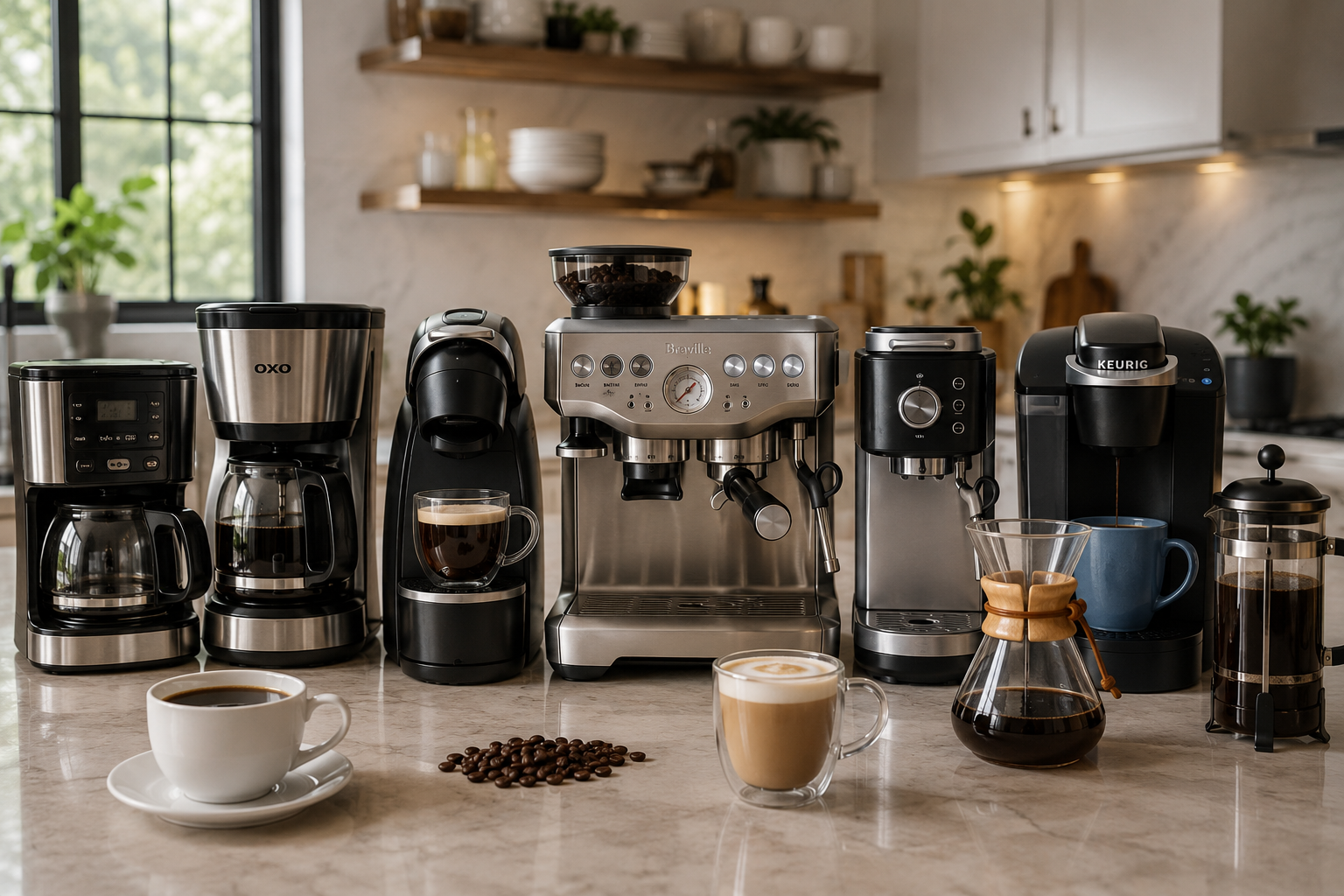
Choosing among the best coffee makers for home use starts with a question most buyers skip: what kind of coffee do you actually drink? A classic morning drip pot, a quick single-serve pod, a café-style espresso shot, and a slow, hands-on pour-over are genuinely different brewing methods, each requiring a different type of machine.
This guide walks through 15 well-regarded coffee makers across the major brewing categories- drip, single-serve, espresso, and manual methods- along with a complete buying guide covering capacity, brew strength, features, and budget. Rather than declaring one universal winner, we’ll help you match the right machine to your actual coffee habits.
How to Choose the Right Type of Coffee Maker First
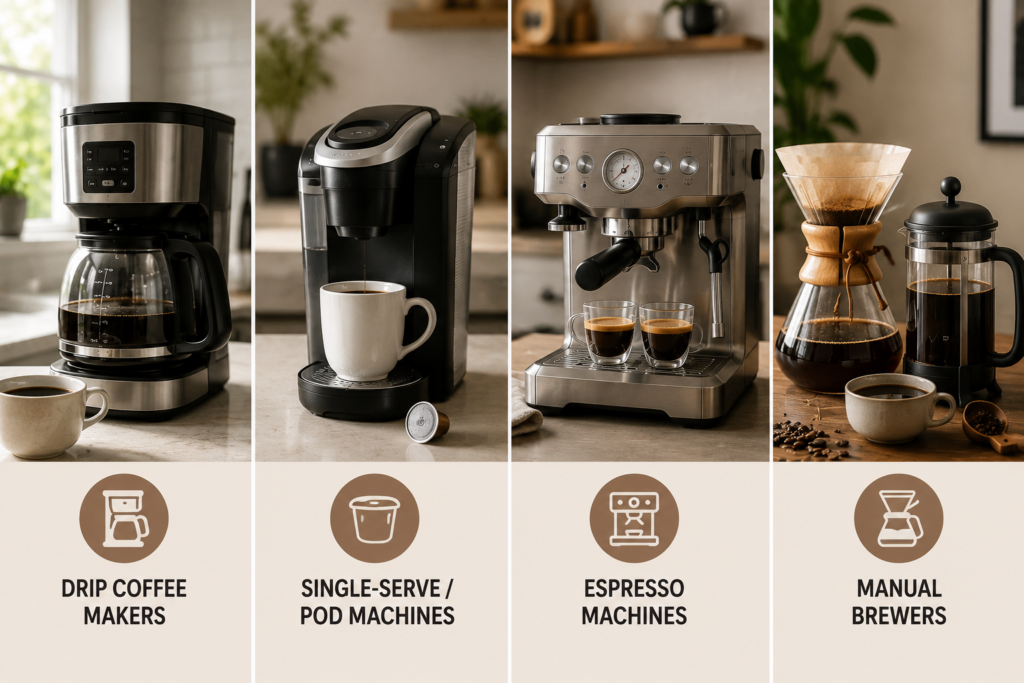
Before comparing specific machines, it helps to understand the broad categories they fall into, since this matters more than any individual feature.
- Drip coffee makers brew a full pot at once by passing hot water through ground coffee and a paper or reusable filter, making them ideal for households that drink multiple cups or serve several people each morning.
- Single-serve and pod machines brew one cup at a time using pre-portioned pods or capsules, prioritizing speed and convenience over batch brewing.
- Espresso machines force pressurized hot water through finely ground coffee, producing a concentrated shot that can be enjoyed alone or used as the base for lattes and cappuccinos.
- Manual brewers, including pour-over setups, French presses, and the AeroPress, require more hands-on involvement but offer more control over strength and flavor, often at a much lower price point than electric machines.
A Quick Comparison Table
| Coffee Maker | Type | Best For | Price Range |
| Technivorm Moccamaster KBGV Select | Drip | SCA-certified brewing at home | Higher |
| OXO Brew 9-Cup | Drip | Reliable everyday drip coffee | Mid-range |
| Ninja CM401 Specialty | Drip | Multi-purpose brewing options | Mid-range |
| Cuisinart PerfecTemp | Drip | Budget-friendly programmable brewing | Lower |
| Bonavita 8-Cup | Drip | Simple, no-frills drip brewing | Lower to mid |
| Ratio Four | Drip | Small-batch, minimal-hassle brewing | Higher |
| Nespresso Vertuo Lattissima | Pod/Single-serve | Espresso and coffee variety in one machine | Mid to higher |
| Keurig K-Elite | Pod/Single-serve | Fast, simple single-cup brewing | Lower to mid |
| Hamilton Beach FlexBrew | Dual (pod + drip) | Flexibility between pod and carafe brewing | Lower |
| Breville Bambino Plus | Espresso | Compact, budget-friendly espresso | Mid-range |
| Breville Barista Express | Espresso | Built-in grinder, semi-automatic control | Higher |
| De’Longhi La Specialista Touch | Espresso | Guided, semi-manual espresso brewing | Higher |
| Chemex | Manual (pour-over) | Clean, hands-on pour-over coffee | Lower |
| Bodum Chambord | Manual (French press) | Full-bodied, immersion-style coffee | Lower |
| AeroPress | Manual | Portable, versatile manual brewing | Lower |
The 15 Best Coffee Makers for Home Use
1. Technivorm Moccamaster KBGV Select
This Dutch-made drip coffee maker has built a strong reputation among coffee enthusiasts for its Specialty Coffee Association certification, which recognizes machines that brew at the proper temperature and saturation for optimal extraction. It’s a best drip coffee maker pick for anyone who takes their morning pot seriously and doesn’t mind paying more for a machine built to last for years.
2. OXO Brew 9-Cup Coffee Maker
The OXO Brew line has also earned Specialty Coffee Association recognition, known for a rainmaker-style showerhead that distributes water evenly over the grounds. It includes a thermal carafe to keep coffee hot for extended periods without a hot plate, which can affect flavor over time.
3. Ninja CM401 Specialty
Ninja’s specialty drip line offers multiple brew styles within one machine, often including options for rich, over-ice, and classic brewing strengths. It suits households wanting flexibility across different coffee preferences without buying multiple machines.
4. Cuisinart PerfecTemp
Cuisinart’s PerfecTemp line is a widely available, budget-friendly programmable drip coffee maker, offering a straightforward option for households wanting a reliable pot of coffee without premium pricing. Programmable timers let you set it to brew automatically before you wake up.
5. Bonavita 8-Cup
Bonavita coffee makers are known among coffee enthusiasts for prioritizing brewing fundamentals, consistent temperature, and proper saturation over extra features. It’s a solid, no-frills option for anyone who wants quality drip coffee without a lot of buttons to navigate.
6. Ratio Four
The Ratio Four is a minimal-hassle, small-batch drip machine, well suited to individuals or couples rather than larger households. Its simple design focuses on consistent brewing without the complexity of a larger, multi-cup machine.
7. Nespresso Vertuo Lattissima
This single-serve machine brews both espresso-style shots and larger coffee formats using Nespresso’s pod system, along with a built-in milk frother for lattes and cappuccinos. It’s a strong pick for households wanting café-style variety without a separate espresso machine.
8. Keurig K-Elite
Keurig remains one of the most recognized names in best single-serve coffee maker searches, offering fast, simple brewing using K-Cup pods. It suits households prioritizing speed and convenience over the more nuanced flavor control of drip or espresso brewing.
9. Hamilton Beach FlexBrew
The FlexBrew line offers a hybrid approach, combining single-serve pod brewing with a traditional carafe option in one machine. This flexibility suits households where some members want a quick single cup, and others want a full pot.
10. Breville Bambino Plus
The Bambino Plus is frequently recommended as a strong best espresso machine for home use at a relatively accessible price point, offering fast heat-up time and automatic milk texturing in a compact footprint. It’s a good entry point for anyone moving from pod-based coffee toward real espresso.
11. Breville Barista Express
This step-up espresso machine includes a built-in grinder, letting you grind beans fresh immediately before each shot. It offers more manual control over the brewing process than fully automatic machines, appealing to buyers who want to develop real espresso-making skills at home.
12. De’Longhi La Specialista Touch
De’Longhi’s La Specialista Touch includes guided technology that helps home users dial in extraction settings based on the specific beans they’re using, aiming to simplify the learning curve typically associated with semi-manual espresso machines.
13. Chemex
The Chemex is a classic manual pour-over brewer, using a distinctive hourglass-shaped glass vessel and thick paper filters that produce a clean, bright cup of coffee. It requires no electricity and appeals to buyers who enjoy a slower, more deliberate morning routine.
14. Bodum Chambord French Press
The French press remains one of the simplest and most affordable ways to brew coffee at home, using an immersion method that produces a fuller-bodied cup than paper-filtered methods. The Bodum Chambord is a widely recognized, classic design within this category.
15. AeroPress
The AeroPress is a compact, portable manual brewer that uses air pressure to push water through coffee grounds, producing a concentrated brew that can be enjoyed straight or diluted like an Americano. Its small size and durability make it popular for both home use and travel.
Drip vs Single-Serve vs Espresso: Which Should You Choose?
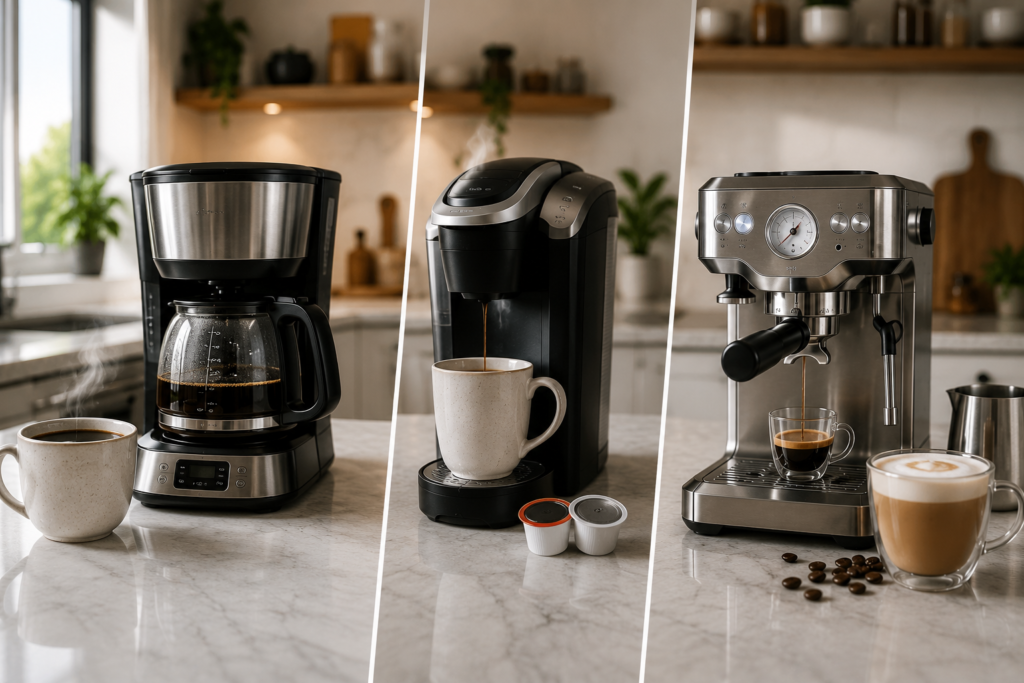
Choose Drip If:
You regularly make coffee for multiple people, prefer a classic, familiar flavor profile, and want the option to brew a full pot at once, ideal for households and offices with steady daily demand.
Choose Single-Serve or Pod If:
Speed and convenience matter most to you, you live alone or with people who prefer different coffee styles, and you don’t mind trading some flavor control for consistency and minimal cleanup.
Choose Espresso If:
You enjoy stronger, more concentrated coffee, want the ability to make lattes or cappuccinos at home, and are willing to invest more time learning proper technique, along with a higher upfront cost for the machine itself.
Choose Manual Brewing If:
You enjoy the process of making coffee as much as drinking it, want the lowest-cost entry point into quality coffee, and don’t mind a few extra minutes of hands-on preparation each morning.
Coffee Maker Features to Consider
Capacity
Match capacity to your household size and habits. A single-serve machine or small drip pot suits one to two people, while larger households benefit from a full 8-to-12-cup drip machine or a pod machine paired with a larger reservoir.
Brew Strength Settings
Many modern drip machines include adjustable strength settings, letting you brew a bolder cup without needing to manually adjust the coffee-to-water ratio each time.
Programmable Timers
A programmable timer lets you schedule brewing in advance, so coffee is ready as soon as you wake up, a feature particularly valued in households with a consistent morning routine.
Built-In Grinders
Some espresso machines and a growing number of drip makers include built-in grinders, allowing you to grind beans immediately before brewing for fresher flavor, though this typically adds to the machine’s overall cost and size.
Milk Frothing
For espresso-based drinks like lattes and cappuccinos, look for a machine with either an automatic milk frother or a manual steam wand, depending on how much control you want over the frothing process.
Water Filtration
Some machines include built-in water filtration, which can improve flavor and reduce mineral buildup inside the machine over time, particularly useful in areas with hard tap water.
Coffee Maker Buying Tips
A handful of practical tips can help you avoid common frustrations when shopping:
- Match the machine type to your actual daily coffee habits, not just what looks impressive
- Consider maintenance and cleaning requirements, since some machines need more regular upkeep than others
- Factor in the ongoing cost of pods or filters for single-serve and drip machines, which adds up over time
- Read the countertop footprint carefully, particularly for larger espresso machines
- Don’t overlook manual brewing methods if budget is a primary concern, since they can produce excellent coffee at a fraction of the cost
Maintenance and Longevity
Regardless of which type you choose, a few maintenance habits help extend a coffee maker’s lifespan and keep flavor consistent over time.
Regular descaling removes mineral buildup from water, which can affect both taste and machine performance, particularly in areas with hard water. Cleaning removable parts, such as carafes, filter baskets, and portafilters, after each use prevents residue buildup that can turn coffee bitter or stale-tasting over time. For espresso machines specifically, backflushing (if applicable) and regular cleaning of the steam wand help maintain consistent milk frothing performance.
Common Mistakes to Avoid
- Buying based on brand recognition alone, without considering whether the brewing method actually matches your coffee preferences
- Underestimating capacity needs, ending up with a machine too small for a busy household
- Ignoring ongoing costs, such as pods, filters, or specialty beans, which add up considerably over a machine’s lifespan
- Overlooking cleaning requirements, particularly for espresso machines with more components to maintain
- Choosing features you won’t use, paying extra for built-in grinders or smart connectivity that go unused in practice
Conclusion
Finding the best coffee makers for home use comes down to matching the brewing method- drip, single-serve, espresso, or manual- to your household’s actual coffee habits, rather than choosing based on price or popularity alone. Consider how many cups you typically brew, how much hands-on involvement you enjoy, and which features genuinely matter to your morning routine. Whether you land on a classic drip machine, a quick single-serve pod system, a proper espresso setup, or a simple manual brewer, the right coffee maker is the one that fits seamlessly into how you actually live and drink coffee every day.
Frequently Asked Questions
1- What is the best type of coffee maker for a busy household?
A programmable drip coffee maker or a dual pod-and-carafe machine like the Hamilton Beach FlexBrew generally suits busy households best, offering flexibility and minimal daily effort.
2- Are pod coffee makers worse for the environment than drip machines?
Pod machines do generate more waste per cup compared to a reusable drip filter, though many brands now offer recyclable or compostable pod options, and reusable pod inserts are also widely available.
3- Is an espresso machine worth buying for home use?
For households that regularly enjoy espresso-based drinks and are willing to invest time in learning proper technique, a home espresso machine can be worthwhile and often pays for itself compared to regular café visits.
4- What’s the difference between drip coffee and espresso?
Drip coffee is brewed by passing hot water through grounds under gravity, while espresso forces pressurized hot water through finely ground coffee, producing a stronger, more concentrated shot.
5- How often should I descale my coffee maker?
This depends on water hardness and usage frequency, but most manufacturers recommend descaling every one to three months for regular daily use, with more frequent descaling needed in areas with hard water.