
Pets bring genuine challenges to flooring that most households simply don’t have to consider, sharp claws that scratch surfaces, accidents that soak into porous materials, and slippery floors that can actually be dangerous for a running, playing dog. Choosing the best flooring for pets means prioritizing scratch resistance, water resistance, and traction together, rather than picking flooring based purely on appearance and hoping it holds up.
This guide walks through how different flooring materials genuinely perform with pets, covers slip safety for animals specifically, and offers practical advice for choosing flooring that protects both your home and your pets’ comfort and safety.
Best Flooring for Homes with Pets
Luxury vinyl plank (LVP) is generally the top overall choice for pet owners, offering strong scratch resistance, genuine waterproof performance for accidents, and better paw traction than smoother materials like tile or hardwood. Porcelain and ceramic tile offer outstanding scratch and water resistance but can be genuinely slippery for pets, particularly older dogs or larger breeds, unless a textured finish is chosen specifically. Solid hardwood is generally the least suited option for pet-heavy households, given its vulnerability to both scratching and moisture damage. Carpet, while comfortable, holds onto pet odors, stains, and allergens more persistently than hard flooring alternatives.
What Pets Actually Do to Flooring
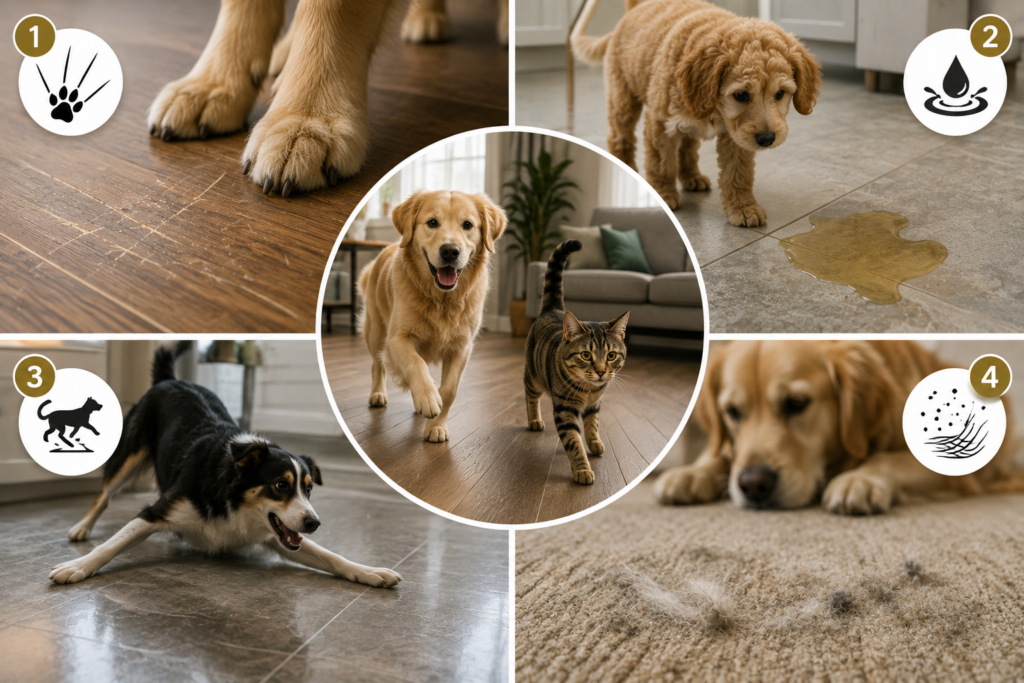
1- Claws and Scratching
Dog and cat nails, even when regularly trimmed, create ongoing surface wear from walking, running, and playing, an issue that compounds over years of daily pet traffic across the same paths through a home.
2- Accidents and Moisture
Even well-trained pets have occasional accidents, and puppies, kittens, and senior pets in particular may need more frequent accommodation. Flooring that absorbs liquid rather than repelling it can develop lasting stains, odors, and, in porous materials, genuine structural damage.
3- Slipping and Traction Issues
Smooth, hard flooring surfaces, particularly polished tile or hardwood, can be genuinely difficult for pets to gain traction on, leading to slipping, especially during excited play, sudden stops, or for older pets with joint sensitivity where a slip could cause real injury.
4- Shedding and Allergens
Pet hair and dander settle into flooring differently depending on material, with porous surfaces like carpet trapping considerably more allergens and debris than smooth, hard flooring that can simply be swept or vacuumed clean.
Ranking Flooring Options for Pet Owners
1. Luxury Vinyl Plank (LVP)
LVP consistently ranks as one of the best overall choices for pet owners, combining strong scratch resistance (particularly with a thicker wear layer), genuine waterproof performance for accidents, and a slightly textured surface that generally offers better paw traction than glossy alternatives.
2. Porcelain Tile
Extremely scratch-resistant and essentially impervious to pet accidents, porcelain tile is a genuinely durable choice, though its hard, smooth surface can be slippery for pets unless a textured, matte finish is specifically chosen.
3. Ceramic Tile
Similar performance to porcelain, with slightly less scratch and impact resistance, but still a strong, water-resistant option, with the same traction considerations applying regarding finish choice.
4. Engineered Hardwood (With Caveats)
Engineered hardwood with a durable finish can hold up reasonably well to pets, particularly smaller or lighter animals, though it remains more vulnerable to both scratching and moisture damage than LVP or tile.
5. Laminate
Offers decent scratch resistance for its price point, though its more limited water resistance makes it a riskier choice for households with pets prone to accidents, since moisture reaching the fiberboard core can cause lasting damage.
6. Solid Hardwood
Generally the least suited option for pet-heavy households, given its vulnerability to visible claw scratching and its poor water resistance, though very careful households with well-trained, larger pets sometimes make it work with diligent maintenance.
7. Carpet
Offers the most comfort and best traction for pets, but holds onto odors, stains, and allergens more persistently than any hard flooring option, making it the most maintenance-intensive choice specifically for pet owners.
Pet Flooring Comparison Table
| Material | Scratch Resistance | Water/Accident Resistance | Pet Traction | Odor Retention | Best For |
| Luxury vinyl plank (LVP) | High | Excellent | Good | Low | Best overall choice |
| Porcelain tile | Very high | Excellent | Poor (unless textured) | Low | Maximum durability |
| Ceramic tile | High | Excellent | Poor (unless textured) | Low | Budget-friendly durability |
| Engineered hardwood | Moderate | Fair | Moderate | Low | Smaller/lighter pets, careful households |
| Laminate | Moderate to high | Fair | Moderate | Low | Lower-risk pet households |
| Solid hardwood | Low to moderate | Poor | Moderate | Low | Not generally recommended |
| Carpet | Low | Poor | Excellent | High | Comfort priority, lower accident risk |
Scratch Resistance: What Actually Matters
1- Wear Layer Thickness in Vinyl
For LVP specifically, a thicker wear layer (generally 12 mils or higher) offers better scratch resistance against regular pet claw contact than thinner, budget-tier products meaningfully, making this specification worth checking closely for pet-heavy households.
2- AC Ratings in Laminate
Laminate’s AC (Abrasion Class) rating indicates scratch resistance, with AC3 or AC4 generally recommended for households with pets, offering better protection than lower-rated products designed for lighter residential use.
3- Hardwood Species and Hardness
If choosing hardwood despite the general caution around pets, harder wood species (measured by the Janka hardness scale) hold up somewhat better to claw contact than softer woods, though even the hardest wood species remain more vulnerable to visible scratching than vinyl or tile.
Waterproof Flooring for Pet Accidents
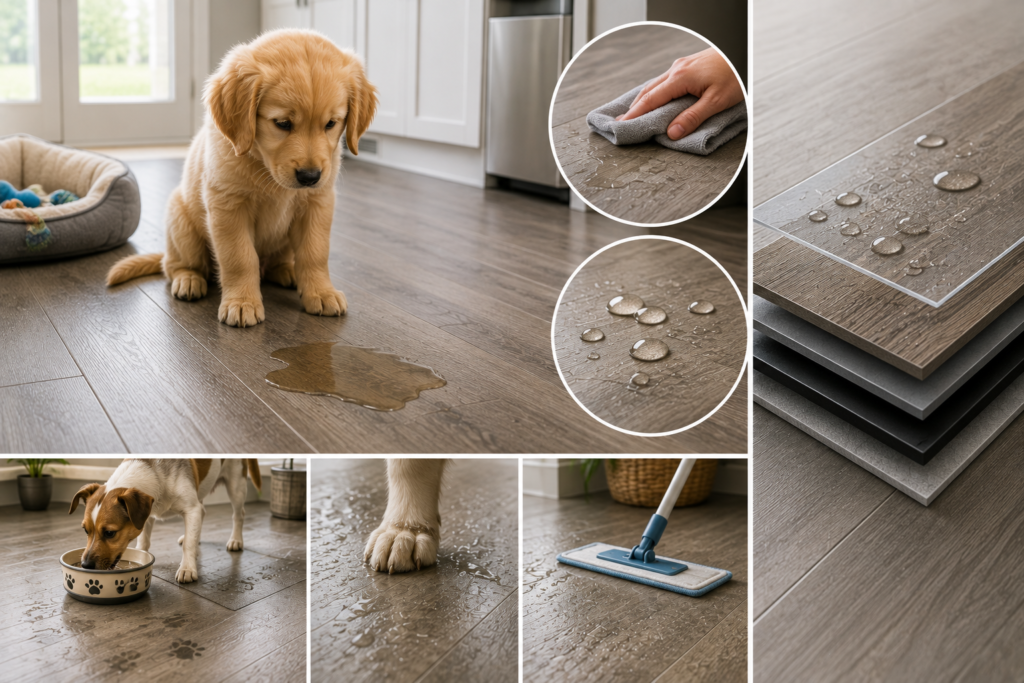
Why True Waterproofing Matters
Accidents happen even with well-trained pets, and genuinely waterproof flooring, rather than merely water-resistant, prevents liquid from being absorbed into the material itself, protecting against both lasting stains and, over time, structural damage.
Best Waterproof Options for Accidents
LVP with a rigid SPC or WPC core explicitly labeled waterproof, along with tile itself, offer the strongest protection against pet accidents, since liquid sits on the surface rather than soaking in, allowing prompt cleanup without lasting damage.
The Grout Line Caveat
Even with waterproof tile, unsealed or poorly maintained grout lines remain more porous and can absorb liquid and odor from repeated pet accidents in the same spot, making grout sealing a particularly relevant maintenance task for pet owners choosing tile.
Traction and Slip Safety for Pets
Why This Matters More Than You’d Think
Unlike humans, pets don’t wear shoes, and their paw pads rely directly on surface texture for grip. Smooth, polished, or glossy flooring can genuinely compromise a pet’s ability to move confidently, particularly during play, sudden direction changes, or for senior pets with existing joint or mobility concerns.
Materials That Offer Better Traction
LVP’s slightly textured surface generally offers noticeably better paw traction than polished tile, sealed hardwood, or natural stone. For tile specifically, choosing a textured or matte finish rather than a glossy one meaningfully improves traction for pets.
Rugs and Runners as a Practical Addition
Adding rugs or runners with non-slip backing along frequently traveled pet paths, particularly near sharp turns or areas where pets tend to play more actively, can meaningfully improve traction regardless of your primary flooring material choice.
Comfort Considerations for Pets
Joint Health and Hard Surfaces
For older pets or larger breeds with joint sensitivity, consistently hard, unforgiving flooring surfaces can be less comfortable for extended periods compared to slightly softer options like LVP with cushioned backing.
Temperature Considerations
Tile and stone can feel genuinely cold to pets during colder months, similar to the consideration for human comfort, worth factoring in if your pet spends significant time lying directly on the floor.
Odor Management by Material
Hard, Non-Porous Materials
LVP and tile, being non-porous, don’t absorb pet odors into the material itself the way porous materials can, making thorough cleaning genuinely effective at fully removing odor sources.
Grout and Seams
While tile itself resists odor absorption, grout lines are more porous and can retain odor from repeated accidents in the same spot if not promptly cleaned and periodically resealed.
Carpet’s Odor Challenge
Carpet fibers and padding can absorb and retain pet odors considerably more persistently than hard flooring, often requiring professional cleaning or, in cases of repeated accidents in the same area, padding replacement to fully resolve lingering odor issues.
Choosing Flooring by Pet Type
Dogs (Especially Larger or More Active Breeds)
Prioritize scratch resistance and traction most heavily, LVP with a thick wear layer and textured surface handles both claw contact and active movement well.
Cats
While cats generally cause less flooring wear than dogs given their lighter weight and typically retracted claws during walking, scratching posts and furniture remain the primary claw-related concern rather than flooring itself, though litter box area flooring specifically benefits from water and odor resistance.
Puppies, Kittens, and Senior Pets
Households with pets still being house-trained, or senior pets with potential incontinence issues, should prioritize maximum water resistance, LVP or tile, over materials like hardwood or carpet that carry more accident-related risk.
Multiple Pets or Larger Households
More pets generally means more cumulative wear and accident risk, making the most durable, water-resistant options (LVP or tile) increasingly worthwhile as pet household size grows.
Room-Specific Considerations for Pet Owners
Living Rooms and Main Living Areas
These see the most concentrated pet traffic in most homes, making durability and traction particularly important here, LVP generally performs best for these high-use, high-visibility spaces.
Kitchens
Where pets often eat and drink, water resistance for spilled water bowls becomes an additional consideration alongside general kitchen flooring needs, reinforcing the case for LVP or tile in this room.
Bedrooms
Lower general activity but potentially higher comfort priority if pets sleep on the floor, worth considering LVP with cushioned backing or a washable area rug over harder materials.
Budget Planning for Pet-Friendly Flooring
LVP and laminate generally offer the most budget-friendly entry points while still providing reasonably strong pet-specific performance, particularly LVP given its superior water resistance. Ceramic tile occupies a similar moderate price range with excellent durability, though traction considerations apply. Porcelain tile and premium, thick-wear-layer LVP represent a higher investment, generally justified for households with multiple pets or larger, more active breeds where long-term durability meaningfully offsets the higher upfront cost.
Common Mistakes to Avoid
- Choosing glossy, polished tile or hardwood without considering pet traction, risking slipping injuries during active play or for pets with mobility concerns
- Installing solid hardwood in households with larger, more active dogs, given its vulnerability to visible, lasting claw scratches
- Overlooking wear layer thickness or AC ratings, choosing budget flooring not actually rated for the scratch exposure pets create
- Skipping grout sealing on tile floors, allowing pet accident odors and staining to accumulate at the more vulnerable grout lines
- Choosing carpet for high-pet-traffic areas without considering long-term odor and stain accumulation
Conclusion
Choosing the best flooring for pets comes down to prioritizing scratch resistance, genuine water resistance, and paw traction together, rather than selecting flooring based on appearance alone and hoping it holds up to daily pet wear. Luxury vinyl plank offers the strongest overall balance of these priorities for most pet-owning households, while tile rewards those prioritizing maximum durability, provided a textured finish addresses traction concerns. Whichever material you choose, pairing it with regular nail trims, prompt accident cleanup, and non-slip rugs in active play areas will protect both your floors and your pets for years of shared daily life.
Frequently Asked Questions
1- What is the best flooring for homes with dogs?
Luxury vinyl plank is generally the top choice, offering strong scratch resistance, genuine waterproof performance for accidents, and better paw traction than smoother materials like polished tile or hardwood.
2- Is hardwood flooring bad for pets?
It’s not ideal, since hardwood is more vulnerable to visible claw scratching and moisture damage compared to vinyl or tile, though very careful households with smaller or lighter pets sometimes manage it successfully with diligent maintenance.
3- What flooring is most scratch-resistant for pets?
Porcelain tile is among the most scratch-resistant options available, essentially impervious to claw damage, with high-wear-layer luxury vinyl plank also offering strong scratch resistance.
4- Is tile slippery for dogs?
It can be, particularly polished or glossy tile finishes. Choosing a textured or matte tile finish specifically improves traction and reduces slip risk for pets.
5- How do I stop my pet from slipping on hard floors?
Choose flooring with better inherent traction, like textured LVP or matte-finish tile, and add non-slip rugs or runners along frequently traveled paths, particularly near sharp turns or active play areas.
6- Is carpet bad for households with pets?
Carpet offers good comfort and traction for pets but holds onto odors, stains, and allergens more persistently than hard flooring, generally requiring more frequent, intensive cleaning in pet-heavy households.
7- What flooring is best for pet urine accidents?
Genuinely waterproof materials, LVP with an SPC or WPC core, or tile, offer the best protection, since liquid sits on the surface rather than absorbing into the material, allowing prompt, complete cleanup without lasting stains or odor.