
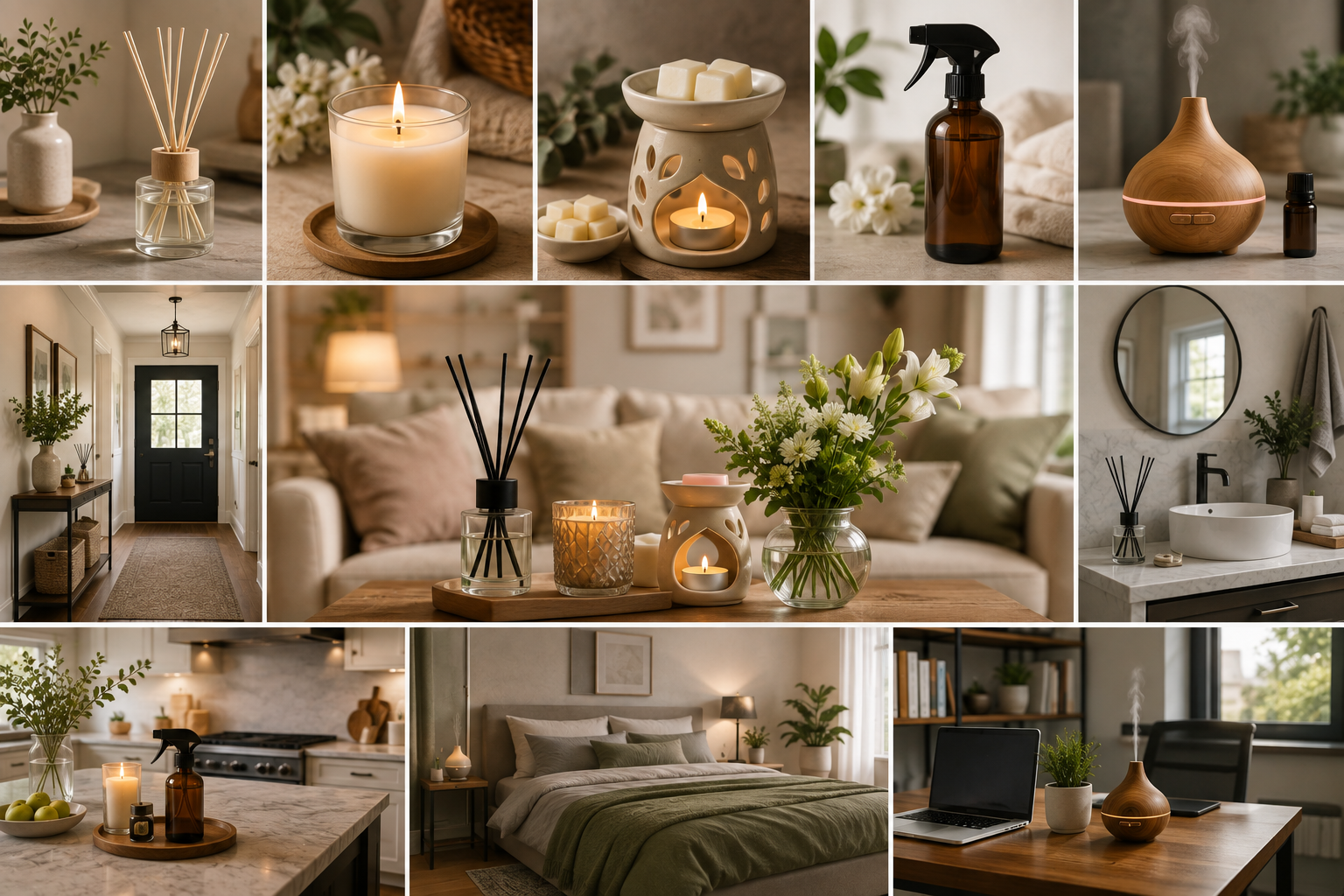
Walking into a beautifully scented home genuinely changes how a space feels, but with candles, reed diffusers, wax melts, and room sprays all competing for shelf space, picking the right one for each room isn’t always obvious. The best choice depends less on personal preference alone and more on how each room is actually used.
This guide breaks down the main home fragrance formats, which scents and products work best in specific rooms, and practical safety tips every homeowner should know. We’ll also cover reed diffusers, scented candles, wax melts, and room-by-room fragrance advice for American homeowners wanting a home that genuinely smells as good as it looks.
By the end, you’ll know exactly which fragrance format and scent profile suits each room in your home, rather than guessing based on what’s trending.
What’s the Best Fragrance Format for Each Room?
As a general rule, reed diffusers work best for constant, low-effort scent in hallways, entryways, and bathrooms, while wax melts deliver strong, on-demand fragrance well suited to living rooms and open-plan spaces. Candles add both scent and atmosphere, making them ideal for evenings and dinner tables, while room sprays offer instant, short-lived freshness perfect for kitchens or a quick refresh before guests arrive.
Matching format to how a room is actually used, rather than just picking a favorite scent, is the real key to getting a home fragrance strategy that actually works day to day.
Understanding Your Home Fragrance Options
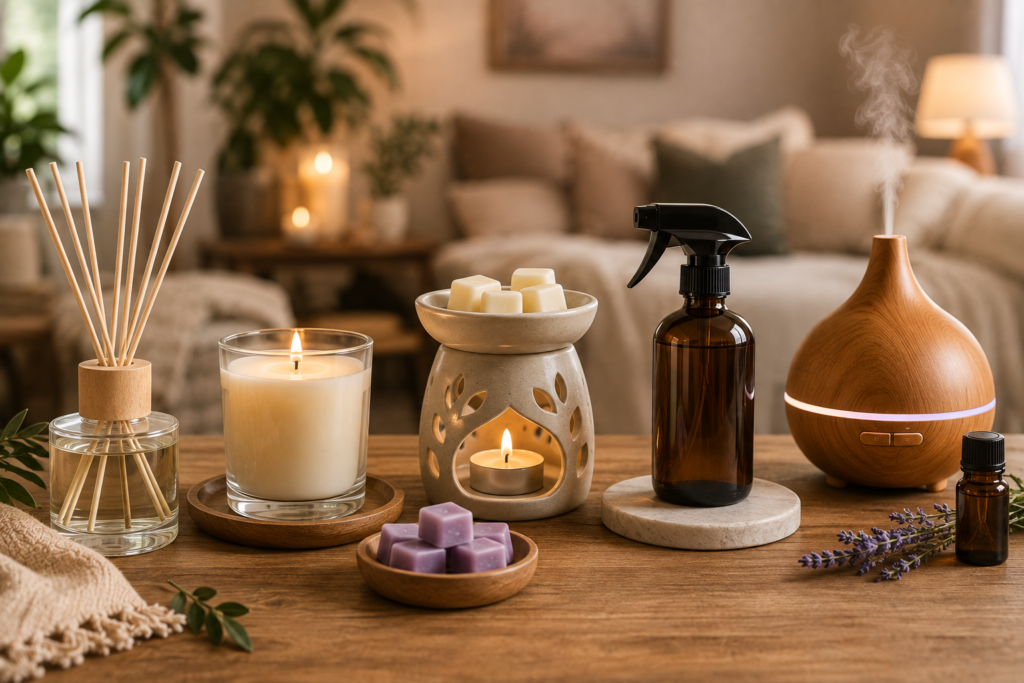
Before diving into room-specific advice, it helps to understand what each fragrance format genuinely offers, along with its real trade-offs.
Reed Diffusers
Reed diffusers release fragrance continuously through natural evaporation, requiring no flame, no electricity, and virtually no daily effort. A typical bottle can last several weeks, making this one of the lowest-maintenance options available for consistent background scent.
The trade-off is scent strength. Diffusers generally produce a more subtle fragrance than candles or wax melts, which makes them better suited to smaller spaces or rooms where you want a light, steady presence rather than a bold statement.
Scented Candles
Candles are the only format that adds both light and genuine atmosphere alongside fragrance, making them a natural fit for evenings, dinner tables, and cozy gatherings. Burning for two to four hours at a time with a properly trimmed wick generally produces the best scent throw and cleanest burn.
The trade-off here is safety and attention. Candles involve an open flame, cost more per hour of scent than wax melts, and should never be left burning unattended or while sleeping.
Wax Melts
Wax melts deliver candle-strength fragrance without an open flame when used with an electric warmer, making them a strong choice for larger or open-plan living spaces that need a genuinely noticeable scent. They also activate quickly, often filling a room within minutes of the wax fully melting.
The main limitation is that wax melts require a warmer running continuously to maintain scent, and traditional tealight-warmed melts still involve a small flame unless you choose an electric version.
Room Sprays
Room sprays transform a space in seconds, making them the fastest fragrance option available for an immediate refresh. A few sprays into the air handle a quick freshen-up before guests arrive or after cooking.
The obvious trade-off is longevity, since the effect typically fades within an hour or two, making room sprays a refresher rather than a lasting solution.
Oil Diffusers
Electric oil diffusers, often using essential oils, offer a low-maintenance way to maintain continuous, subtle fragrance, similar in spirit to reed diffusers but with adjustable intensity settings on many models. These work particularly well in bedrooms or home offices where a gentle, consistent scent supports relaxation or focus.
Comparing Home Fragrance Formats
| Format | Scent Strength | Effort Required | Fire Risk | Best For |
| Reed Diffuser | Subtle | Very low | None | Hallways, bathrooms |
| Scented Candle | Strong | Moderate | Yes, open flame | Evenings, dinner tables |
| Wax Melt | Strong | Moderate | Low with electric warmer | Living rooms, open spaces |
| Room Spray | Strong, brief | Very low | None | Kitchens, quick refreshes |
| Oil Diffuser | Subtle-moderate | Low | None | Bedrooms, offices |
Choosing the Right Fragrance for Your Entryway
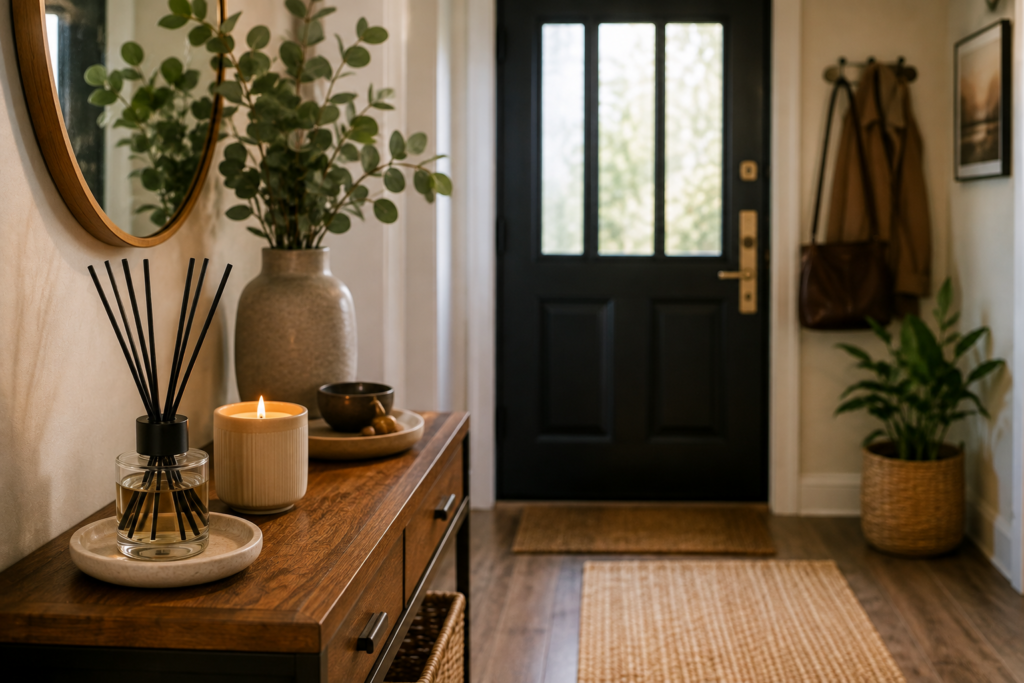
Your entryway sets the first impression for your entire home, making fragrance choice here more impactful than you might expect.
A warm, welcoming scent works particularly well in this space, with vanilla and patchouli blends offering a rich, inviting first impression without being overpowering. Since entryways see people passing through rather than lingering, a reed diffuser or a well-placed plug-in diffuser offers consistent scent without needing daily attention.
Best formats for entryways: Reed diffusers or oil diffusers, since these spaces benefit most from continuous, low-maintenance fragrance rather than something you need to remember to activate.
Choosing the Right Fragrance for Living Rooms
Living rooms are typically larger, open, and heavily used, which means fragrance choices here need to work harder than in smaller spaces.
Wax melts or a scented candle generally provide the strength a larger living space needs, since diffusers alone can struggle to fill bigger, open-plan rooms. Warmer, cozier scent families, like woody or subtly spiced blends, tend to suit living rooms well, especially during evening hours when candles add ambiance alongside fragrance.
Best formats for living rooms: Wax melts for consistent daytime fragrance, with candles reserved for evenings when you can properly supervise an open flame.
Choosing the Right Fragrance for Bedrooms
Bedrooms call for a genuinely different approach than social spaces, since the goal here is relaxation rather than a bold scent statement.
Soft florals like rose, jasmine, and peony offer a calming presence without becoming cloying in a smaller, enclosed space. Keep intensity gentle in bedrooms specifically, since strong fragrance can actually interfere with sleep quality rather than support it. A diffuser or a single wax melt cube is typically plenty for this size of room.
Best formats for bedrooms: Reed diffusers or oil diffusers with essential oils, since bedrooms benefit from subtle, continuous fragrance rather than an intense burst of scent.
Choosing the Right Fragrance for Bathrooms
Bathrooms present unique fragrance challenges, combining humidity, frequent use, and the practical need to neutralize odors quickly.
Reed diffusers handle bathroom humidity well and provide continuous freshness without requiring a flame in a space where safety concerns are naturally higher. For a quick, immediate fix, a room spray remains genuinely unbeatable, since nothing else refreshes a bathroom’s air as instantly.
Best formats for bathrooms: Reed diffusers for ongoing freshness, paired with a room spray for immediate needs.
Choosing the Right Fragrance for Kitchens
Kitchens deal with cooking odors that can linger well beyond mealtime, making fragrance strategy here slightly different from other rooms.
A room spray is particularly effective in kitchens, since it can quickly address specific odors after cooking rather than trying to compete with them continuously throughout the day. Citrus and herbal scent families tend to complement kitchens well, offering a fresh, clean feel that doesn’t clash with food aromas.
Best formats for kitchens: Room sprays for quick odor management, since open flames and kitchens generally don’t mix well from a safety standpoint.
Choosing the Right Fragrance for Home Offices
Home offices benefit from fragrance that supports focus rather than overwhelming the senses during work hours.
Lighter, subtle scents work best here, since strong fragrance can become genuinely distracting during long work sessions. An oil diffuser with a lower intensity setting, or a reed diffuser, provides steady background fragrance without competing for attention.
Best formats for home offices: Oil diffusers or reed diffusers, prioritizing subtlety over strength.
Understanding Scent Families
Beyond format, understanding broad scent categories helps you choose fragrances that genuinely suit each room’s purpose.
- Floral: Romantic and timeless, floral scents like rose and jasmine suit bedrooms and other spaces meant for relaxation.
- Fruity: Bright and uplifting, fruity scents work well in kitchens and casual living spaces where a fresh, energetic feel is welcome.
- Woody and earthy: Grounded, natural notes like cedarwood suit living rooms and studies, offering warmth without excessive sweetness.
- Gourmand: Sweet, dessert-inspired scents can work beautifully in kitchens and living rooms during colder months, though they’re worth using sparingly to avoid feeling heavy.
Home Fragrance Safety Tips Every Homeowner Should Know
These precautions matter more than they might seem. According to the National Fire Protection Association (NFPA), U.S. fire departments respond to roughly 7,400 home structure fires started by candles every year, causing an average of 90 deaths and 670 injuries annually. Over a third of these fires start in the bedroom, and roughly 60% happen when something combustible bedding, curtains, or cabinetry was left too close to the flame. Nearly all of these are preventable with basic precautions
Regardless of which format you choose, a few consistent safety habits protect both your home and household.
- Never leave burning candles unattended, and always extinguish them before leaving a room or going to sleep
- Keep candles and wax melts away from pets and small children, positioning them on stable, heat-resistant surfaces away from anything flammable
- Trim candle wicks to about a quarter inch before each burn to avoid excessive flames and sooty smoke
- Crack a window in smaller rooms if fragrance feels overwhelming, since scent can build up quickly in enclosed spaces
- Choose electric wax warmers over tealight versions where possible, since electric warmers eliminate open flame risk entirely
- Check IFRA compliance information when available, since reputable fragrance oils are tested for safe usage levels across different product types
Practical Buying Advice
A few considerations can help you choose fragrance products that perform well and match your household’s specific needs.
- Match format to room size: Diffusers suit smaller, enclosed spaces, while candles and wax melts have more presence in larger or open-plan rooms.
- Consider wax type for candles: Soy wax generally burns slower and cleaner than paraffin, often providing better overall value per burn despite a similar or slightly higher upfront cost.
- Let candles burn to the edge on the first use: This full first burn, known as avoiding “tunneling,” ensures you get the maximum life out of a candle rather than it burning down the center only.
- Consider household sensitivities: If anyone in your home has fragrance sensitivities, allergies, or respiratory conditions, unscented or very lightly scented options may be worth considering in bedrooms and living spaces.
- Rotate scents seasonally: Many homeowners find warmer, spiced scents suit colder months, while lighter florals and citrus notes feel more appropriate during warmer seasons. Keeping a couple of seasonal options on hand lets you shift your home’s atmosphere without needing to overhaul your entire fragrance routine.
Common Home Fragrance Mistakes to Avoid
- Using the same strong scent throughout the entire home: Different rooms serve different purposes, and matching fragrance intensity and character to each space’s function produces a more cohesive, pleasant result than one blanket scent everywhere.
- Overwhelming small spaces with strong fragrance: Bathrooms and bedrooms in particular benefit from restraint, since strong scent in an enclosed space can quickly become unpleasant rather than inviting.
- Leaving candles or wax melts unattended: This remains one of the most common and preventable home fragrance safety mistakes.
- Ignoring pets and household members with sensitivities: Not everyone in your household may enjoy or safely tolerate strong fragrance, so it’s worth considering the whole household’s comfort, not just personal preference.
Conclusion
Choosing the best home fragrance for every room comes down to matching format and scent character to how each space is actually used, rather than picking one favorite fragrance for the entire house. Reed diffusers and oil diffusers suit bedrooms, bathrooms, and entryways needing continuous, subtle scent, while candles and wax melts bring the strength larger living spaces need. Room sprays remain unmatched for instant kitchen refreshes or last-minute freshening before guests arrive. With the right format and scent paired to each room, your whole home can feel genuinely inviting, safely and consistently, without any single space feeling overwhelmed.
Frequently Asked Questions
1- What’s the best home fragrance option for someone who wants low maintenance?
Reed diffusers are generally the lowest-maintenance option, requiring no flame or electricity and lasting several weeks per bottle with minimal upkeep.
2- Are wax melts safer than candles?
Wax melts used with an electric warmer eliminate open flame risk entirely, making them a safer option than traditional candles, particularly in homes with children or pets.
3- What scent works best for a small bathroom?
Lighter, fresh scents like citrus or clean florals tend to work well in bathrooms, especially paired with a reed diffuser for ongoing freshness and a room spray for quick refreshes.
4- Should I use the same fragrance throughout my whole house?
It’s not necessary, and many homeowners actually prefer varying scent character and intensity by room to match each space’s specific purpose and size.
5- Is it safe to use essential oil diffusers around pets?
Some essential oils can be harmful to certain pets, so it’s worth researching specific oils and consulting your veterinarian if you have concerns about a particular scent or diffuser type.
6- How long does a reed diffuser typically last?
A standard bottle of reed diffuser oil typically lasts several weeks, depending on the number of reeds used and how often you flip them to refresh the scent throw.